

Do I Need to Be a Strong Swimmer to Scuba Dive?
For many people considering scuba diving for the first time, one question comes before almost everything else: how good do I need to be at swimming?
The reassuring answer is that you do not need to be a competitive swimmer, have perfect technique, or be particularly fast in the water to learn to scuba dive.
You do, however, need basic swimming ability and enough confidence in the water to support yourself, move comfortably, and complete the water skills required by your training program.
That distinction matters. Scuba equipment helps you breathe underwater and control your buoyancy, but it is not a substitute for basic water skills.
You Do Not Need to Be a Fast Swimmer
Scuba diving is very different from swimming laps in a pool.
Underwater, divers normally move using fins rather than traditional swimming strokes. A buoyancy compensator helps control position in the water, while proper weighting and breathing allow a trained diver to maintain neutral buoyancy with relatively little effort.
Good divers are generally trying to move efficiently rather than quickly.
This means someone who considers themselves an average swimmer may be perfectly capable of becoming a competent scuba diver.
What matters more is whether you are comfortable enough in the water to remain calm and function without depending completely on flotation equipment.
What Swimming Tests Are Required for Scuba Certification?
Exact requirements depend on the training organization and program, so students should always check the current standards for the course they are taking.
Two major training organizations currently use very similar assessments for their entry level scuba programs.
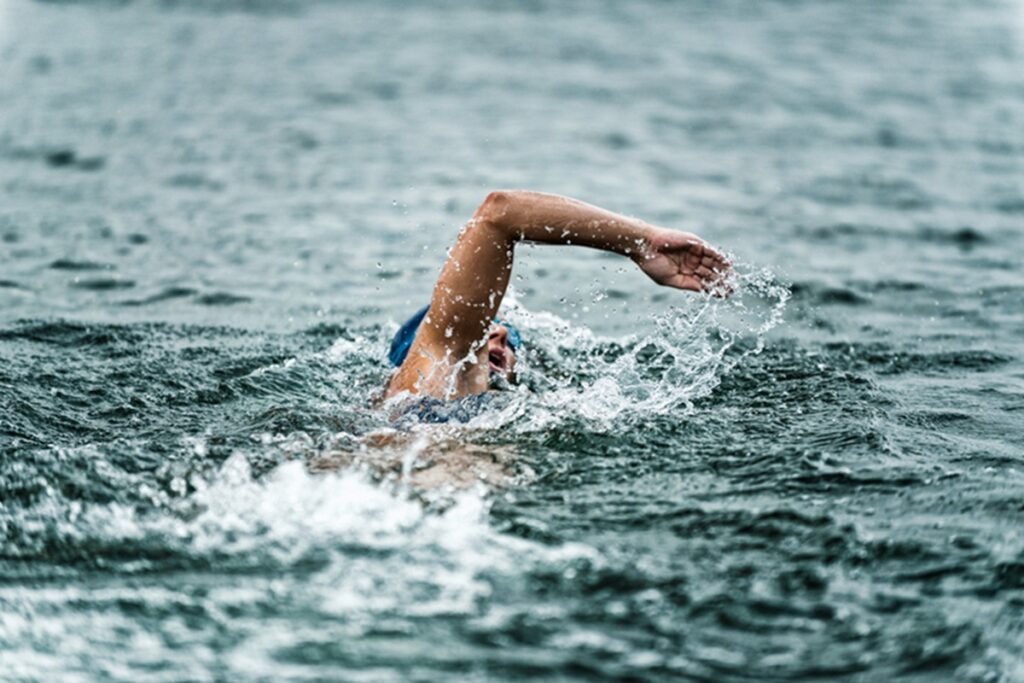
PADI requires Open Water Diver students to demonstrate basic water skills that include swimming 200 metres without stopping, or swimming 300 metres using a mask, snorkel and fins. There is no time limit, and students can use whatever swimming stroke they prefer.
Students must also remain at the surface by floating or treading water for 10 minutes.
SSI currently requires entry level students to complete a water fitness evaluation before open water training. This includes a 200 metre swim without swimming or buoyancy aids, or a 300 metre swim using a mask, snorkel and fins. There is no time limit, although the swim must be completed without stopping or standing.
SSI also requires students to float or tread water for 10 minutes in water too deep to stand.
NAUI similarly states that divers do not necessarily need to be advanced swimmers, but they do need basic swimming ability. Specific requirements depend on the program.
These standards illustrate the purpose of the assessment. The goal is not to discover who is the fastest swimmer. It is to establish that the student has a basic level of independence and comfort in the water.
Water Comfort May Matter More Than Swimming Style
Being able to complete a swimming distance is only part of becoming comfortable underwater.
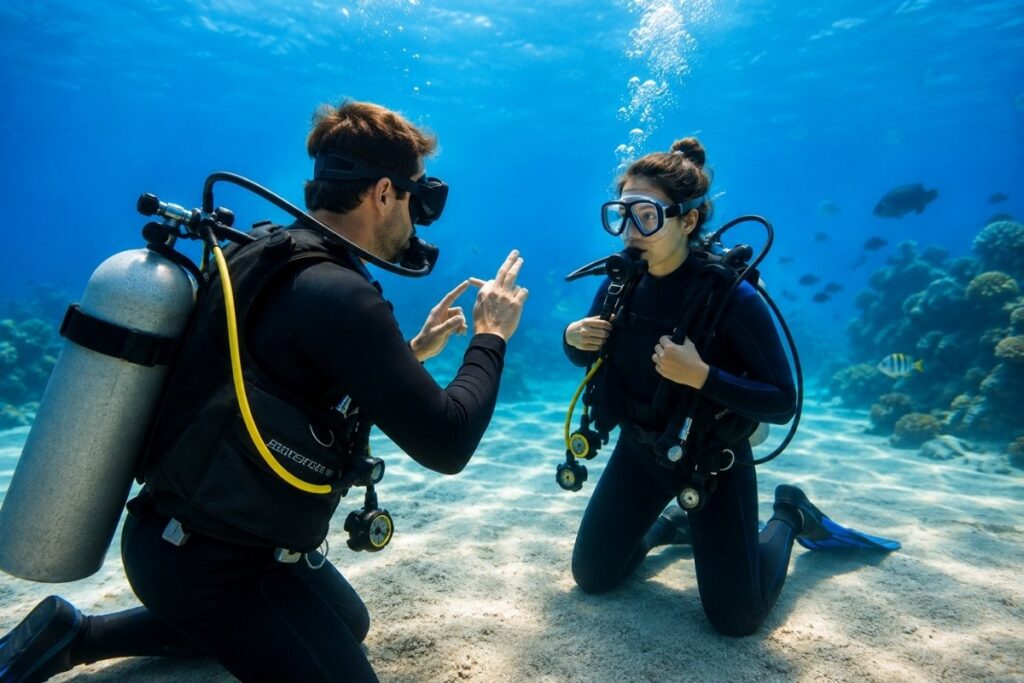
During scuba training, beginners encounter situations that may initially feel unfamiliar. They breathe while their face is underwater, remove and replace equipment, clear water from a mask, control their position without standing on the bottom, and learn how to respond calmly when something does not feel normal.
Someone may be able to swim several pool lengths but still become anxious when water enters their mask.
Another person may have an inefficient swimming stroke but feel completely relaxed in deep water.
For scuba diving, that confidence can be extremely important.
Training is designed to build these skills progressively, normally beginning in a pool or another controlled water environment. Students are not expected to arrive already knowing how to scuba dive.
They should, however, arrive with enough basic water confidence to learn safely.
Can I Learn to Scuba Dive If I Cannot Swim?
If you cannot swim at all or cannot comfortably support yourself in water where you cannot stand, it is generally better to develop basic swimming skills before beginning a full scuba certification course.
Scuba equipment should not be viewed as something that makes swimming ability unnecessary.
A buoyancy compensator can provide flotation at the surface, but divers must still be capable of dealing with situations in which equipment is removed, adjusted, fails to function as expected, or is temporarily unavailable.
Learning to swim does not mean you need months of competitive training.
For many prospective divers, a basic swimming course focused on floating, breathing, relaxed movement and water confidence may provide the foundation they need before starting scuba training.
Why Swimming Ability Still Matters After Certification
A calm recreational dive can require very little physical effort. Under ideal conditions, a diver may spend most of the dive moving slowly while maintaining neutral buoyancy.
But conditions do not always remain ideal.
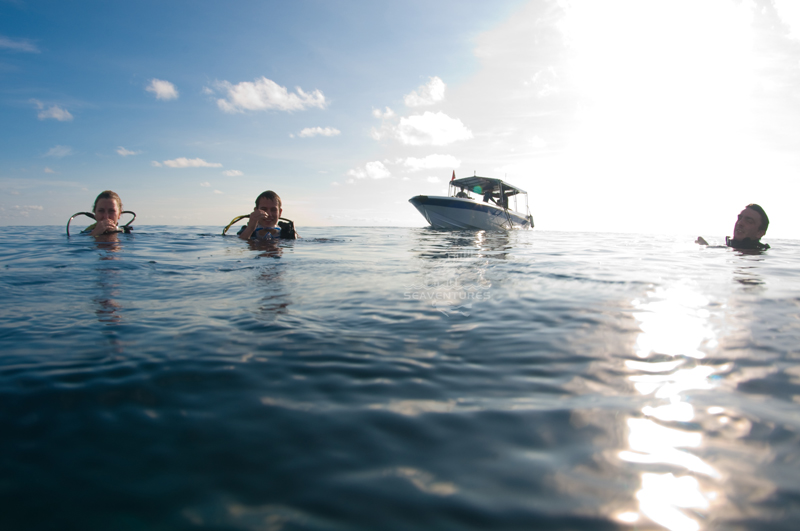
A diver may need to swim at the surface to reach a boat, deal with waves, exit through surf, respond to a current, tow or assist a buddy, or reach an exit point after surfacing away from the planned location.
Divers Alert Network notes that the physical demands of diving can vary considerably depending on conditions, equipment and the type of dive. Currents, waves and demanding entries or exits can turn a relatively easy dive into a much more strenuous activity.
This is why the minimum swimming requirement for certification should be regarded as a starting point rather than the maximum level of fitness a diver will ever need.
Swimming Ability and Physical Fitness Are Not the Same Thing
A person can be a technically good swimmer without having strong cardiovascular fitness. Someone else may be physically fit from running or cycling but have limited confidence in the water.
Scuba divers benefit from both.
General physical fitness helps divers cope with carrying equipment, climbing onto boats, swimming against resistance and managing unexpected exertion.
Swimming and fin swimming provide another advantage because they develop comfort and movement skills in the same environment in which diving takes place.
Divers do not need to become elite athletes, but maintaining reasonable strength, endurance and water skills creates a greater reserve when conditions become more demanding.
What If I Am Nervous About the Swim Test?
Being worried about the swimming assessment does not automatically mean scuba diving is not for you.
If you can swim but are concerned about the required distance, practice before beginning your course.
Focus on swimming slowly and continuously rather than trying to swim fast. The objective in common entry level assessments is normally to complete the distance, not to achieve a particular speed.
Practice floating as well. Many beginners waste energy trying to hold themselves high above the surface rather than learning to relax and allow their natural buoyancy to help them.
If deep water makes you uncomfortable, tell your instructor before training begins. An instructor needs to know when a student is anxious rather than discovering it during a difficult exercise.
Additional pool practice may make a significant difference.
You Should Be Able to Answer These Questions
Before beginning scuba training, consider whether you can comfortably:
- Swim continuously for a reasonable distance without assistance
- Float or tread water without holding onto the side of a pool
- Put your face underwater without immediately becoming distressed
- Remain calm in water where your feet cannot touch the bottom
- Follow instructions while in the water
- Recover your breathing after moderate swimming effort
If several of these situations make you uncomfortable, some swimming lessons before your scuba course may be worthwhile.
There is no embarrassment in improving your water skills first. Becoming more comfortable in the water can make scuba training easier and allow you to concentrate on learning diving skills instead of simply trying to cope with the environment.
So, Do You Need to Be a Strong Swimmer?
No. You do not need to be an exceptionally strong or fast swimmer to become a recreational scuba diver.
But you do need basic swimming ability, enough water confidence to support yourself without relying entirely on equipment, and the ability to complete the water skills required by your chosen training program.
Passing the certification swim assessment also should not be confused with being prepared for every possible diving environment. More demanding dives can require considerably greater endurance and swimming ability than an entry level course.
For beginners, the best objective is not speed.
It is comfort, control and confidence in the water.
Once those foundations are in place, scuba training can teach you how to move through the underwater world in an entirely different way.

Mohsen Nabil is the Founder and Editor-in-Chief of Diventures Magazine. A mechanical engineer and scuba diving instructor based in the Red Sea, he writes about diving safety, marine conservation, underwater exploration, and developments in the global dive industry. Through Diventures Magazine, he works to connect divers, scientists, and ocean advocates while promoting responsible diving and protection of the oceans.