


What Happens If You Run Out of Air Underwater?
A Diventures reader asks: “What actually happens if I run out of air while scuba diving? Can I breathe from my buddy, and what if my buddy is too far away?”
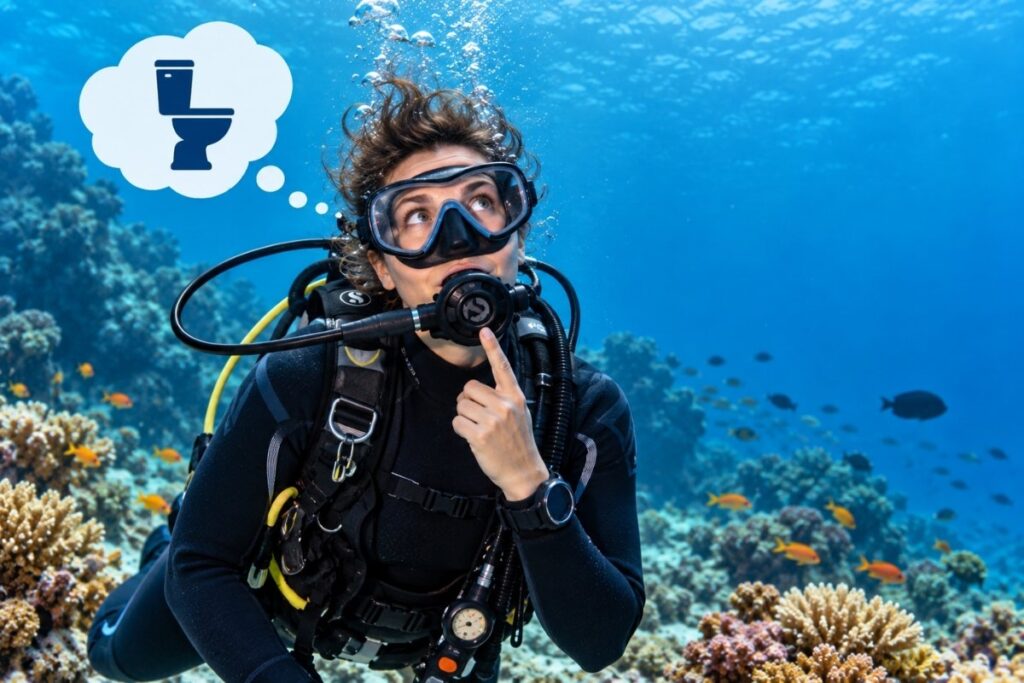
Running out of breathing gas underwater is one of those situations almost every new diver thinks about.
What happens when you take a breath and suddenly nothing comes through the regulator?
The reassuring part is that scuba divers are trained specifically for this situation. Modern scuba equipment also gives divers several ways to deal with a gas supply emergency before an immediate rush to the surface becomes necessary.
The most important lesson, however, comes before any emergency procedure:
A diver should normally reach the surface with breathing gas still remaining in the cylinder.
Running completely out of gas should never be part of a dive plan.
First, “Out of Air” Does Not Always Mean the Cylinder Is Empty
A diver who suddenly cannot breathe may naturally assume the cylinder is empty, but several problems can interrupt gas delivery.
The cylinder may genuinely be depleted. A valve may not have been fully opened. A regulator could malfunction. A hose or other component could fail. A regulator may begin free flowing and rapidly consume the available gas.
Divers Alert Network has documented incidents in which divers experienced apparent gas starvation because cylinder valves were not fully open, as well as incidents where regulator problems resulted in rapid gas loss.
Whatever the cause, once a diver cannot obtain a breath from the regulator, the immediate priority is the same:
Get a reliable breathing gas source and end the dive.
Option One: Use Your Buddy’s Alternate Air Source
This is the normal response taught to recreational scuba divers.
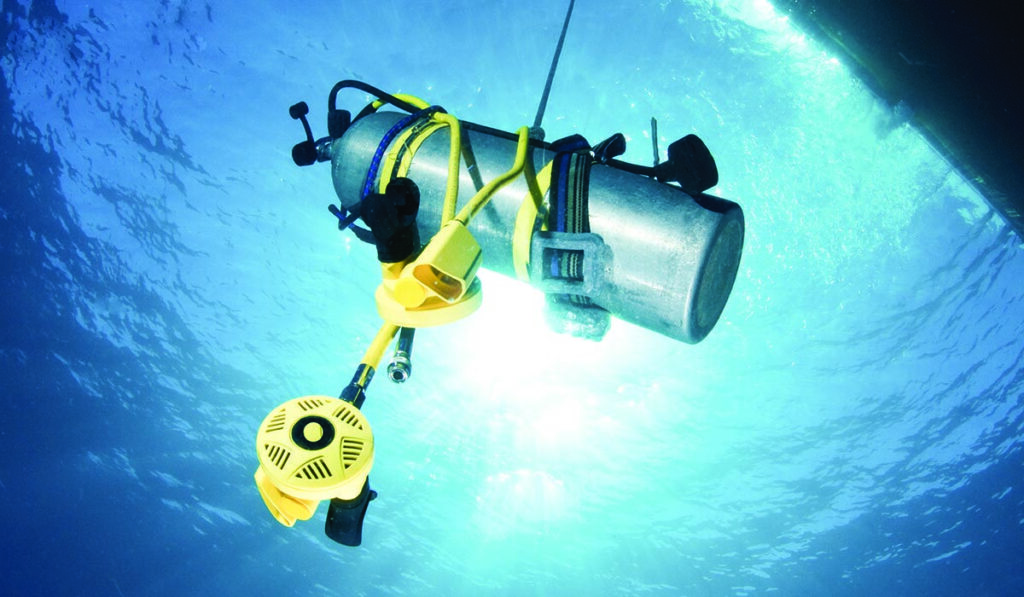
A standard recreational scuba setup usually includes a second regulator that can be donated to another diver. It is commonly called an alternate air source or octopus.
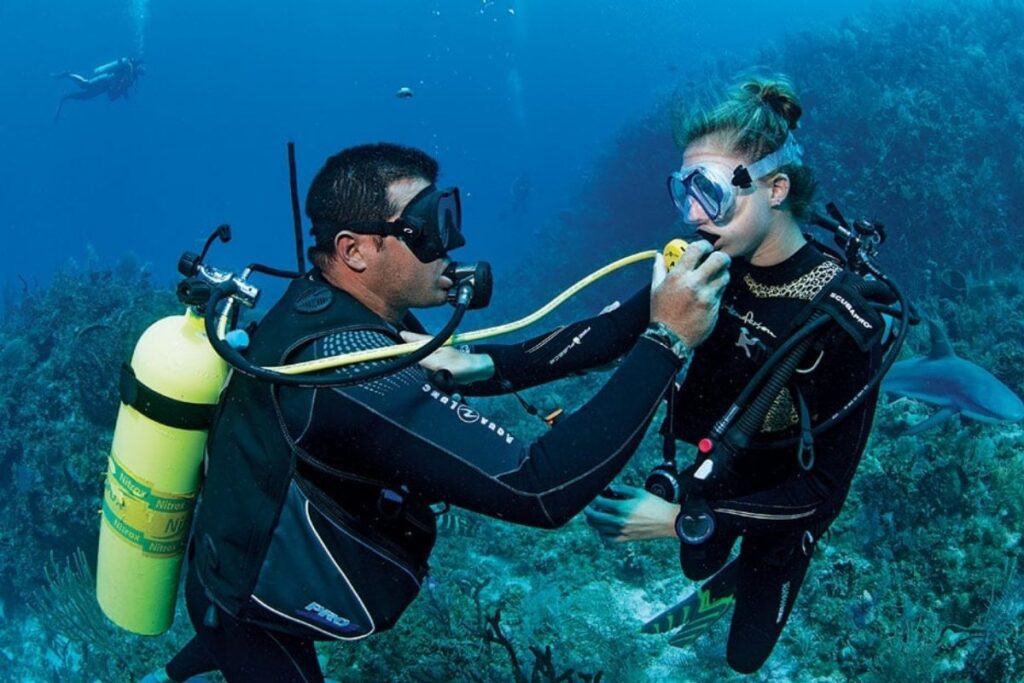
The diver who needs gas signals the emergency to the buddy and obtains a functioning regulator. The two divers then establish contact and begin a controlled ascent together.
Diving organizations describes the alternate air source as equipment specifically intended to allow another diver who is low on gas or out of gas to breathe from the buddy’s cylinder during an ascent.
The important point is that receiving gas from a buddy does not mean the dive continues.
The dive is over.
Once breathing has been restored, the objective is to reach the surface safely and under control.
DAN similarly advises that after establishing an alternate breathing supply, divers should make a slow, controlled ascent. A safety stop should only be made when sufficient breathing gas is available to do so safely.
What About Buddy Breathing?
Older divers may remember a technique known as buddy breathing.
This is different from using an alternate regulator.
During buddy breathing, two divers share a single second stage regulator, passing it between them while ascending.
The technique played a much larger role when scuba equipment commonly had only one second stage. Modern recreational equipment normally provides an alternate air source, allowing both divers to breathe continuously instead.
That makes sharing two separate regulators the preferred solution whenever the equipment configuration allows it.
Buddy breathing may still appear in particular training systems, equipment configurations, or specialized circumstances, but it should not be improvised by divers who have never been trained to perform it.
An underwater emergency is not the time to invent a new procedure.
What If Your Buddy Is Too Far Away?
This is where the situation becomes much more serious.
If no functioning breathing gas source can be reached, a trained recreational diver may have to perform an emergency ascent using the procedure taught during certification.
One commonly taught procedure is the Controlled Emergency Swimming Ascent, often called a CESA.
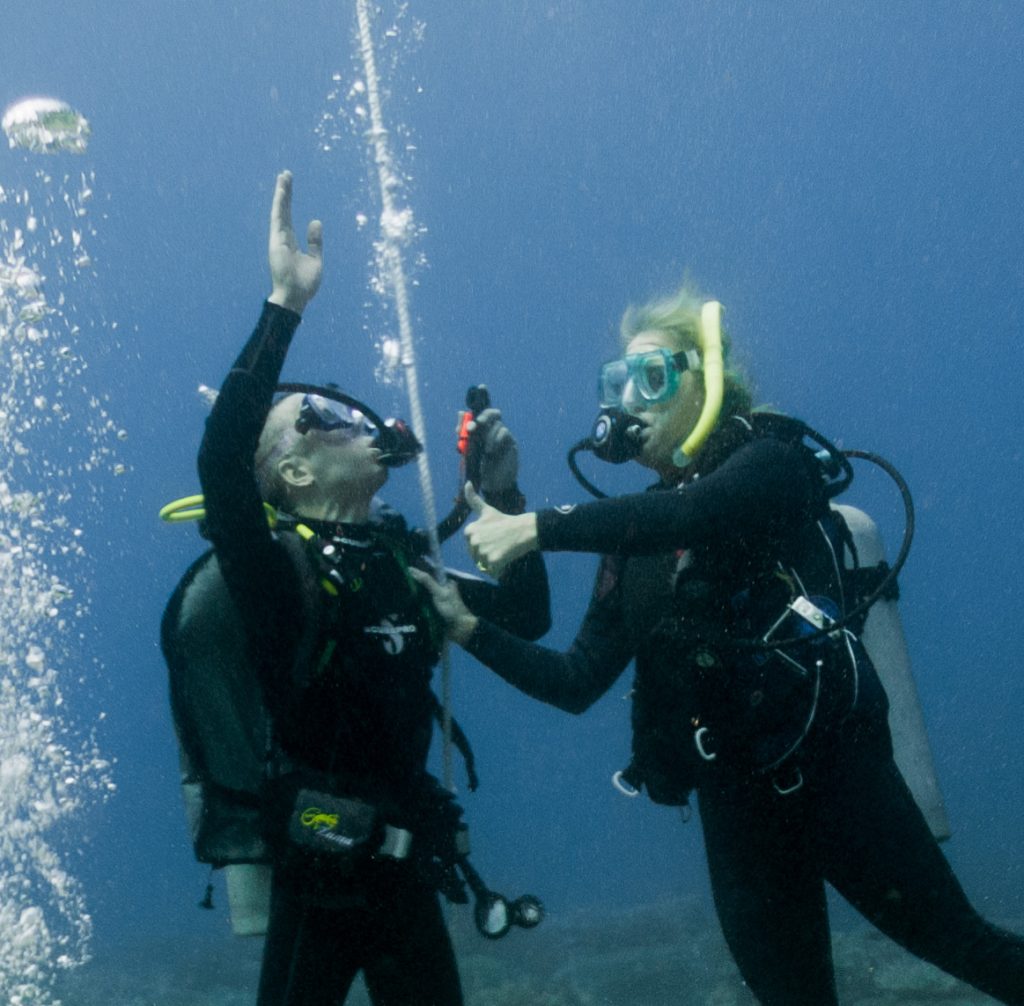
During such an ascent, the diver swims toward the surface while continuously allowing expanding gas to escape from the lungs.
ISO training standards include practicing a simulated controlled emergency swimming ascent as part of Open Water Diver training.
DAN describes the preferred sequence during an emergency as first making a normal controlled ascent when possible, then obtaining a buddy’s alternate gas source when necessary, and using a controlled emergency ascent when another breathing source cannot be reached.
However, an emergency swimming ascent has limitations.
Depth matters. Distance from the surface matters. Decompression obligations matter. Current, overhead environments, physical condition and the diver’s level of training can completely change the situation.
A technique practiced during an entry level course should therefore never be interpreted as a universal escape solution for every type of dive.
Technical diving, cave diving, wreck penetration and decompression diving require different gas planning and emergency strategies.
Why You Must Never Hold Your Breath
One of the most important rules in scuba diving becomes especially critical during an emergency ascent:
Never hold your breath while ascending.
As a diver rises, ambient pressure decreases and gas in the lungs expands.
Under normal circumstances, breathing allows that expanding gas to escape naturally. If a diver holds their breath during ascent, expanding gas can potentially cause serious lung overexpansion injuries.
These injuries can include pneumothorax and arterial gas embolism.
DAN specifically warns that panic during an emergency ascent can cause divers to forget the fundamental rule of continuously releasing expanding gas during ascent.
This is also why an uncontrolled dash for the surface is not the correct response to suddenly losing gas.
The objective remains a controlled ascent whenever circumstances permit.
Should You Drop Your Weights and Shoot to the Surface?
Not automatically.
A rapid uncontrolled ascent introduces its own serious hazards.
Dropping weights may be appropriate in particular emergencies, especially when establishing positive buoyancy at the surface becomes critical, but turning an out of gas situation into an uncontrolled buoyant ascent can create additional problems.
Emergency procedures depend on depth, equipment, environment and the diver’s training.
Divers should follow the emergency ascent procedures taught by their recognized training organization rather than relying on advice remembered from social media or attempting an unfamiliar technique.
Your Buddy Is Part of Your Gas Management
The possibility of gas sharing is one reason proper buddy positioning matters.
A buddy who is somewhere in the same ocean is not necessarily a useful buddy during an emergency.
Divers should remain close enough that assistance can realistically be provided if something suddenly goes wrong.
DAN has published real incident reports where access to a buddy’s alternate regulator allowed a diver with a gas supply problem to make a controlled ascent rather than attempting a rapid ascent alone.
This is also why alternate regulators should be positioned where they can be quickly located and deployed rather than hanging loosely or being difficult to access.
Prevention Starts Long Before the Cylinder Reaches Zero
The best out of gas emergency is the one that never happens.
Divers should monitor cylinder pressure throughout the dive rather than waiting for a predetermined moment to check it.
Gas consumption is also not constant.
Depth increases gas consumption. Swimming against current increases breathing demand. Poor buoyancy control can increase workload. Stress and anxiety can cause a diver to consume gas faster than expected.
DAN therefore recommends incorporating breathing gas into dive planning, checking pressure regularly, considering the effects of depth and exertion, and beginning the return and ascent with an appropriate reserve.
The exact gas planning method depends on the dive.
A straightforward recreational reef dive and a technical penetration dive should clearly not use the same gas management strategy.
Practice Matters
There is an enormous difference between understanding an emergency procedure while reading about it and performing it calmly underwater.
Skills such as donating an alternate regulator, receiving gas, maintaining contact with a buddy, controlling buoyancy and ascending together should be practiced during training and refreshed periodically.
DAN recommends regularly practicing alternate air source procedures and emergency ascent skills in an appropriate controlled environment.
If it has been years since you practiced them, a refresher session with a qualified instructor may be far more valuable than simply remembering that you once performed the skill during your Open Water course.
So, What Happens If You Run Out of Air Underwater?
If everything works as your training intended, the answer is much less dramatic than many new divers imagine.
You signal your buddy.
You obtain another breathing gas source.
You establish control.
And you end the dive with a controlled ascent.
If another breathing source cannot be reached, emergency ascent procedures learned during training may become necessary.
What you should not do is panic, hold your breath, or blindly race toward the surface.
And ideally, you should never reach that situation at all.
Good gas planning, frequent pressure checks, sensible buddy positioning and regularly practiced emergency skills are what keep an out of gas problem from becoming something much worse.
Diventures Safety Note
This article explains general scuba safety principles and is not a substitute for practical training. Emergency ascent and gas sharing procedures should be learned and practiced under the supervision of a qualified diving professional. Procedures may vary according to training organization, equipment configuration, environment and type of diving.

Mohsen Nabil is the Founder and Editor-in-Chief of Diventures Magazine. A mechanical engineer and scuba diving instructor based in the Red Sea, he writes about diving safety, marine conservation, underwater exploration, and developments in the global dive industry. Through Diventures Magazine, he works to connect divers, scientists, and ocean advocates while promoting responsible diving and protection of the oceans.