

Ancient Shark ‘Graveyard’ Reveals Lost Sea Beneath Egypt’s Western Desert
Fossil shark teeth discovered at Egypt’s Abu Tartur Plateau have revealed five extinct shark species and new evidence of the diverse marine ecosystem that once covered part of what is now the Western Desert.
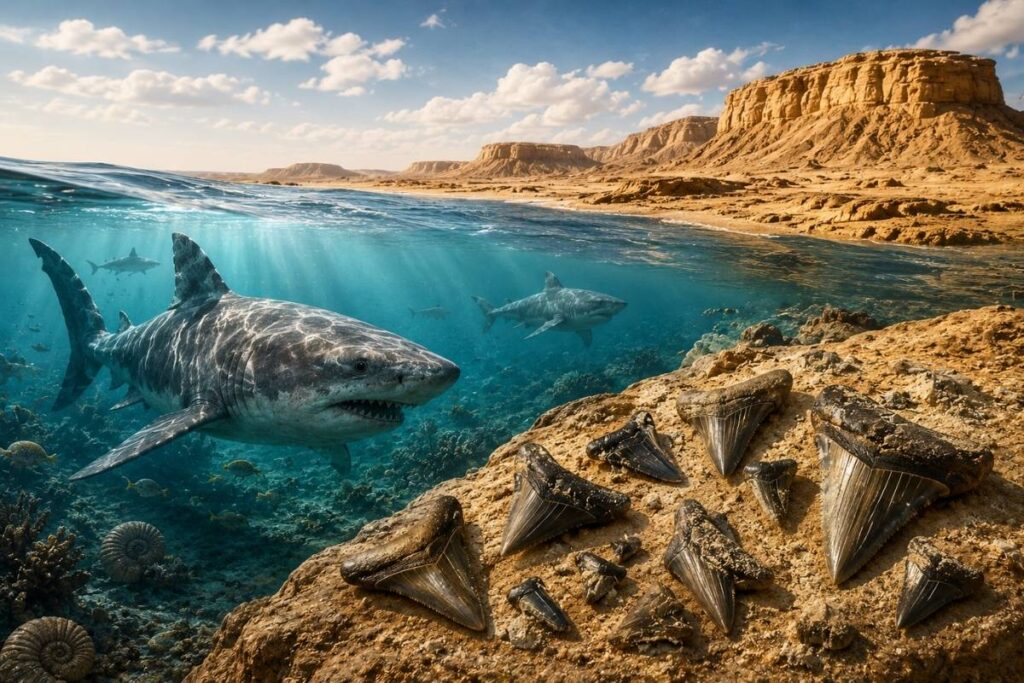
A landscape now dominated by desert once lay beneath a tropical sea inhabited by sharks and other marine animals.
A new paleontological study has identified fossil teeth belonging to at least five extinct species of lamniform sharks from the Abu Tartur Plateau in Egypt’s Western Desert, providing researchers with a new glimpse into the marine ecosystems that existed in North Africa during the Late Cretaceous.
The research was led by Tarek Yassin and included Jorge D. Carrillo Briceño, René Kindlimann, Alhussein Ibrahim and Mohamed K. AbdelGawad. The study was published online in the scientific journal Cretaceous Research on 18 August 2026.
The researchers titled their paper “Egyptian shark graveyard: New Late Cretaceous Lamniform shark Assemblage from Duwi Formation of Abu Tartur Area, Southwestern desert, Egypt.”
Fourteen Teeth Reveal Five Shark Species
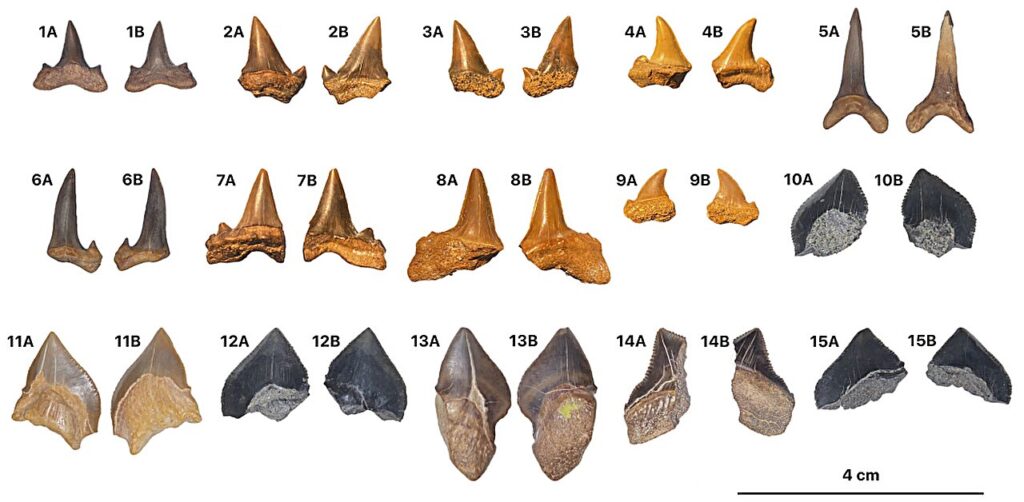
Researchers collected 14 isolated fossil shark teeth from phosphate beds in the Maghrabi Liffiya sector of the Abu Tartur Plateau.
The fossils came from the Duwi Formation, a geological unit dating to the Campanian stage of the Late Cretaceous. According to the study, these deposits formed in a tropical marine environment.
Analysis of the teeth identified five extinct lamniform shark species:
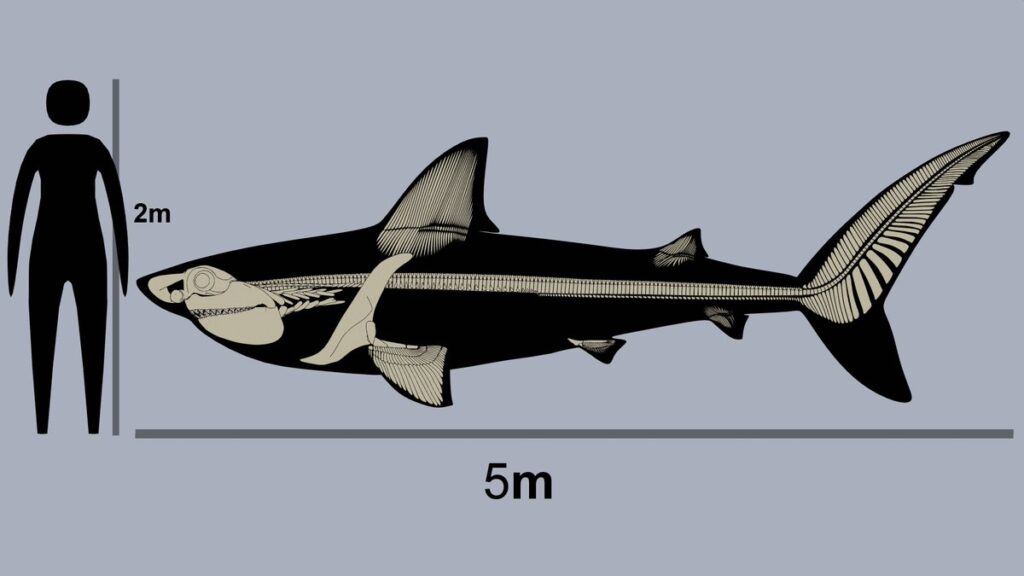
Cretalamna cf. maroccana
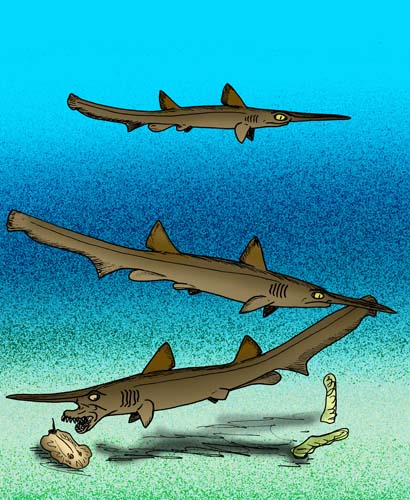
Scapanorhynchus cf. raphiodon
Serratolamna cf. serrata
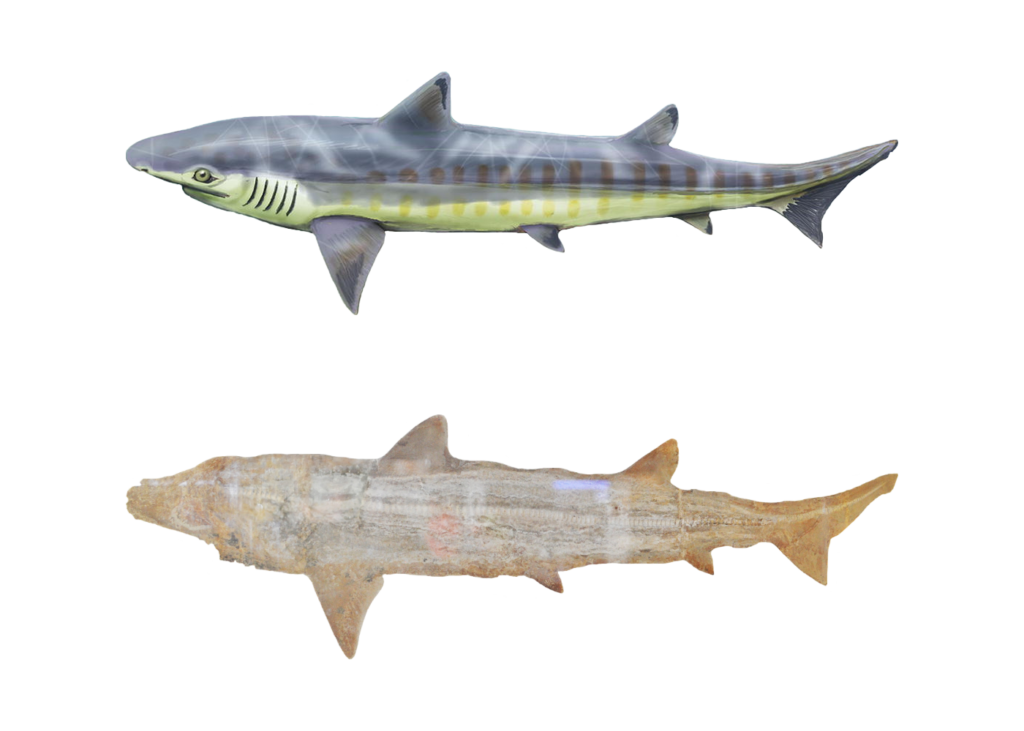
Squalicorax bassanii
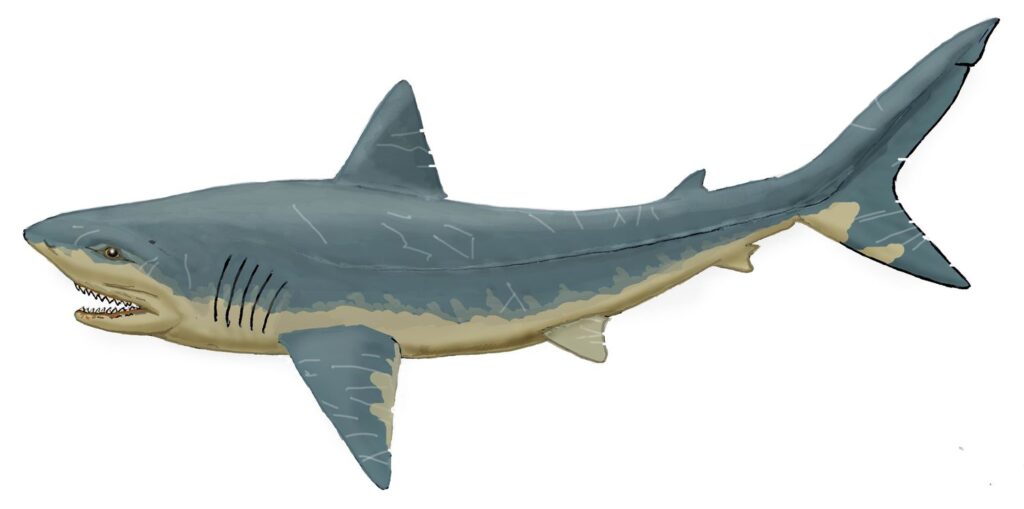
Squalicorax pristodontus
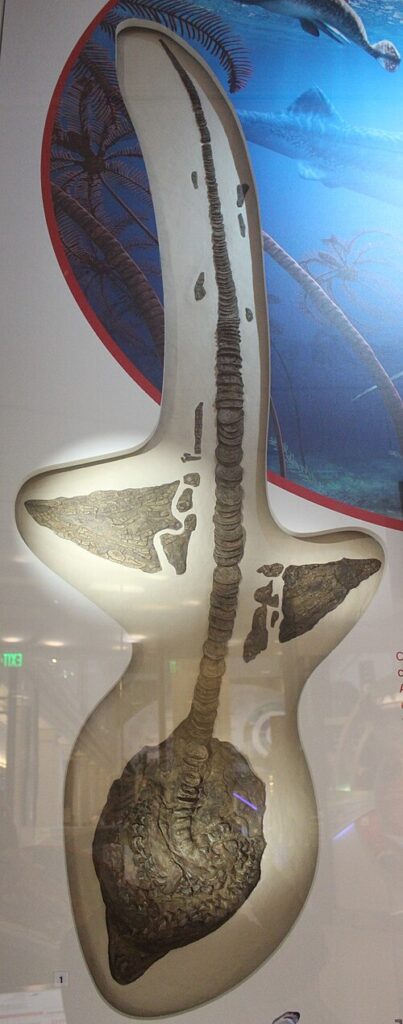
All five are being reported from the Abu Tartur area for the first time.
The study also reports that Serratolamna cf. serrata and Squalicorax bassanii represent their first known fossil records in Egypt.
One of the most significant specimens was assigned to Scapanorhynchus cf. raphiodon. The researchers say it may represent the first record of this shark in Africa and potentially its youngest known occurrence in the fossil record.
However, the scientists remain cautious about that identification. They state that additional specimens and future taxonomic revision would be required before the assignment can be considered more certain.
Why Shark Teeth Survive
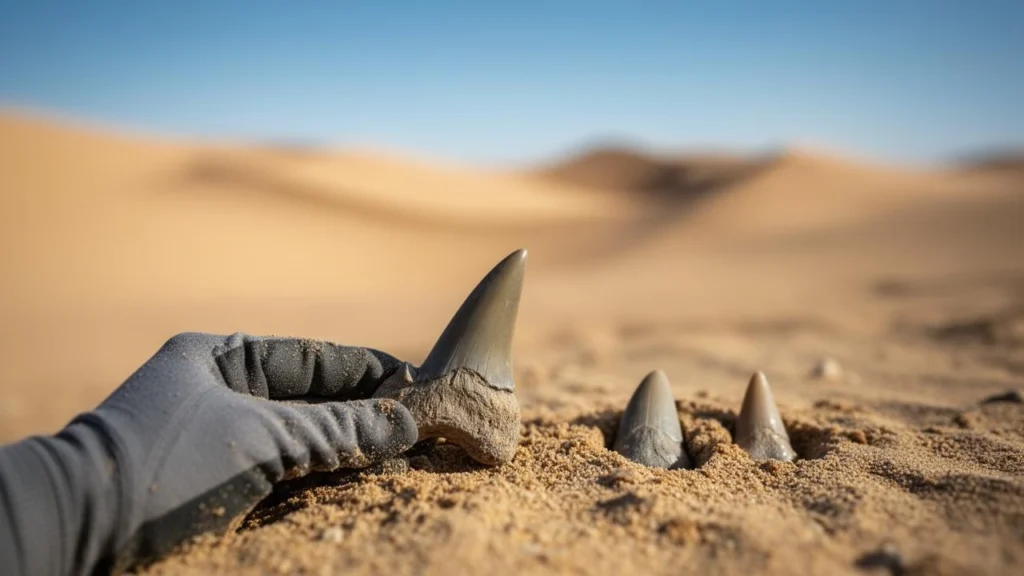
Fossil shark discoveries are often dominated by teeth because shark skeletons are primarily composed of cartilage rather than bone.
Cartilage generally does not fossilize as readily as mineralized skeletal material, while shark teeth are highly resistant and can survive in sediments for millions of years.
For paleontologists, the shape, cutting edges, cusps and other features of fossil teeth can therefore provide important clues about the sharks that once occupied an ancient marine environment.
The Abu Tartur specimens show considerable variation, reflecting several different shark forms living within the broader ecosystem represented by the deposits.
Egypt’s Desert Was Once a Tropical Sea
Perhaps the most striking part of the discovery is not simply the sharks themselves, but the environment in which they lived.
Today, Abu Tartur lies within Egypt’s arid Western Desert, between the Dakhla and Kharga oases.
During the Late Cretaceous, however, the geological picture was dramatically different.
The Duwi Formation represents a period when marine conditions extended across parts of Egypt. Its phosphate deposits preserve evidence of ancient marine vertebrates and provide scientists with information about the ecosystems that occupied the region when seawater covered areas that are now far inland.
The researchers interpret the shark assemblage as evidence of a nutrient rich and highly productive marine ecosystem associated with a phosphogenic continental shelf environment.
The fossil accumulation may also represent animals from different ecological niches and different points in time rather than a single community preserved during one moment.
Was It Really a Shark Graveyard?
Despite the term used in the study’s title, the discovery should not be interpreted as evidence that a large group of sharks died together in a single catastrophic event.
The fossils consist of isolated teeth collected from phosphate layers.
The researchers explain that these deposits represent a condensed geological section in which biological material accumulated during periods of relatively low sedimentation. Fossils from different times and potentially different habitats could therefore become concentrated within the same deposit.
In other words, the “shark graveyard” provides a record of shark diversity across an ancient marine environment, rather than evidence of a mass shark death.
Abu Tartur’s Shark Record Continues to Grow
The latest discovery builds on previous research from the same area.
An earlier study by Yassin and colleagues documented 49 isolated shark teeth from the Duwi Formation and identified two other lamniform sharks, Scapanorhynchus cf. rapax and Cretoxyrhina cf. mantelli.
Taken together, the studies show that Abu Tartur supported a notably diverse assemblage of lamniform sharks during the Late Cretaceous.
The new research expands that record with five additional taxa from the area and adds important evidence to scientists’ understanding of shark diversity across the ancient tropical seas of North Africa.
A Marine World Beneath the Desert
The discovery offers another reminder of how dramatically marine environments can change over geological time.
Where desert now stretches across Egypt’s Western Desert, sharks once moved through tropical waters alongside other marine organisms.
Their teeth, preserved within phosphate deposits for tens of millions of years, are now helping researchers reconstruct a vanished ecosystem and better understand the evolutionary and geographic history of sharks in Africa.
For scientists studying ancient marine life, Abu Tartur is proving to be far more than a desert plateau. Beneath its surface lies a record of a very different Egypt, one shaped not by sand, but by the sea.
Sources

Mohsen Nabil is the Founder and Editor-in-Chief of Diventures Magazine. A mechanical engineer and scuba diving instructor based in the Red Sea, he writes about diving safety, marine conservation, underwater exploration, and developments in the global dive industry. Through Diventures Magazine, he works to connect divers, scientists, and ocean advocates while promoting responsible diving and protection of the oceans.