

For many divers, travel follows a familiar compass: warm water, coral reefs, clear visibility and tropical islands. But at the opposite end of the diving spectrum lies an experience shaped by ice, cold, isolation and some of the most dramatic landscapes on Earth.
Polar diving takes scuba beneath the surface of Antarctica and the Arctic, where divers may descend alongside icebergs, explore rocky seabeds rarely visited by humans and encounter marine ecosystems adapted to conditions that seem almost impossible from the surface.
It is not simply another destination to add to a diving logbook. A polar diving expedition changes almost every familiar element of a dive trip.
Diving Beneath the Ice
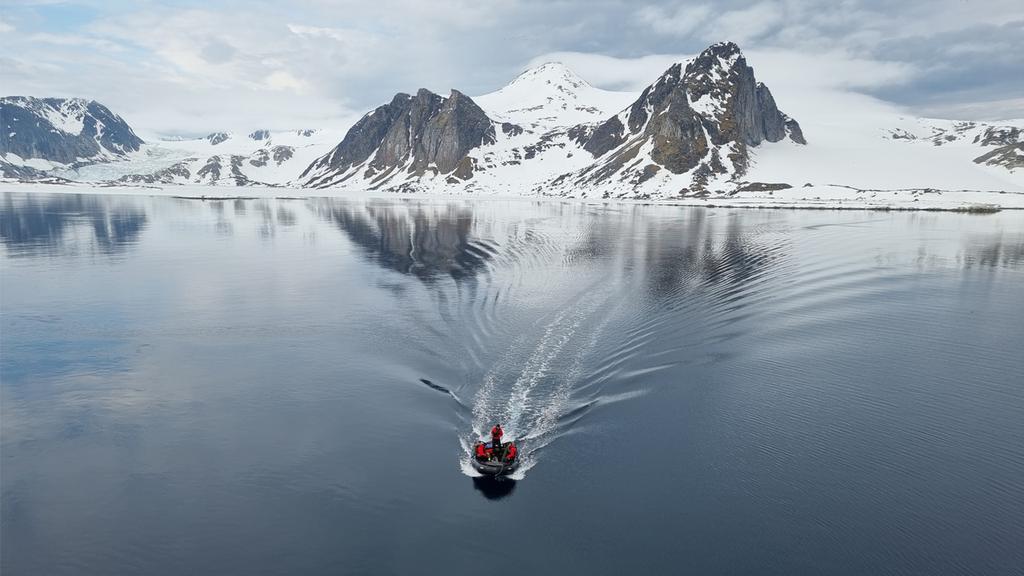
The first surprise is that polar diving is not necessarily about descending beneath a solid sheet of ice.
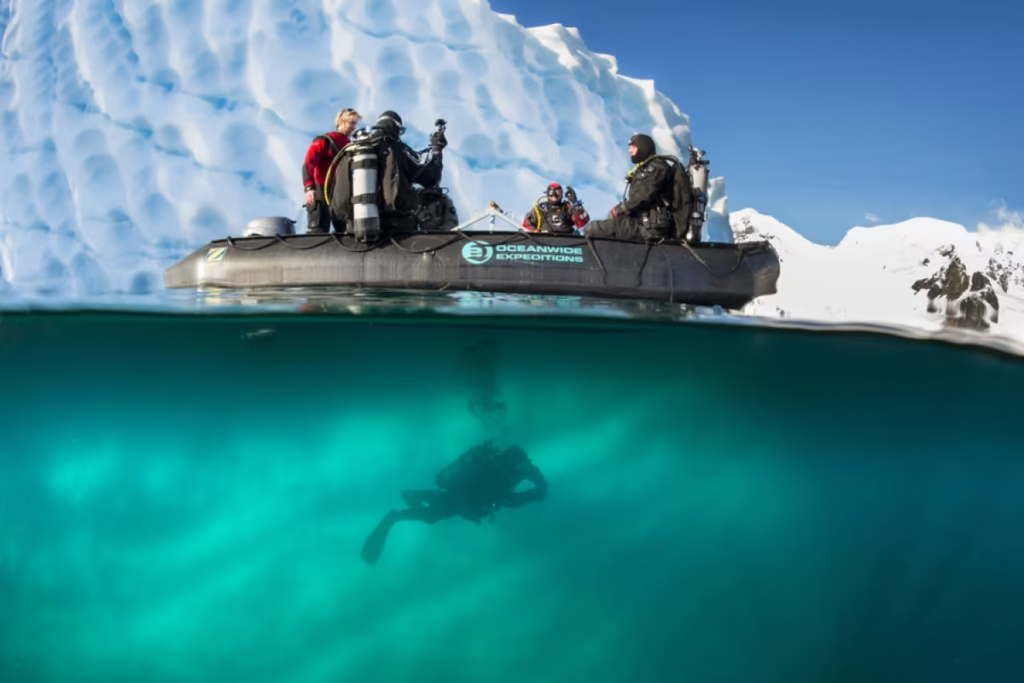
Expedition diving can take place from small boats at selected sites around coastlines, islands, bays and ice formations. Conditions determine where diving is possible, and plans can change quickly as wind, weather and moving ice reshape the environment.
This unpredictability is part of the experience.
Dive leaders interviewed by Oceanwide Expeditions describe polar diving as highly variable, with conditions changing not only between seasons but sometimes from one day to the next. Some dives may take place at established locations, while others explore areas that have seen little or no recreational diving.
Underwater, the scenery can be unlike almost anywhere else.
The submerged portion of an iceberg can reveal sculpted walls, grooves, cavities and blue ice formations hidden beneath the surface. Light filtering through ice can transform the water into shades of blue and turquoise, while suspended ice crystals add another dimension to the landscape.
Yet the ice is only part of the attraction.
A Different Kind of Marine Life
Divers accustomed to tropical reefs should not expect a polar version of the Red Sea or Coral Triangle.
The appeal is different.
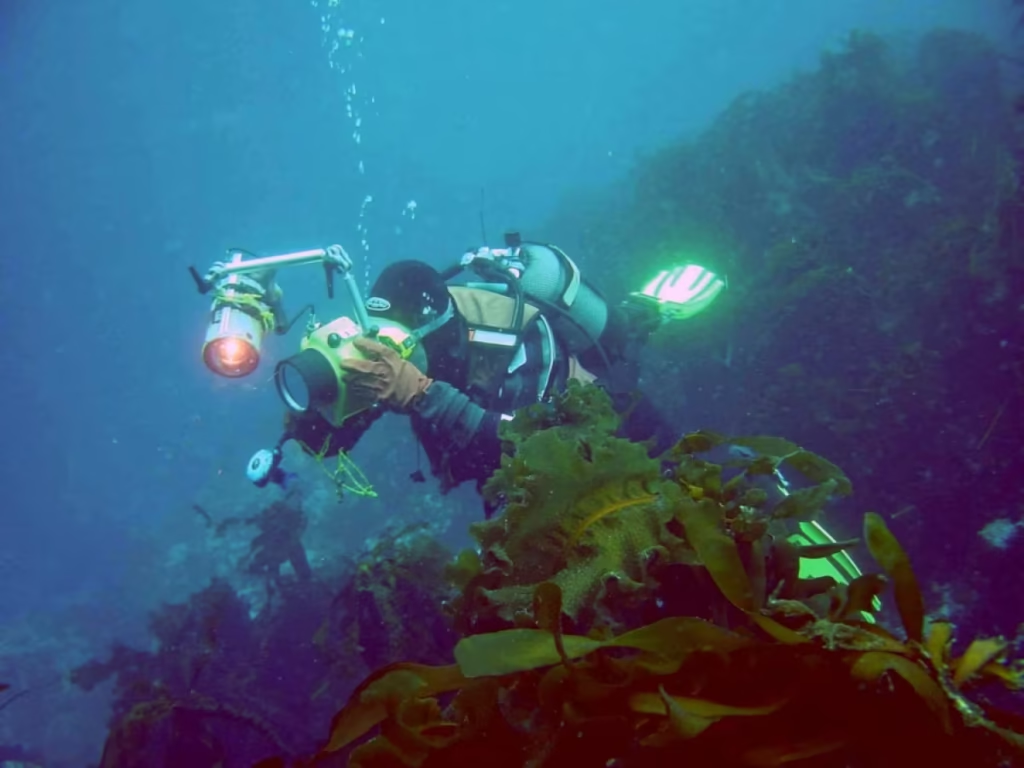
Cold water ecosystems can support marine life including sea stars, anemones, sponges, crustaceans and other benthic organisms, while encounters with larger animals depend heavily on location, season and circumstances.
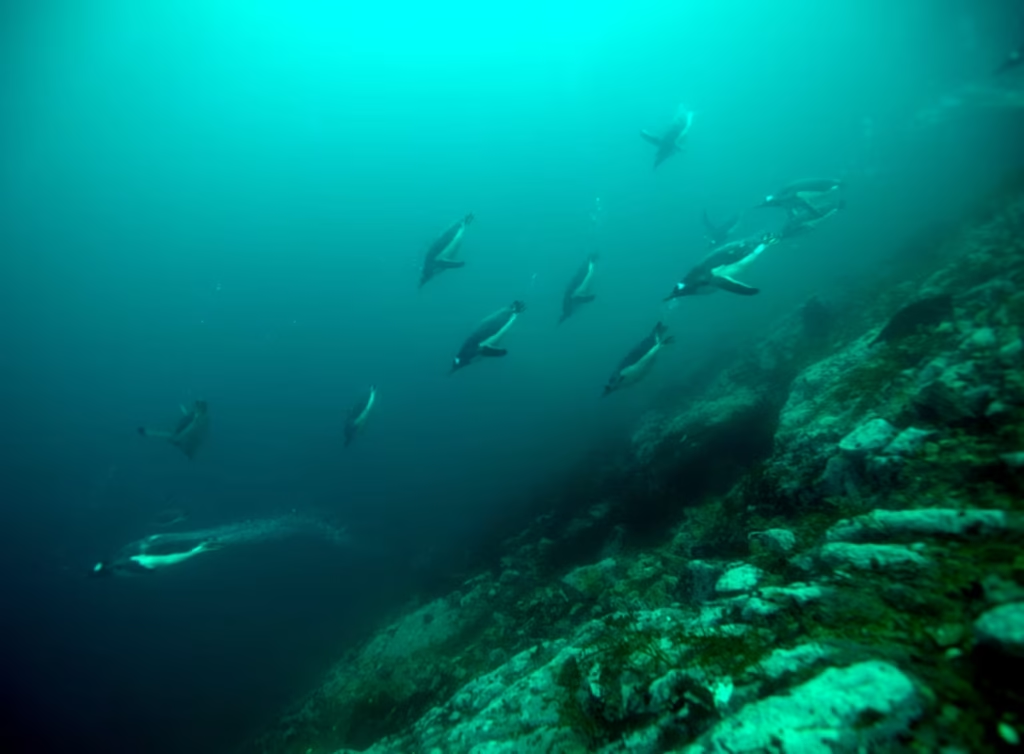
Above water, the expedition may be equally important as the diving itself. Depending on the region, travelers can encounter penguins, seabirds, seals and whales while moving between dive sites and landing areas.
Wildlife encounters underwater, however, should never be treated as guaranteed. In polar environments particularly, conditions and animal movements determine what a diver actually sees.
That uncertainty is part of what separates expedition diving from a conventional dive holiday.
Antarctica or the Arctic?
Although they are often grouped together under the label of polar diving, the Arctic and Antarctica are very different destinations.
Antarctica is a continent surrounded by ocean. Expedition routes commonly explore areas such as the Antarctic Peninsula and nearby islands, with enormous ice formations and wildlife dominating the landscape.
The Arctic, by contrast, is an ocean surrounded by continents and islands. Diving expeditions can operate in areas including Greenland and Svalbard, creating a very different combination of geology, wildlife, human history and ice.
Neither should be considered simply a colder version of the other.
For traveling divers, choosing between them may have as much to do with the overall expedition as with what happens underwater.
This Is Not a Beginner Dive Trip
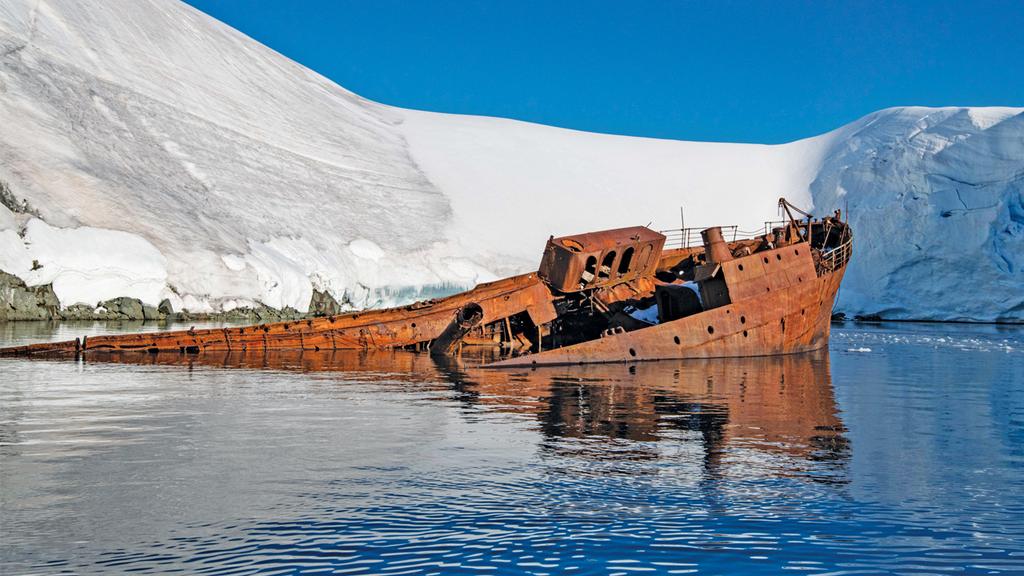
The spectacular photographs can make polar diving look deceptively accessible.
It is not.
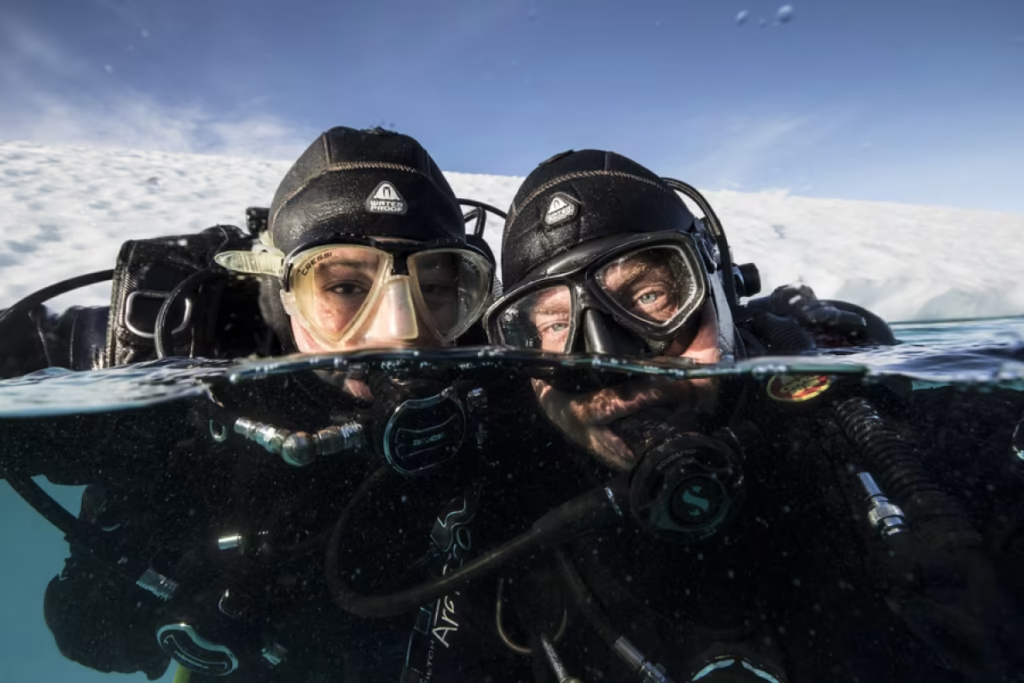
Cold water affects divers, equipment and dive planning. Drysuit skills become essential, thermal protection becomes part of the safety system rather than simply a matter of comfort, and equipment problems that might be manageable in warmer conditions can become significantly more serious in a remote polar environment.
Regulators also have to perform in extremely cold water, where freezing and free flow are potential concerns.
Operators therefore establish experience requirements for participation. Oceanwide Expeditions, for example, currently requires participants in its polar diving program to have an internationally recognized diving certification and at least 30 logged cold water drysuit dives.
That figure is an operator requirement rather than a universal qualification for polar diving, so divers should check the specific standards of whichever expedition company they intend to travel with.
Equipment familiarity is equally important. Oceanwide advises divers not to arrive with unfamiliar equipment and recommends completing several dives with new equipment before a polar expedition.
A remote polar expedition is not the place to discover that a new drysuit configuration, regulator setup or weighting system does not work as expected.
The Drysuit Is Only the Beginning
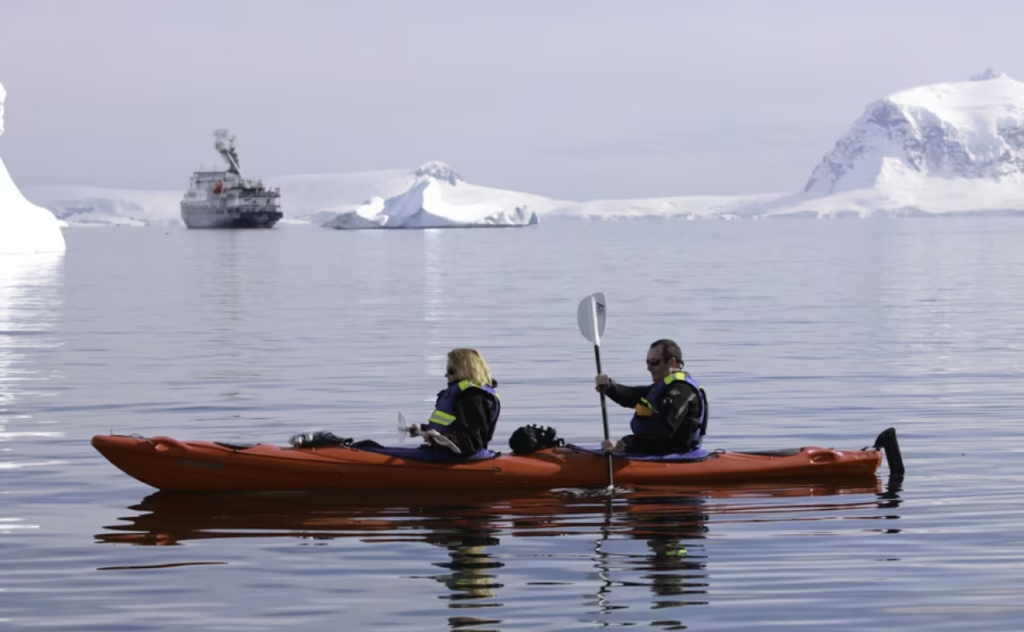
Preparing for polar diving involves more than buying warmer equipment.
Divers need to be comfortable managing a drysuit, maintaining buoyancy while heavily insulated and working with gloves that reduce dexterity. Equipment configuration should remain familiar and manageable even when the diver is cold.
Redundancy and spare equipment also become more important when the nearest dive shop may be thousands of kilometres away.
Oceanwide advises participating divers to bring spare parts for regulators and drysuits and notes that divers may need to carry their own equipment between the expedition ship and the smaller boats used for diving.
Physical preparation therefore matters as well.
This is expedition travel with diving attached to it, not necessarily a conventional liveaboard where cylinders wait beside a spacious dive deck and every dive follows a predictable schedule.
The Dive Plan Belongs to the Environment
Perhaps the biggest adjustment for experienced recreational divers is accepting that the itinerary is never entirely in their control.
Ice moves.
Weather changes.
Wind can arrive quickly.
A site that looks suitable in the morning may no longer be appropriate later in the day.
Polar expedition itineraries are therefore inherently flexible. Oceanwide states that its Arctic and Antarctic programs can change according to ice, weather, wildlife, site availability and environmental regulations, with operational decisions made by the expedition leader and captain.
For divers accustomed to planning a holiday around specific wrecks or reefs, this requires a different mindset.
The objective is not necessarily to dive a particular site.
The objective is to dive safely wherever the polar environment allows.
Remoteness Changes the Meaning of Safety
One of the defining characteristics of polar diving is not temperature but isolation.
Antarctica in particular demands a level of self sufficiency that travelers may not experience at established diving destinations.
The International Association of Antarctica Tour Operators advises visitors to recognize that Antarctica is an unpredictable and potentially dangerous environment and specifically warns visitors not to expect a conventional rescue service. It emphasizes planning, suitable equipment and trained personnel as fundamental ways of reducing risk.
For divers, this makes operator selection particularly important.
Experience in ordinary dive tourism is not automatically the same as experience running diving operations around ice, rapidly changing weather and remote expedition vessels.
Divers considering such a trip should look carefully at the operator’s experience, dive leadership, emergency procedures, equipment requirements and cancellation policies before booking.
Protecting the Places Divers Travel So Far to See
Polar tourism also carries environmental responsibilities.
Antarctica remains one of the world’s most unusual wilderness environments, and visitors operate under specific rules intended to minimize disturbance.
IAATO’s visitor guidance includes keeping a safe distance from wildlife, following expedition leaders’ instructions, avoiding disturbance or pollution of lakes and streams, and leaving biological, geological and historical material untouched.
For divers, responsible travel should extend underwater as well.
Excellent buoyancy control, careful finning, controlled entries and exits and respect for wildlife become particularly important when entering environments that receive relatively few human visitors.
The privilege of reaching somewhere remote does not give a diver greater freedom to disturb it. It creates a greater responsibility to leave as little evidence of the visit as possible.
More Expedition Than Dive Holiday
This may ultimately be the best way to understand polar diving.
You are not simply traveling somewhere cold to scuba dive.
You are joining an expedition in which diving is one part of a much larger experience.
There may be Zodiac journeys through ice, wildlife encounters from the ship, shore landings and long periods watching landscapes that seem almost untouched by human activity. Diving adds another perspective by revealing the part of that landscape most travelers never see.
It also means accepting uncertainty.
A planned dive may be moved.
Another may be cancelled.
Visibility may change.
Wildlife may appear, or it may not.
Conditions always have the final word.
Is Polar Diving Worth It?
For the right diver, probably few destinations can offer the same combination of exploration, isolation and underwater scenery.
But polar diving should not be treated as the next automatic step after earning an advanced certification.
It makes more sense as a goal toward which a diver deliberately builds experience.
Become genuinely comfortable in a drysuit. Dive regularly in cold water. Learn how your regulators and exposure protection behave in demanding conditions. Develop strong buoyancy control. Become comfortable managing problems while wearing thick gloves and heavy thermal protection.
Then choose an experienced polar operator and prepare for an expedition rather than simply another diving holiday.
Warm water diving often draws us underwater with colour and abundance.
Polar diving offers something very different: ice, silence, uncertainty and the opportunity to descend into an environment that still feels genuinely remote.
For divers who have spent years exploring the warmer parts of the planet, that may be precisely the reason to go.
Source: Ocean Wide Expeditions

Mohsen Nabil is the Founder and Editor-in-Chief of Diventures Magazine. A mechanical engineer and scuba diving instructor based in the Red Sea, he writes about diving safety, marine conservation, underwater exploration, and developments in the global dive industry. Through Diventures Magazine, he works to connect divers, scientists, and ocean advocates while promoting responsible diving and protection of the oceans.