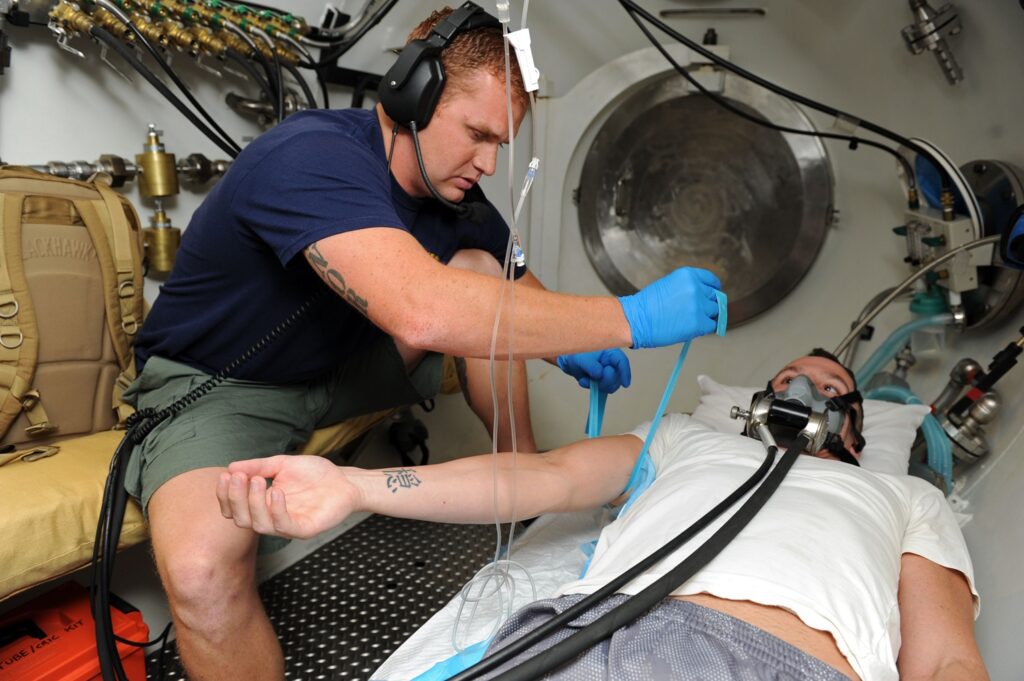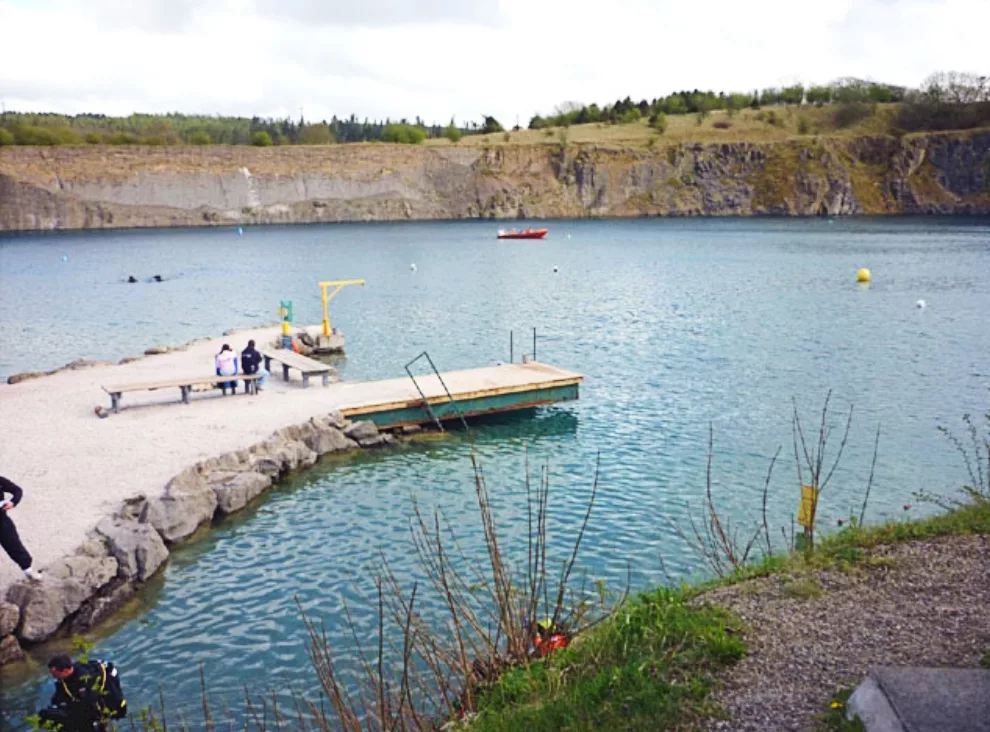



For many divers, nothing feels better after a long day on the boat than sinking into a hot tub or standing under a hot shower. But according to the Divers Alert Network (DAN), that instinct to warm up immediately after diving can work against a diver’s safety rather than for it. DAN’s health and medicine team, in guidance authored by Neal W. Pollock, Ph.D., explains that jumping into heat right after surfacing can actively increase the risk of decompression sickness (DCS), depending on how much inert gas a diver is still carrying in their tissues.
The Body’s Temperature Balancing Act
The human body works constantly to stay in a state of internal balance known as homeostasis, and temperature regulation, or thermoregulation, is a central part of that process. DAN explains that when the body is exposed to cold, blood vessels near the skin’s surface constrict in a process called vasoconstriction. This reduces blood flow to the extremities and effectively turns the outer layers of the body into a protective shell that shields the core temperature. In more extreme cold, the body may begin shivering, a response that can raise the metabolic rate several times above resting levels in order to generate heat.
Heat exposure triggers the opposite reaction. Blood vessels near the skin dilate, a process called vasodilation, increasing blood flow to the body’s outer layers. According to DAN, this warmer “shell” allows the body to lose heat more efficiently through radiation when the surrounding air is cooler than the skin, and through evaporation of sweat when conditions allow. In water, evaporation cannot occur, so heat is instead lost primarily through direct contact with the surrounding water and through convection as warmer water is continually replaced by cooler water.
How Temperature Affects Inert Gas in the Body
This is where thermoregulation intersects directly with dive physiology. DAN notes that vasodilation in peripheral tissues during the descent and bottom phases of a dive increases blood flow, which in turn increases the uptake of inert gas, primarily nitrogen, into those tissues. Conversely, vasoconstriction during these same phases reduces how much gas the body absorbs.
The relationship flips during ascent. Peripheral cooling during the ascent and any safety or decompression stops impairs the body’s ability to eliminate absorbed inert gas. A small degree of warming during ascent can actually help the body offgas more efficiently, but DAN is clear that this benefit only applies when the warming is mild and gradual, such as when a diver crosses a thermocline into naturally warmer surface water.
Rapid warming is a different story entirely. Whether it comes from an electrically heated dive suit turned up too quickly during ascent, or from a hot tub or hot shower taken immediately after surfacing, fast warming can trigger bubble formation in the tissues before the body’s circulation has had a chance to clear the excess gas.
The Science Behind Bubble Formation
The underlying mechanism comes down to basic gas solubility. As tissue temperature rises, the solubility of dissolved gas in that tissue decreases. If a diver’s tissues are still carrying a substantial inert gas load and are then rapidly warmed, that gas can come out of solution and form bubbles faster than the bloodstream can carry them away. DAN states that the most likely result is cutaneous, or skin, decompression sickness, sometimes called “skin bends,” though more serious symptoms affecting other body systems can also develop depending on the severity of the gas load and the bubble formation involved.
A Blind Spot in Dive Computers
One point DAN emphasizes is a gap in current dive technology. Dive computers routinely track water temperature, but none of them measure a diver’s actual thermal status, which can vary enormously depending on exposure protection, exertion level, and individual physiology. Even in cases where thermal status could theoretically be estimated, DAN notes that no decompression algorithm currently on the market meaningfully incorporates thermal data into its decompression calculations. In practical terms, this means a diver’s computer has no way of knowing whether a hot tub thirty minutes after a dive is a comfort or a hazard, and it will not warn them either way.
What This Means for Post-Dive Behavior
DAN frames this as a matter of diver responsibility rather than equipment limitation. Divers who actively warm themselves during a dive increase their inert gas uptake, while divers who stay cold through the end of a dive tend to trap inert gas in their tissues rather than efficiently offgassing it. Either way, stepping straight into a hot tub or hot shower immediately after surfacing raises decompression stress, and if the gas load is significant, it raises the risk of decompression sickness along with it.
DAN’s advice, while not always what divers want to hear, is straightforward: delay the heat. There are plenty of practical ways to fill that waiting period, from eating a meal to rinsing and stowing gear to logging the dive. Giving the body time to offgas, particularly while it is still cool and offgassing more slowly, meaningfully reduces risk. The more demanding the dive profile and the greater the decompression stress involved, the longer that delay should be.
DAN’s Recommendations
DAN lays out three practical guidelines for divers weighing a post-dive soak:
First, delay the hot tub or hot shower for as long as reasonably possible, especially after dives involving significant inert gas loads. DAN suggests treating the waiting period like a surface interval, with the hot tub or shower effectively treated as the next “dive” in sequence.
Second, divers who are unwilling or unable to wait should compensate by diving more conservatively in the first place, reducing their gas loading so there is less risk to manage afterward.
Third, for divers who cannot wait at all, DAN recommends opting for a lukewarm shower rather than a hot one, since a smaller temperature differential means a gentler, less risky warming process.
The underlying message from DAN is simple: comfort and safety are not always aligned in the minutes after a dive, and understanding why can help divers make smarter choices about when to finally enjoy that hot tub.
Source: Divers Alert Network (DAN), guidance authored by Neal W. Pollock, Ph.D.

Mohsen Nabil is the Founder and Editor-in-Chief of Diventures Magazine. A mechanical engineer and scuba diving instructor based in the Red Sea, he writes about diving safety, marine conservation, underwater exploration, and developments in the global dive industry. Through Diventures Magazine, he works to connect divers, scientists, and ocean advocates while promoting responsible diving and protection of the oceans.