

Tips for Freediving With Sharks for More Safer Encounters
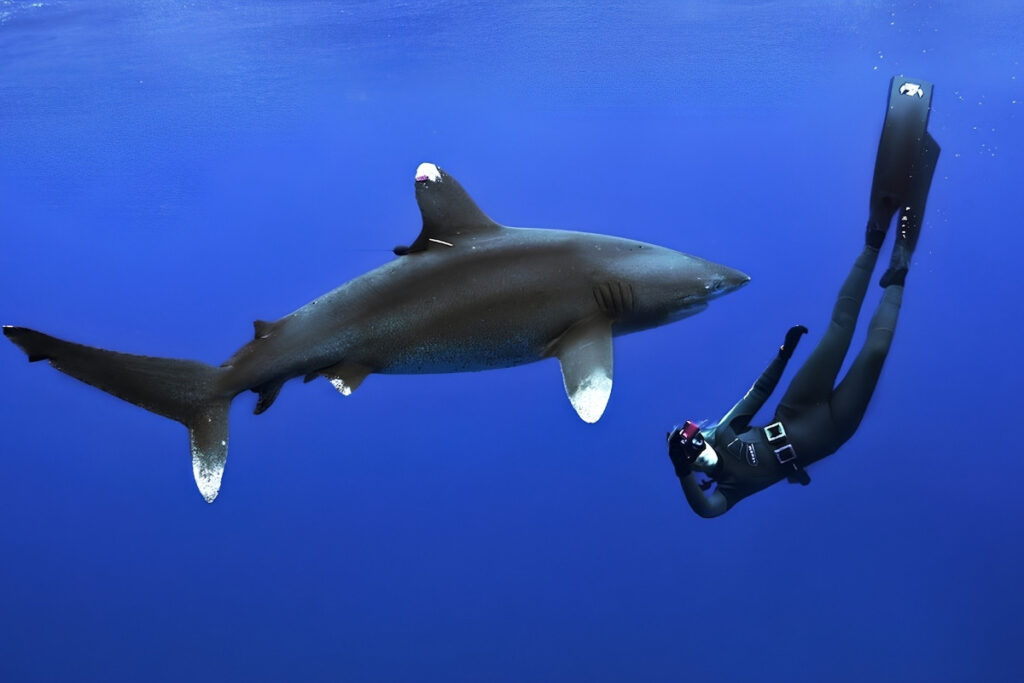
Few underwater experiences compare with seeing a shark while freediving. Without bubbles, heavy equipment or the sound of a regulator, a freediver can move quietly through the water and observe sharks in a remarkably natural setting.
That simplicity, however, should not be confused with a lack of risk.
Freediving with sharks combines two activities that demand awareness. One involves breath hold diving, with risks such as loss of motor control and blackout. The other involves entering the environment of a wild predator whose behavior can vary according to species, location and circumstances.
The objective should never be to prove how close you can get. A successful encounter is one in which both the freediver and the shark are able to behave naturally and leave the interaction without unnecessary disturbance.
Here are some principles to consider before getting into the water.
1. Become a Competent Freediver First
A shark encounter is not the place to learn basic freediving skills.
Before intentionally freediving with sharks, you should already be comfortable with breath hold diving, equalization, buoyancy, finning, surface recovery and rescue procedures.
Divers Alert Network emphasizes two fundamental freediving safety principles: never freedive alone and avoid hyperventilation before a dive. A capable buddy must actively supervise the diver rather than simply remain somewhere nearby.
The presence of sharks does not change these fundamentals.
In fact, the excitement of an encounter can make them easier to forget.
2. Learn About the Sharks Before Entering the Water
There is no single set of instructions that applies equally to every shark encounter.
A whale shark encounter is very different from observing reef sharks, hammerheads, tiger sharks or oceanic whitetips. Local conditions also matter. Visibility, current, depth, bait, nearby fishing activity and the number of people in the water can all change the situation.
Before entering the water, learn which species you are likely to encounter and listen carefully to experienced local guides.
SHARKPROJECT specifically recommends discussing the local species, conditions, approach and emergency procedures before diving with sharks.
Knowing what normal behavior looks like can also help you recognize when the situation is changing.
3. Choose the Operator Carefully
If the encounter is organized, choosing the right operator may be one of your most important decisions.
Look for an operation that provides a detailed briefing, limits inappropriate interactions and explains exactly what divers should do if sharks approach closely.
A responsible operator should place the welfare of the animals alongside guest safety.
The Shark Trust recommends researching operators in advance, following the guide’s instructions and choosing businesses that demonstrate concern for both sharks and divers. Save Our Seas Foundation similarly advises looking for operators with clear codes of conduct, relevant accreditation and a strong conservation or education component.
If the briefing seems focused entirely on getting spectacular photographs rather than controlling the interaction, reconsider the dive.
4. Observe Before You Dive Down
When sharks appear, the natural reaction may be to take a large breath and immediately descend toward them.
Waiting can produce a better encounter.
Spend some time at the surface observing where the sharks are swimming, whether they are repeatedly following a particular route and how they respond to other people in the water.
This approach is also recommended in PADI guidance specifically addressing freediving with sharks. Observing first allows divers to better understand the movement of the animals rather than constantly chasing them.
Sometimes the best strategy is simply to wait.
Let the shark come closer on its own terms.
5. Move Calmly and Efficiently
Good freediving technique becomes particularly valuable around wildlife.
Use controlled fin kicks and avoid unnecessary splashing, frantic swimming or sudden changes in direction.
SHARKPROJECT advises swimmers and freedivers to remain calm, minimize noisy surface finning and avoid hurried movements when sharks are present.
Smooth movement also conserves oxygen, giving you more reserve for the ascent and surface recovery.
You are not trying to imitate a shark.
You are simply trying to remain a predictable presence in the water.
6. Keep the Shark in View
Situational awareness matters.
Whenever practical, maintain visual awareness of sharks around you rather than becoming fixated on one animal.
This becomes especially important when several sharks are present.
SHARKPROJECT recommends maintaining visual contact and remaining aware of the three dimensional environment around the diver.
That does not mean aggressively confronting a shark or continually swimming toward it. It means knowing where the animals are and avoiding being surprised because your attention was elsewhere.
7. Never Chase a Shark
If the shark moves away, let it go.
Chasing usually produces exactly the opposite result from what the freediver wants. It can disturb the animal and may end the encounter altogether.
The Shark Trust advises divers not to touch, chase or harass sharks and rays. PADI wildlife interaction guidance similarly recommends allowing marine animals to control the encounter rather than pursuing them.
Patience often produces better wildlife encounters than pursuit.
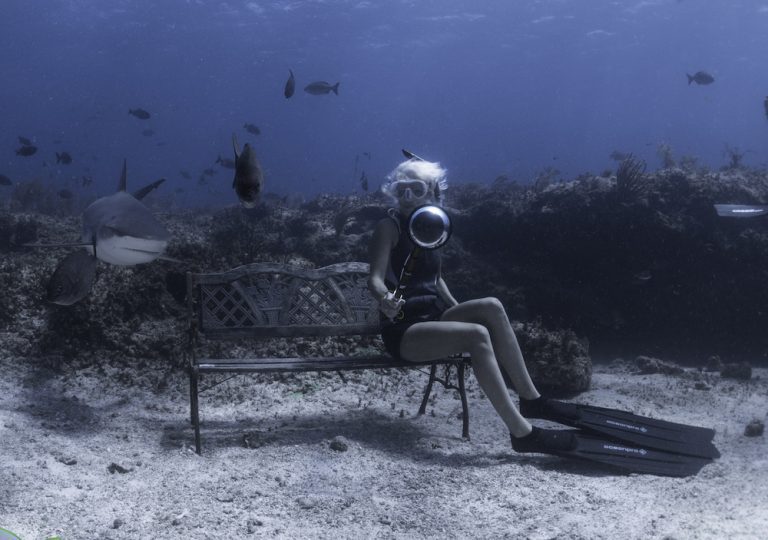
8. Do Not Touch, Ride or Block the Shark
Social media has created plenty of images showing divers touching sharks.
That should not be your objective.
Wild sharks are not props.
Avoid touching them, holding their fins, riding them, deliberately blocking their direction of travel or positioning yourself solely to force a close photograph.
Responsible shark diving guidance consistently recommends allowing the shark to determine the distance and direction of the encounter.
The principle is simple: observe rather than manipulate.
9. Your Buddy Still Comes Before the Shark
A beautiful shark appearing below you can make it surprisingly easy to forget where your buddy is.
Do not.
Freediving safety does not stop because wildlife appears.
Your buddy should know when you are descending, observe your dive and remain capable of assisting you during the ascent and recovery.
DAN stresses that a freediving buddy must be close enough and sufficiently trained to intervene if the diver experiences a problem.
If both divers simultaneously disappear underwater after the same shark, there is effectively nobody providing safety.
10. Do Not Extend Your Breath Hold for the Encounter
The shark is still there.
Your oxygen is not.
One of the easiest mistakes during an exciting wildlife encounter is remaining underwater longer than planned because the shark suddenly approaches at the end of the dive.
Do not sacrifice your normal safety margin for another photograph or another few seconds beside the animal.
Begin your ascent according to your normal conservative limits.
No shark encounter is worth turning a routine breath hold dive into an emergency.
11. Be Especially Cautious Around Bait
Not every shark tourism operation uses bait, and practices vary considerably around the world.
Where bait or chum is involved, the encounter requires additional consideration.
The Shark Trust notes that shark feeding dives remain controversial and recommends strict management of feeding practices, including avoiding hand feeding and minimizing actions that could encourage sharks to associate divers with food. SHARKPROJECT also advises that baited encounters can involve increased risk, particularly with large or pelagic species.
If you choose a baited shark experience, understand exactly how the operation works before entering the water.
Follow the operator’s positioning instructions closely and never improvise around food or bait.
12. Do Not Let the Camera Take Over
Photographers are particularly vulnerable to tunnel vision.
You descend, see the shark approaching, frame the image and suddenly everything outside the viewfinder disappears.
That can mean losing track of another shark, your buddy, the boat, your depth or your remaining breath hold time.
SHARKPROJECT specifically warns divers not to lose situational awareness while taking photographs or video.
Get the photograph only when the situation allows it.
Sometimes simply watching the shark is the better choice.
Know When to Leave the Water
There is no requirement to complete a shark encounter once you have entered the water.
Conditions change.
Visibility may deteriorate. The current may increase. More sharks may arrive. Boat traffic can become a concern. You may become tired, cold, anxious or distracted.
DAN recommends assessing factors including current, sea conditions, visibility and marine life hazards when planning freediving sessions.
If you no longer feel comfortable with the situation, end the dive.
Leaving the water is a safety decision, not a failure.
Respect Creates Better Encounters
Freediving can offer an extraordinary way to experience sharks because it allows humans to enter their environment with relatively little equipment and noise.
But getting closer should never become the purpose of the dive.
The best shark encounters often happen when the freediver stops pursuing the animal and simply becomes part of the surrounding water.
Watch.
Remain calm.
Stay with your buddy.
Give the shark space.
And remember that you are visiting the shark’s environment, not the other way around.
When approached with good freediving technique, careful preparation and respect for wildlife, an encounter with a shark can become far more than an adrenaline experience. It can provide an opportunity to observe one of the ocean’s most remarkable animals behaving as a wild animal should.
Sources: DAN, The Shark Trust, Shark Project

Mohsen Nabil is the Founder and Editor-in-Chief of Diventures Magazine. A mechanical engineer and scuba diving instructor based in the Red Sea, he writes about diving safety, marine conservation, underwater exploration, and developments in the global dive industry. Through Diventures Magazine, he works to connect divers, scientists, and ocean advocates while promoting responsible diving and protection of the oceans.