


Today I am posting something that crosses things I have been involved with. My 3+ decades in the dive industry as an Instructor, Instructor Trainer and Course Director and my 15 years of advocacy for veterans who suffer from Operational Stress Injuries (OSI) from their service.
In diving, thanks to Gareth Lock Msc and his superb work on human factors and also the work of Dr Laura Walton on the psychological aspects diving and trauma responses, the conversation long overdue is occurring. However, in both diving and among veterans there is an aspect that is not as well discussed and deserves to be brought into the conversation. It is gaining traction in the veteran’s mental health realm but to my knowledge has not been discussed in diving. Today, I am going to introduce it.
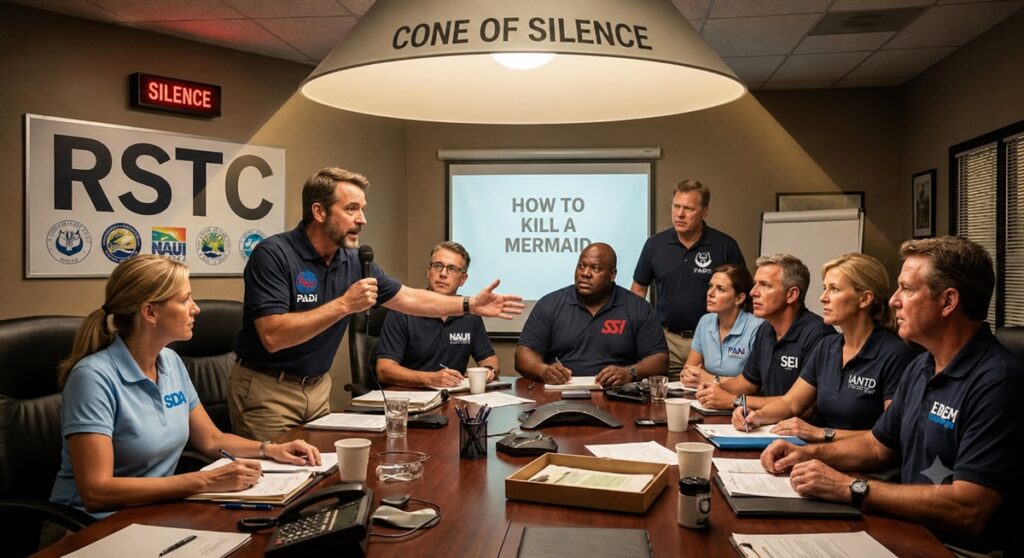
I want to be clear and honest up front. Over the last couple months I have been struggling with “what more could I have done?” and “if I could have made my arguments better, would things have been different?” in reflection on the current state of dive safety and my personal participation as a high level instructor in the dive industry. Maybe that sounds a bit ego driven, heck, maybe it is. But the truth is that I have been an agency regional rep, board member of NAUI, on training committee, a board member of the RSTC, a member of International Training’s TAP (Training advisory Panel) and have been in a position to be able to bend ears at the very top level of the training agencies by calling their cell phones, and they answer, even if often with a groan. Yeah, I feel like I didn’t do enough, I have some regrets over things I didn’t manage, bitter sweet reflection on some good things happening now that I feel I did plant a seed years ago and instead of being happy to watch them grow, just sad at how long it took and what the human cost has been in that time. It occurred to me the other day driving back from a week of diving and some mentoring that in fact, I was experiencing a moral injury from the dive industry.
So, what the hell is a moral injury and how?
In high-consequence environments, military operations, emergency medicine, and critical aviation, the psychological toll on operators has long been studied through two distinct lenses: physical danger and moral conflict. For decades, most of the work was focused almost exclusively on physical danger and post-traumatic stress following severe incidents. Moral injury was like a submarine lurking under the surface and not as well studied or understood. Trauma responses seemed to “feel” right because it is a direct response to trauma. But what when a system creates a moral injury that impacts those removed from the immediate trauma? In many ways there is a far more insidious wound operating beneath the surface of dive centers, instructors and technical teams across the globe: moral injury.
Unlike Post-Traumatic Stress Disorder (PTSD), which stems from an immediate threat to life and a breach of personal safety, moral injury occurs when an individual witnesses, perpetrates, or fails to prevent actions that violate their deeply held ethical framework and professional duty of care. In an industry built on agency protocols, trust, and shared risk, moral injury is quietly destroying careers, degrading culture, and leaving instructors, shops, centres and technical team members isolated in the wake of preventable tragedies.
So, let’s talk about what a moral injury is, and how it is different from PTSD and trauma responses.
1. Moral Injury vs. PTSD
To address the issue, we must first establish precise terminology. Full disclosure, not a head doc, just someone working adjacent to the issue for a while on the veteran side (I conceived and was a founding executive of the Royal Canadian Legion OSI Special Section.)
For years, dive professionals suffering from emotional exhaustion or leaving the industry after an incident have been mislabeled as experiencing “burnout” or generic stress. In reality, many are carrying profound ethical injuries. (see article graphic for a nice chart)
Now, consider the distinction: A diver who barely escapes an underwater entrapment experiences acute fear and potential PTSD. However, a dive professional who is pressured by a dive shop manager to take twelve inexperienced resort divers into heavy current with faulty rental gear, and subsequently watches one of those divers panic and suffer a fatal event experiences a moral injury.
The trauma stems not from fear for their own life, but from the crushing realization that their professional ethics were compromised for commercial expediency, leading to a catastrophe they saw coming.
2. How the Industry Cultivates Moral Compromise
Moral injury does not happen in a vacuum. It is the natural end product of systemic operational pressures that force dive professionals to choose between their economic livelihood and their duty of care.
The Commercial Pressure Cooker
In many resort destinations and low-margin dive operations, business models rely on high volume and fast turnover. Instructors and divemasters, far too often underpaid, working without formal employment protections, and dependent on tips or per-head commissions face intense institutional pressure:
- Ratios Pushed to the Limit: Enforcing maximum student-to-instructor ratios regardless of environmental conditions, water clarity, or student panic levels. Ratios often become the “you can take” instead of the “in perfect conditions, otherwise reduce ratio’s” they are meant to be
- Rubber-Stamping Certifications: Being implicitly or explicitly told to pass students who haven’t mastered basic survival skills (such as mask clearing or buoyancy control) because “the customer paid for a card and did they do the skill once ok?”
- Deferred Maintenance: Operating with overdue cylinder hydrostatic tests, leaky regulators, or failing compressors because repair budgets are tight.
The Normalization of Deviance
Sociologist Diane Vaughan established in her analysis of organizational accidents, normalization of deviance occurs when dangerous shortcuts are repeated without immediate bad outcomes, gradually becoming the standard operational culture. In diving, this manifests as skipping thorough pre-dive briefs, omitting buddy checks, ignoring gas plan rules, or diving beyond depth/deco limits because “we’ve done it a hundred times and nothing happened.”
The Silence of the Bystander
In diving, especially in technical diving, moral injury frequently takes the form of bystander silence. Experienced divers witness a high-profile figure, instructor, or teammate break protocols, push gas limits recklessly, or bypass safety margins. Fearing social exclusion, conflict, or loss of access to diving groups, they remain silent. When that reckless behavior eventually results in a fatality, the silent witness carries a heavy burden: “I saw the warning signs, and I said nothing.”
3. Institutional Betrayal and the Legacy of Blame
A severe component of moral injury is institutional betrayal—the psychological impact when a governing body, training agency, or employer acts against the well-being of those who depend on it. When a fatality or severe incident occurs in diving, the institutional response is often driven by legal exposure, liability containment, and brand protection:
- The Agency Shield: Training agencies frequently default to legal isolation, focusing entirely on whether paperwork was signed and standards were technically documented on paper, while offering zero psychological or operational support to the traumatized instructor.
- Shop-Level Scapegoating: Dive operations may quickly throw individual staff members under the bus to preserve their local reputation, ignoring the reality that the shop’s own schedules, quotas, and culture created the conditions for failure.
- Community Victim-Blaming: Online dive communities routinely resort to immediate, aggressive victim-blaming or instructor-shaming following an incident. This reflex stems from a psychological defense mechanism: if the community can convince itself that the accident was caused by an “idiot” or a “rogue operator,” they can maintain the comforting illusion that diving is perfectly safe for everyone else.
This sequence leaves the surviving professional completely abandoned. They are left to digest not only the tragedy itself, but the realization that the industry they loved views them as disposable.
4. Reclaiming Identity and Moving Forward
Diving is rarely just a job or a pastime; for most professionals and dedicated technical divers, it is a core identity. When moral injury occurs, it shatters the fundamental narrative of who they are: “I am a guardian of safety.” “We are a professional community that looks out for one another.” “I have been loyal to XYZ agency, they will be loyal to me,” etc.
Rebuilding professional identity after an ethical rupture requires concrete, intentional steps at both the individual and industry levels:
- Call It by Its Real Name: We must stop labeling ethical distress as mere “stress” or “burnout.” Identifying moral injury for what it is allows professionals to process guilt and shame accurately, rather than internalizing systemic failures as personal moral flaws.
- Shift from Bad Apple Theory to Just Culture: The diving industry must adopt exactly what Gareth has been pushing with all the energy of a mouse on meth as his post military service new “mission,” specifically Just Culture and Human Factors. Instead of asking “Who screwed up and how do we punish them?”, organizations must ask “What systemic conditions made this compromise seem reasonable at the time?”
- Establish Psychological Safety and the Right to Stop: Every diver, from open water student to trimix supervisor, must be given genuine, unpunished authority to call a dive or halt an operation if safety or ethics are compromised. Operations must reward staff who speak up, rather than penalize them for lost revenue.
- Active Refusal and Cultural Leadership: For seasoned professionals, recovering from moral injury often means shifting from passive compliance to active cultural leadership. It means drawing unyielding boundaries, refusing to work for toxic or compromised operations, and mentoring younger divers to recognize that standing up for standards is the ultimate mark of diving mastery.
- Having Moral Injury as part of the conversation: The very seed I am planting today, see, we can’t fix it if we don’t even acknowledge or name it. Yeah, doing so means that the agencies, the employers and hell, even I as an “industry elder” are very much part of the problem. We treat new (and often not so new) instructors like disposable and replaceable pawns on the dive industry chessboard.
If we want a safer diving industry, we must protect not only the physical bodies of our divers, but the moral integrity of those who guide them into the water.

Founder, Deep 6 Gear | Training Director, SNSI
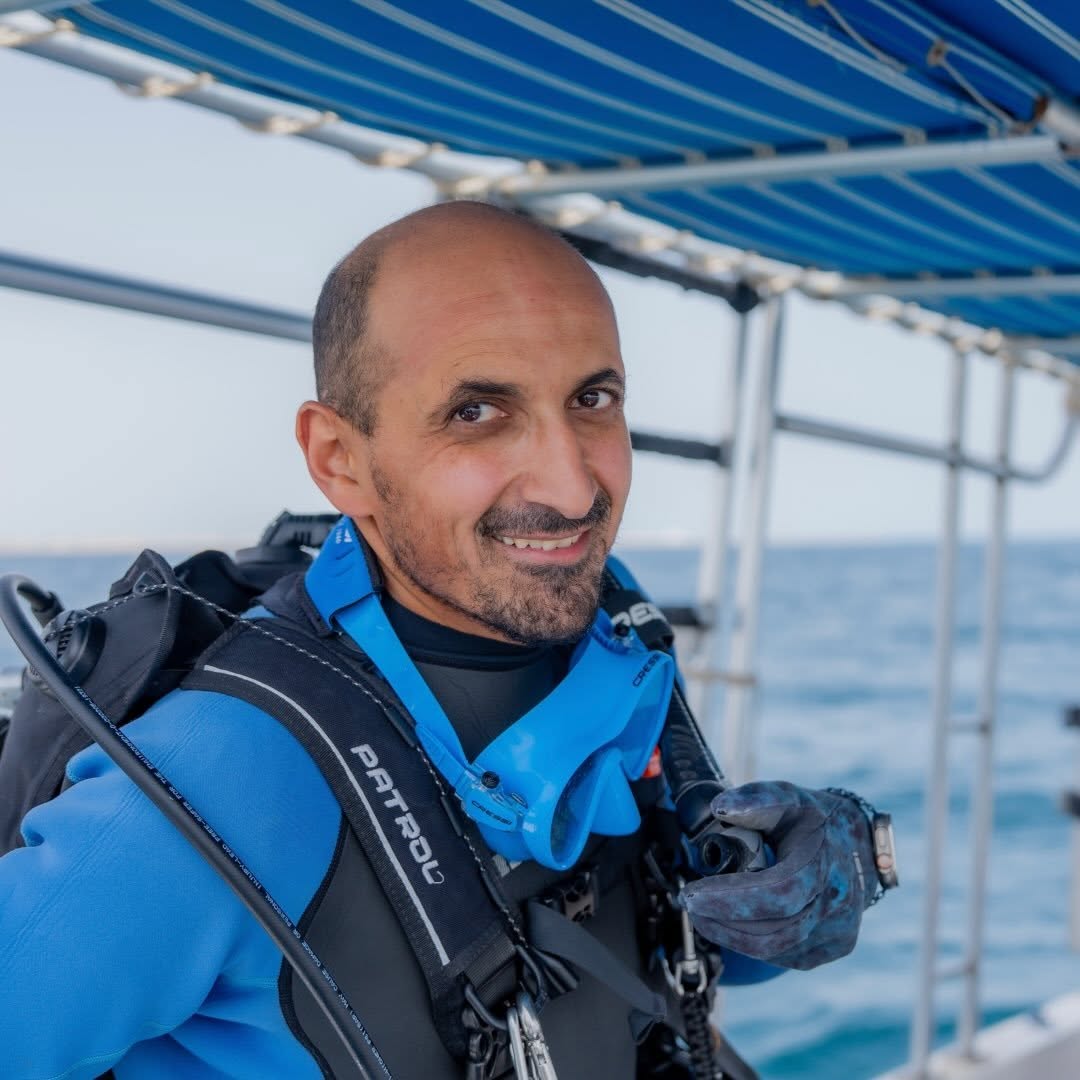
Chris Richardson is a diving industry leader, military veteran, and the founder of Deep 6 Gear. An elite Instructor Trainer and Course Director for SDI, TDI, ERDI, and NAUI, he specializes in technical, cave, and public safety diving. With an MBA and a history of shaping global standards on the NAUI and RSTC boards, Chris currently serves as the US/Canada Training Director for SNSI and is an SSI Platinum Pro 5000 recipient.