

Four Spanish Navy Divers Remain in ICU After Cartagena Hyperbaric Complex Accident
Four Spanish Navy personnel remain in intensive care following an accident during an activity at the Navy Diving Center’s hyperbaric complex in Cartagena, Spain, while four others injured in the incident have now been discharged from hospital.
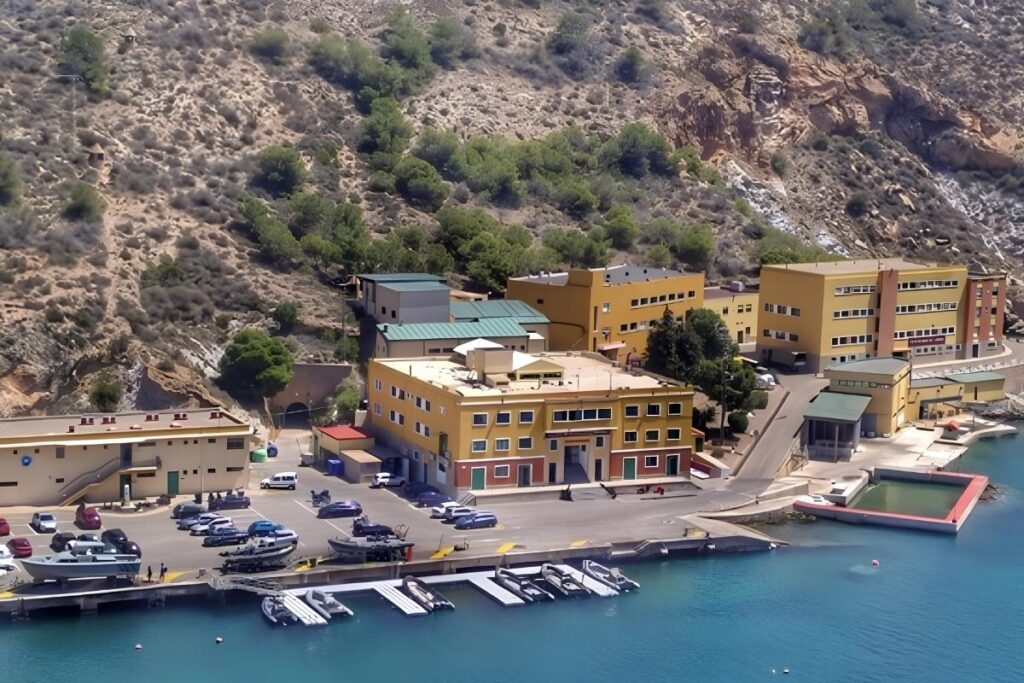
The accident occurred on Wednesday, September 16, at the Spanish Navy Diving Center in La Algameca Naval Station, Cartagena.
Eight members of the Spanish Navy were injured during an activity being carried out in the center’s hyperbaric complex.
According to the Navy’s initial statement, two of the injured had a reserved prognosis, five were being kept under observation with less serious injuries, and one had already been discharged. The Navy immediately opened an investigation to determine what caused the incident.
The condition of several of those affected subsequently required more intensive medical care.
By September 17, four personnel were being treated in intensive care, with three at Santa Lucía Hospital in Cartagena and one at Virgen de la Arrixaca Hospital in Murcia. Four others remained under observation at Santa Lucía.
The latest publicly reported update, issued by the Navy on Friday, September 18, said that four of the eight affected personnel had been discharged from hospital.
Four remained in intensive care. Two continued to have a reserved prognosis, while the other two were being kept in intensive care for closer monitoring and observation. Three were being treated at Santa Lucía Hospital and one at Virgen de la Arrixaca Hospital.
The Navy said it continues to monitor their condition, support their families and investigate the circumstances surrounding the accident.
Cause of the Accident Remains Unconfirmed
The Spanish Navy has not publicly announced the cause of the accident.
Early reports from Spanish media referred to several possible explanations, including a technical problem involving the hyperbaric facility, possible exposure to an unidentified gas, and what some reports described as an “immersion syndrome.”
None of these explanations has been confirmed by the Navy.
Information reported immediately after the incident also varied regarding precisely what activity was being conducted and whether the injured personnel were inside a hyperbaric chamber at the time.
The Navy’s official wording has remained broader, stating that the accident occurred while an activity was being carried out in the hyperbaric complex of the Navy Diving Center.
For this reason, the nature of the injuries and the mechanism that caused them should not yet be considered established.
What Happens During Hyperbaric Exposure?
Although the cause of the Cartagena accident remains unknown, hyperbaric systems expose people to pressure conditions that share important physiological characteristics with diving.
Divers Alert Network describes exposure inside a pressurized chamber as a form of “dry diving.” As pressure inside the chamber increases, occupants experience increased ambient pressure in much the same way that a diver does while descending underwater.
Hyperbaric systems have several purposes. Recompression chambers can be used to treat diving injuries, while decompression chambers can allow commercial, military or scientific divers to complete controlled decompression outside the water.
DAN explains that these systems must control not only pressure but also the internal environment, including breathing gas purity, oxygen levels, communications and temperature.
When professionally designed, maintained and operated by trained personnel, the risks associated with hyperbaric environments can be managed. However, DAN identifies several broad categories of potential hazards associated with pressure vessels for human occupancy.
These include mechanical failures, inappropriate changes in pressure, breathing gas contamination, exposure to inappropriate oxygen levels, and physiological effects caused by changes in ambient pressure. Fire is another major consideration in hyperbaric facilities because elevated oxygen conditions can greatly increase the consequences of ignition.
These are general risks associated with hyperbaric systems and there is currently no evidence establishing that any particular one caused the Cartagena accident.
Pressure Related Injuries Can Have Different Causes
Changes in ambient pressure can also produce different medical conditions, making diagnosis dependent on the circumstances of an individual incident.
According to DAN, decompression illness is associated with a reduction in ambient pressure and includes two principal conditions: decompression sickness and arterial gas embolism.
Decompression sickness occurs when gas bubbles form in body tissues, while arterial gas embolism can occur when gas enters the arterial circulation, potentially obstructing blood flow to important organs.
However, DAN also warns that symptoms following diving or pressure exposure can overlap with many other conditions.
Its diving medicine guidance lists possible alternatives including inner ear and sinus barotrauma, contaminated breathing gas, oxygen toxicity, immersion pulmonary edema, water aspiration and other medical conditions. Determining the actual cause therefore requires a medical differential diagnosis rather than assuming that symptoms following pressure exposure are automatically decompression sickness.
This distinction is particularly important in the Cartagena case because no official diagnosis explaining the injuries has yet been released.
Reports of “Immersion Syndrome”
Several Spanish reports have used the expression “immersion syndrome” when describing the Cartagena incident.
At present, however, the Spanish Navy has not confirmed that diagnosis.
The terminology should therefore be treated cautiously, particularly because “immersion syndrome” can be used differently in general emergency medicine and diving related reporting and does not, by itself, establish what occurred inside a hyperbaric facility.
Similarly, reports suggesting gas exposure or a technical malfunction remain preliminary until investigators determine the sequence of events and the medical findings associated with the injured personnel.
Investigation Continues
The Navy Diving Center is the Spanish Navy’s specialized organization for underwater activities and also performs an important role in diving medicine and hyperbaric operations within the Spanish Armed Forces.
The center has previously used its hyperbaric facilities to treat diving accidents, including cases of decompression illness requiring recompression treatment. The Spanish Navy has documented specialist medical and technical personnel being involved in such treatments.
The investigation into the September 16 accident remains open.
As of the latest publicly available medical update, four of the eight affected personnel had been discharged from hospital, while four remained in intensive care. Two of those patients continued to have a reserved prognosis.
No definitive cause of the accident has been publicly announced.
Sources: Europa Press, Puente de Mando, Democrata

Operations and Marketing Manager at Diventures, holds an advanced diver certification and writes outstanding articles for both the website and digital publications. She contributes to every step of the process with her creativity and organizational skills.