


Ear injuries are the leading cause of health complaints among scuba divers, according to Divers Alert Network (DAN). The most common by far is middle ear barotrauma (MEBT). Most cases are mild, heal spontaneously, and are never reported, though in more serious cases divers seek medical attention. DAN’s data indicates more than half of all divers experience MEBT at least once, compared with only about 4.4 percent who will ever experience decompression sickness.
Divers are also affected by a range of other ear injuries, many of which are preventable. This article covers:
Middle Ear Barotrauma (MEBT)
DAN defines it as fluid and blood accumulating in the middle ear, or rupture of the eardrum, resulting from failed pressure equalization during diving or flying.
How It Happens
Air pressure inside the middle ear space must be equalized with the surrounding environment through the Eustachian tube, which connects the throat to that space. Under normal conditions this happens with little effort, aided by swallowing or yawning.
An obstructed Eustachian tube can prevent equalization, particularly on descent when pressure changes quickly. When pressure in the middle ear falls below the pressure of the surrounding tissue, the resulting imbalance causes tissue swelling, inward bulging of the eardrum, fluid leakage, and bleeding from ruptured vessels. Beyond a certain point, further attempts to equalize become futile, and forcing a Valsalva maneuver at that stage can injure the inner ear rather than solve the problem. Continued descent may eventually rupture the eardrum, which relieves the pain but is an outcome DAN advises avoiding wherever possible.
Colds, allergies, and inflammation, all of which can swell and block the Eustachian tubes, contribute to MEBT, as do poor equalization technique and descending too quickly.
Warning Signs
Divers unable to equalize during descent first notice discomfort or a clogged, stuffed sensation, which can progress to severe pain. Further descent intensifies the pain and is followed by fluid buildup and bleeding in the middle ear. If descent continues, the eardrum may rupture, relieving pain but potentially causing vertigo, hearing loss, and exposure to infection.
What to Do
While diving: Stop descending at the first sign of discomfort and attempt to equalize. Ascend a few feet if needed. If equalization still isn’t achievable, end the dive.
First aid: If fullness persists after a dive, avoid further diving and use a nasal decongestant spray or drops to reduce swelling in the nasal and Eustachian tube mucosa, which can help drain fluid from the middle ear. DAN is explicit that drops should never be placed in the ear itself.
Treatment: Seek a physician evaluation if there is fluid or blood discharge from the ear canal, or if pain and fullness persist beyond a few hours. Vertigo or dizziness, which may indicate inner ear barotrauma, warrants urgent evaluation. Severe vertigo and nausea after diving require emergency care.
Fitness to Dive
A return to diving may be considered once a physician confirms the injury has healed and the Eustachian tube is functioning properly.
How to Avoid It
Avoid diving with congestion or a cold. Descend slowly, and if unable to equalize after a few attempts, end the dive safely rather than risking an injury that could sideline an entire trip.
Tympanic Membrane Rupture (Perforated Eardrum)
DAN defines it as a tear of the eardrum that can occur during scuba diving due to failed middle ear pressure equalization.
Mechanism
The tympanic membrane separates the outer ear from the middle ear space and connects to the chain of small bones (auditory ossicles) inside it, acting as a barrier between the sterile middle ear and the outside environment.
Rupture can be caused by descending without equalizing, a forceful Valsalva maneuver, an explosion, a blow to the ear or head, or acoustic trauma. It is usually painful, and the rupture itself relieves that pressure and pain, sometimes followed by vertigo and some bleeding in the ear canal. Congestion, inadequate training, and excessive descent rates are contributing factors.
Warning Signs
- Ear pain during descent that stops suddenly
- Clear or bloody drainage from the ear
- Hearing loss
- Ringing in the ear (tinnitus)
- Vertigo
- Nausea or vomiting linked to vertigo
What to Do
Most perforations heal spontaneously within a few weeks, though treating nasal and sinus congestion alongside may be necessary. If a tear does not heal on its own, an ENT specialist can apply a paper patch in an office procedure, using a chemical to stimulate tissue growth around the edges of the tear. Larger defects may require outpatient surgery (tympanoplasty), in which a surgeon grafts a small patch of the patient’s own tissue over the hole.
DAN members can request an ENT referral by emailing Me***@*AN.org or calling the DAN Medical Information Line at +1 (919) 684-2948.
Fitness to Dive
If a physician confirms solid healing with no evidence of Eustachian tube problems, return to diving is possible within several months. Chronic, non healing perforations are a contraindication to diving.
How to Avoid It
Avoid diving with congestion. Maintain a comfortable descent rate and equalize as needed.
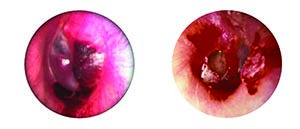
The O’Neill Grading System
DAN uses the O’Neill grading system to classify the severity of middle ear barotrauma in a simplified, consistent way that helps direct treatment.
Grade 0, Eustachian Tube Dysfunction: Baseline anatomical appearance with symptoms but no visible trauma.
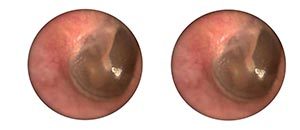
Grade 1, Barotrauma: Increased redness compared to baseline, with fluid or air trapping visible in the middle ear space.
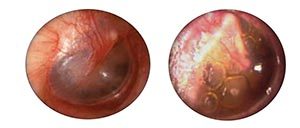
Grade 2, Barotrauma: Any bleeding within the tympanic membrane or middle ear space, or perforation.
Inner Ear Barotrauma
DAN defines it as damage to the inner ear caused by pressure differences from incomplete or forceful equalization, with or without a leak of inner ear fluid.
How It Happens
When middle ear pressure is properly equalized, the risk to the inner ear is extremely low. If it isn’t equalized during descent, pressure transfers inward through the middle ear ossicles to the oval window, causing the round window to bulge outward; this pressure alone can damage sensitive inner ear structures. If the pressure is excessive, the oval window, or more commonly the round window, can tear, allowing inner ear fluid (perilymph) to leak into the middle ear, a condition known as perilymph fistula.
A forceful Valsalva maneuver raises pressure in the head and circulation, which can transmit to the cochlear fluid and push the round window outward even without a direct middle ear imbalance. If a tear occurs and the fluid loss isn’t stopped through spontaneous healing or surgery, permanent hearing loss can result.
Warning Signs
- Severe vertigo
- Hearing loss, often affecting higher frequencies first and sometimes not noticed for hours
- Tinnitus
- Involuntary eye movement (nystagmus)
- Fullness in the affected ear
Symptoms of middle ear barotrauma are almost always present alongside these, and vertigo is usually severe, with nausea and vomiting.
What to Do
If vertigo occurs underwater, abort the dive and get assistance reaching the surface safely. Begin surface oxygen if decompression illness is also suspected, and have a first aid provider conduct a full neurological exam.
Inner Ear Barotrauma or Inner Ear DCS?
Distinguishing between the two matters because treatment differs sharply. DCS is normally treated with recompression in a hyperbaric chamber, but recompression is contraindicated when inner ear barotrauma is suspected. DAN notes that barotrauma tends to follow a failed equalization early in a dive, while DCS follows a failed decompression near the end of one.
Definitive Treatment
Seek urgent evaluation to rule out DCS. If a physician determines it isn’t DCS, consult an ENT experienced with divers (DAN members: Me***@*AN.org or +1 919 684 2948). Avoid exertion, equalizing, altitude or diving exposure, and sneezing or nose blowing. Avoid aspirin, niacin, other vasodilators, and anticoagulants. Conservative treatment includes bed rest in a sitting position. Surgery may be needed if symptoms don’t improve, though the tear usually heals within one to two weeks; hearing loss can still become permanent.
Fitness to Dive
This requires evaluation by an expert diving physician, weighing the degree of permanent damage against the likelihood of repeat injury.
Prognosis
Many cases heal spontaneously. If a fistula doesn’t heal on its own, surgery may be recommended. In some cases the inner ear sustains permanent damage; the body can adapt to one side functioning poorly, but injury to the other ear can create serious, disabling balance problems.
How to Avoid It
Learn gentle, effective equalization techniques and avoid aggressive Valsalva attempts. Don’t dive congested.
Perilymph Fistula
DAN defines it as a tear in the round or oval window membrane through which inner ear fluid leaks.
Mechanism
Leakage occurs when the round or oval window is disrupted by severe middle ear barotrauma or a forceful Valsalva maneuver.
Warning Signs
Dizziness, vertigo, imbalance, nausea, and vomiting, often with tinnitus, fullness, and some hearing loss. Symptoms tend to worsen with altitude changes (elevators, flights, mountain travel), weather changes, and physical exertion.
What to Do
Conservative management with strict bed rest in a sitting position is usually effective. Straining, sneezing, nose blowing, sexual activity, loud noises, and middle ear equalizing should all be avoided to prevent pressure waves reaching the inner ear. The fistula often heals within one to two weeks, but progressive hearing loss or persistent symptoms may require surgical repair.
Fitness to Dive
Even after acute symptoms resolve, a diver’s future in the sport is uncertain. Flying should be avoided for several months to allow full healing. DAN members can request a referral via Me***@*AN.org or +1 (919) 684-2948.
How to Avoid It
Confirm the Eustachian tubes are functioning by gently equalizing on the surface before diving.
Alternobaric Vertigo
DAN defines it as vertigo occurring during descent, ascent, or immediately after surfacing, caused by unequal pressure stimulation between the two ears.
Statistics
DAN cites estimates of up to 25 percent of divers experiencing this at some point.
How It Happens
During ascent, expanding air in the middle ear normally opens the Eustachian tube passively and escapes into the nasopharynx. If one tube is obstructed, air builds up and pressure sensation increases in that ear. Where the obstruction is one sided and the pressure difference exceeds about 60 centimeters of water, the resulting stimulation of the vestibular apparatus can cause vertigo, usually resolved by continued ascent as rising differential pressure eventually forces the tube open. Contributing factors include middle ear barotrauma from descent, allergies, upper respiratory infections, and smoking.
Warning Signs
Disorientation, nausea, and vomiting.
DAN emphasizes that vertigo underwater is genuinely dangerous: it can leave a diver unable to tell up from down, unable to follow safe ascent procedures, and vomiting underwater carries its own hazards for the diver and others nearby.
What to Do
DAN cites guidance from Dr. Carl Edmonds on managing an episode during a dive: descend slightly to reduce the pressure imbalance, then attempt to open the blocked Eustachian tube with a Toynbee maneuver (pinching the nose and swallowing). Pressing on the tragus and suddenly pushing the enclosed water inward can occasionally force the tube open as well. If these fail, try other equalization techniques and ascend slowly.
Uncomplicated episodes usually resolve within minutes of surfacing. Persistent symptoms warrant a physician or ENT visit, and DAN advises against diving with unresolved equalization problems. Related conditions to rule out include middle and inner ear barotrauma, inner ear DCS, and caloric vertigo, which happens when cold water enters one ear suddenly.
Fitness to Dive
A diver may return once all symptoms and contributing factors have resolved.
How to Avoid It
Take standard precautions against ear barotrauma, avoid tight fitting hoods or earplugs that create unequal pressurization, maintain good ear hygiene, and don’t dive congested or unable to equalize.
Reverse Squeeze
DAN defines it as barotrauma caused by an inability to release pressure from the middle ear on ascent.
How It Happens
Expanding air must vent through the Eustachian tubes as a diver ascends, or it will bulge and potentially rupture the eardrum. Tubes blocked with mucus at depth, usually from poor equalization on descent, diving congested, or a decongestant wearing off, can prevent that release.
Warning Signs
Pressure or fullness in the ear, pain, and vertigo.
What to Do
While diving: Some equalization techniques used on descent can also clear the ears on ascent; pointing the affected ear downward may help too. Ascend as slowly as air supply allows, since rising pressure usually opens the tube on its own. In rare cases the pressure persists all the way to the surface, in which case the diver must endure it while staying close to their buddy.
First aid: A nasal decongestant spray may help open the tube. See a physician if vertigo, prolonged pain, or fullness persist.
Fitness to Dive
Repeated episodes call for an ENT evaluation (DAN members: Me***@*AN.org or +1 919 684 2948).
How to Avoid It
Equalize on the surface before diving to confirm Eustachian tube function is adequate.
Facial Baroparesis
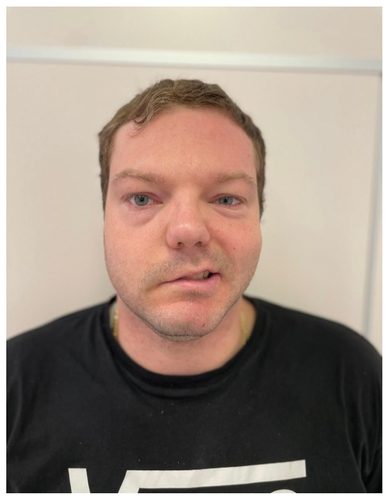
DAN defines it as reversible paralysis of the facial nerve caused by increased middle ear pressure during ascent, whether flying or diving.
How It Happens
The facial nerve passes through a bony channel in the wall of the middle ear space on its route to the brain. In most people, pressure changes there have little effect on the nerve. In some individuals, however, that canal lacks its bony wall and is separated from the middle ear cavity by only a thin membrane. If middle ear pressure rises to meet or exceed capillary pressure in that scenario, circulation to the nerve stops and facial muscles can become paralyzed. Function typically returns once middle ear pressure normalizes, though the condition tends to recur with further flying or diving.
Warning Signs
Numbness, tingling, weakness, or paralysis of the face, often with visible drooping on one side.
What to Do
Usually discovered after the dive. Even if brief and self resolving, DAN recommends a physician evaluation to rule out other causes such as stroke, infection, trauma, or decompression sickness. Experimental evidence suggests overpressure lasting more than 3.5 hours may cause permanent damage, so divers with ongoing numbness or drooping should be seen within three hours.
Fitness to Dive
The condition is self limiting and usually resolves within hours. Return to diving may be considered once symptoms have fully resolved and are confirmed to be barotrauma related.
How to Avoid It
Learn gentle, effective equalization techniques. Don’t dive with congestion.
Temporomandibular Joint Syndrome (TMJ)
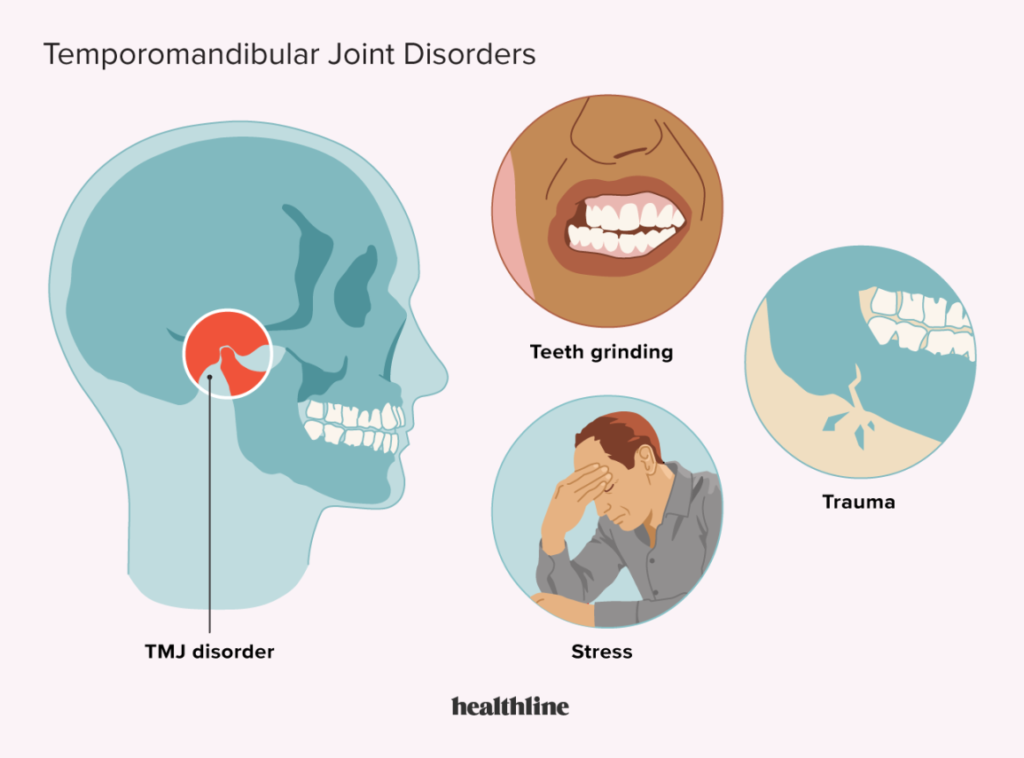
DAN defines it as pain in and around the jaw joint caused by prolonged gripping of a snorkel or regulator mouthpiece.
Statistics
DAN cites reports of TMJ occurring in 15 to 20 percent of snorkelers and divers.
Mechanism
Chronic inflammation of the jaw joint just in front of the ear, sometimes severe enough to make holding a mouthpiece difficult. Joint laxity, anatomical factors, capsular or muscular inflammation, and mouthpiece type can all worsen it. In diving, it’s typically linked to an ill fitting mouthpiece forcing the jaw forward and to clenching, especially with heavier regulators; it can also aggravate pre existing TMJ and, in novice divers who clench heavily, sometimes leads to biting through a mouthpiece.
Warning Signs
- Pain in the jaw joint and ears
- Clicking or cracking sounds (crepitus)
- Difficulty opening the mouth fully
- Dizzy spells, which can be hazardous underwater
- Muscle pain from chewing
- Stuffy sensation in the ears and Eustachian tube dysfunction
- Headache and facial pain
What to Do
While diving: Try to relax the bite while keeping the mouthpiece secure. If that doesn’t work, end the dive safely and consider a different mouthpiece.
Definitive treatment: Persistent pain warrants a specialist consultation, since solutions are individualized: bite adjustment, addressing dental issues, orthodontic mouthpieces, heat, and anti inflammatory medication can all help.
Fitness to Dive
Return to diving is possible once pain resolves and the mouthpiece can be gripped without discomfort.
How to Avoid It
Use a properly fitting mouthpiece, consider a custom one, and address contributing factors like dental problems, anxiety, and teeth grinding.
Surfer’s Ear (Exostosis)
DAN defines it as narrowing of the outer ear canal caused by abnormal bone growth triggered by cold, wet conditions.
Mechanism
Chronic irritation from cold water causes the bony canal wall to thicken slowly over years, a condition known as exostosis or, informally, swimmer’s nodes, common among swimmers, surfers, and divers. It isn’t caused by or related to infection, but the narrowed canal can trap water, raising the risk of outer ear infections. Growth continues with ongoing cold water exposure and tends to appear in outdoor enthusiasts in their mid to late thirties, though heavy cold water exposure can bring it on earlier.
A narrowed canal, DAN notes, is more prone to blockage by wax or debris and more susceptible to swimmer’s ear; an exostosis on the canal floor can even form a moisture trapping “sump” prone to infection. A normal ear canal measures about 7 millimeters wide; advanced exostosis can narrow it to as little as 1 millimeter. Early signs include water trapping after swimming, and advanced debris trapping or recurrent infection may eventually require surgery.
Warning Signs
Recurrent outer ear infections and difficulty clearing water from the canal. Advanced cases may show decreased hearing alongside more frequent infections.
Differential Diagnosis
Other causes of canal obstruction to rule out include infection or earwax impaction.
Treatment
Surgical removal may be considered for decreased hearing or repeated infections.
Fitness to Dive
Exostosis doesn’t affect fitness to dive unless it’s blocking the canal or causing recurrent infection.
How to Avoid It
- Wear a hood in cold water.
- Rinse ears with fresh water after diving to flush salt and contaminants.
- If prone to infection, use a hair dryer on a low, safe setting to dry the canal.
- Have ears checked regularly for earwax buildup, particularly before extended dive trips.
Swimmer’s Ear (Otitis Externa)
DAN defines it as acute inflammation or infection of the outer ear caused by prolonged exposure to wet, warm conditions.
Statistics
DAN cites data showing otitis externa affects about one in 200 Americans annually, with a chronic form present in 3 to 5 percent of the population; swimmers, surfers, and others with frequent wet exposure face higher risk.
Mechanism
The external ear canal is lined with skin that secretes protective earwax. Frequent water exposure swells the cells lining the canal until they separate enough for surface bacteria to penetrate the skin, where warmth allows them to multiply. Chafed or cracked skin from excessive moisture or scratching makes infection more likely, as can seborrheic dermatitis, psoriasis, or overly aggressive earwax cleaning. Excess debris or wax can also trap water in the canal.
Warning Signs
Itching is the chief complaint, often with pain, tenderness, and swelling. Left untreated, swelling can spread to nearby lymph nodes and make jaw movement uncomfortable.
What to Do
First aid: Stay out of the water until it clears. Dry the ear carefully with a hair dryer on a low, safe setting after showering. Over the counter pain relief such as acetaminophen, ibuprofen, or naproxen can help, following label instructions.
Treatment: Stop swimming and diving and see a physician. Don’t put anything in the ear unless instructed. Divers with diabetes or on immune suppressing medication should seek prompt care, since complications can be more severe. A physician should also rule out external ear squeeze, otitis media, and mastoiditis.
Fitness to Dive
Return to diving is possible once a physician confirms the infection has resolved.
How to Avoid It
- Dry ears with a towel after swimming or showering, tilting the head and gently pulling the earlobe while facing the ear downward.
- Avoid inserting cotton swabs, fingers, or other objects into the canal, and don’t remove earwax yourself.
- A hair dryer on the lowest setting, held at least a foot away, can help dry ears safely.
- Ask a physician about alcohol based eardrops after swimming.
Divers without a punctured eardrum can use over the counter or homemade preventive drops. DAN suggests a mixture of equal parts white vinegar and rubbing alcohol, placing five drops in each ear at the end of a diving day, letting it sit five minutes, then draining it out.
This article is educational in nature and is not a substitute for individual medical assessment. Divers experiencing ear pain, vertigo, hearing changes, or facial numbness should seek medical evaluation, and DAN members can contact the DAN Medical Information Line for a referral.
Source: Divers Alert Network (DAN)

Mohsen Nabil is the Founder and Editor-in-Chief of Diventures Magazine. A mechanical engineer and scuba diving instructor based in the Red Sea, he writes about diving safety, marine conservation, underwater exploration, and developments in the global dive industry. Through Diventures Magazine, he works to connect divers, scientists, and ocean advocates while promoting responsible diving and protection of the oceans.