
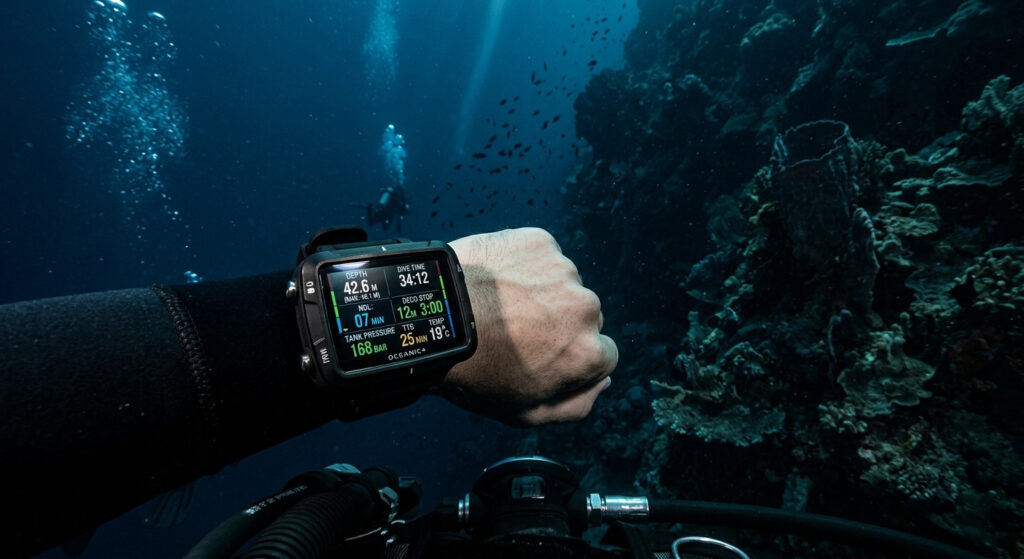

For decades, technical and recreational divers have relied on the same fundamental math to stay safe: theoretical decompression models. We plug our depth and time into algorithms like Buhlmann ZHL-16C, throw on some generic “Gradient Factors” to add a safety buffer, and hope our bodies match the textbook.
But humans’ bodies aren’t textbooks!
In this exclusive feature, Diventures Magazine explores how the industry is shifting away from generic math toward live physiological data.
We need to understand that, in 2026, a massive shift is occurring. We are entering the era of biometric dive computers 2026—where your gear stops guessing how your body is handling a dive and starts measuring it in real-time.
Biometric Dive Computers 2026: Beyond Depth and Time
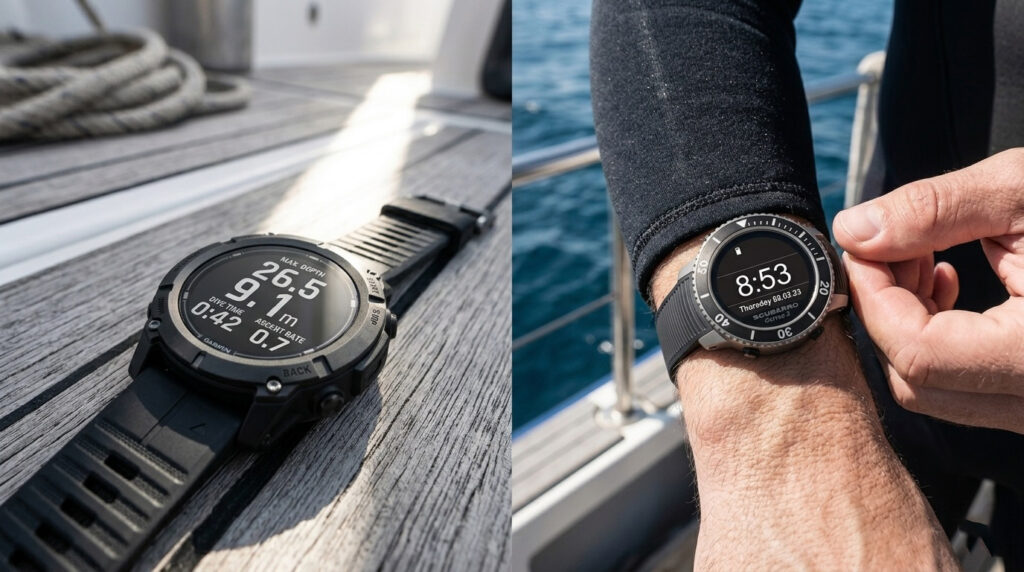
Traditional dive computers only look at the environment: how deep you are, how long you’ve been there, and what gas you are breathing. While this math is incredibly reliable, it treats a stressed, freezing diver the same way it treats a relaxed diver in warm water.
The latest generation of smart dive computers changes the game by tracking real-time physiological data directly through skin-contact sensors or paired transmitter straps.
By continuously monitoring Heart Rate Variability (HRV) and skin temperature, these devices build a live physiological profile of the diver. If you are working hard against a current, your elevated heart rate and dropping skin temperature signal to the computer that your body is under stress, triggering immediate, micro-adjustments to your dive profile in a way that could eventually save your life from potentially dangerous situations.
Personalized Decompression Algorithms: The Death of Generic Math
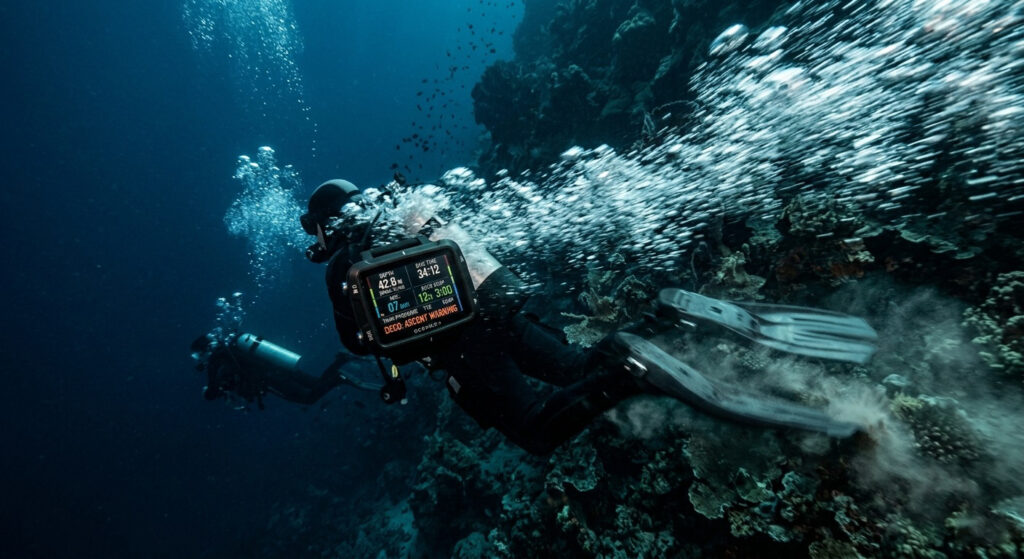
The core breakthrough in this new era is the deployment of personalized decompression algorithms.
Historically, divers adjusted their safety margins using Gradient Factors (GF)—essentially telling the computer, “Assume I am 15% or 20% closer to decompression sickness than the math says, just to be safe.” It was a static, unyielding choice made on the boat before hitting the water.
With modern biometric integration, the algorithm becomes dynamic:
- Heart Rate Variability (HRV): HRV measures the specific time variation between consecutive heartbeats. It is a direct window into your autonomic nervous system. A drop in HRV indicates high physical or psychological stress, which correlates with increased blood circulation and faster inert gas loading.
- Skin Temperature: Cold tissue absorbs inert gas differently from warm tissue. If your skin temperature drops significantly during a deep thermocline, the computer realizes your peripheral circulation is constricting.
Instead of waiting for you to surface, the computer uses this data to adjust your No Decompression Limit (NDL) or decompression ceiling on the fly. If you are calm and warm, you get your optimal bottom time. If you are cold and stressed, your NDL shrinks dynamically to keep you out of the danger zone.
Do Biometrics Improve Diving Safety?
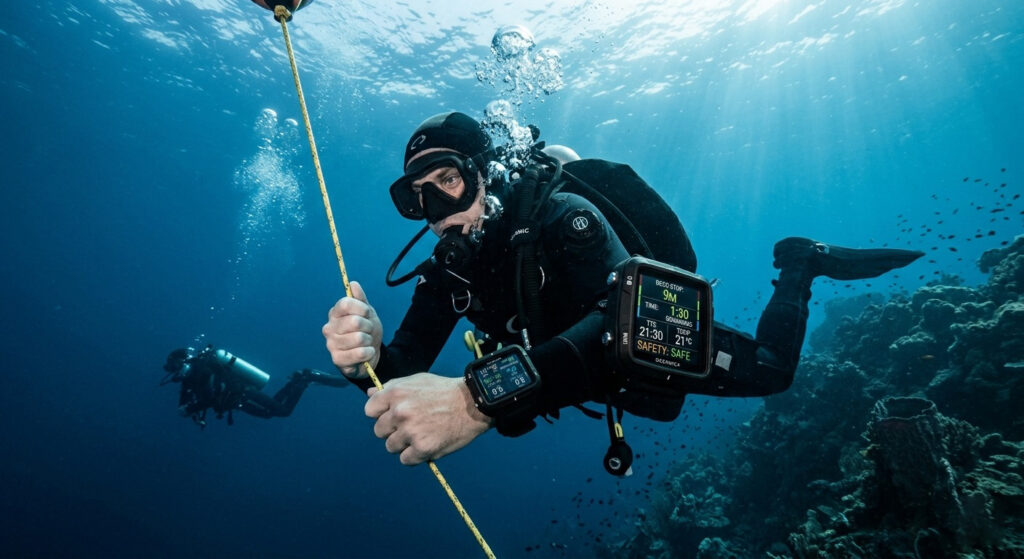
The short answer is yes, significantly, greatly, but it helps to understand why.
Decompression Sickness (DCS) has always had an element of mystery. Two divers can perform the same profile, yet one gets bent while the other walks away fine. This is because traditional models cannot account for personal predisposition factors like fatigue, dehydration, or mild hypothermia.
How Biometrics Bridge the Gap: By using HRV and temperature data, the computer actively monitors physiological markers of fatigue and thermal stress.While a biometric computer cannot directly measure the bubbles forming in your bloodstream, it can detect the precise physical conditions that cause them to form faster. By shortening NDLs or lengthening safety stops when your body is working too hard, biometrics add a personalized safety shield that generic tables simply cannot match.
AI-Integrated Dive Computers vs Traditional Systems
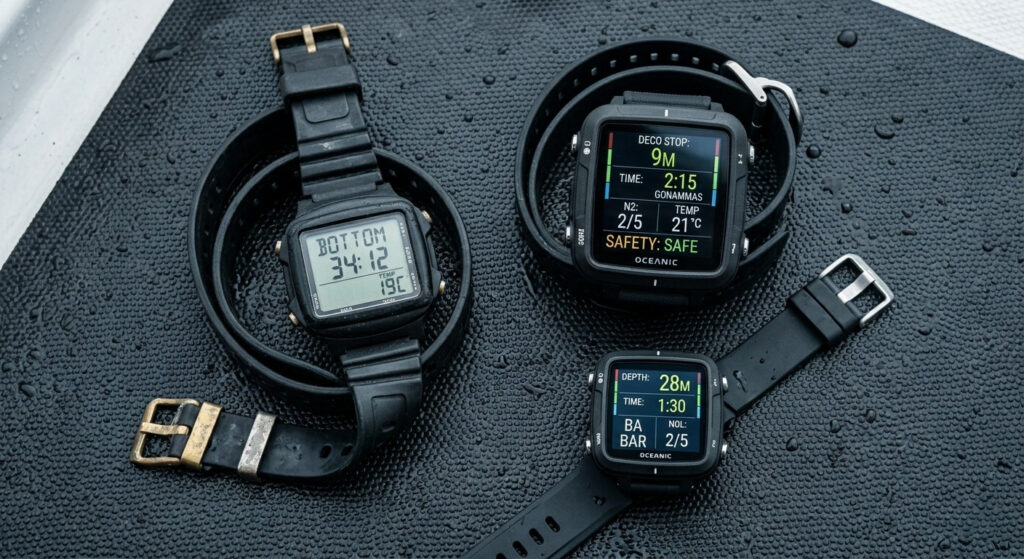
If you are looking to upgrade your kit, understanding the breakdown of AI-integrated dive computers vs traditional systems is essential.
| Feature | Traditional Dive Computers | AI & Biometric Dive Computers (2026) |
| Data Inputs | Depth, Time, Gas Mix, Tank Pressure | Depth, Time, Gas Mix, Tank Pressure + HRV, Skin Temp, and Breathing Rate |
| NDL Calculation | Static mathematical models | Dynamic, real-time adjustments based on physical exertion |
| Safety Buffers | Manually preset Gradient Factor (User Guesswork) | Automated safety margins that scale up or down during the dive |
| Post-Dive Insights | Basic logbook (Depth/Time Graph) | Full Physiological Analysis showing stress levels and workload correlation |
While traditional computers remain incredibly reliable backups, they operate blindly. AI-integrated biometric systems act as an intelligent dive buddy, constantly processing how your specific cardiovascular system is responding to the pressure of the deep.
The Bottom Line
The “Smart” Diver Era isn’t about making diving more complicated; it’s about removing the guesswork. By allowing your heart rate and body temperature to guide your decompression, you aren’t just following an algorithm—you are diving using a profile designed perfectly for you.