

Diver Injured After Scuba Cylinder Reportedly Explodes on Boat Off Procida
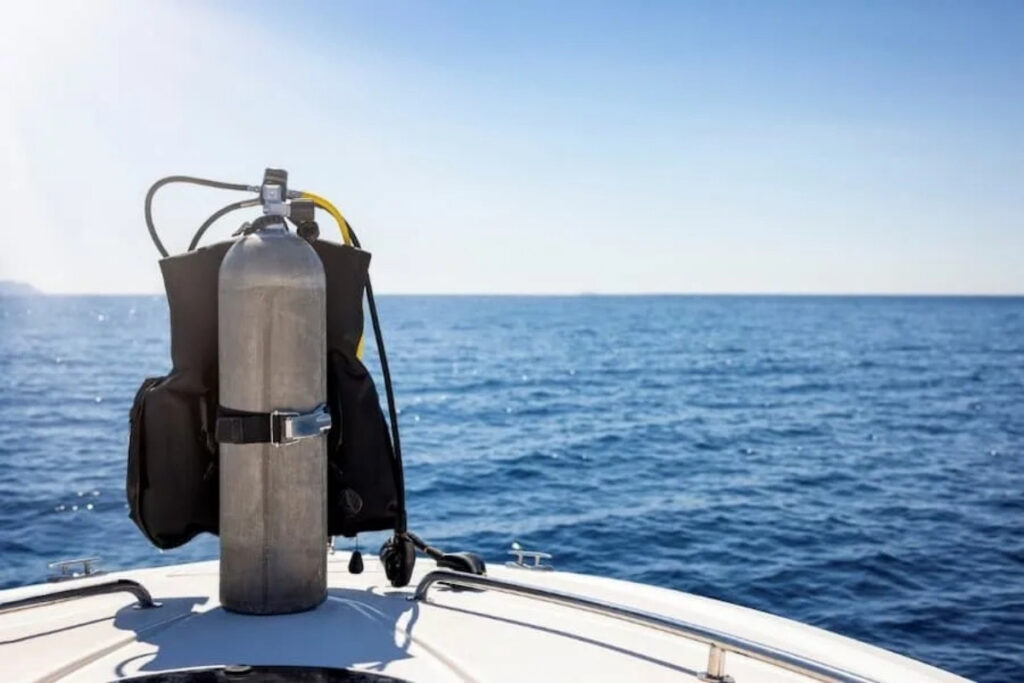
A 60 year old diver was injured after a scuba cylinder reportedly ruptured aboard a rigid inflatable boat off the Italian island of Procida on September 6, 2026.
According to Italian news agency ANSA, the incident occurred while the boat was off Punta Pizzaco. An initial reconstruction indicated that a diving cylinder suddenly failed with a loud blast, with the force of the incident reportedly throwing the diver into the sea.
The diver, who lives in the province of Naples, was recovered from the water and taken aboard the boat to Marina Grande, where emergency medical personnel were waiting.
ANSA reported that he remained conscious following the incident but suffered facial injuries and significant abdominal trauma. He was initially taken to the hospital on Procida for examinations before doctors arranged an urgent helicopter transfer to Naples for further treatment. Despite being transferred under the highest emergency priority, initial reports indicated that his life was not believed to be in danger.
Cause of Cylinder Failure Under Investigation
Authorities have opened an investigation to establish the precise sequence of events and determine why the diving cylinder failed.
The initial report describes the incident as the sudden rupture or explosion of a diving cylinder, but no official findings have yet established what part of the equipment failed or what caused the failure.
There is currently no confirmed information indicating whether the incident involved structural damage to the cylinder itself, corrosion, the valve assembly, filling procedures, heat exposure, excessive pressure, or another factor.
Until investigators release their findings, attributing the Procida incident to any specific equipment defect or maintenance issue would be premature.
Scuba Cylinder Safety
Although serious scuba cylinder failures are uncommon, cylinders contain breathing gas at very high pressure and require appropriate inspection, maintenance, filling, storage, and handling.
Divers Alert Network advises divers to pay attention to external corrosion, dents, gouges, valve damage, and other signs of mechanical deterioration. A cylinder showing suspicious damage should be removed from service and examined by a trained inspector rather than used simply because its scheduled inspection remains valid.
Internal corrosion is another concern because it may not be visible from the outside.
The UK Health and Safety Executive warns that water entering a diving cylinder can cause internal corrosion and weaken the cylinder structure. It recommends an internal inspection before refilling whenever there is reason to believe water may have entered the cylinder, including after a cylinder has been emptied underwater.
Valve compatibility and installation are also important. The HSE has documented incidents in which incompatible valve and cylinder threads resulted in valves being violently expelled from pressurised cylinders. It advises that cylinder valves should be installed by competent personnel using the correct components and manufacturer requirements.
Divers should also make sure cylinders are secured during transport and while aboard boats to prevent them from falling or damaging the valve.
Inspection requirements differ between countries and cylinder types, so divers should follow the applicable local regulations, manufacturer instructions, and recognised testing requirements rather than relying on a single inspection interval worldwide.
Investigation Continues
The Procida incident demonstrates the potential seriousness of an equipment failure involving a pressurised diving cylinder, but its cause remains unknown.
The findings of the investigation will be necessary before conclusions can be drawn about what caused the cylinder to fail and whether any equipment, maintenance, filling, or handling factor contributed to the accident.
Developing story: Diventures will update this article if Italian authorities release further confirmed information about the cause of the cylinder failure or the diver’s condition.