


For years, recreational and technical divers often appeared to inhabit two very different equipment worlds.
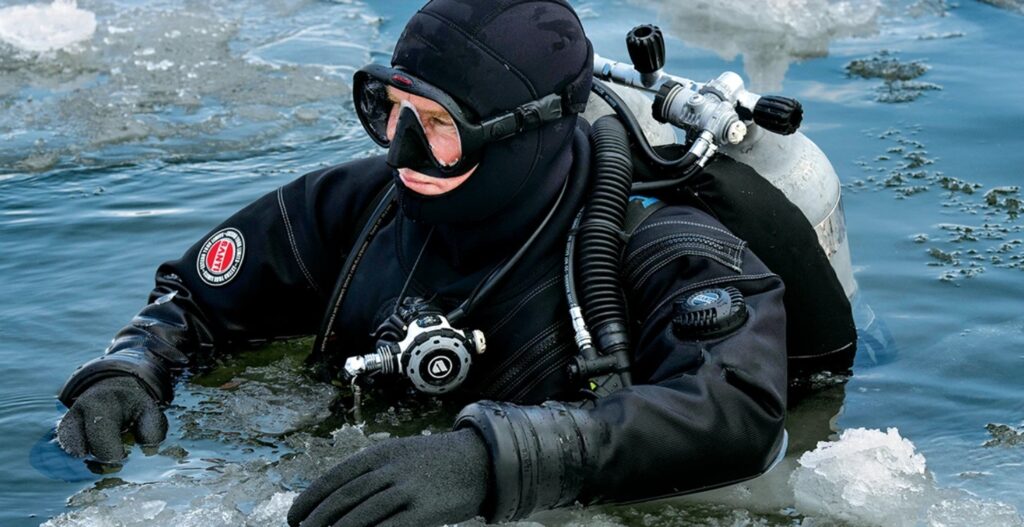
Recreational divers commonly used padded jacket style buoyancy compensators with integrated pockets, quick release buckles and multiple adjustment points. Technical divers were more likely to appear in minimalist harnesses, metal backplates, wings and carefully routed regulator hoses.
That distinction is becoming less obvious.
Equipment concepts once associated primarily with technical, cave and wreck diving are increasingly appearing on ordinary recreational dives. Backplates, wings, continuous webbing harnesses and streamlined equipment configurations appeal to divers who value simplicity, modularity and equipment that can evolve with their experience.
At Diventures Magazine, we can describe this approach as Technical Lite. It is not a formal training system or recognised category of diving. Instead, it describes recreational divers adopting selected equipment principles traditionally associated with technical diving without necessarily becoming technical divers themselves.
For anyone considering a backplate and wing setup in 2026, the attraction is increasingly less about looking technical and more about building a simple, adaptable and streamlined diving system.
What Is the Hogarthian Approach?
Many of the ideas behind minimalist diving equipment can be traced to the Hogarthian diving philosophy, named after cave diver William Hogarth Main and later closely associated with the development of DIR diving practices.
The central principle is simplicity. Equipment should have a clear purpose, unnecessary components should be avoided, and the complete configuration should remain streamlined and predictable.
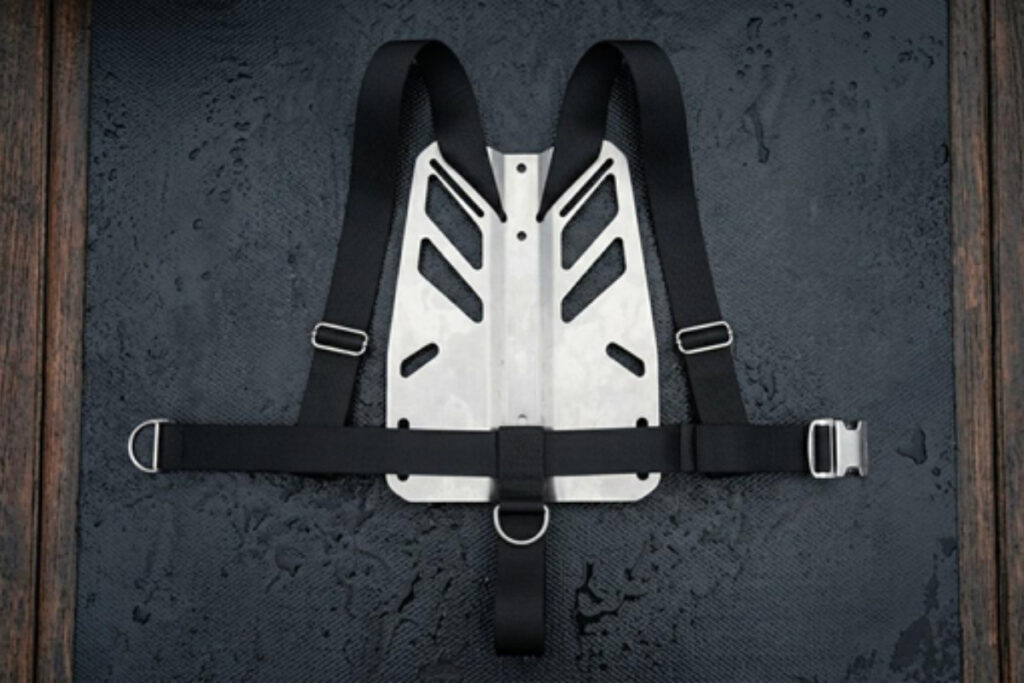
A traditional Hogarthian inspired setup usually includes a rigid backplate, a continuous webbing harness, a crotch strap, a back mounted buoyancy wing and a carefully arranged regulator system.
For recreational divers, two aspects are particularly relevant.
The Long Hose Configuration
In many technical configurations, the primary second stage is supplied through a long hose routed around the diver’s body and behind the neck.
During gas donation, the diver donates the regulator currently being breathed from and switches to a backup second stage positioned beneath the chin.
The logic is straightforward. The donated regulator is known to be functioning because the donor was breathing from it immediately before the donation.
A longer hose can also provide additional space between divers during an assisted ascent or exit.
This configuration requires appropriate training and practice. Simply changing hose lengths does not replace instruction in gas sharing procedures.
Back Mounted Buoyancy
A wing places most of the buoyancy behind the diver rather than around the torso.
When properly configured and weighted, this can support a streamlined horizontal position underwater and leave the chest and sides relatively uncluttered.
This does not mean that a wing automatically produces perfect trim. Cylinder position, weighting, exposure protection, equipment placement and diver technique all influence underwater balance.
The advantage is that the system provides considerable freedom to adjust those elements.
Why Modular BCD Systems Appeal to Recreational Divers
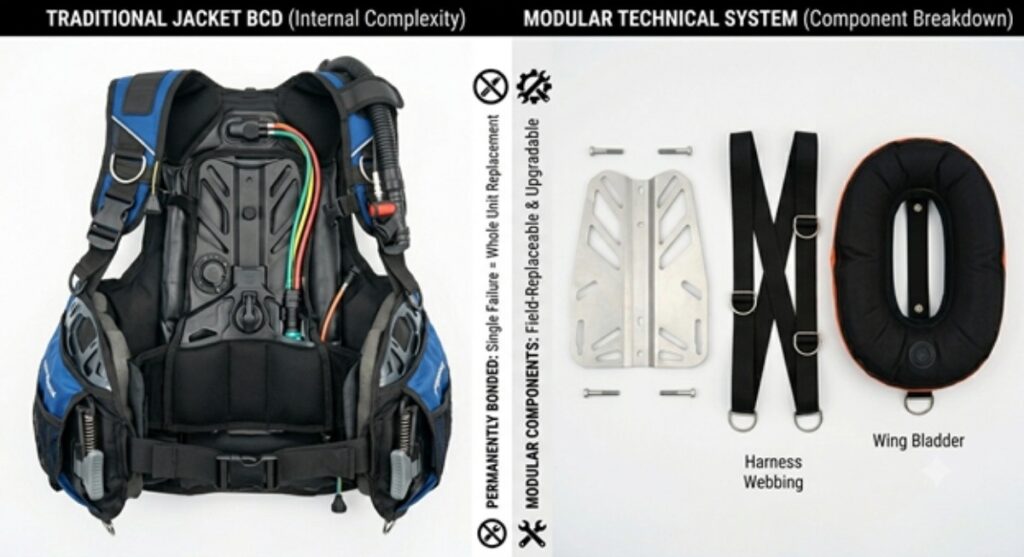
One of the strongest arguments for a backplate and wing is modularity.
A conventional jacket BCD is generally designed as one integrated product. A backplate and wing system separates the main functions into individual components that can often be replaced or changed independently.
A typical system contains three primary elements.
The Backplate
The plate provides the structural foundation of the system.
Aluminium plates are commonly chosen by divers who want to reduce travel weight, while stainless steel versions add weight directly to the diver’s back and may be useful when heavier exposure protection is required.
A properly maintained metal backplate has very few moving components and can remain usable for many years.
The Harness
The simplest configurations use continuous webbing threaded through the plate.
There are no complicated shoulder mechanisms required, although some manufacturers also offer adjustable harness designs for divers who prefer easier entry and removal.
If the webbing eventually becomes worn, it can normally be replaced without replacing the plate or wing.
The Wing
The wing provides buoyancy and can be selected according to the cylinder configuration and required lift.
A compact wing may be appropriate for recreational single cylinder diving, while different wings are designed for heavier cylinder configurations.
This modularity allows a diver to change part of the system rather than replacing the entire BCD as equipment needs evolve.
The Appeal of Streamlined Scuba Equipment
Minimalism is not simply about reducing the number of items a diver carries.
It is about deciding where equipment belongs and whether every component serves a useful purpose.
A streamlined configuration can reduce dangling hoses, loose accessories and unnecessary bulk. Clips, gauges, lights and backup equipment can be positioned close to the diver’s body rather than hanging below it.
This can reduce drag and make equipment easier to locate by touch.
The same philosophy can also encourage divers to think more carefully about weighting.
Instead of relying automatically on large integrated weight pockets, weight can be distributed according to the diver’s cylinder, exposure suit and trim requirements.
There is no single configuration that works for every diver. The important principle is that equipment should be arranged deliberately rather than simply added because attachment points are available.
Regulators Designed for Long Term Serviceability
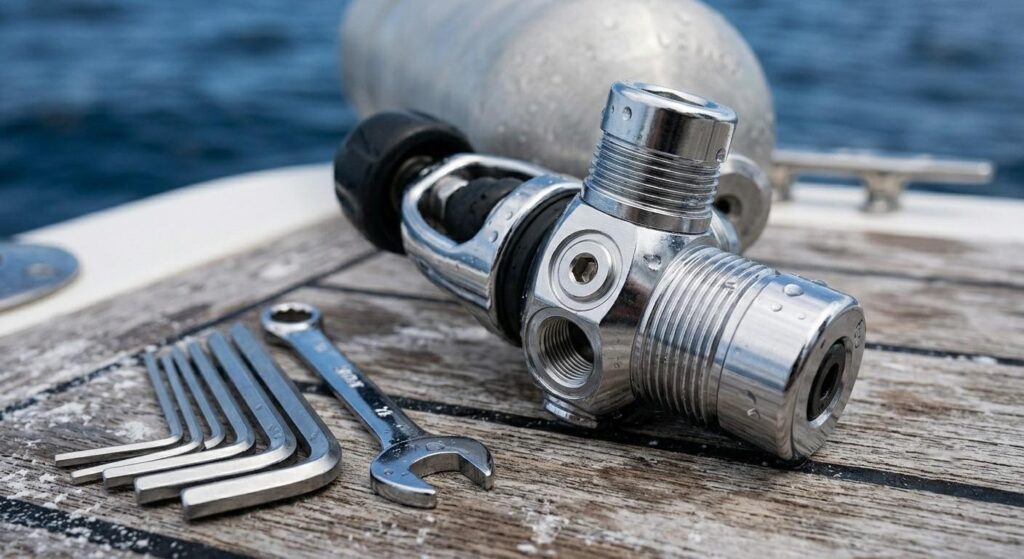
The same interest in durable equipment extends beyond buoyancy systems.
Divers who regularly travel or dive in remote destinations often consider not only regulator performance, but also long term serviceability.
A regulator built around a proven design, supported by an established service network and supplied with replaceable components may be easier to maintain throughout a long diving career.
Balanced diaphragm and piston first stages are both widely used in high performance recreational and technical regulators. Neither design should automatically be considered superior simply because it is associated with technical diving.
The more useful questions are whether the regulator is appropriate for the planned environment, whether qualified service is available, and whether replacement components can be obtained when required.
Field serviceability should also not be confused with untrained repair.
Some regulator designs allow limited user maintenance such as rinsing or cleaning specific externally accessible components, but internal servicing should always follow the manufacturer’s instructions. Where the manufacturer requires an authorised technician, divers should not dismantle life support equipment themselves.
For a diver building a long term equipment system, dependable servicing may ultimately be more valuable than choosing the regulator with the longest list of features.
From Recreational Diving to More Advanced Configurations
One attraction of a modular backplate system is that some of its components can continue to be useful as a diver progresses.
A recreational diver may begin with a single cylinder, compact wing and simple harness. Later, additional training may introduce different equipment configurations.
This does not mean that buying a backplate automatically prepares someone for technical diving. Technical diving requires dedicated training, planning, procedures and experience.
The equipment can, however, provide a familiar foundation.
Sidemount Versus Twinset for Technical Diving
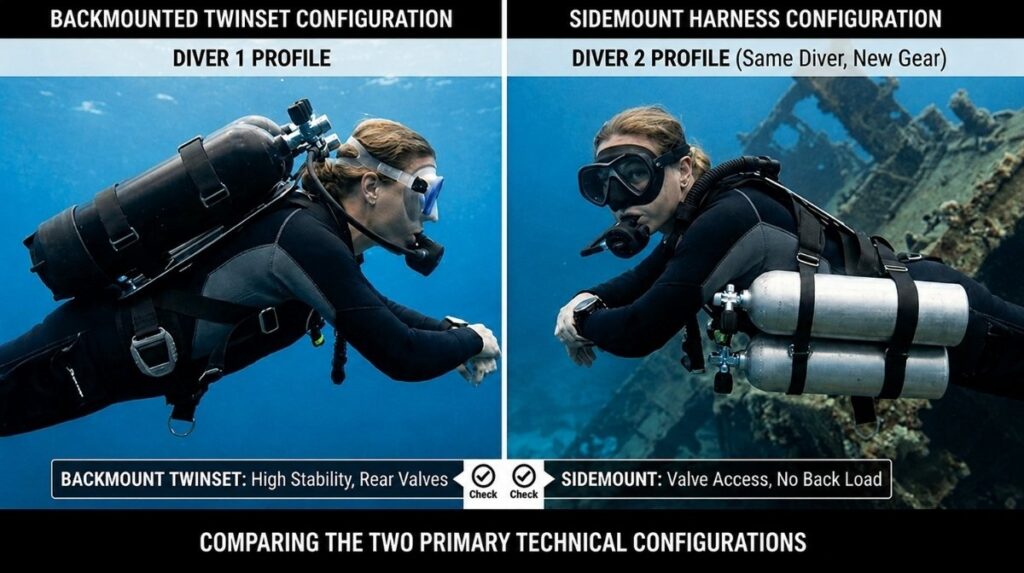
When divers eventually move beyond single cylinder recreational diving, two common equipment paths are backmounted twin cylinders and sidemount.
Backmount Twinset
A twinset mounts two cylinders behind the diver using bands and a manifold, with the assembly supported by a backplate and an appropriately sized wing.
For someone already comfortable with a backplate and harness, this can preserve a familiar equipment layout.
The backplate and harness may continue to be used, although the single cylinder wing normally needs to be replaced with one designed for the new cylinder configuration.
Twinsets remain widely used for technical wreck diving, deeper open water diving and other environments where additional gas volume and redundancy are required.
Sidemount Diving
Sidemount places the cylinders alongside the diver rather than directly behind the torso.
The configuration was developed for environments where flexibility and access were particularly important and later expanded into recreational and technical diving.
Sidemount can provide excellent access to cylinder valves and allows cylinders to be attached or removed in the water, which can be useful where carrying a heavy backmounted system is difficult.
It also requires its own equipment, training and equipment management techniques.
Neither sidemount nor backmount is universally better. The appropriate configuration depends on the environment, dive objective, available logistics, training and personal preference.
Why Simplicity Is Becoming Attractive
The strongest argument for the Technical Lite approach is not that recreational divers should imitate technical divers.
It is that some principles developed in demanding diving environments also make sense during ordinary recreational diving.
Modularity can extend the useful life of equipment.
Streamlining can reduce unnecessary clutter.
A simple harness can offer extensive adjustment without numerous plastic mechanisms.
A backplate can remain part of a diver’s equipment even as other components change.
None of those advantages make a backplate and wing automatically superior to a jacket BCD.
Modern recreational BCDs can be comfortable, reliable and extremely practical. Some divers prefer their surface position, integrated storage and easy adjustment. Others simply enjoy the familiar feel of a jacket.
Equipment should ultimately match the diver, the environment and the type of diving being undertaken.
For divers who value simplicity, customisation and a system that can evolve over time, however, the backplate and wing has become an increasingly compelling alternative.
Perhaps that is the real idea behind Technical Lite.
It is not about carrying technical equipment on recreational dives.
It is about borrowing one of technical diving’s most useful lessons:
Take what you need, configure it carefully, and make every piece of equipment serve a purpose.