

Could Viagra Save Divers’ Lives? The Complicated Science of Sildenafil and Diving
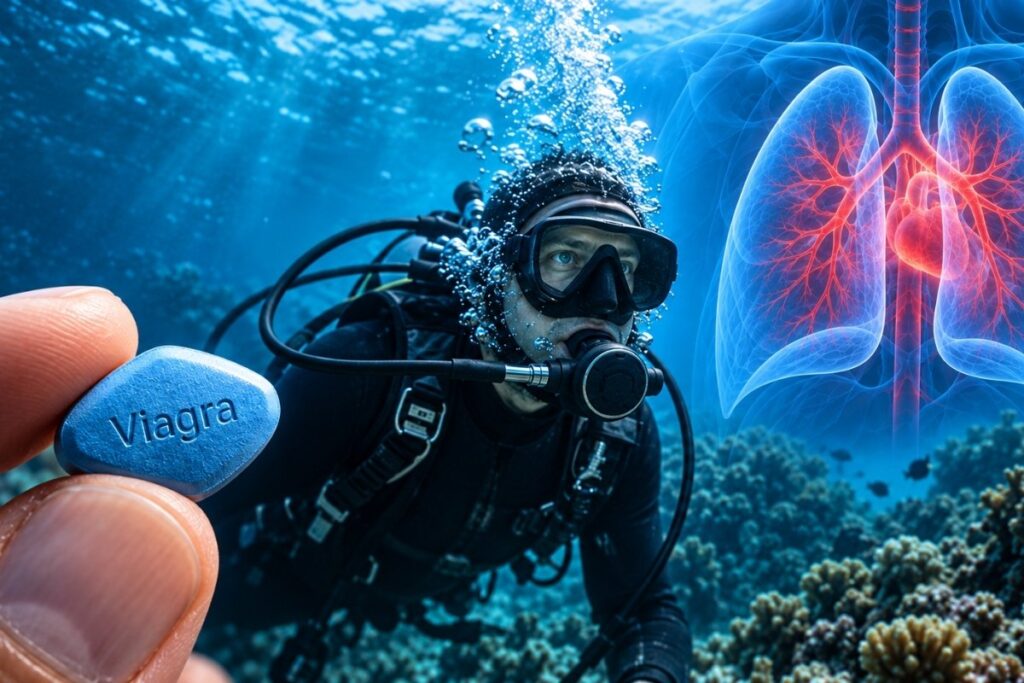
Sildenafil, better known by the brand name Viagra, has shown surprising potential for preventing immersion pulmonary edema, a dangerous condition that can cause a diver’s lungs to fill with fluid. But the same drug also raises concerns about oxygen toxicity and decompression sickness, making the answer far more complicated than it first appears.
Viagra is probably not the first medication most divers would associate with diving medicine.
Yet sildenafil, the active ingredient in Viagra, has been studied by researchers at Duke University and Divers Alert Network because of its effects on the blood vessels of the lungs.
The research concerns immersion pulmonary edema, or IPE, a potentially life threatening condition in which fluid moves from the pulmonary circulation into the lungs while a person is immersed in water.
IPE can affect scuba divers, freedivers, swimmers and triathletes. A diver may suddenly become extremely short of breath, begin coughing, feel that breathing is unusually difficult, or produce pink or blood tinged frothy sputum.
Unlike conventional drowning, the fluid entering the lungs comes from the diver’s own circulation rather than from inhaled seawater.
DAN describes immersion pulmonary edema as a condition associated with the cardiovascular and respiratory changes created by immersion. Blood shifts from the extremities toward the chest, increasing the volume of blood within the central circulation. Cold, exertion, breathing resistance, hypertension and other factors can increase the strain further.
And that is where sildenafil becomes interesting.
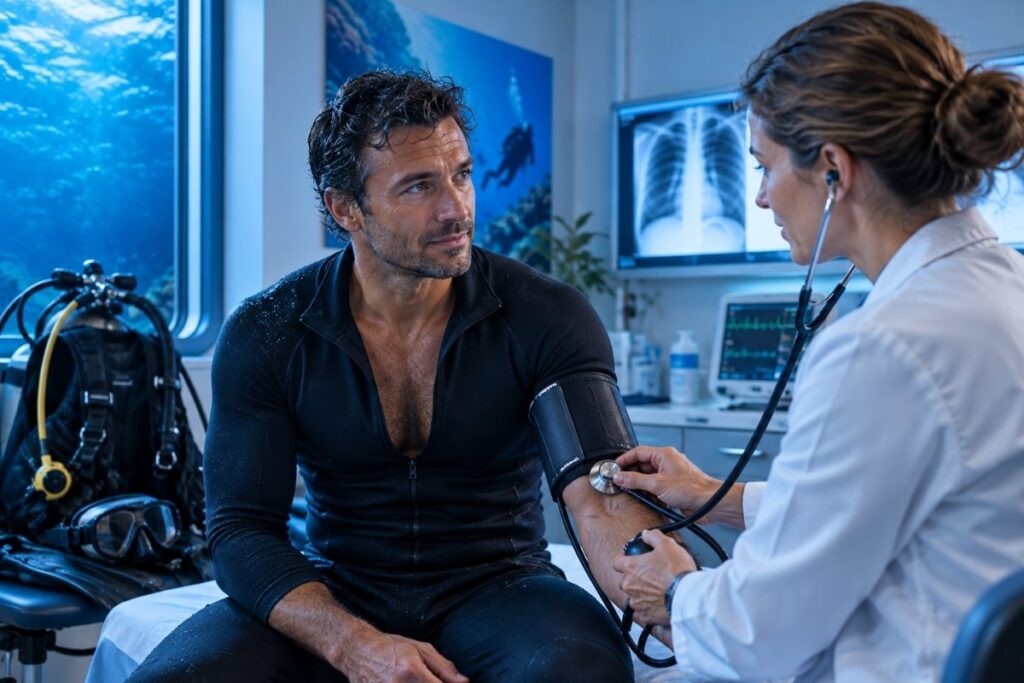
Why Viagra entered diving medicine research
Sildenafil belongs to a group of medications called PDE5 inhibitors. It relaxes blood vessels and is widely known as a treatment for erectile dysfunction, although sildenafil is also prescribed medically for pulmonary arterial hypertension.
Researchers investigating IPE suspected that reducing pressure within the pulmonary circulation might help people who are particularly susceptible to the condition.
A Duke University study published in Circulation investigated 10 people with a previous history of swimming induced pulmonary edema and compared them with 20 control subjects.
Participants exercised while submerged in water at 20°C while researchers directly measured cardiovascular pressures.
The people susceptible to IPE developed substantially higher pulmonary artery and pulmonary artery wedge pressures during immersed exercise than the control group.
The susceptible participants then repeated the exercise after receiving sildenafil.
Their pulmonary pressures decreased significantly, leading the researchers to conclude that sildenafil might have a role in reducing the risk of IPE.
This did not demonstrate that Viagra prevents deaths in scuba divers. The experiment measured physiological responses during controlled immersed exercise rather than testing whether the medication prevented pulmonary edema during real scuba dives.
But it provided a plausible physiological mechanism.
One remarkable case
A subsequent report provided another intriguing piece of evidence.
Researchers described a 46 year old female ultratriathlete who had experienced at least five previous episodes of swimming induced pulmonary edema.
After participating in the Duke research, her physician prescribed sildenafil before swimming competitions.
According to the published case report, she subsequently completed 20 triathlons without another episode of SIPE while using the medication.
DAN has also discussed the research. In an interview concerning extreme environmental exposure, DAN described how Duke researchers investigated sildenafil in people susceptible to IPE and observed reduced pulmonary artery and wedge pressures after administration of the medication.
It is an impressive observation.
It is also one patient.
The case involved competitive surface swimming rather than repetitive recreational or technical scuba diving, so it cannot establish that the same preventive strategy is safe or effective for divers.
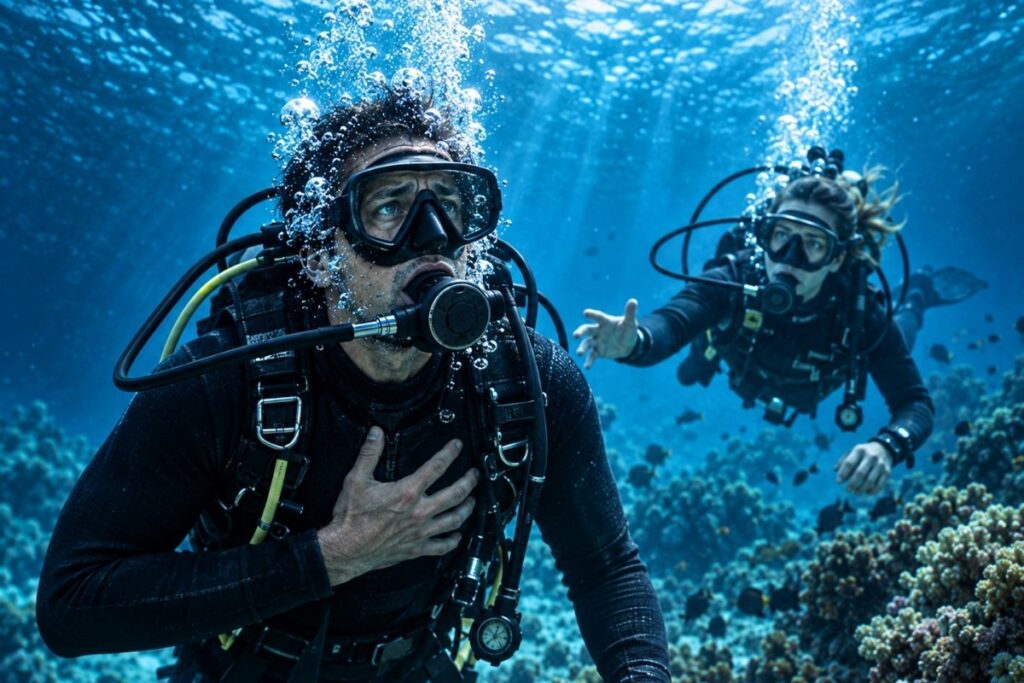
The problem: Viagra may introduce other diving risks
This is where the story becomes considerably more complicated.
The same ability of sildenafil to dilate blood vessels that could potentially reduce pulmonary pressures may have unwanted consequences under hyperbaric conditions.
DAN funded animal research investigating PDE5 inhibitors and central nervous system oxygen toxicity.
Researchers found that rats treated with sildenafil or tadalafil developed oxygen toxicity seizures more rapidly during exposure to hyperbaric oxygen than untreated animals.
The proposed explanation involves cerebral blood flow. High oxygen pressures normally cause a degree of vasoconstriction within the brain. PDE5 inhibitors can oppose this response, potentially increasing cerebral oxygen exposure.
These were animal experiments, so the findings cannot simply be translated into a specific level of risk for human divers. Nevertheless, DAN advises divers using PDE5 inhibitors to consider the duration of the medication and the oxygen partial pressures they expect to encounter, particularly when diving with oxygen rich breathing mixtures.
That concern could be particularly relevant to nitrox and technical divers.
Then there is decompression sickness
Another animal study produced an equally important warning.
Researchers gave sildenafil to rats before a simulated hyperbaric dive and compared their outcomes with untreated animals.
The sildenafil treated animals experienced significantly more manifestations of decompression sickness. The researchers concluded that sildenafil pretreatment promoted the onset and severity of neurological decompression sickness in that animal model.
Again, rats are not recreational divers.
There is currently no equivalent evidence demonstrating that sildenafil causes an increased rate of decompression sickness in human divers.
The result does mean, however, that recommending sildenafil routinely before diving would be difficult to justify without substantially more research.
Current medical guidance remains cautious
The most important development came in 2024, when the South Pacific Underwater Medicine Society and the United Kingdom Diving Medical Committee published a joint position statement on immersion pulmonary edema and diving.
The statement describes IPE as a potentially life threatening diving illness and strongly advises against further compressed gas diving following an episode.
Divers who have experienced suspected or confirmed IPE should undergo detailed medical investigation, particularly cardiovascular assessment, under the supervision of doctors experienced in diving medicine.
A 2025 medical review examining the mechanisms and treatment of immersion pulmonary edema also discussed the sildenafil research. The authors considered the findings promising, but concluded that widespread use of PDE5 inhibitors or similar vasodilating medications for IPE prevention is not currently recommended.
In other words, sildenafil remains an interesting research avenue rather than a standard preventive treatment for scuba divers.
Viagra is not an emergency treatment for IPE
Perhaps the most important distinction for divers is that sildenafil should not be considered something to carry in a dive kit and take when breathing problems begin.
Suspected IPE is a diving emergency.
The 2024 SPUMS and UKDMC guidance recommends terminating the dive, getting the affected diver out of the water as rapidly and safely as possible, administering the highest available concentration of oxygen, keeping the person upright to assist breathing, removing restrictive equipment, keeping the casualty warm and arranging urgent medical assessment.
More advanced medical support may include positive airway pressure ventilation when available.
Sudden unexplained breathlessness, coughing, wheezing, extreme difficulty breathing or pink frothy sputum underwater should never simply be dismissed as poor fitness or anxiety.
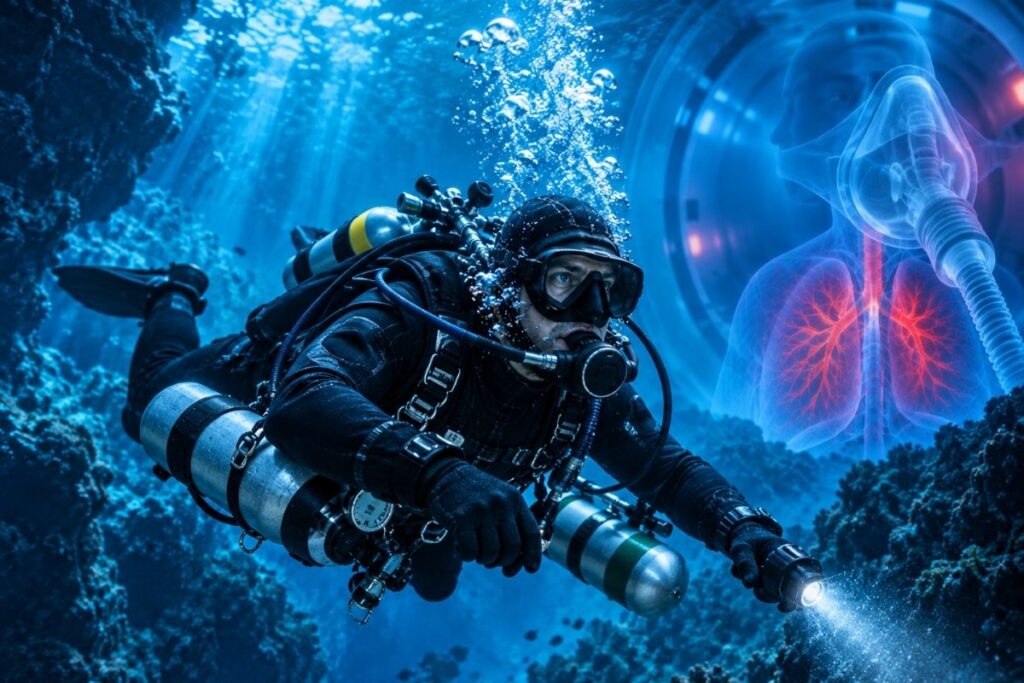
Self medication could also be dangerous
Sildenafil is a prescription medication with important cardiovascular effects.
Most importantly, sildenafil must not be combined with nitrate medications because the combination can produce a dangerous reduction in blood pressure. Other cardiovascular medications and medical conditions may also affect whether sildenafil can be used safely.
For a diver who has already experienced IPE, determining why the episode occurred is more important than simply attempting to suppress it with medication.
Hypertension, cardiovascular disease, breathing resistance, cold exposure, heavy exertion and other factors may contribute to an episode, and some of those conditions may themselves affect fitness to dive.
So, could Viagra save a diver’s life?
Possibly, but science is not there yet.
Human research shows that sildenafil can reduce the abnormal pulmonary vascular pressures observed in people susceptible to immersion pulmonary edema. A published case also suggests that physician supervised sildenafil use may prevent recurrent SIPE in some individuals.
Those findings deserve further investigation.
But there is currently insufficient evidence to recommend sildenafil routinely to divers as protection against IPE. There are also unresolved diving specific concerns involving oxygen toxicity and decompression sickness, much of which currently comes from animal research.
For now, the most important tools against IPE remain recognition, immediate removal from the water, oxygen, emergency medical care and proper investigation before considering a return to diving.
Viagra may eventually prove to have a place in preventing one of diving medicine’s more dangerous and poorly understood conditions.
For the moment, however, it remains a promising research question rather than a pill that divers should take before entering the water.
Diventures medical note: Divers taking sildenafil or other PDE5 inhibitors should discuss their medication and planned diving profile with a physician experienced in diving medicine. Divers with a history of suspected immersion pulmonary edema require medical evaluation before considering further diving.

Mohsen Nabil is the Founder and Editor-in-Chief of Diventures Magazine. A mechanical engineer and scuba diving instructor based in the Red Sea, he writes about diving safety, marine conservation, underwater exploration, and developments in the global dive industry. Through Diventures Magazine, he works to connect divers, scientists, and ocean advocates while promoting responsible diving and protection of the oceans.