
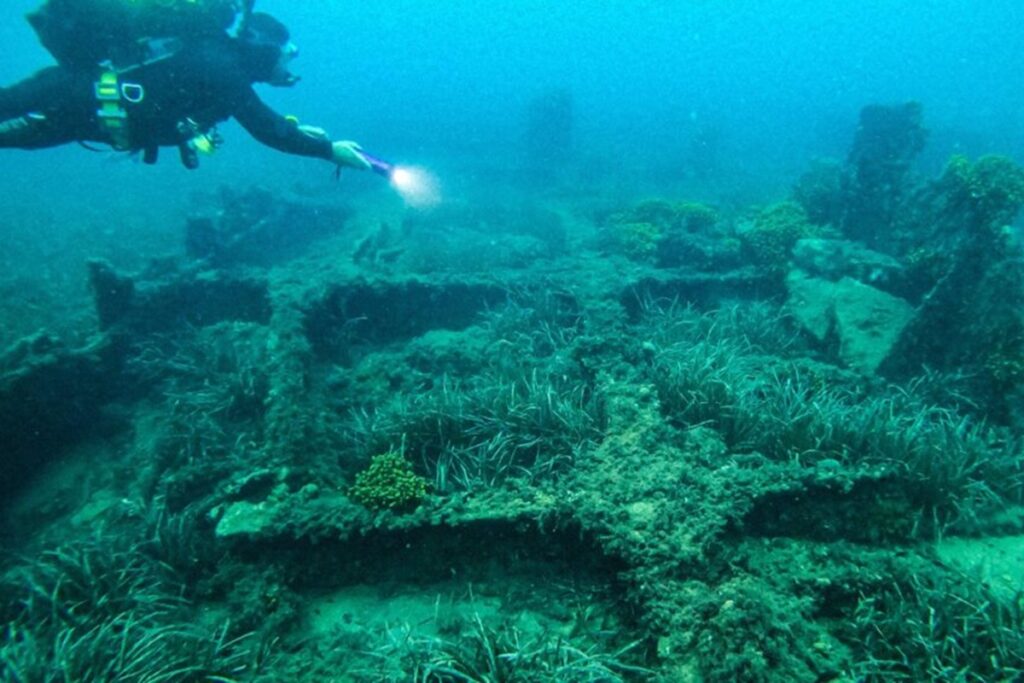

Along Türkiye’s Gallipoli coastline, the surface of the Dardanelles Strait looks like nothing more than a calm summer holiday spot. But a few meters below that glassy water lies one of the most remarkable wreck diving destinations on the planet: an entire fleet of World War I warships resting on the seabed, now open to divers of nearly every skill level.
Battle That Shaped a Century, Now a Dive Site
Between April 1915 and January 1916, the Dardanelles was the setting for one of the deadliest naval and land campaigns of the First World War. British and French forces tried to force their way through the strait toward Istanbul in an attempt to open a supply route to Russia. The campaign failed, and it cost hundreds of thousands of lives on both sides, cementing Gallipoli’s place in military history.
More than a century later, that same stretch of water sits inside the Gallipoli Peninsula National Historical Park and appears on UNESCO’s Tentative List. More than 100 wrecks are believed to lie on the strait’s floor. Of these, 29 sites, made up of 27 sunken vessels and two reef zones, have been opened to controlled public diving as part of a project called Derin Miras, meaning “Deep Legacy” in Turkish. The initiative is a joint effort between the Gallipoli Historical Site Directorate and the 1915 Çanakkale Bridge Consortium, and it aims to turn a site once associated with tragedy into a center for diving tourism, marine conservation, and historical remembrance.
Ismail Kasdemir, president of the Gallipoli Historical Site Directorate, has described the park as one of the most important diving sites in the world, and its scale of preserved wartime wrecks in a single accessible area supports that claim.
Wrecks for Every Level of Diver
One of the park’s biggest draws is that it welcomes divers across the full range of experience.
New divers typically begin with the SS Milo, sitting at a shallow and manageable 7 meters, offering an accessible first look at a century old warship. Intermediate divers often move on to the HMS Louis, a British destroyer resting at around 13 meters, where shifting light plays across a steel wreck that has sat untouched since 1915.
For advanced and technical divers, the park’s deeper sites present a serious challenge. Wrecks and submarines here reach depths of up to 72 meters, including the HMS Triumph, a British battleship that demands strong technical skill and careful dive planning.
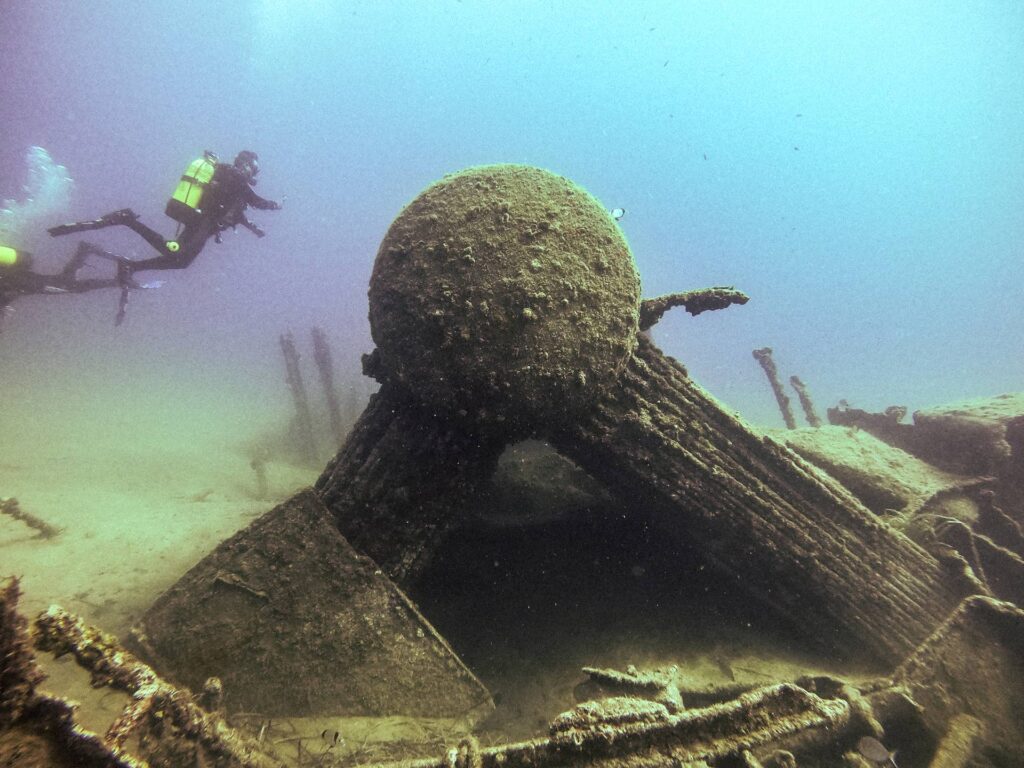
The strait is also home to other notable wrecks, among them the HMS Majestic, the HMS Ocean (the first ship lost in the campaign after striking a mine on March 18, 1915), the Australian submarine AE2, the British submarine E14, and the 121 meter SS Carthage, sunk by a German U boat torpedo. According to Yusuf Kartal, head of the project’s Planning and Projects Group, the wrecks represent the shared history of soldiers from Australia, Canada, Senegal, France, Ireland and beyond, all of whom lost their lives in these waters.
From Warships to Living Reefs
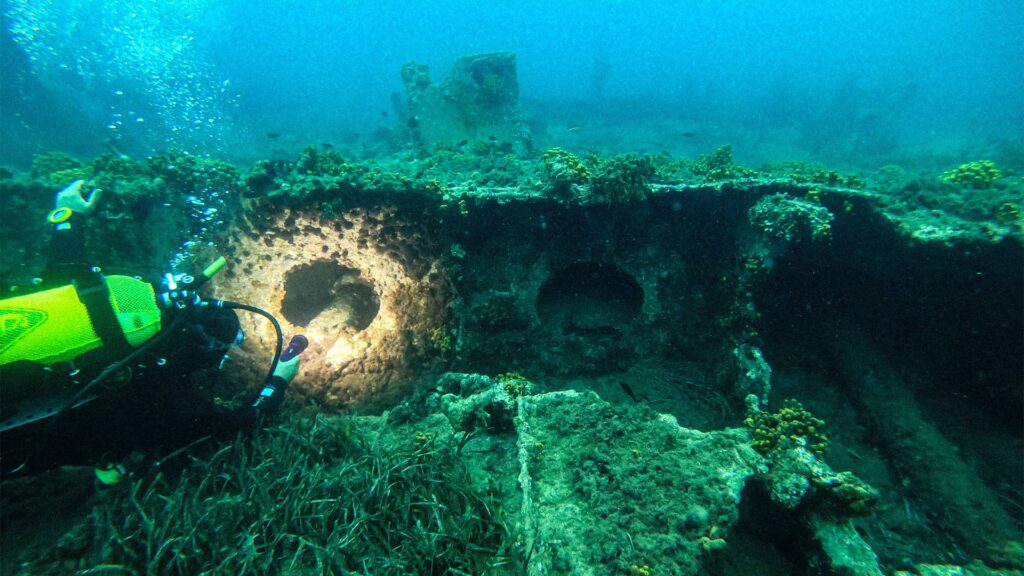
Perhaps the most unexpected part of the Gallipoli story is what these sunken warships have become ecologically. Coral, algae and a wide range of fish species have colonized the hulls, turning former instruments of war into thriving artificial reefs. The wrecks also act as an informal barrier against illegal trawling, since commercial fishing nets snag on the sunken structures, keeping destructive fishing boats out of the area.
Preserving a Century of Steel
Keeping century old steel intact underwater is a genuine engineering challenge, since saltwater corrodes iron continuously. To slow this process, engineers working on the Derin Miras project have installed a system known as cathodic protection, using sacrificial anode blocks made of zinc, aluminum or copper near each wreck. These blocks corrode in place of the ship itself, significantly slowing deterioration.
The HMS Louis became the first wreck in the project to receive this conservation treatment. To mark the occasion, Swedish underwater photographer Alex Dawson, named Underwater Photographer of the Year in 2024, documented the wreck and its newly installed anodes. Turkish freediver Bilge Cingigiray, a Guinness World Record holder, also marked the milestone with a freedive to 13 meters without scuba equipment.
Site of Remembrance as Much as Recreation
Beyond the diving and the science, Gallipoli Underwater Park carries a deeper significance. Kartal has described the site as one that calls for awareness of the suffering that took place in these waters during the campaign.
That message of reconciliation echoes the words spoken by Mustafa Kemal Atatürk, founder of the Republic of Türkiye, addressed to the families of the foreign soldiers who died at Gallipoli, in which he assured them that the fallen had become as sons of the Turkish nation as well.
More than a hundred years on, the sunken fleet beneath the Dardanelles no longer stands only for conflict. It has become a rare combination of history, marine science and hope, a demonstration that even a site shaped by tragedy can be preserved, protected and opened to future generations of divers.
Planning the Dive
Gallipoli Underwater Park offers guided dives ranging from shallow, beginner friendly wrecks to extreme technical dives reserved for certified professionals, making it one of the world’s more unusual combinations of history and diving tourism. Divers interested in the site can arrange guided trips through the Gallipoli Historic Underwater Park’s official operators.

Mohsen Nabil is the Founder and Editor-in-Chief of Diventures Magazine. A mechanical engineer and scuba diving instructor based in the Red Sea, he writes about diving safety, marine conservation, underwater exploration, and developments in the global dive industry. Through Diventures Magazine, he works to connect divers, scientists, and ocean advocates while promoting responsible diving and protection of the oceans.