

To Pee or Not to Pee in Your Wetsuit While Scuba Diving?
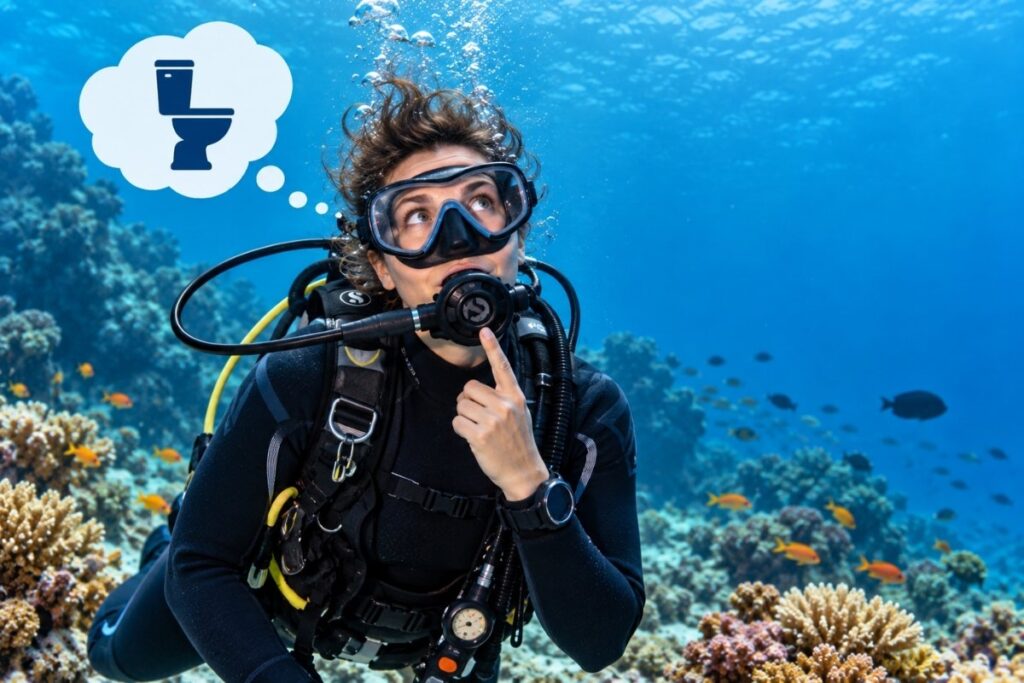
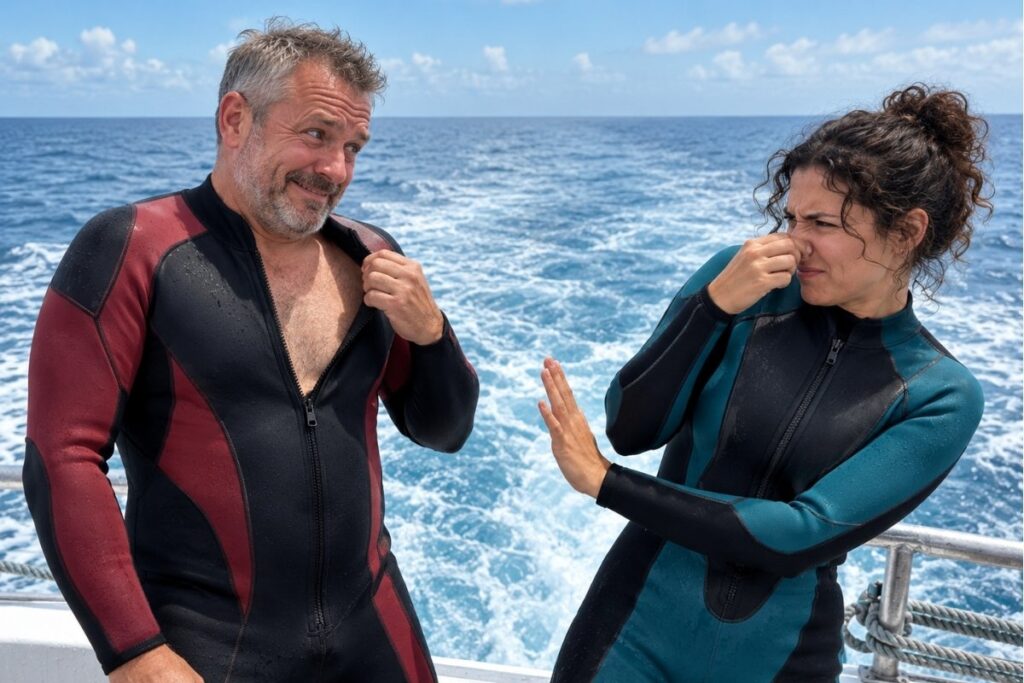
It is one of those questions divers often joke about but rarely discuss seriously: Is it actually okay to pee in your wetsuit?
For many divers, the question becomes surprisingly relevant shortly after entering the water. You used the toilet before the dive, you did not drink an unusual amount of water, and yet halfway through the dive your bladder suddenly seems convinced that surfacing is an emergency.
There is a physiological reason for this, and it has very little to do with poor planning.
Why Do Divers Need to Pee So Much?
The phenomenon is called immersion diuresis.
When you enter the water, particularly cooler water, blood vessels near the skin and in the extremities constrict. Blood shifts toward the chest and the central circulation.
Your body interprets this increased central blood volume as though there is more fluid circulating than necessary. Hormonal changes follow, including a reduction in antidiuretic hormone activity, encouraging the kidneys to produce more urine.
In other words, your bladder is not necessarily complaining because you drank too much before the dive. Your body is responding naturally to immersion.
Divers Alert Network describes immersion diuresis as a normal physiological response to being underwater, with cooler temperatures tending to increase the effect.
This is why a diver can visit the bathroom immediately before gearing up and still feel the urge again surprisingly early in the dive.
So, Is It Safe to Pee in a Wetsuit?
Generally, yes.
According to Divers Alert Network, urinating in a wetsuit is common among recreational divers and is generally not harmful when exposure is limited.
If the alternative is spending much of the dive uncomfortable and distracted while desperately trying to hold your bladder, relieving yourself may be the more practical option.
That does not mean your wetsuit should become a portable toilet without consequences.
Urine remaining against the skin for a prolonged period can contribute to irritation. DAN notes that extended contact may affect the skin’s protective barrier and potentially cause redness, itching, or a rash.
Good hygiene after the dive therefore matters.
Does Peeing in Your Wetsuit Keep You Warm?
For a few moments, it certainly feels that way.
Warm urine entering a cold wetsuit can produce an immediate feeling of warmth, which probably explains why the practice has acquired a reputation as an improvised heating system among divers.
But it should not be considered thermal protection.
The warmth is temporary. Your real protection against cold comes from choosing appropriate exposure protection for the water temperature and dive duration.
If you are becoming genuinely cold during a dive, urinating inside your wetsuit is not a solution to inadequate thermal protection.
Will Urine Damage Your Wetsuit?
One accidental bathroom break is unlikely to destroy a wetsuit.
The bigger issue is repeated exposure combined with poor cleaning.
DAN advises that compounds present in urine can gradually affect neoprene when a wetsuit is not properly rinsed and cleaned. Odor is another obvious consequence of allowing urine to remain inside the suit after diving.
After the dive, rinse the wetsuit thoroughly with fresh water. Periodic cleaning with a product suitable for wetsuits can also help, particularly when the suit is used frequently.
The diver deserves a rinse too.
Removing the wetsuit relatively soon after diving and rinsing the skin with fresh water reduces prolonged contact and helps prevent irritation.
Should You Drink Less Before Diving?
No.
Trying to avoid the problem by deliberately reducing your fluid intake is not a good solution.
Immersion itself encourages urine production, which means drinking less may not prevent the urge anyway. DAN recommends divers maintain appropriate hydration rather than intentionally limiting fluids simply to avoid urinating during a dive.
A better strategy is simple: use the bathroom before gearing up, remain normally hydrated, and accept that your kidneys may still have other plans once you enter the water.
What About Rental Wetsuits?
This is where physiology meets etiquette.
Your personal wetsuit is one thing. A rental wetsuit that another diver will be wearing tomorrow is another.
If you can reasonably avoid urinating in rental equipment, do so. If it becomes unavoidable during a long dive, the important issue is ensuring that the suit is properly cleaned afterward according to the dive operator’s procedures.
Dive centers also have different equipment cleaning practices, so divers should respect the policies of the operator providing the equipment.
And if you have ever wondered why owning your own wetsuit feels particularly attractive after several days of diving, this may be one more reason.
Should You Just Hold It?
There is no award for finishing a dive with the fullest bladder.
DAN notes that holding urine through an entire dive can become uncomfortable and distracting, and prolonged retention may contribute to bladder irritation in some circumstances.
Distraction matters underwater.
A diver who spends half the dive concentrating on desperately needing a bathroom is paying less attention to buoyancy, gas, depth, time, the environment, and their buddy.
If you genuinely need to urinate during a dive, doing so is usually more sensible than allowing increasing discomfort to dominate your attention.
When It Is More Than Immersion Diuresis
Needing to urinate underwater is normal.
Pain or burning during urination is not.
Divers experiencing persistent urinary urgency outside the water, pain, blood in the urine, unusual irritation, or recurrent symptoms should not simply blame diving. Those symptoms deserve medical evaluation.
Immersion diuresis explains why healthy divers often need to urinate while submerged. It does not explain every urinary symptom.
The Bottom Line
So, to pee or not to pee?
If you are wearing your own wetsuit, nature is calling halfway through the dive, and you are otherwise comfortable and healthy, there is generally little reason to turn it into an underwater endurance competition.
Pee if you need to.
Just remember what comes afterward: rinse yourself, rinse the wetsuit thoroughly, clean it properly, and let it dry before storing it.
And perhaps the real question among experienced divers was never whether anyone pees in their wetsuit.
It was whether anyone admits it.

Mohsen Nabil is the Founder and Editor-in-Chief of Diventures Magazine. A mechanical engineer and scuba diving instructor based in the Red Sea, he writes about diving safety, marine conservation, underwater exploration, and developments in the global dive industry. Through Diventures Magazine, he works to connect divers, scientists, and ocean advocates while promoting responsible diving and protection of the oceans.