
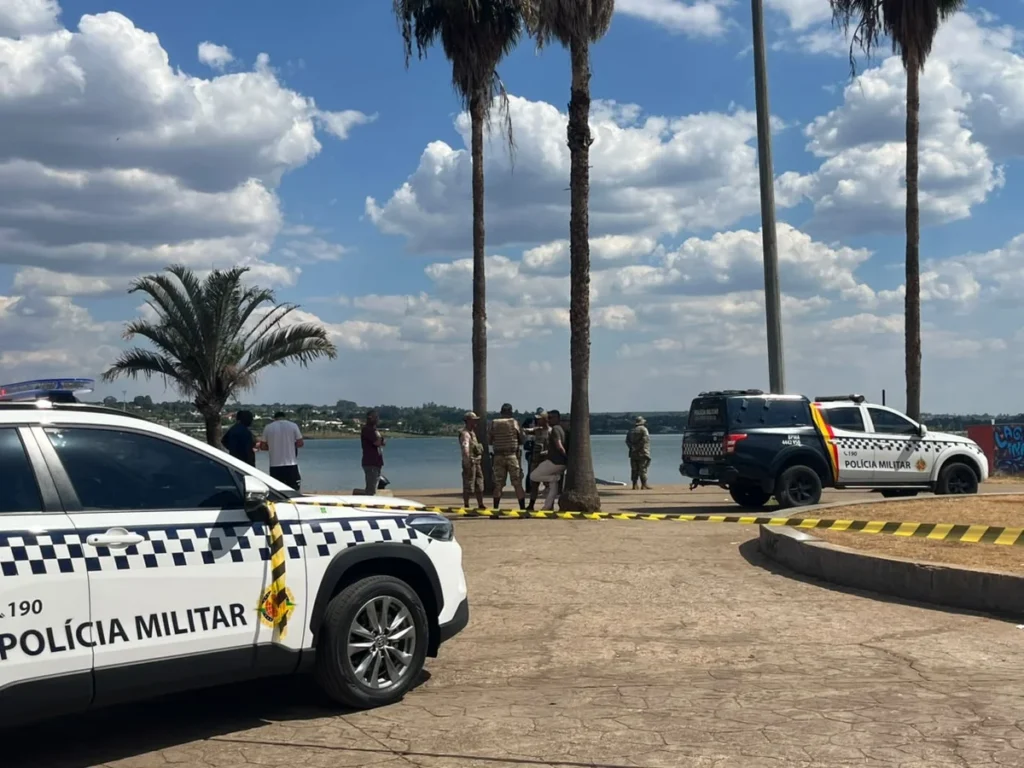

Brazilian Police Diver Dies During Training in Lake Paranoá
A 28 year old Brazilian military police officer has died during an aquatic training exercise in Lake Paranoá in Brasília, with authorities now investigating the circumstances surrounding the incident.
Lucas Duran da Silva, a member of the Federal District Military Police Environmental Battalion, died on Monday, September 21, while taking part in training near the JK Bridge in Brasília.
According to a statement issued by the Federal District Military Police, known as the PMDF, two officers were participating in the activity. Both had completed the Water Operations Course and were described by the force as advanced divers with international certification permitting dives to depths of up to 40 metres.
The PMDF said Lucas suffered what it described as a sudden medical event while submerged. The officer accompanying him brought him from the water and began cardiopulmonary resuscitation.
The Federal District Military Fire Department was called to the scene and continued advanced resuscitation efforts, but Lucas could not be revived.
Questions Remain About the Training Exercise
Metrópoles reported additional details about the exercise, saying Lucas was conducting breath hold diving training while another police officer accompanied him using scuba equipment.
According to the publication, the two descended together and Lucas at one stage reportedly breathed from an auxiliary scuba cylinder carried by his colleague before beginning an ascent.
The supporting diver later reached the surface, but Lucas was not immediately located. A search was subsequently initiated, and the officer returned underwater to the original descent area, where Lucas was reportedly found unconscious.
He was brought to the surface and resuscitation attempts began before emergency services arrived. Metrópoles reported that firefighters continued CPR at the scene before Lucas was pronounced dead.
These details have been reported by Metrópoles and should be distinguished from the more limited sequence of events provided in the official PMDF statement.
Why Breathing From Scuba During a Freedive Can Be Dangerous
Breathing compressed gas underwater changes the physiology of a breath hold dive.
During a normal freedive, a diver descends with the gas already contained in the lungs from the surface. As depth increases, that gas is compressed by the increasing surrounding pressure. During the return to the surface, it expands again, but under normal circumstances it should not exceed approximately the volume the diver had before descending.
The situation changes if a freediver breathes from a scuba regulator or another compressed gas source while at depth.
A scuba regulator delivers gas at the surrounding ambient pressure. This means a diver who takes a breath from a scuba cylinder underwater introduces additional compressed gas into the lungs. From that moment, the diver faces the same critical ascent principle as a scuba diver: the expanding gas must be allowed to escape during ascent.
Divers Alert Network, DAN, explains that if a diver ascends after breathing compressed gas and holds their breath, the gas in the lungs expands as the surrounding pressure decreases. If it cannot escape, the lungs can become overinflated, potentially causing pulmonary barotrauma, pneumothorax or arterial gas embolism.
Published medical literature has also documented this specific risk in breath hold diving. A 2024 case report in Undersea & Hyperbaric Medicine noted that arterial gas embolism is normally unlikely during breath hold diving because the lung volume on surfacing generally cannot exceed its initial surface volume. However, once a breath hold diver breathes from a compressed gas source underwater, that protection no longer applies and the diver becomes vulnerable to pulmonary overinflation injuries during ascent.
A separate published case report similarly noted that a breath hold diver who breathes compressed gas at depth effectively assumes the pulmonary risks associated with scuba diving during the subsequent ascent.
This risk is particularly important close to the surface, where proportional changes in pressure and therefore gas volume are greatest. DAN notes that lung expansion injury can occur even following an ascent from very shallow water after inhaling compressed gas underwater.
In the Lake Paranoá incident, reports that Lucas may have breathed from a scuba cylinder during the exercise make this an important aspect for investigators to examine. However, there is currently no official confirmation that pulmonary barotrauma, arterial gas embolism or this reported sequence caused his death.
Prosecutors Request Information
Following the death, the Federal District and Territories Public Prosecutor’s Office, MPDFT, requested information and documents from the PMDF concerning the training exercise.
The Military Prosecutor’s Office said it is seeking to establish how the activity was planned, conducted and supervised, as well as what safety and emergency measures were in place.
The requested information includes the nature and planning of the exercise, qualifications of those responsible for instruction and safety, equipment used, risk prevention procedures, environmental conditions and the emergency response available at the site.
Prosecutors have also requested records including images, communications, incident documentation and information concerning any forensic examinations or internal investigations. The PMDF was given 10 days to provide the requested information.
Cause of Death Not Yet Confirmed
A separate report by Metrópoles cited information suggesting that barotrauma was being considered as a possible factor in the incident. However, this has not been officially established as the cause of Lucas’s death.
The PMDF has stated that the circumstances and cause of the incident remain under investigation. Until the findings of the investigation or any medical examination are released, the precise cause of the fatality remains unconfirmed.
The police force described Lucas as a highly dedicated athlete who was known for his discipline and sporting ability, and said he was well regarded by his colleagues. He had joined the force a little more than a year before his death.
The PMDF expressed condolences to his family, friends and fellow officers.
Developing Story: The circumstances of the training exercise and the medical cause of death remain under investigation. Diventures will update this article if authorities release further confirmed information.
Sources: Metrópoles, MPDFT, DAN