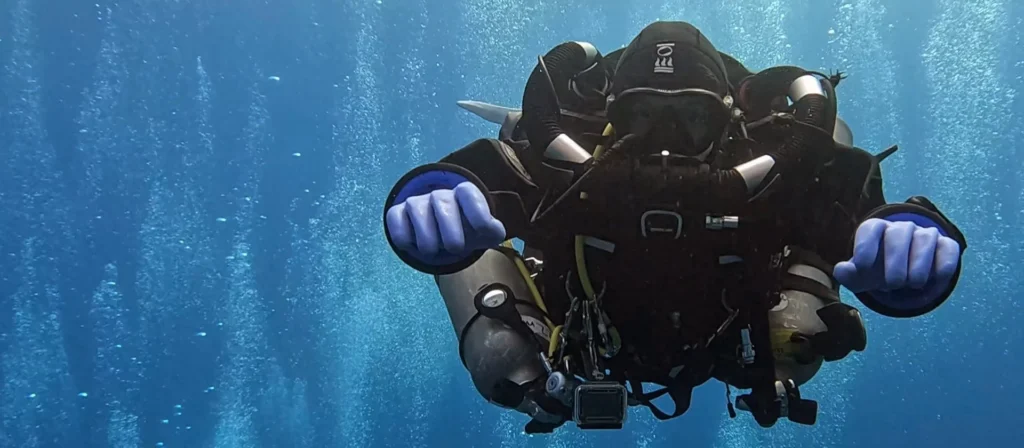

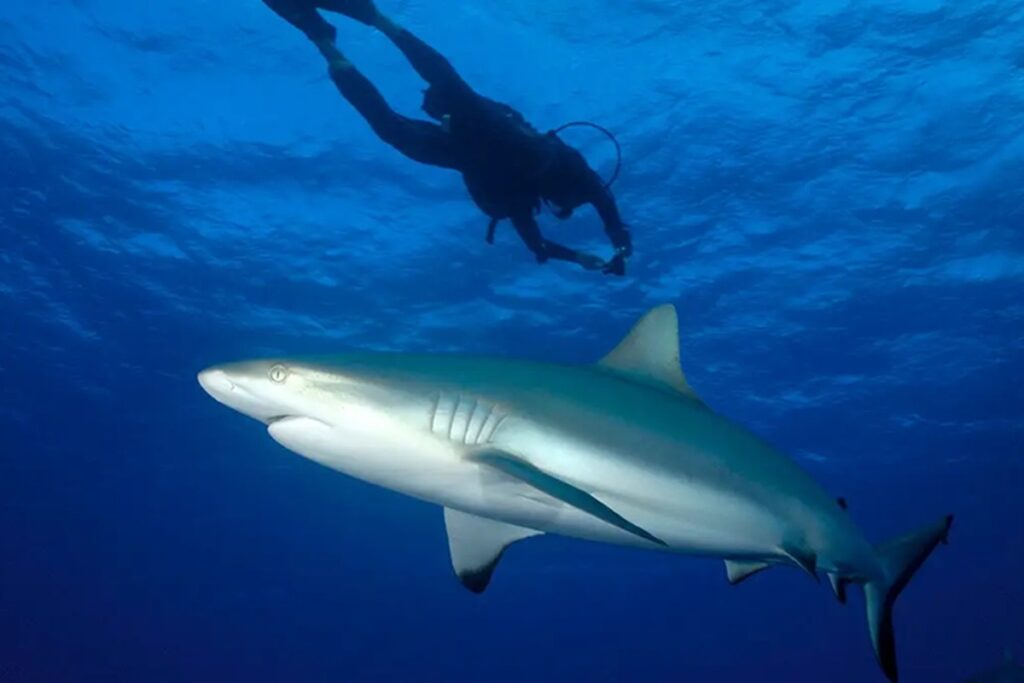

A New Zealand based fishing content creator is recovering after a grey reef shark bit his lower leg during a spearfishing dive in Fiji earlier this month, an incident he later documented on social media along with underwater footage of the attack.
Henry Gibbs, known for his fishing and diving content, was spearfishing in Fijian waters when the shark bit his right leg. The injury required four surgeries and a skin graft. Despite the severity of the wound, Gibbs retained full function of his foot.
In a post on Instagram, Gibbs described the incident without placing blame on the animal, noting that he had been in the shark’s territory while hunting its natural prey. He said he intended to share the footage publicly so that other divers and spearfishers could learn from the encounter and better understand how to respond if a similar situation arises.
Gibbs later posted the video itself, which shows a grey reef shark circling beneath him before turning and biting his lower leg. According to his account, the group had spent one to two hours diving along the reef before moving into open blue water to spearfish, an area where several grey reef sharks were already present.
One shark in particular remained near the divers longer than the others. Gibbs said he could not say for certain whether the noise from the boat, the sound of the speargun, or general activity in the water triggered the shark’s behavior. He described the animal making tight circles beneath the group and becoming increasingly agitated before the attack, and said in hindsight that behavior should have been a signal to end the dive.
Gibbs noted that most of his previous shark encounters occurred in New Zealand waters, where he said sharks tend to be less aggressive, and that assuming this shark would behave the same way was a misjudgment.
Following the incident, Gibbs offered several safety takeaways for other divers and spearfishers. He recommended ending a dive immediately if a shark’s behavior changes, choosing plain, solid colored wetsuits rather than patterned or camouflage designs when diving in tropical waters, and never dismissing signs of agitation in a shark regardless of its size. He said he has since heard of other cases involving grey reef sharks approaching divers wearing camouflage wetsuits.
Gibbs said he is still deciding whether to release additional, more graphic footage from the encounter, but that he wants to use the experience to raise awareness about carrying proper trauma gear, knowing how to use it, and diving with trusted companions. He thanked the medical staff, along with family and friends, who supported his recovery.
The incident adds to a string of shark encounters reported across popular diving and fishing destinations this year, underscoring the importance of situational awareness and clear dive protocols in areas where reef sharks are commonly present.