
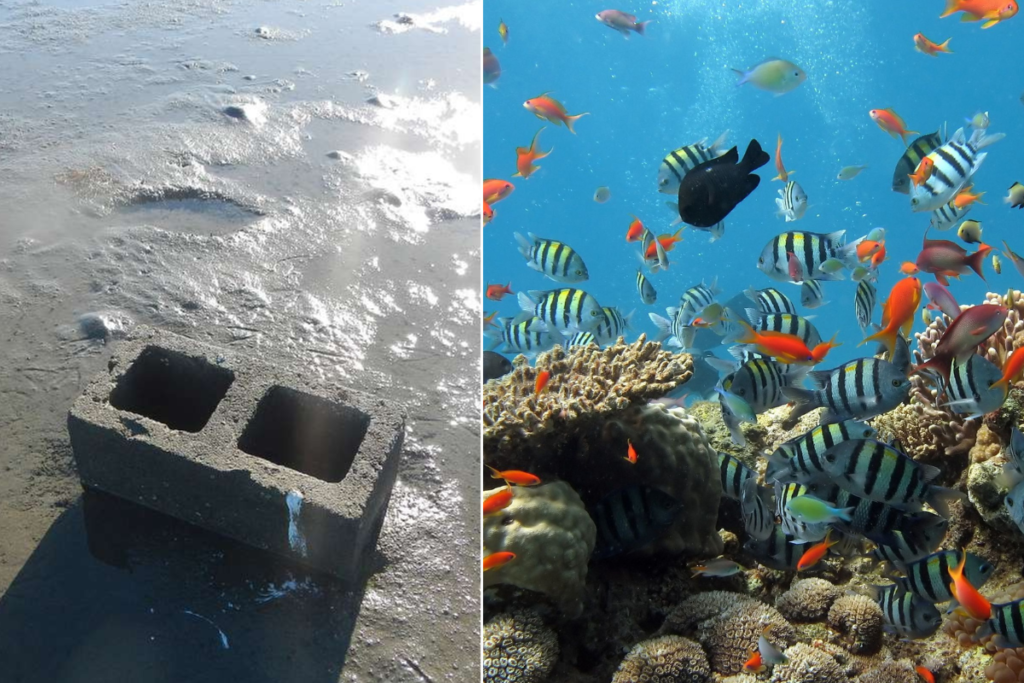

A new approach to coral reef restoration is gaining attention as researchers and conservationists explore the use of specially designed concrete structures to support marine life and rebuild damaged reefs.
The concept focuses on creating artificial reef systems that can provide a stable foundation for coral growth while attracting fish and other marine species back to degraded areas.
A Different Way to Support Coral Growth
Traditional reef restoration methods often rely on coral transplantation, where fragments are grown in nurseries and later placed back onto natural reefs.
The new approach introduces carefully engineered concrete structures that are placed underwater to act as a base for marine organisms. These structures are designed to mimic natural reef formations, offering surfaces where coral larvae can settle and grow.
Over time, these artificial bases can develop into thriving ecosystems.
Why Concrete?
Concrete may seem like an unusual material for marine conservation, but when designed correctly, it can be highly effective.
Researchers are developing marine-safe concrete mixes that:
- Encourage coral attachment
- Resist erosion in saltwater environments
- Provide long-term structural stability
- Create complex surfaces for marine life
In some projects, eco-friendly materials are used to reduce environmental impact while improving biological compatibility.
Supporting Marine Biodiversity
Once deployed, these structures can quickly attract marine organisms.
Fish, invertebrates, and algae begin to colonize the area, creating a new ecosystem that can support biodiversity. As coral begins to grow, the structure becomes more integrated into the surrounding environment.
This process can help restore habitats that have been damaged by climate change, pollution, or human activity.
A Complement, Not a Replacement
Experts emphasize that artificial reef structures are not a replacement for natural reefs, but rather a tool to support recovery.
Protecting existing reefs remains the top priority. However, in areas where reefs have been severely degraded, artificial structures can provide a starting point for regeneration.
What This Means for Divers
For divers, artificial reefs are becoming increasingly common around the world.
In many cases, these sites offer new dive experiences while also contributing to conservation efforts. Divers may notice:
- Increased fish activity
- Early stages of coral growth
- Changes in marine life over time
These sites can also serve as educational platforms, helping divers understand the challenges facing marine ecosystems.
Looking Ahead
As ocean conditions continue to change, innovative solutions like artificial reef structures are becoming more important.
The success of these projects depends on careful design, proper placement, and long-term monitoring.
For the diving community, supporting such initiatives—through awareness, responsible diving practices, and conservation efforts—remains essential to protecting the future of coral reefs.

Mohsen Nabil is the Founder and Editor-in-Chief of Diventures Magazine. A mechanical engineer and scuba diving instructor based in the Red Sea, he writes about diving safety, marine conservation, underwater exploration, and developments in the global dive industry. Through Diventures Magazine, he works to connect divers, scientists, and ocean advocates while promoting responsible diving and protection of the oceans.