
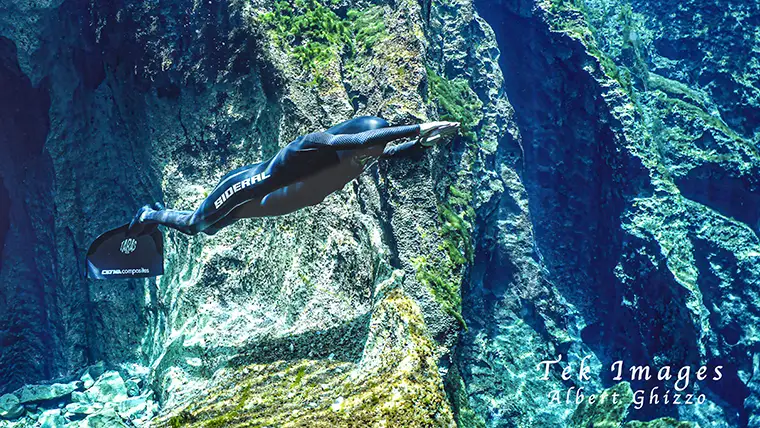

For decades, scuba innovation has focused on going deeper, staying longer, and carrying more advanced technology underwater. But Swiss cave explorer and inventor Olivier Isler pursued a different dream entirely: creating a diving system so streamlined and natural that it would allow a diver to move through the water almost like a marine animal itself.
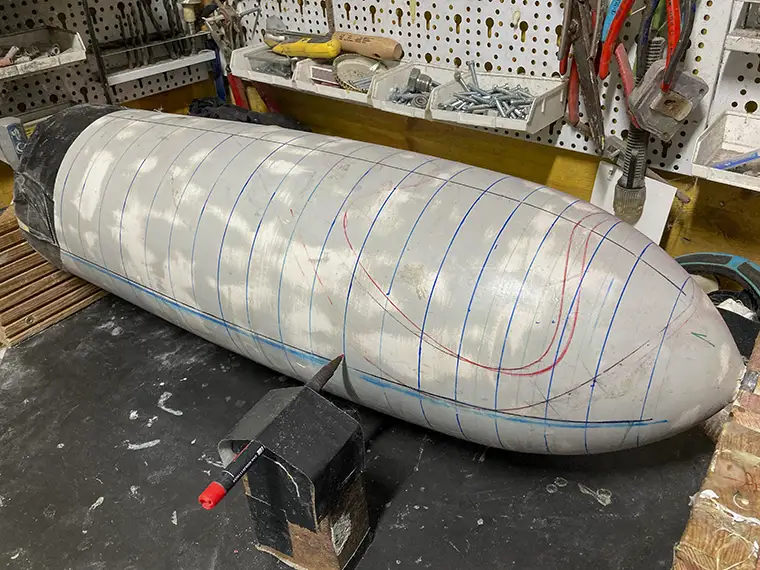
That vision became the Hydrophilis, a radically lightweight closed-circuit rebreather system developed over more than 14 years of experimentation. Weighing just 10 kg (22 lb), the compact apparatus was designed not simply as diving equipment, but as a hydrodynamic extension of the diver’s body.
Originally introduced through an in-depth feature by InDEPTH Magazine. The Hydrophilis reflects an unusual blend of engineering, cave-diving experience, freediving principles, and biomimicry-inspired design.
A Dream Inspired by Marine Life
According to Isler, the idea for the Hydrophilis emerged after a vivid dream in which he was swimming peacefully among whales and dolphins. That image sparked a question: could a diver move underwater with the same freedom and fluidity as marine mammals?
The answer required rethinking conventional diving systems.
Traditional scuba equipment often creates drag through bulky cylinders, hoses, and accessories mounted behind the diver. Isler instead pursued a low-profile design focused on minimizing resistance in the water while maintaining sufficient breathing autonomy.
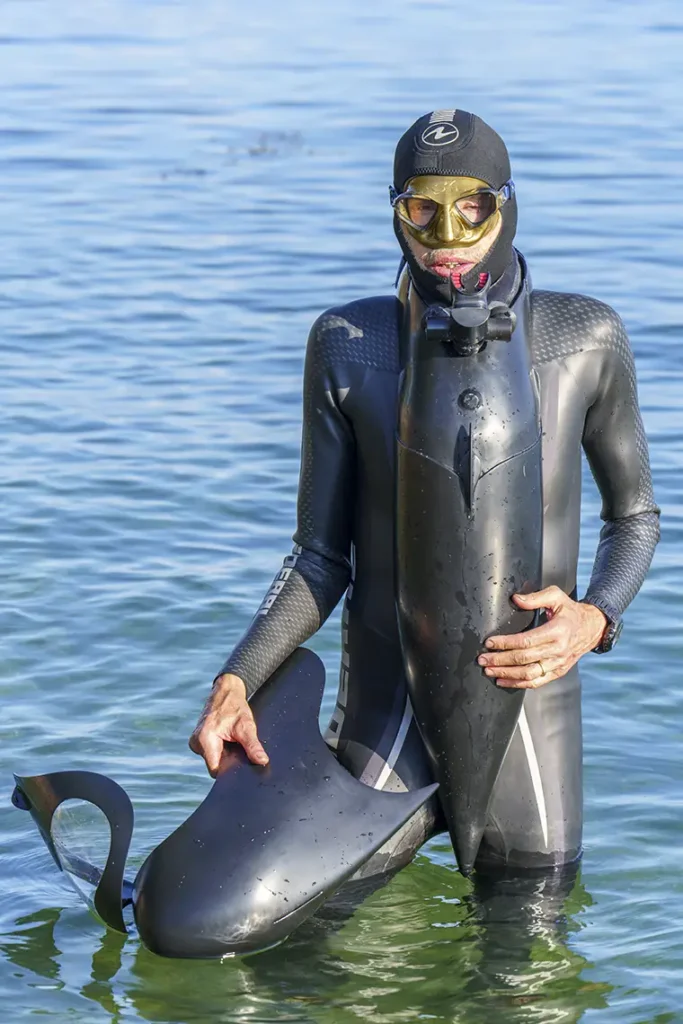
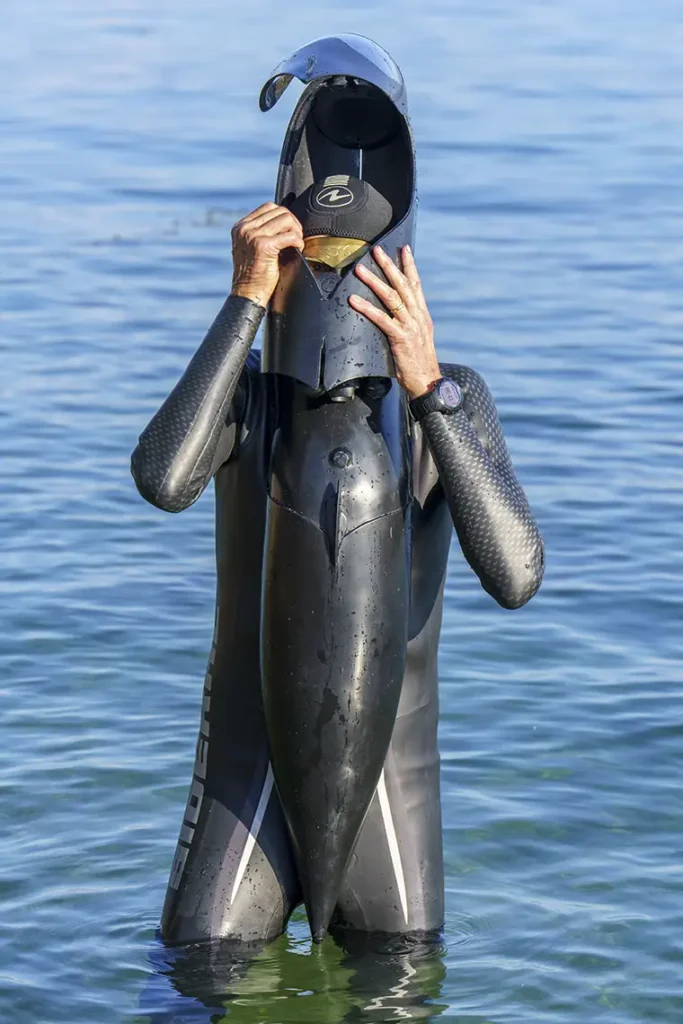
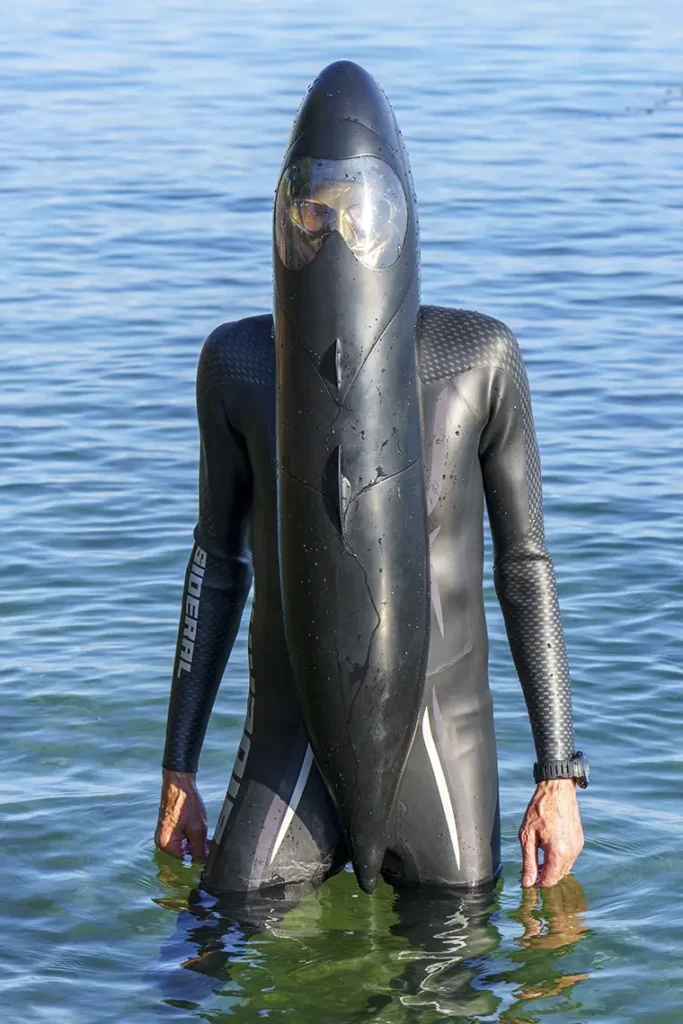
The result is a chest-mounted rebreather integrated with a hydrodynamic helmet, creating a streamlined profile rarely seen in recreational or technical diving equipment.
Engineering the Hydrophilis
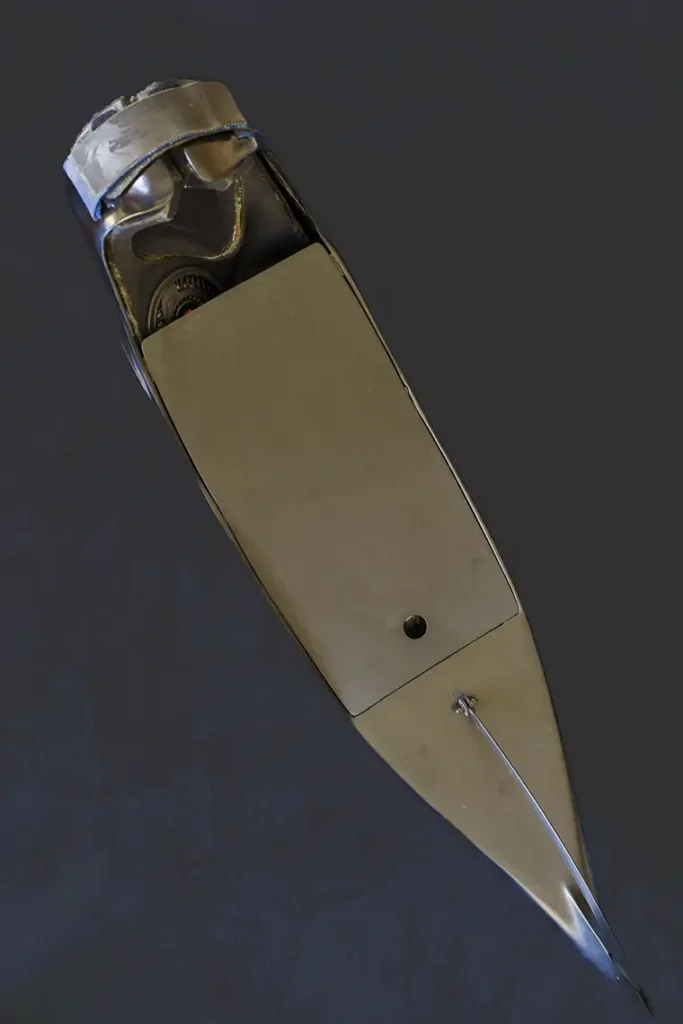
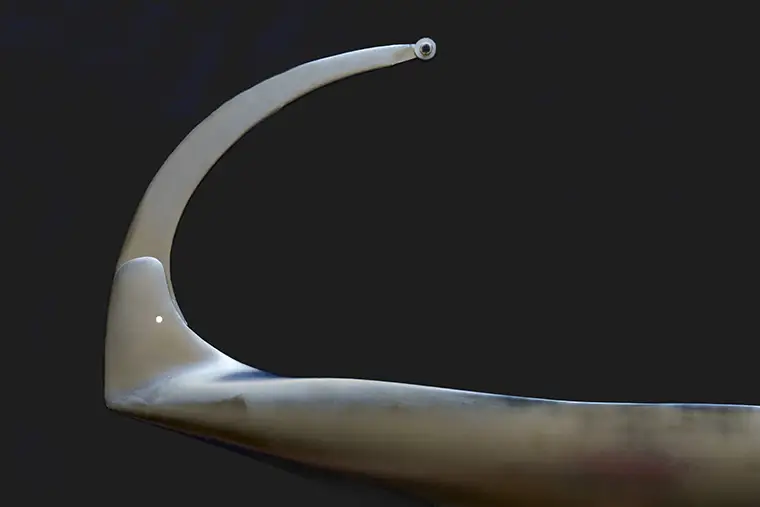
One of the most distinctive aspects of the Hydrophilis is its shape. Isler based much of the system’s design on NACA airfoil principles — aerodynamic profiles originally developed for aviation to reduce drag.
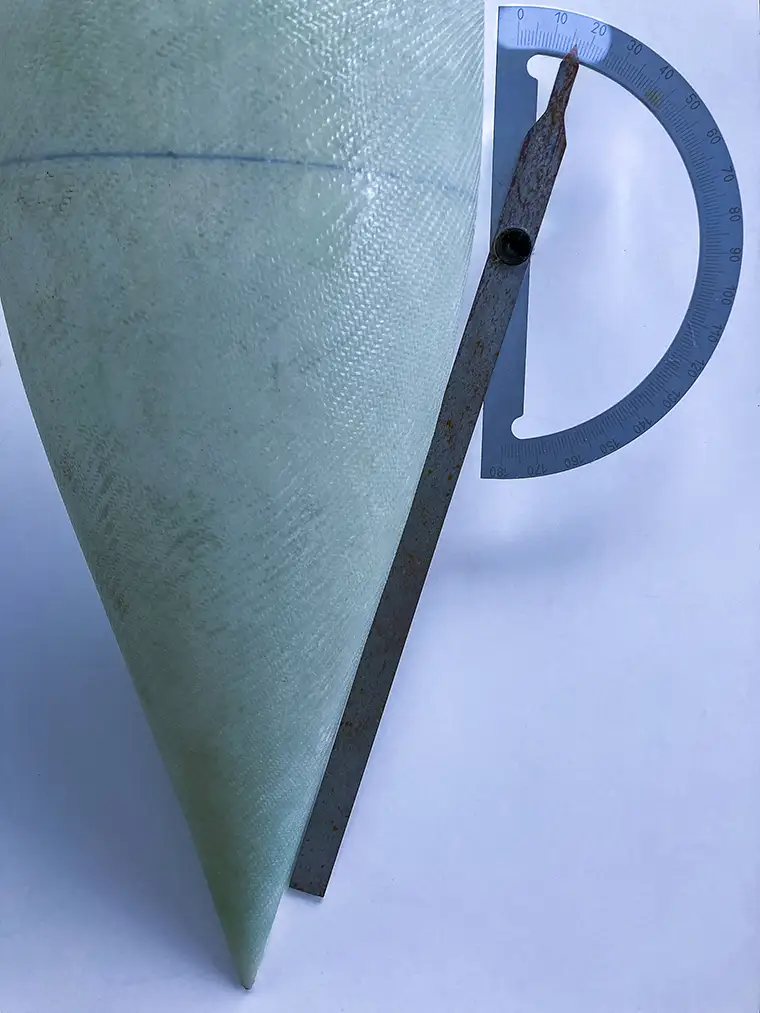
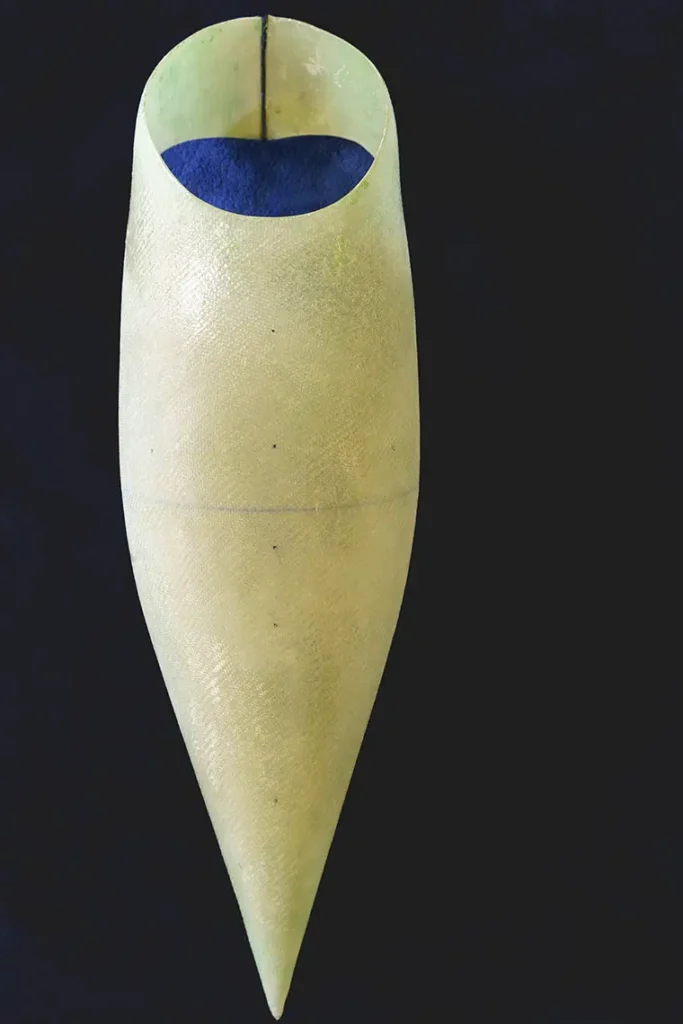
Working with fluid dynamics specialists in Switzerland, he refined the geometry of the system, including a trailing cone angled specifically to minimize turbulence underwater.
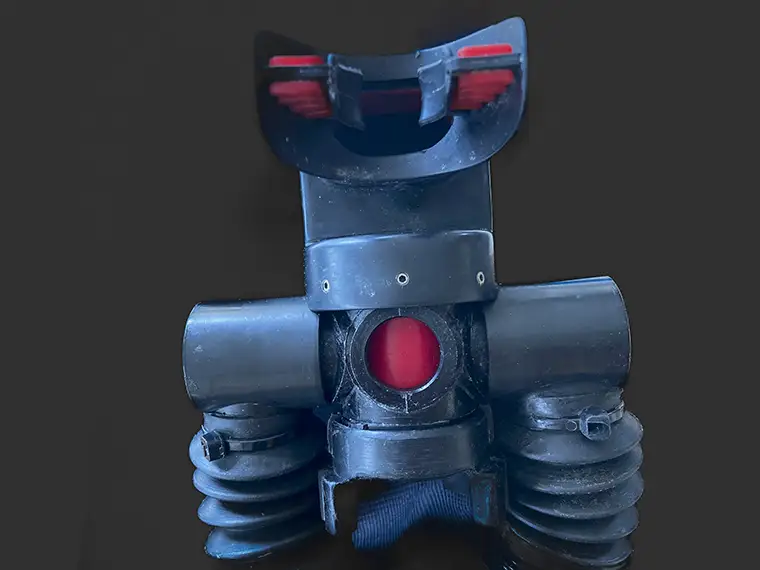
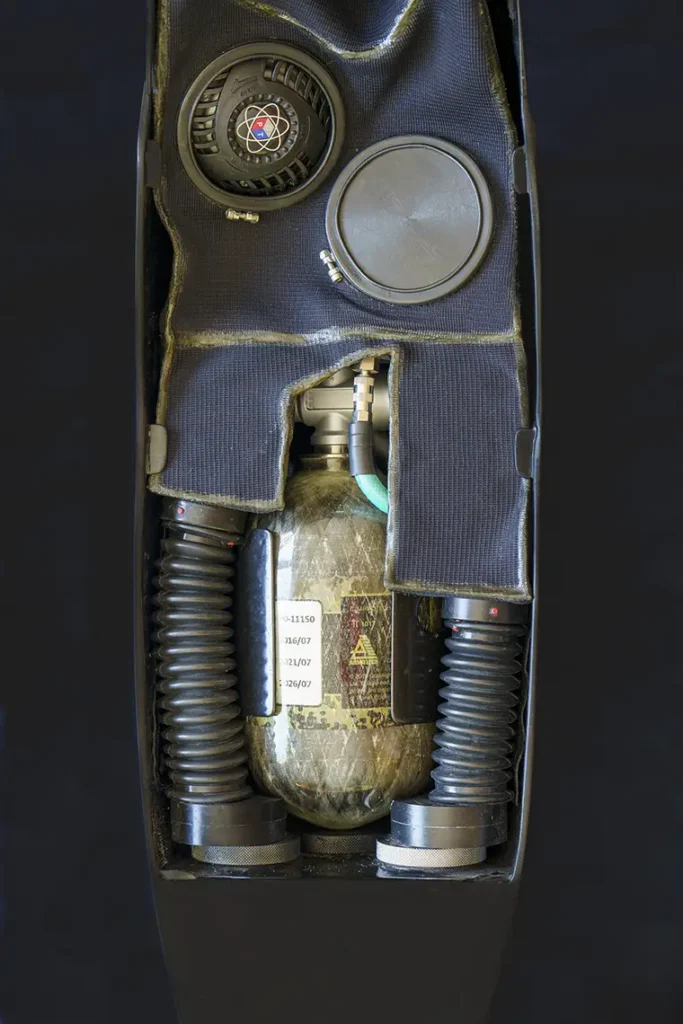
The device itself is built primarily from epoxy resin and fiberglass composites, helping keep the total weight exceptionally low. Despite its compact dimensions, the system offers between 60 and 90 minutes of autonomy depending on exertion levels.
The Hydrophilis can operate as:
- A pure oxygen closed-circuit rebreather
- A semi-closed nitrox system for dives up to approximately 20 meters (66 feet)
That flexibility allows the apparatus to bridge concepts from technical diving and advanced breath-hold diving.
Why Chest-Mounted Matters
Unlike most rebreathers that position counterlungs on the back, Isler intentionally placed the breathing system on the chest.
The reasoning was partly medical.
He aimed to reduce the potential risk of Immersion Pulmonary Edema (IPE), a condition associated with pressure differences during breathing underwater. By keeping the breathing volume closer to the lungs and reducing negative pressure effects, the chest-mounted configuration may offer ergonomic advantages for some diving profiles.
The compact counterlung system integrates directly into the diver’s frontal profile, while a lightweight support hoop helps stabilize the apparatus close to the body during movement.
This setup contributes to what Isler describes as a more natural underwater swimming sensation.
The Helmet Concept
Perhaps the most visually striking feature of the Hydrophilis is its helmet.
Instead of conventional masks and exposed hoses, the helmet extends seamlessly from the rebreather body, creating a continuous hydrodynamic shape. Magnets and keyed fittings connect the helmet securely to the breathing unit.
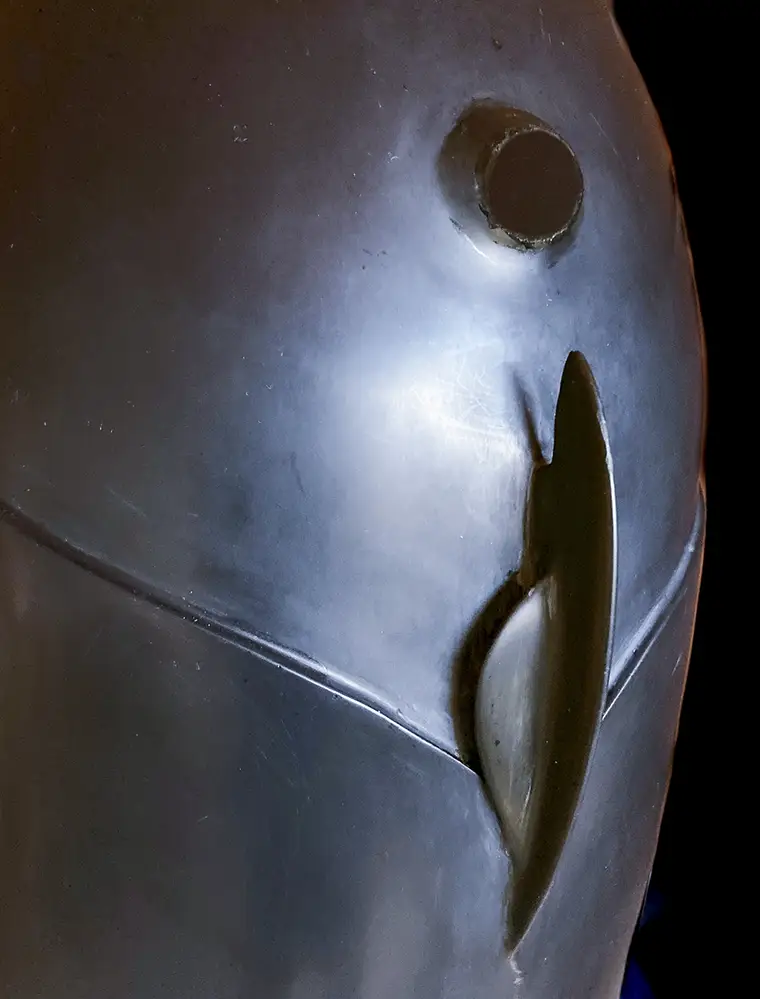
The visor, made from thermoformed Plexiglas, can open for access to the mouthpiece and mask system underneath.
The overall appearance feels closer to experimental underwater aviation equipment than traditional scuba gear — a reflection of Isler’s long-standing fascination with efficiency in extreme underwater environments.
Minimal Drag, Maximum Freedom
Hydrodynamics remain central to the Hydrophilis philosophy.
To reduce drag further, Isler paired the system with:
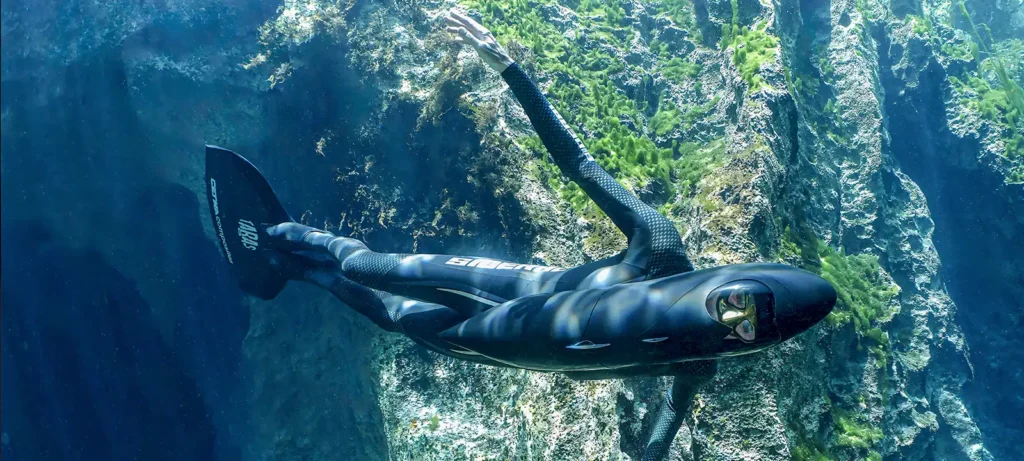
- A thin 2 mm freediving suit
- Hidden ballast systems using tungsten grit
- Long freediving fins or monofins
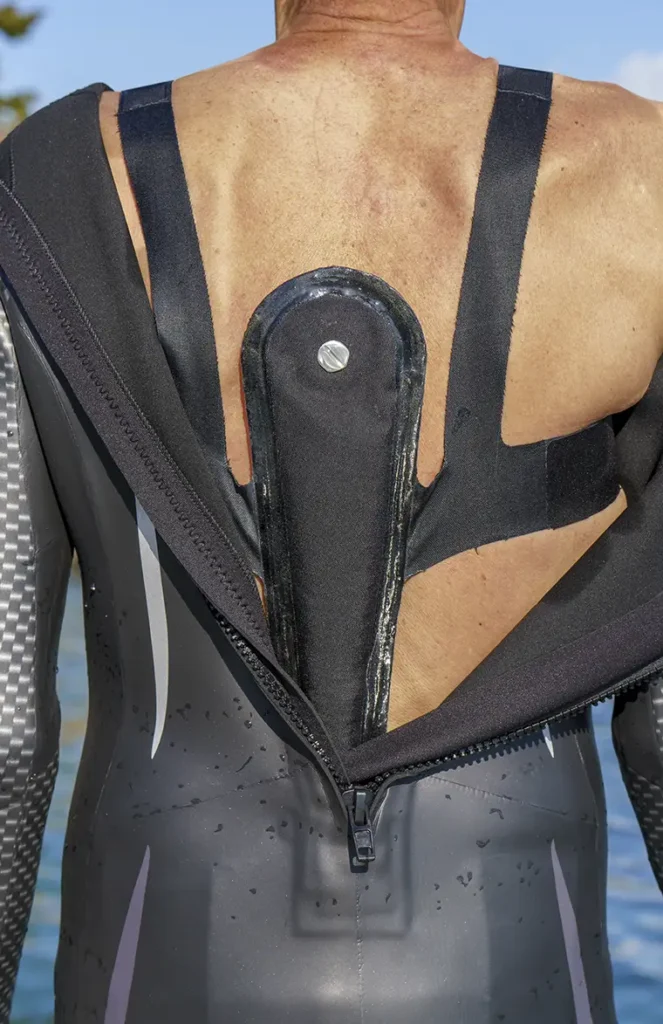
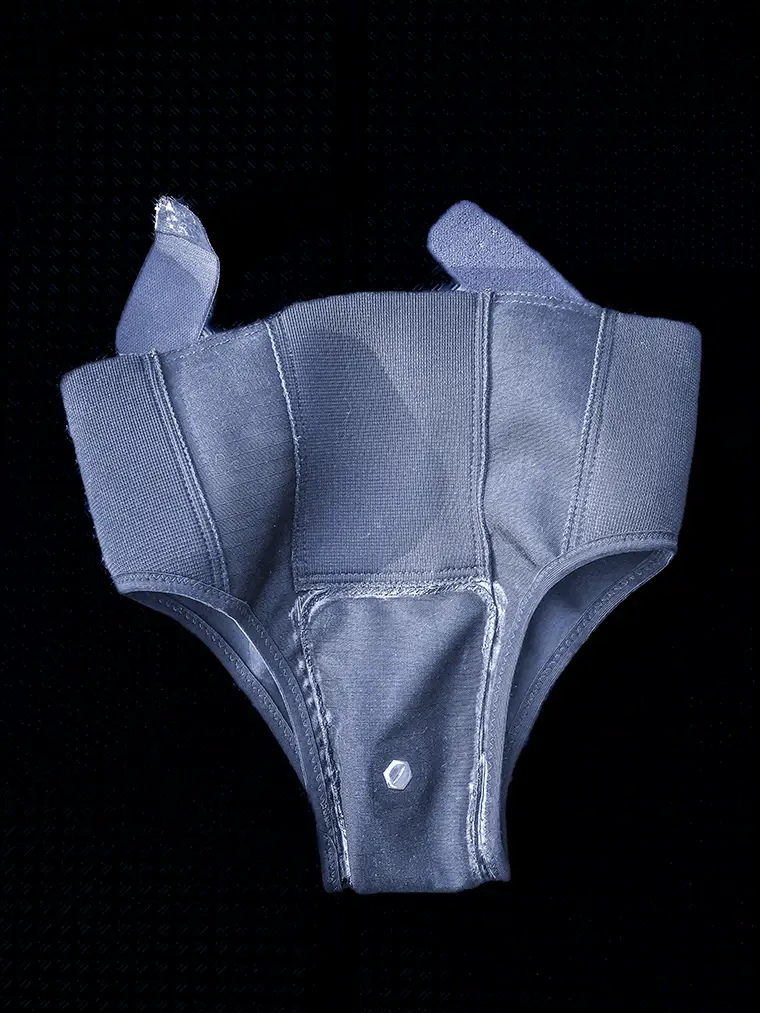
Even the weighting system avoids external lead blocks that could interrupt water flow.
According to Isler’s early test dives, the system performs especially efficiently when paired with a monofin, allowing smooth propulsion with relatively low effort.
For cave divers and exploration-focused freedivers, this level of streamlining could represent an intriguing direction for future experimentation.
Lessons from a Cave Diving Pioneer
The Hydrophilis carries additional significance because of the diver behind it.
Born in 1950, Olivier Isler became one of Europe’s most respected cave explorers, known for pushing the limits of closed-circuit diving in flooded cave systems. He participated in major explorations across France, Italy, and the Canary Islands, including deep penetrations into the Atlantida Tunnel lava tube system.
Isler also helped develop the RI 2000, recognized as one of the first fully redundant rebreathers.
His decades of exploration experience clearly influenced the Hydrophilis design philosophy:
- Reduce unnecessary complexity
- Improve hydrodynamics
- Enhance diver mobility
- Minimize physical strain underwater
Rather than chasing commercial trends, the project appears driven by pure curiosity and the pursuit of underwater efficiency.
Could Designs Like This Shape Future Diving?
The Hydrophilis remains experimental, and Isler himself avoids making bold predictions about its future.
Still, projects like this often influence broader diving innovation in unexpected ways.
Many technologies now common in technical diving once began as unconventional prototypes developed by explorers experimenting at the edge of the sport. Lightweight materials, integrated systems, and drag-reduction concepts continue to gain importance across scuba and freediving disciplines.
For Red Sea divers, where extended drift dives, reef exploration, and streamlined movement are highly valued, the Hydrophilis concept also raises interesting possibilities about future equipment evolution.
While widespread adoption may still be far away, the project highlights an enduring truth about diving innovation: some of the most important ideas begin not in factories, but in the imagination of explorers trying to move more naturally through the underwater world.
As underwater technology evolves, the Hydrophilis stands as a reminder that the future of diving may not always involve adding more equipment — sometimes it means making the diver and the ocean work together more seamlessly.

Mohsen Nabil is the Founder and Editor-in-Chief of Diventures Magazine. A mechanical engineer and scuba diving instructor based in the Red Sea, he writes about diving safety, marine conservation, underwater exploration, and developments in the global dive industry. Through Diventures Magazine, he works to connect divers, scientists, and ocean advocates while promoting responsible diving and protection of the oceans.