
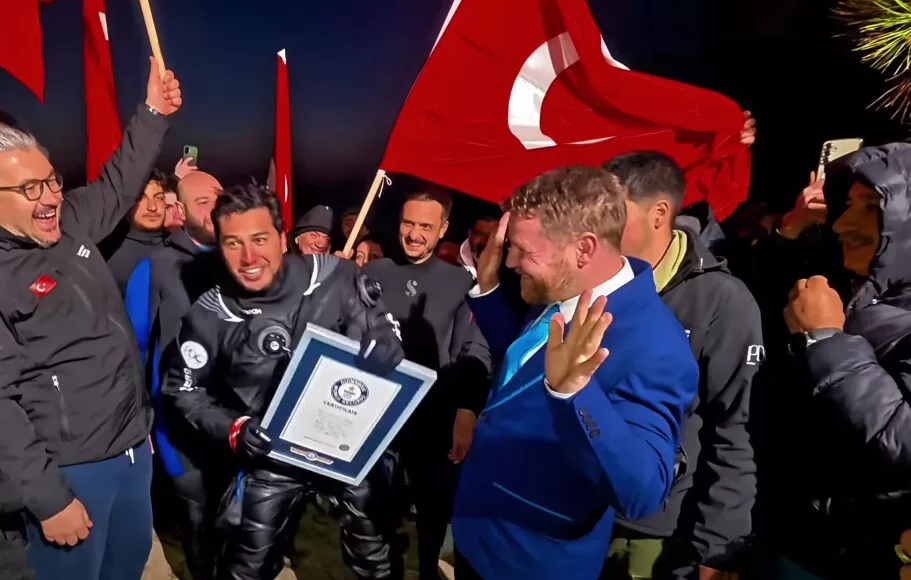

A Turkish scuba instructor, Mazlum Kibar, has set a new Guinness World Record for the longest open saltwater scuba dive in cold water, after spending more than 36 hours underwater in the Aegean Sea.
The record attempt took place at Mimoza Beach in Anzac Cove, on Türkiye’s Gallipoli peninsula. Kibar entered the water at 7:00 a.m. on 14 March and stayed at a depth of 7 meters in 12°C water for 36 hours, 9 minutes, and 36 seconds, surfacing the following evening.
For experienced divers, the headline number is only part of the story. This was not a deep dive. It was an endurance event, built around thermal stress, mental control, logistics, and team support over a long period. Cold water changes everything. Even at 7 meters, the body works hard to protect core temperature and maintain circulation. That makes planning and supervision the real foundation of an attempt like this.
The previous record and why this one matters
The previous Guinness record in the same category was held by another Turkish diver, Cem Karabay, who remained underwater for 30 hours and 20 minutes in April 2018, also in the Gallipoli area.
Kibar’s time extends that mark by almost six hours, a major increase in a category where the final stretch is often the hardest. The longer a diver stays submerged, the more small problems can stack up: cold stress, fatigue, hydration and nutrition management, skin exposure, and simple boredom that can affect focus.
A Guinness World Records adjudicator travelled from Portugal to observe the attempt and confirm the result, awarding the certificate on site.
How the dive was managed
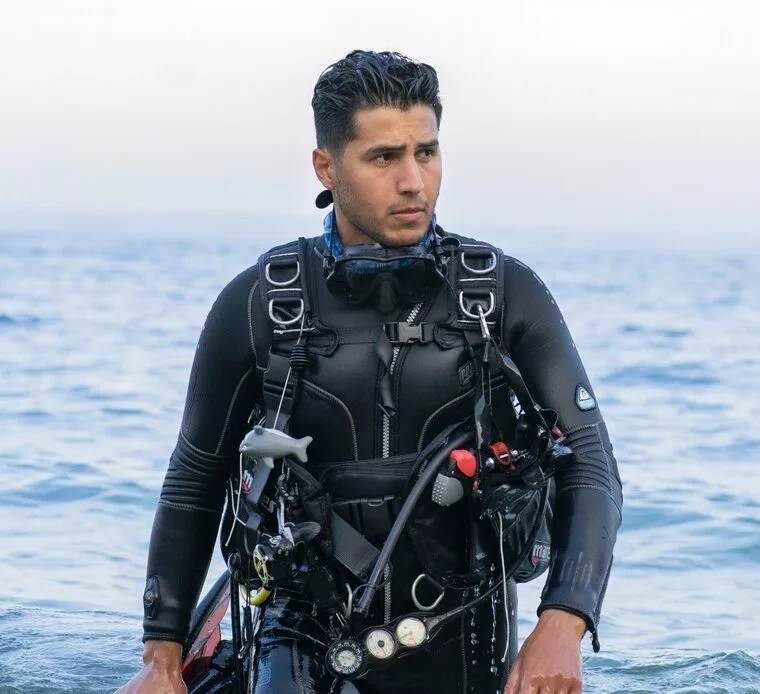
According to reporting on the event, Kibar used a full-face diving mask during the attempt. He removed it at times to take nourishment. Communication for such a long dive was handled with slates, rather than voice systems.
The support plan also included hands-on measures to reduce cold-related risk. Team members gave Kibar massages to help maintain circulation during the long exposure to 12°C water.
Kibar is reported to be 32 and based in Istanbul. His record attempt followed a 13-hour test dive, which is a sensible step when the goal depends on tolerance and systems that must work for many hours.
He also linked the dive to the anniversary of the Ottoman World War I naval victory at Gallipoli on 18 March 1915, which is connected to Martyrs’ Remembrance Day in Türkiye.
The experienced diver’s view: what this record really tests
Endurance records can look simple from the outside: “stay down and wait.” In reality, they test several high-risk areas that divers often underestimate:
- Cold-water management: 12°C can drain energy fast, even with protection. Long exposure needs active monitoring and clear thresholds for stopping.
- Human factors: fatigue, discomfort, and mental stress can lead to poor decisions late in the attempt.
- Surface and in-water support: a long dive is a team operation, not a solo performance. The support divers, safety cover, and communication plan matter as much as the record holder.
- Nutrition and hydration planning: long-duration events require planned intake and controlled breaks without losing safety oversight.
Kibar reportedly worked with a team of 75 people. That number underlines the scale of support required to keep an endurance dive controlled and documented.
What comes next
After setting this record, Kibar indicated he hopes to pursue further endurance records in different environments, including enclosed pools, lakes, and warm seas.
For the wider dive community, the value of stories like this is not that divers should copy them. The value is the reminder that time underwater is a serious stressor, and cold water multiplies that stress. Good planning, supervision, and clear stop criteria are what turn a high-risk idea into an organised effort.

Mohsen Nabil is the Founder and Editor-in-Chief of Diventures Magazine. A mechanical engineer and scuba diving instructor based in the Red Sea, he writes about diving safety, marine conservation, underwater exploration, and developments in the global dive industry. Through Diventures Magazine, he works to connect divers, scientists, and ocean advocates while promoting responsible diving and protection of the oceans.