

Of all the skills covered during scuba training, few are as fundamental or as frequently underestimated as equalizing the ears.
Divers Alert Network describes middle-ear equalization as one of the most important skills a diver can develop. In divers with healthy ears, proper technique, controlled descents and the willingness to stop when equalization fails can prevent most cases of middle-ear barotrauma.
The technique itself is simple. The discipline required to use it correctly on every dive is what makes the difference.
Understanding the Ear
The ear is not only responsible for hearing. It also contains the body’s balance system, making ear injuries particularly important for divers.
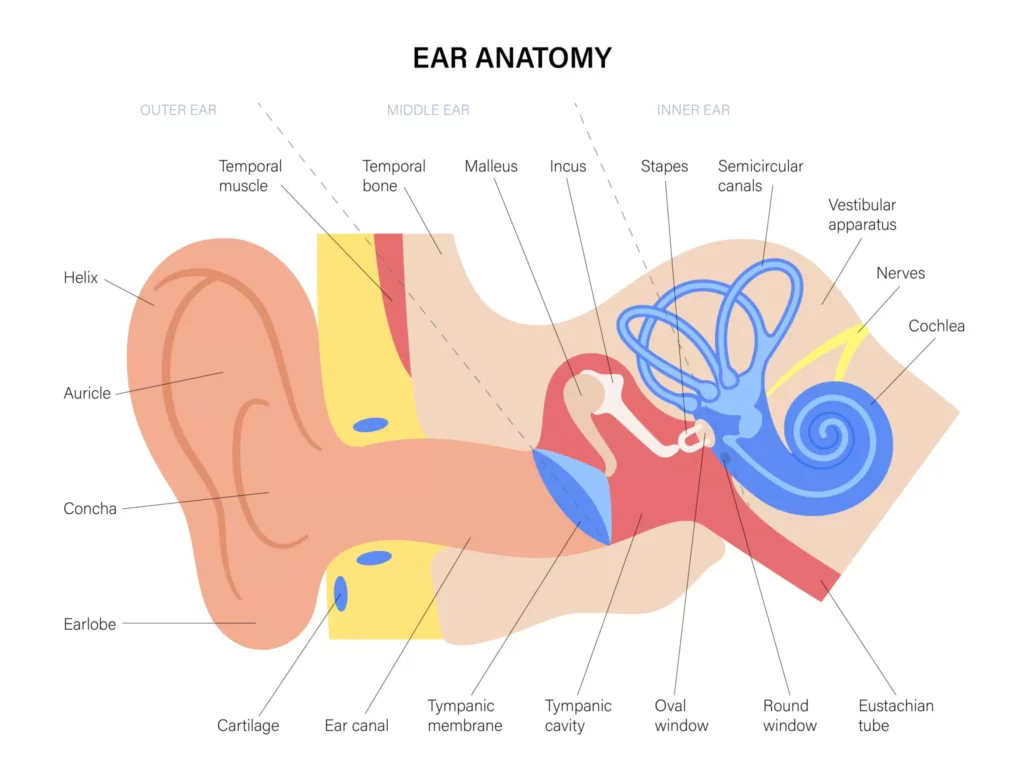
The ear is divided into three main anatomical regions: the outer ear, the middle ear and the inner ear.
The outer ear includes the visible part of the ear and the ear canal. The canal ends at the eardrum, which separates the outer ear from the middle ear.
The middle ear is an air-filled cavity within the temporal bone of the skull. It contains three tiny bones, known as the ossicles, which transmit sound vibrations from the eardrum toward the inner ear.
The middle ear is connected to the nasopharynx, the area behind the nose and upper throat, through the Eustachian tube. Divers rely on this tube every time they equalize.
During descent, the diver must allow additional air to enter the middle ear through the Eustachian tube. During ascent, expanding air normally escapes through the same pathway without conscious effort.
The inner ear contains the cochlea, which is involved in hearing, and the vestibular system, which helps control balance and spatial orientation. Because the inner ear is delicate, forceful equalization attempts can cause more than temporary discomfort. In severe cases, they may contribute to lasting hearing or balance problems.
What Pressure Does to the Middle Ear
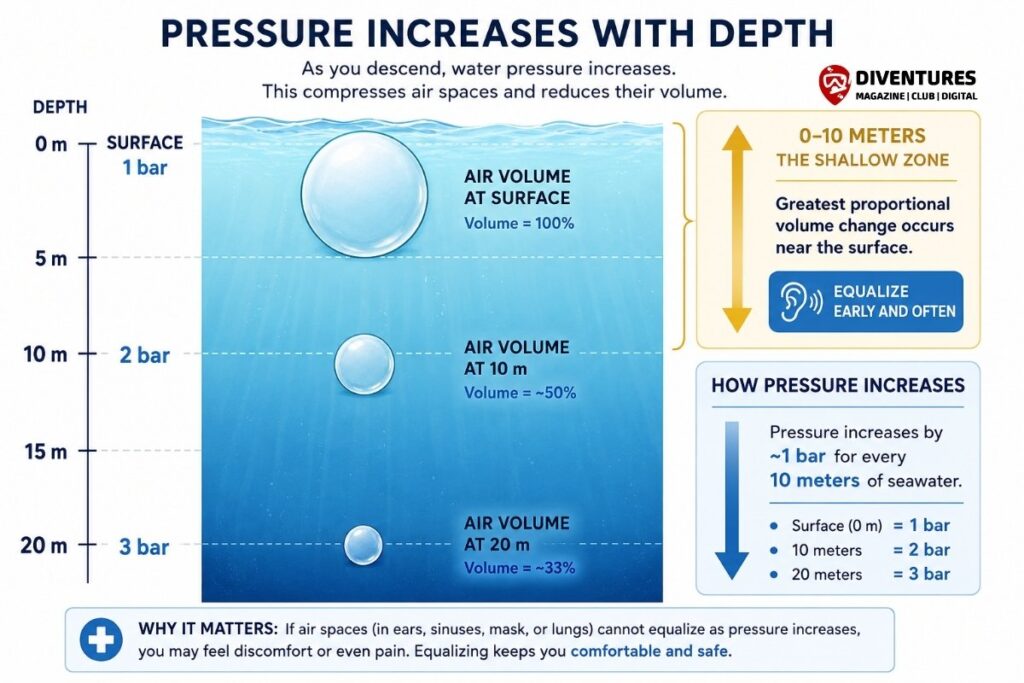
As a diver descends, surrounding water pressure increases by approximately 1 bar every 10 metres of seawater, or about 0.45 psi per foot.
According to Boyle’s law, the volume of a trapped gas decreases as the surrounding pressure increases. The greatest proportional volume change occurs close to the surface, which is why equalization is especially important during the first few metres of descent.
The middle ear is surrounded by bone and cannot simply collapse as pressure increases. The eardrum is the flexible part of the system.
If no air is added to the middle ear during descent, the increasing external pressure pushes the eardrum inward. This may initially feel like fullness or mild discomfort. With continued descent, the pressure difference can cause pain, swelling, fluid leakage and bleeding inside the middle ear.
If the diver continues descending without equalizing, the eardrum may eventually rupture.
DAN’s medical reference describes these injuries using the O’Neill grading system. Fluid leakage or minor bleeding may be classified as O’Neill Grade 1 barotrauma, while eardrum rupture is classified as Grade 2.
DAN also notes that eardrum rupture may occur in some divers at a pressure difference of around 5 psi, or approximately 0.35 bar, and becomes more likely as the pressure difference increases.
These figures are injury thresholds, not limits that divers can safely approach or measure underwater. Pain is already a warning that equalization has fallen behind.
The correct response is not to push harder. It is to stop descending.
Stay Ahead of the Pressure
The central rule of equalization is simple:
Equalize before discomfort develops.
Once the pressure difference becomes large enough to push the eardrum inward, the Eustachian tube may become more difficult to open. This is why trying to “catch up” after pain begins often fails.
Divers should equalize gently before beginning the descent and continue equalizing frequently during the shallowest part of the dive.
Waiting for pain before equalizing is waiting too long.
What Happens During Ascent?
During ascent, the process reverses.
As surrounding pressure decreases, the gas inside the middle ear expands. Under normal circumstances, the expanding air opens the Eustachian tube and escapes automatically.
Most divers therefore do not need to actively equalize during a normal ascent.
Problems can occur when gas becomes trapped in one or both middle ears. This is sometimes called a reverse block. It may cause pain, pressure, reduced hearing or difficulty continuing the ascent.
If one ear releases pressure more quickly than the other, the unequal pressure may affect the vestibular system and cause alternobaric vertigo. The diver may suddenly feel that the environment is spinning or that the body is rotating underwater.
Vertigo during a dive can be extremely disorienting. A diver experiencing it should stop, maintain control, hold onto a stable reference if available and avoid making a rapid or uncontrolled ascent.
Conditions That Make Equalization More Difficult
Even divers who normally equalize without difficulty may experience problems when the Eustachian tubes are swollen, obstructed or functioning poorly.
Common risk factors include:
- Colds and upper respiratory infections
- Nasal congestion
- Hay fever and allergies
- Inflammation of the sinuses or nasal passages
- Cigarette smoking
- Irritation caused by recreational drugs taken through the nose
- Anatomical conditions such as a deviated nasal septum
A diver who cannot equalize comfortably at the surface should not assume the problem will improve underwater.
Congestion can also change during a dive, which may create difficulty venting expanding gas on ascent.
Six Equalization Techniques Divers Should Know
Different techniques work better for different divers. Practising them on land can help divers discover which methods feel most natural and effective.
1. Passive Equalization
During ascent, expanding air usually escapes from the middle ear automatically. No deliberate technique is required.
Passive equalization is normal on ascent, but it should not be relied upon during descent.
2. Voluntary Tubal Opening
Some people can consciously open their Eustachian tubes by yawning, moving the jaw or controlling muscles around the throat.
DAN estimates that approximately 30 percent of divers may be able to develop this ability.
It can be especially useful because it does not require increasing pressure inside the chest or throat.
3. Valsalva Manoeuvre
The Valsalva manoeuvre is the most commonly taught equalization technique.
The diver pinches the nostrils closed and blows very gently against the blocked nose.
The word “gently” is essential. Forceful or prolonged blowing against Eustachian tubes that will not open can increase pressure within the inner ear and may contribute to injury.
If a gentle attempt does not work, the diver should stop descending and ascend slightly rather than blowing harder.
4. Toynbee Manoeuvre
The Toynbee manoeuvre involves pinching the nose and swallowing.
Swallowing activates muscles that help open the Eustachian tubes. The technique may also help when passive venting is difficult during ascent, although most divers’ ears normally vent automatically.
5. Frenzel Manoeuvre
During the Frenzel manoeuvre, the diver pinches the nose, closes the throat and uses the tongue and throat muscles to create pressure, often while making a “k” sound.
Unlike the Valsalva manoeuvre, the Frenzel technique does not depend heavily on pressure generated by the lungs. Many freedivers prefer it, and it can also be useful for scuba divers who struggle with conventional equalization.
6. Lowry and Edmonds Techniques
The Lowry technique combines gentle pressure against a pinched nose with swallowing.
The Edmonds technique combines moving the jaw forward with either the Valsalva or Frenzel manoeuvre.
These combined techniques may help divers whose Eustachian tubes do not respond well to one method alone.
Practical Equalization Guidance
Good equalization begins before the diver leaves the surface.
Pre-equalize gently
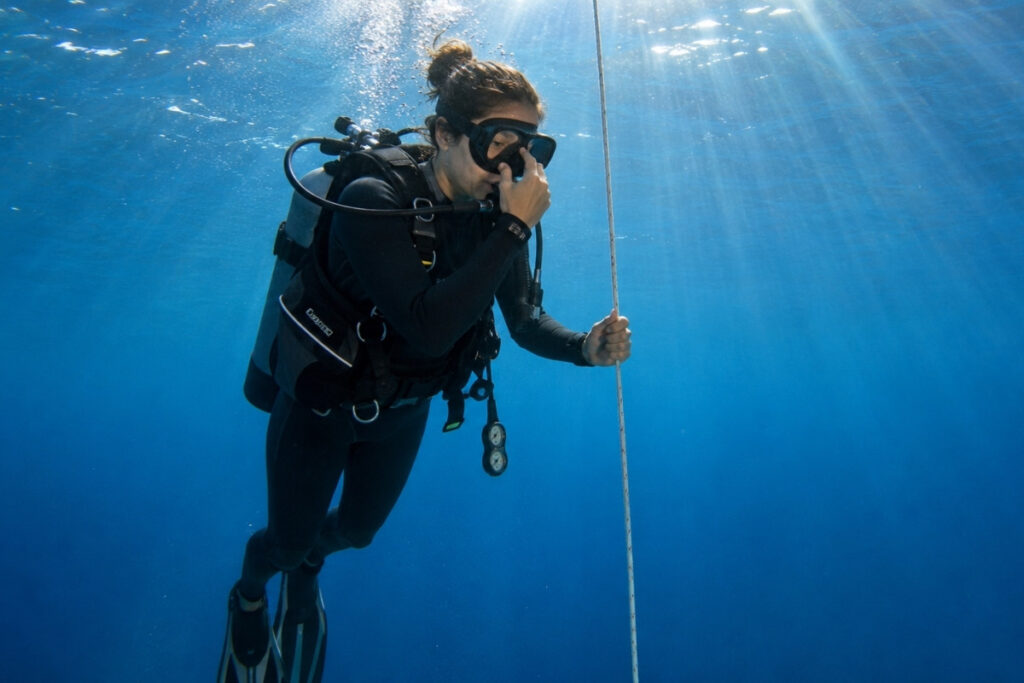
Before beginning the descent, establish control at the surface or on the descent line and gently equalize both ears.
This confirms that the Eustachian tubes are opening and reduces the chance of falling behind during the first part of the descent.
Descend in a controlled position
Descending feet first may make equalization easier for some divers. It can also give the diver better control and make it easier to stop or rise slightly if one ear does not clear.
A descent line provides an additional visual and physical reference.
Equalize early and frequently
Equalize before feeling pressure and continue every metre or less during the first few metres of descent.
There is no need to wait until discomfort appears.
Never descend through pain
Pain means the pressure difference has already become excessive.
Stop immediately, ascend slightly and try again using a gentle technique.
Do not bounce repeatedly
Repeatedly dropping and rising while trying to force equalization can irritate the Eustachian tubes and make the problem worse.
Make one controlled adjustment at a time.
Adjust the head and jaw
Moving the jaw, swallowing or tilting the blocked ear toward the surface may help open the Eustachian tube.
Do not force the manoeuvre
Blowing harder is not a solution to an ear that will not equalize.
Excessive pressure may move force from the middle ear toward the inner ear, where the consequences can be more serious.
Abort when necessary
If the ears will not equalize, the correct decision is to end the descent.
Aborting one dive is far less serious than suffering an injury that may prevent diving for weeks, months or permanently.
Be Careful With Decongestants
Some divers use oral decongestants or nasal sprays to reduce swelling before diving. These medications are not a substitute for normal Eustachian tube function and should not be treated as permission to dive while ill or congested.
Repeated use of some nasal sprays may cause rebound congestion. Medication may also wear off during the dive, potentially contributing to trapped expanding gas or a reverse block during ascent.
Decongestants may have side effects or interact with other medical conditions and medications.
Divers considering their use should discuss the issue with a physician familiar with diving medicine. They should also avoid trying an unfamiliar medication immediately before a dive.
When to Stop Diving and Seek Medical Advice
A diver should end the dive immediately if they experience:
- Sudden or severe ear pain
- Vertigo or spinning
- Sudden hearing loss
- Persistent ringing in the ear
- Fluid or blood coming from the ear
- Significant imbalance
- Nausea associated with ear symptoms
After the dive, persistent pain, blocked hearing, vertigo or sudden hearing changes should be evaluated by a doctor before the diver returns to the water.
Sudden hearing loss or severe vertigo requires urgent medical assessment because these symptoms may indicate inner-ear involvement.
Divers should not place drops into an injured ear unless advised by a medical professional, particularly when a ruptured eardrum is possible.
The Bottom Line
Ear barotrauma is among the most common injuries in recreational diving, but it is also one of the most preventable.
The solution is not a stronger Valsalva manoeuvre or greater tolerance for pain. It is a controlled descent, early and frequent equalization, gentle technique and the judgment to stop when the ears do not cooperate.
On wrecks, walls and current-exposed dive sites, divers may feel pressure to descend quickly or remain close to the group. That pressure should never override personal safety.
A diver who stops, ascends slightly or aborts because an ear will not clear is not demonstrating weakness.
That diver is demonstrating one of the most important skills in diving: knowing when not to continue.
Primary source: Divers Alert Network, Ears & Diving and DAN guidance on middle-ear equalization.
This article is intended for general education and is not a substitute for individual medical assessment. Divers with persistent equalization difficulties, hearing changes, ear pain or vertigo should consult a physician experienced in diving medicine.

Mohsen Nabil is the Founder and Editor-in-Chief of Diventures Magazine. A mechanical engineer and scuba diving instructor based in the Red Sea, he writes about diving safety, marine conservation, underwater exploration, and developments in the global dive industry. Through Diventures Magazine, he works to connect divers, scientists, and ocean advocates while promoting responsible diving and protection of the oceans.