

Italian authorities have opened an investigation into the death of a recreational diver who was found with serious head injuries following a dive in the Punta Campanella Marine Protected Area, on Italy’s Sorrentine Peninsula. Investigators are examining whether the injuries may have resulted from contact with a passing boat, though no official cause of death has yet been confirmed.
The diver, identified by Italian media as 54-year-old Luigi Belardo, went missing during an organised recreational dive near Marina di Puolo, located between Sorrento and Massa Lubrense, on 12 July 2026. He was diving as part of a group supported by a dive centre based in Castellammare di Stabia.
When the rest of the group surfaced at the end of the dive, Belardo did not return with them. A search was launched immediately, involving fellow divers and the Italian Coast Guard. Search teams located his body roughly two hours later, at a depth of approximately 30 metres.
Cause of Death Under Investigation
Prosecutors have ordered an autopsy to determine the exact cause of death. According to Italian media reports, investigators noted significant head injuries and are assessing whether these are consistent with contact from a boat propeller. Officials have not confirmed that a vessel was involved in the incident, and have stated that other scenarios — including the possibility that Belardo suffered a medical emergency before sustaining the injuries — remain under consideration. Authorities have emphasized that no conclusions have been reached pending forensic results.
A Popular but Busy Dive Destination
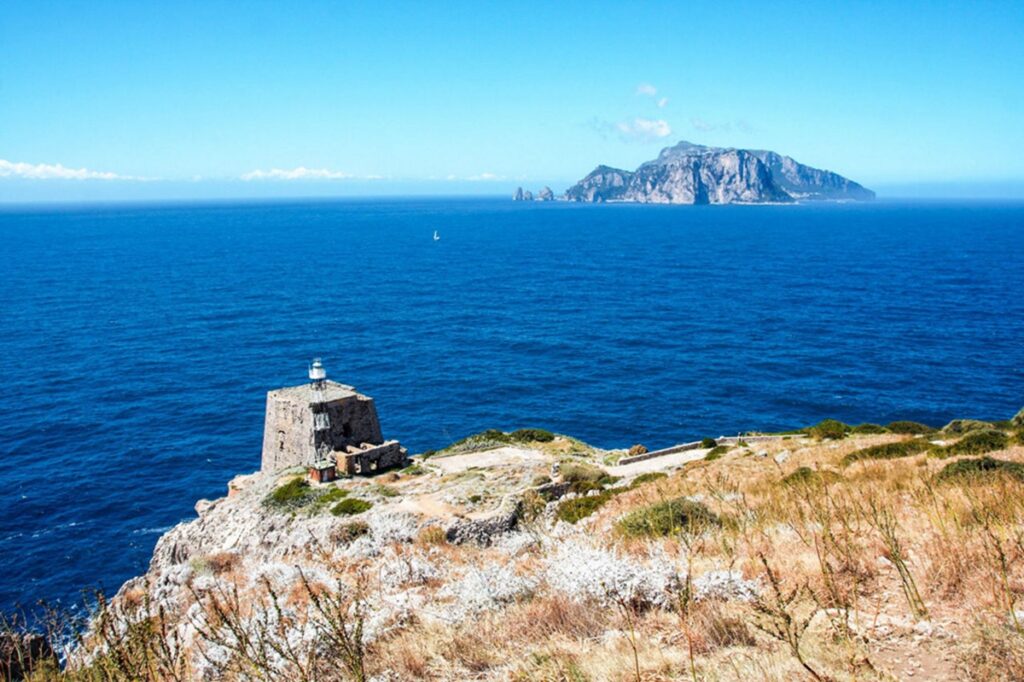
The Punta Campanella Marine Protected Area sits at the western tip of the Sorrentine Peninsula, where the Bay of Naples meets the Gulf of Salerno. The reserve is known for its underwater caves, archaeological features and Mediterranean marine life, making it one of Italy’s most visited diving destinations.
During peak summer months, the same waters see heavy recreational boat traffic, with dive boats, private vessels and tourist craft frequently operating close to established dive sites. While a vessel’s involvement in this incident has not been confirmed, the focus on possible propeller-related injuries has renewed attention on the risks of shared coastal waters between divers and boat traffic.
A Known Risk in Coastal Diving
Collisions between boats and divers are relatively rare but remain among the more serious hazards in busy coastal diving areas. Divers are generally advised to use delayed surface marker buoys (DSMBs) where appropriate, display recognised dive flags, and surface cautiously in zones with vessel traffic. Boat operators, in turn, are expected to observe navigation restrictions near known dive sites and maintain safe speeds where divers may be present.
Whether any of these factors played a role in Belardo’s death will be determined as the investigation continues. Authorities are expected to release further findings once the autopsy and forensic examinations are complete.
Source: IL MATTINO

A young voice whose articles shine with energy and a fresh perspective. Through a promising pen, he takes us on journeys driven by a passion for discovery and a spirit of curiosity, adding a distinctive character to Diventures that reflects a new generation of writers connected to the sea and its worlds.