
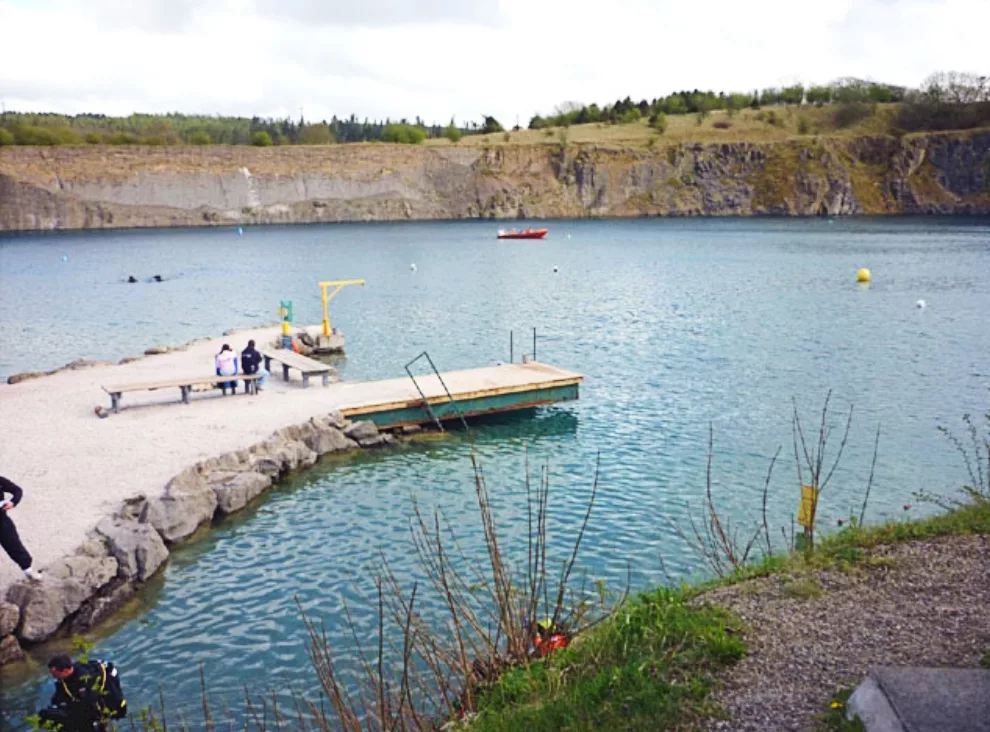

A UK coroner has concluded that immersion pulmonary oedema (IPO) was the likely factor behind the death of a diver who panicked after surfacing during a training dive at Capernwray Diving Centre in Lancashire.
The incident involved 52-year-old Mark Powell, who was taking part in the first day of his Advanced Open Water Diver training on 3 May 2025 at the inland diving site near Carnforth. The findings were presented during an inquest held at Preston Coroners’ Court on 30 April 2026.
Diver Experienced Breathing Difficulties During Ascent
According to evidence presented during the hearing, Powell had already completed two dives earlier that day before entering the water for a third dive after lunch.
He was paired with divemaster Nicola Hopkins, and the pair descended to a submerged aircraft wreck at a depth of approximately 18 metres. When Powell’s air supply reached 70 bar, Hopkins signaled for the ascent to begin.
During the ascent, Powell appeared to experience breathing difficulties. Hopkins offered him her alternative air source, which he accepted before both divers reached the surface safely.
However, moments after surfacing, Powell reportedly began shouting for help and struggling in the water. Hopkins instructed him to inflate his buoyancy compensator, but witnesses described him as panicked and unable to respond rationally.
Rescue Attempts Followed Rapidly
The diver reportedly grabbed Hopkins during the incident, pulling her underwater. Nearby diver Jak Spedding saw the situation unfold and moved in to assist.
Both rescuers later located Powell on the lakebed and returned him to the surface, where he was transported ashore by boat. CCTV footage reviewed during the investigation showed that Powell had remained at the surface for less than one minute before sinking.
CPR and defibrillator efforts were carried out at the scene before Powell was transferred to Royal Lancaster Infirmary, where he was pronounced dead.
An investigation later confirmed that Powell’s diving equipment had functioned correctly and that his remaining air supply had been sufficient for the ascent.
IPO Highlighted as a Growing Diving Safety Concern
During the inquest, Health & Safety Executive diving specialist Jules Tuvey described IPO as “the most common cause of diving fatalities.”
IPO occurs when fluid accumulates in the lungs during immersion, making breathing increasingly difficult underwater and sometimes even worse after surfacing. Factors such as cold water, exertion, overhydration, elevated blood pressure, and tight exposure suits can contribute to the condition.
The coroner stated there was no evidence of negligence or procedural failures contributing to Powell’s death.
“I suspect, though we will never know, the most likely event was that Mark felt he was struggling for oxygen,” the coroner said during proceedings, according to reports.
Increasing Attention on IPO in Diving Investigations
The case is one of several recent diving fatalities in which IPO has been considered a contributing factor.
A separate inquest in Ireland last month involving Belgian technical diver Luk Heyvaert also examined the possible role of IPO during a deep wreck dive.
Medical experts continue to note that IPO can be difficult to diagnose after death because its symptoms often resemble drowning or other diving-related medical emergencies.
The incident has once again drawn attention to the importance of recognizing breathing distress symptoms early during dives, particularly during ascent and immediately after surfacing.

A young voice whose articles shine with energy and a fresh perspective. Through a promising pen, he takes us on journeys driven by a passion for discovery and a spirit of curiosity, adding a distinctive character to Diventures that reflects a new generation of writers connected to the sea and its worlds.