
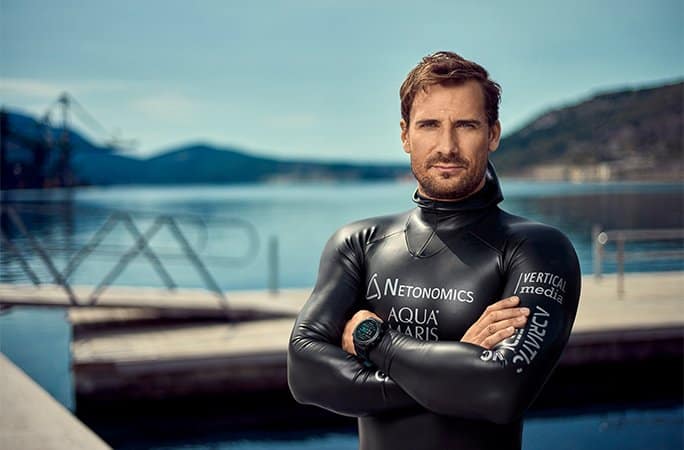

A new Guinness World Records title has pushed one of the most talked-about limits in freediving: holding breath underwater for as long as possible. On 14 June 2025, Croatian freediver Vitomir Maričić set the record for longest time breath held voluntarily underwater (male) with a time of 29 minutes 3 seconds in Opatija, Croatia.
This is a “static” record. There is no depth, no distance, and no need for speed. The whole point is control: body, mind, and environment. For general readers, that detail matters, because the headline can sound like a deep dive. It was not. It was a long, closely managed breath-hold underwater, observed under formal conditions.
Maričić also linked the attempt to a public message about ocean conservation. That part is easy to miss in the shock of the number. But it was central to why he chose this record, and how he framed it afterward.
What happened, and where it happened
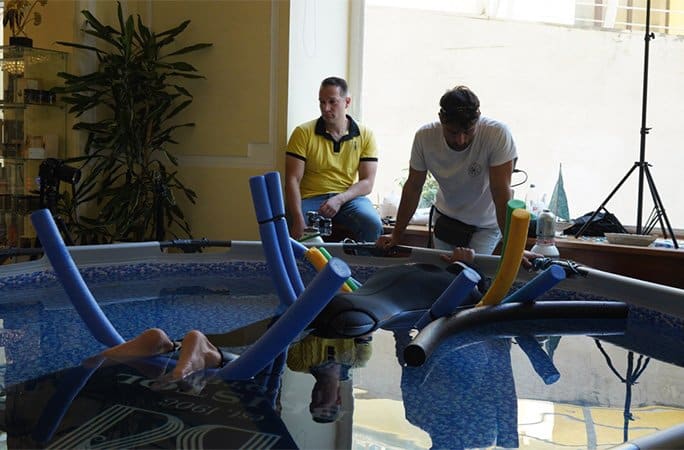
On the day of the attempt, Maričić submerged his face and remained in place in the water for 29:03. Guinness World Records reports that he floated supported by pool noodles and held onto the sides while staying face-down and still. A support team was present throughout, including AIDA freediving judges, who monitored the attempt for safety and verification. Guinness World Records
When he surfaced, the response in the room was loud and immediate. The report notes that he stood up, removed his goggles, and received applause. It also notes a detail that surprised many viewers: he did not appear to be gasping for air after coming up. Guinness World Records
The official record page confirms the location and date as Opatija, Croatia, on 14 June 2025, and lists the result at 29:03.07. Guinness World Records
The record he broke, and why the margin matters
Before this, the Guinness World Records title stood at 24 min 37.36 sec, set by Budimir Šobat (Croatia) in 2021. Maričić beat it by more than four minutes, which is a very large margin at this level.
Guinness also places the result in longer context. It states that the record has moved from 13 min 42.5 sec, set by Robert Foster (USA) in March 1959, to 29 min 3 sec today. That is a dramatic change across decades, and it shows how training methods, judging standards, and preparation have evolved. Guinness World Records
Oxygen use, rules, and what “one breath” really means here
Many readers assume “holding breath” means one normal breath of air. In this Guinness report, there is a key detail: Maričić took his final breath from an oxygen tank before the attempt. Guinness World Records
This does not reduce the challenge. It defines the category. Guinness records are often very specific about the rules, and “breath held voluntarily underwater” is judged under those rules, with observers and documentation. The record page also notes that the attempt was made in the presence of AIDA freediving judges. Guinness World Records
For divers reading this: this is not a model for normal freediving practice. Oxygen-assisted static breath-holding is a specialized, controlled setting. It is not a training goal for recreational divers, and it should not be copied.
The preparation behind the headline
Guinness reports that Maričić worked for nine months to prepare for the attempt. It also shares a direct comment he made about the experience after the 20-minute mark: mentally, it became easier, but physically it became harder, especially due to diaphragm contractions. Guinness World Records
Those two sides—mental control and physical stress—are at the center of elite freediving performance. The public often focuses on lung size, but long breath-holding is also about staying calm while your body sends strong signals to breathe.
What happens to the body during extreme breath-holding
Guinness World Records includes a short explainer on what happens when a person holds their breath for too long. It describes oxygen levels dropping and carbon dioxide levels rising, leading toward hypoxia. It also lists potential risks, including irregular heartbeat, fainting, seizure, and possible brain injury if breathing does not resume. Guinness World Records
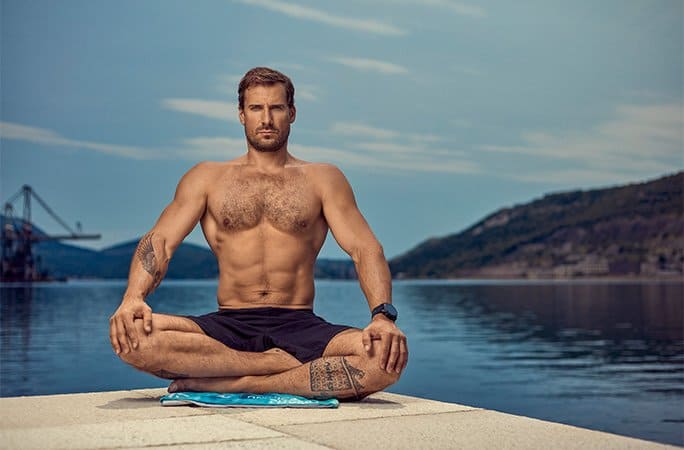
The same report explains how freedivers train for low-oxygen conditions. It mentions deep breathing, relaxation, and triggering the “mammalian dive reflex,” which can slow heart rate and redirect blood flow toward vital organs. It also notes training to increase tolerance to carbon dioxide and improve control under stress. Guinness World Records
This is where a calm editorial reminder is needed: record attempts are built around safety planning. They use monitoring and support teams. Even with that, the physiological risk is real. Freediving is a sport where strong results and serious consequences can sit close together.
Why this matters beyond a single number
It is easy to treat this as a viral moment: a man holds his breath for almost half an hour, and the internet reacts. But the story also shows something else: how modern freediving is often organized around structure, rules, and controlled environments.
It also shows how athletes use attention. Maričić said he wanted to send a strong message about ocean conservation. In 2025, that is not a side note. It is part of how many ocean sports are now discussed in public. The record becomes a platform, not only a personal milestone.
For general readers, the safest takeaway is not “How can I do this?” It is “What kind of planning, support, and risk control sits behind this?” In freediving, the answer is: a lot.
Practical context for divers and travelers
If you are a scuba diver, this record can be confusing. Scuba is about breathing underwater. Freediving is about not breathing underwater. They overlap in the water, but the skills and risks differ.
If you are a traveler, the key context is that Opatija is not famous because it is “hard” water. This was not a test of waves or currents. It was a controlled attempt under supervision, built to meet Guinness rules and documentation needs.
If you are curious about freediving, the safest first step is not holding breath alone. It is learning how freediving training is normally taught, with a buddy system and professional supervision. The record is news. It is not a lesson plan.
Conclusion
Freediving often looks simple from the outside: one person, one breath, one quiet moment underwater. This record shows how complex it becomes at the extreme end. Vitomir Maričić’s 29 minutes 3 seconds is not only a new number on a page. It is a structured, judged, closely monitored event that sits at the edge of human tolerance.
It also carries a second message, clearly stated by the athlete: attention can be used to point people back to the ocean itself. That is a serious idea, and it fits the wider 2025 conversation around ocean sports, public risk, and responsibility. Guinness World Records

Diventures Team is a multidisciplinary team of scuba professionals, editors, and digital creators, producing accurate and experience-driven coverage of diving, marine life, and ocean culture.