
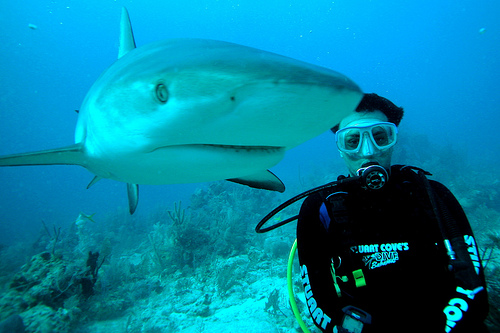

Sharks play an important role in both marine ecosystems and coastal economies. In several countries that depend on beach tourism, sharks are a major source of income. Annual revenue linked to sharks can reach around 500 million US dollars, and in some cases may be even higher. Despite this economic value, sharks continue to suffer from a negative public image shaped by inaccurate films and media portrayals.
In reality, sharks are not a natural threat to humans. They are a key part of marine life and deserve protection. Divers, coastal communities, and tourism operators all share responsibility for correcting false ideas and promoting respect for the sea.
Sharks and Human Perception
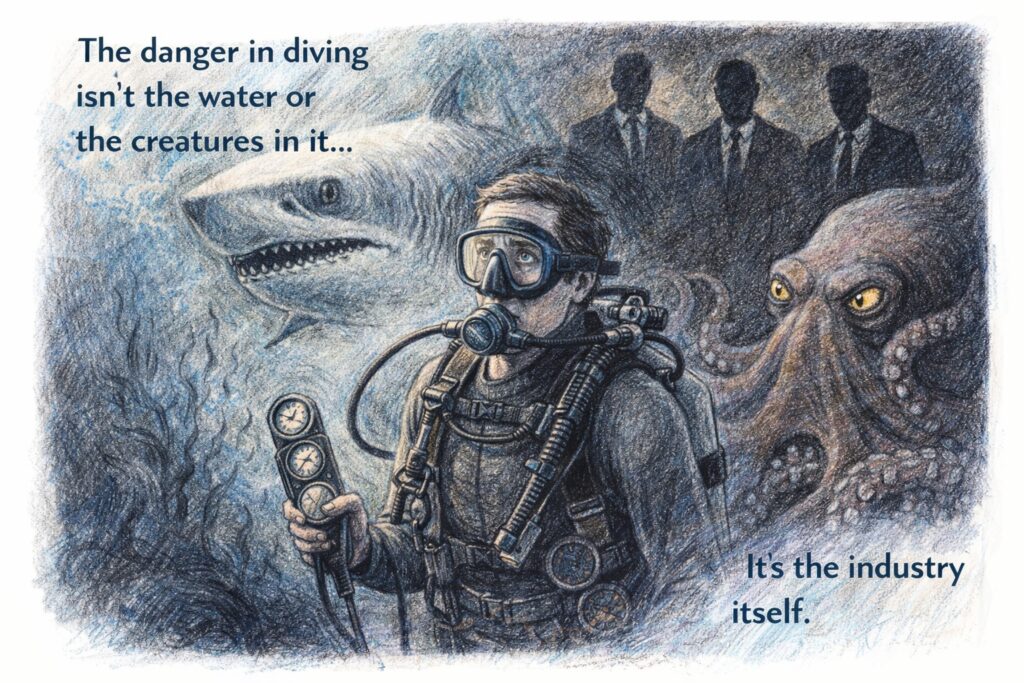
Sharks and marine life are generally safe. The real danger comes from human activity such as pollution, waste disposal, and overfishing. Divers are often the first to observe these problems. This places them in a position of responsibility as direct witnesses to changes in the underwater environment.
As divers, they form a first line of defense for the sea. Protecting marine life is not separate from diving. It is part of the role itself.
Shark Biology and Survival
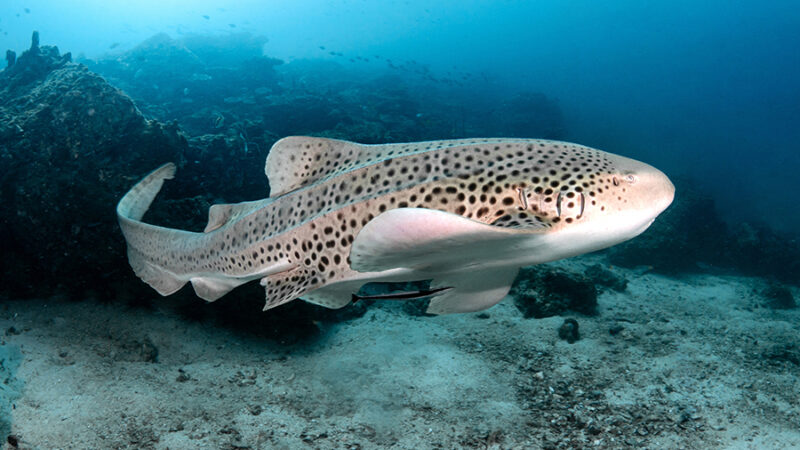
Sharks have existed for around 400 million years. Today, there are about 500 different types of sharks. Their skeletons are made of cartilage rather than bone. Their livers contain oil, which helps them control buoyancy in the water.
Some shark species require about 20 years to reach sexual maturity. Pregnancy periods range from approximately 8 to 12 months. Females usually give birth to between 2 and 20 young and then require a rest period of about one year before the next pregnancy. This slow reproduction rate makes sharks vulnerable to overfishing.
Feeding, Movement, and Depth
Sharks do not feed frequently. Many species eat only once every six weeks. Their swimming speed ranges from about 8 to 70 kilometers per hour. Some species are capable of diving to depths of around 2,000 meters.
These characteristics show that sharks are highly adapted predators capable of surviving in a wide range of marine environments, from shallow coastal waters to deep ocean zones.
Ecological Role of Sharks
Sharks often feed on sick and injured animals. This behavior helps maintain healthy populations of marine life. By removing weak individuals, sharks act as cleaners of the sea and help preserve balance within marine ecosystems.
Sharks do not eliminate entire species. Their varied diet prevents over-predation on a single group, allowing marine systems to remain stable.
Decline of Shark Populations
Shark numbers have declined by approximately 70 percent due to poor understanding and overfishing. Around 40 million sharks are killed each year worldwide. Many are taken for their fins and other body parts used in restaurants and trade.
This level of exploitation is not sustainable and places serious pressure on marine ecosystems.
Sharks and Human Risk
Records from the International Organization for Shark Attacks show that shark attacks on humans are rare. In 2010, around 80 attacks were recorded worldwide, with only 6 classified as serious.
When compared to the estimated 40 million sharks killed annually by humans, it is clear that sharks face far greater risk from people than people do from sharks.
Economic Importance of Sharks
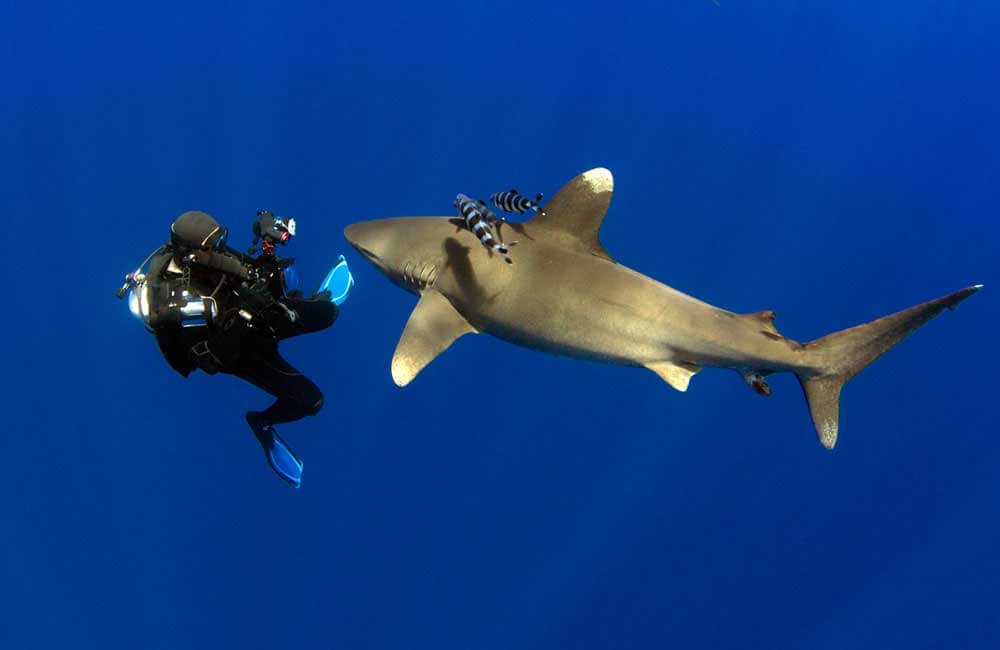
Sharks are an important economic resource. In some countries, sharks alone generate significant income through tourism. Live sharks attract divers, photographers, and researchers. This supports local businesses and provides long-term economic value.
Dead sharks provide short-term profit. Living sharks support sustainable tourism.
The Role of Divers in Conservation
There is a strong need for a clear plan of action. Divers enter the sea daily and are in a unique position to protect marine life. Cooperation between divers, scientists, and authorities is essential.
Scientific solutions must be developed to protect sharks while maintaining the environmental and economic value of the sea.
Conclusion
Sharks are not the enemy. They are a vital part of the marine ecosystem and an important source of income for many coastal regions. Continued killing of sharks threatens ecological balance and long-term economic stability.
Protecting sharks means protecting the sea itself and the communities that depend on it.

Diventures Team is a multidisciplinary team of scuba professionals, editors, and digital creators, producing accurate and experience-driven coverage of diving, marine life, and ocean culture.