
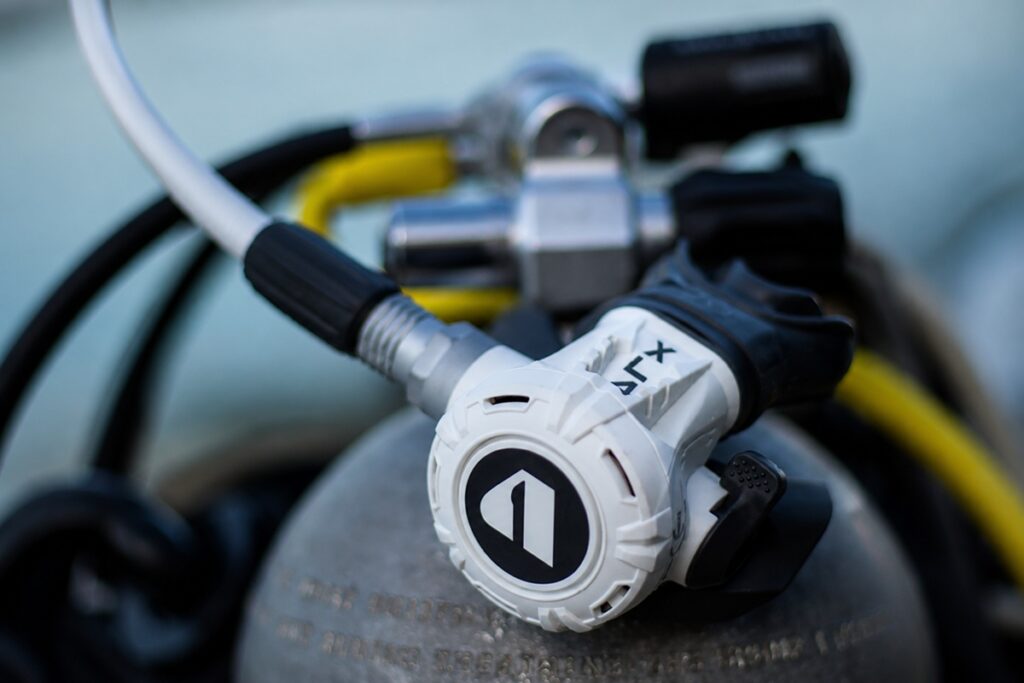

A global product safety recall is underway for a range of Apeks second-stage regulators after testing revealed a manufacturing flaw that could restrict a diver’s air supply at depth. HEAD Watersports, the parent distributor of Apeks, confirmed the recall in coordination with manufacturer Apeks Marine Equipment Ltd., covering the XL4, XL4+ and OCEA second stages, along with matching octopus units and complete regulator sets in both yoke and DIN configurations.
What Triggered the Recall
Performance testing identified that certain affected second stages do not meet the requirements of the EN 250 safety standard, and Apeks has traced the fault to a defect in the spindle mould tool that allowed the spindle assembly to be installed incorrectly. Under demanding diving conditions, this flaw can restrict the flow of breathing gas at depths exceeding 45 metres, meaning the regulator may not deliver sufficient breathing gas when required, and in an extreme scenario this presents a risk of death or serious injury from asphyxiation. Scubaverse Productsafety
The spindle assembly is a core internal component that governs the regulator’s demand valve. When it is seated incorrectly during manufacturing, its performance under load — such as heavy exertion, cold water, or extended time at depth — can degrade in ways that bench-testing at shallow depths may not immediately reveal. That is precisely why this defect surfaced through structured performance testing rather than field reports.
Which Units Are Affected
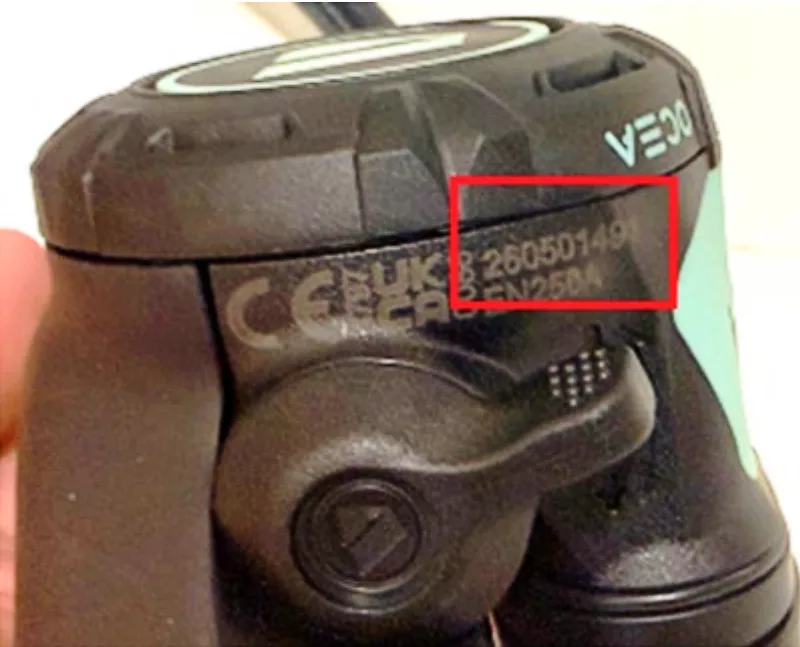
The second stages of concern were manufactured between April 2025 and April 2026, with serial numbers ranging from 250402212 to 260402893 — the first pair of digits indicating the year of manufacture and the second pair the month. The serial number is laser-marked directly onto the second-stage body, generally near the hose connection or casing, making it straightforward for owners to check without disassembling the unit. Divers who cannot locate or read their serial number are advised to treat the regulator as potentially affected until an authorised dealer confirms otherwise. Divernet
Importantly, this is not a blanket recall of all Apeks XL4, XL4+ or OCEA products ever produced — only units manufactured within that thirteen-month production window and falling inside the specified serial range are implicated. Units outside that range remain safe to use under normal servicing schedules.
Apeks’ Response and Next Steps for Divers
Apeks and its regional distributors have set up a structured, no-cost repair pathway. Complete voluntary safety recall information, including affected products, serial number details and technical notice information, has been published on the Apeks regional websites, and the company has notified the relevant consumer safety authorities, including the US Consumer Product Safety Commission and Health Canada. DiveNewswire
Divers whose regulators fall within the affected range are instructed to stop using them immediately and return the unit to the authorised Apeks dealer from which it was purchased, or to an authorised Apeks service centre. Affected regulators will then be inspected and, if necessary, repaired free of charge by qualified technicians using approved replacement components, with no charge for inspection, repair or shipping. DivernetDivernet
Retailers have also been formally instructed on their obligations. According to the recall notices distributed to the trade, dealers must immediately halt the sale, rental, demonstration and distribution of any unit within the affected serial range, proactively contact known customers who purchased affected regulators, and display the recall notice prominently in-store for a minimum of twelve months. Dealers who sell Apeks products online have additionally been asked to publish the notice across their websites and social media channels — a request Diventures is honouring with this coverage, and one every Red Sea and international dive centre stocking Apeks equipment should take seriously.
Apeks has characterised this as a precautionary recall, stating that no incidents involving the affected regulators have been reported to date. That distinction matters: this is a company acting on internal performance-testing data rather than responding to a documented failure or injury in the field — a proactive posture that, from an industry-standards perspective, reflects reasonably well on the manufacturer’s quality-assurance process, even as it inevitably disrupts inventory and diver confidence in the short term. DIVE Magazine
Diventures Analysis: Why the 45-Metre Threshold Matters
The technical detail buried in this recall is the one that deserves the most attention from serious divers: the defect manifests specifically under high-effort conditions and, notably, at depths beyond 45 metres — a zone that sits well outside standard recreational no-decompression limits for most agencies, but squarely within the operating range of technical, wreck, and extended-range recreational diving.
This is not a defect likely to announce itself gently in a shallow reef dive at 12 metres. A regulator with a marginally misseated spindle may perform adequately under low ambient pressure and light breathing demand. The danger compounds precisely where the stakes are highest: greater ambient pressure increases gas density and breathing resistance, physical exertion or stress elevates respiratory demand, and technical dive profiles often remove the option of a rapid, uncontrolled ascent to the surface. In other words, the failure mode is engineered by circumstance to appear exactly when a diver has the fewest safe outs.
This is also why the non-compliance with the EN 250 standard is significant beyond a paperwork technicality. EN 250 exists specifically to certify that a regulator can deliver adequate gas flow under worst-case breathing and depth scenarios — it is a stress-test standard, not a resting-state one. A regulator failing that bar, even marginally, is failing the exact test designed to catch this category of risk.
For Red Sea operators, liveaboard fleets, and technical diving centres carrying Apeks house regulators or rental sets, the practical takeaway is straightforward: serial numbers should be audited across rental fleets immediately, not left to individual customers to self-report. A single affected unit issued to a rental diver on a deep wreck or drift profile is a liability no operator should be carrying voluntarily once this notice is public.
No injuries have been recorded, and Apeks deserves credit for catching this in testing rather than after an incident. But the recall is a useful reminder that regulator reliability at depth is not a given — it is the product of manufacturing tolerances that can and occasionally do fail, and of a quality-assurance culture that, in this case, appears to have worked as intended.
Divers and dive centres with any XL4, XL4+ or OCEA second stage in service are strongly advised to check the serial number today and, if in the affected range, remove the unit from service until it has been inspected by an authorised Apeks dealer.
Business Development Director | Scuba Plus
Tamer brings a sharp analytical background from his senior career in risk management to the diving industry. An expert SDI/TDI Technical Instructor, he focuses on high-level education and environmental advocacy. As a co-founder of the Code Red Sea initiative, he actively leads underwater clean-ups and environmental awareness efforts across Egypt.