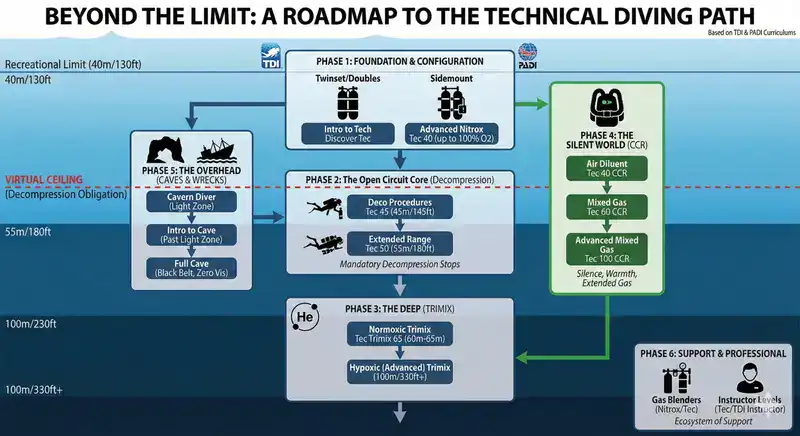

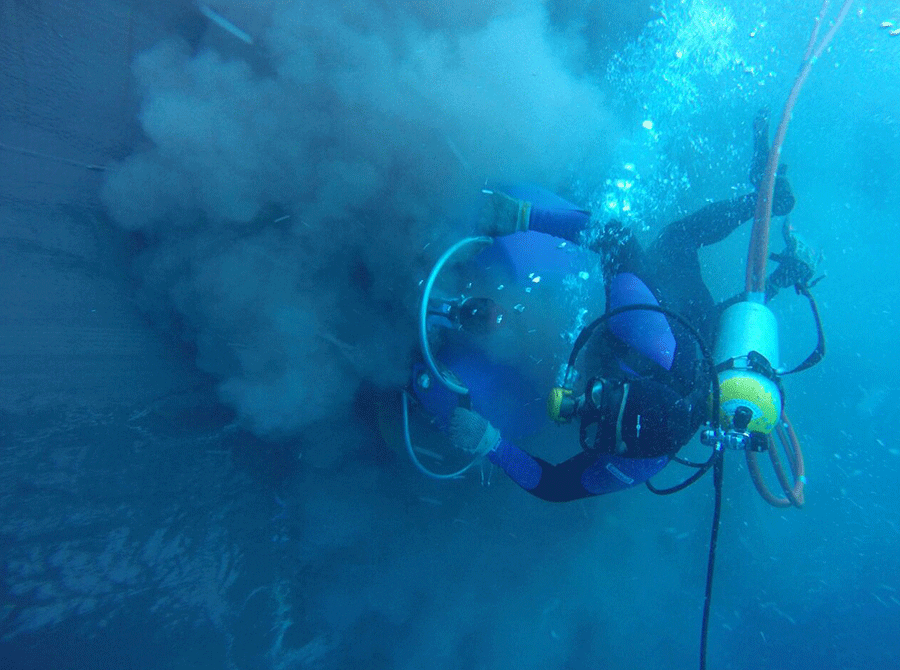

The world below the surface is not only a place to explore. For commercial divers, it is a job site. The work is technical, physical, and often high risk. It supports industries that depend on safe ships, strong infrastructure, and reliable offshore systems. This guide explains what commercial divers do, how they train, where they work, and what it takes to stay safe and employable.
What is a commercial diver?
A commercial diver is a trained professional who completes underwater tasks using specialized equipment. Unlike recreational divers, commercial divers work in controlled teams and follow strict procedures. They may work in hazardous conditions to support construction, oil and gas, shipping, and research.
Commercial diving tasks can include underwater welding, inspection, salvage, maintenance of bridges and pipelines, and filming for movies or documentaries.
Typical roles and responsibilities
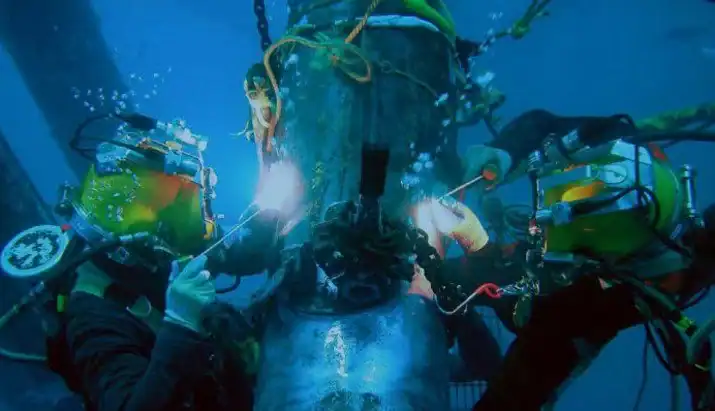
Underwater welding and cutting
Joining or cutting metal structures underwater. This work is important for ship repair and offshore oil rigs.
Inspection and maintenance
Checking the condition of submerged structures such as bridges, dams, pipelines, and platforms.
Salvage operations
Recovering sunken vessels, aircraft, or cargo from the seabed.
Construction and installation
Building or assembling structures underwater, such as piers, docks, and subsea systems.
Commercial diver training and certification
Entry requirements
The path often starts with a high school diploma or equivalent. Candidates should be in excellent physical condition, have strong swimming skills, and pass a full medical examination. Problem solving and calm decision-making under pressure are also important.
Professional training
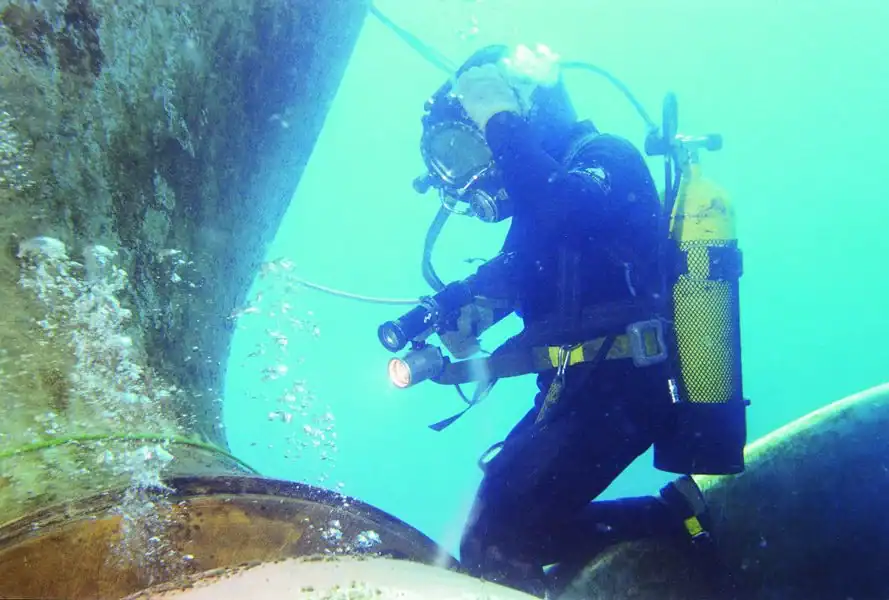
Commercial divers must complete a demanding program at a recognized commercial diving school. Programs usually last from several months to a year. Training often includes:
- Use of surface-supplied diving equipment
- Underwater welding and cutting techniques
- Diving physics and physiology
- Decompression procedures and dive planning
- First aid and emergency management
- Hazardous environment protocols
After training, divers can receive certifications such as ADCI (Association of Diving Contractors International) or IMCA (International Marine Contractors Association) commercial diver qualifications. Many divers also add specialty certifications, such as underwater welding or NDT inspection, based on the type of work they want.
Commercial diver salary and job outlook
Pay depends on experience, location, and the type of project. According to the U.S. Bureau of Labor Statistics, the median annual wage for commercial divers in 2023 was about $60,000, and highly experienced or specialized divers can earn over $100,000 per year. Offshore work, hazardous jobs, and international assignments can raise pay and may include extra allowances.
Demand stays steady. Drivers include maintenance of aging infrastructure, renewable energy projects like wind farms, and continuing underwater construction. The field also changes with new subsea technology, which can create new roles for trained divers.
Working conditions and safety
Commercial diving is physically demanding and can be dangerous. Divers may work in cold, dark, or contaminated water. Risks include decompression sickness, equipment failure, and entanglement. This is why safety systems matter as much as diving skill.
Most jobs depend on strict procedures, clear communication, and teamwork. Many employers also require up-to-date medical clearance and first aid qualifications.
Where the work is: key sectors in 2025
Offshore oil and gas
Oil rigs and offshore platforms need inspection, maintenance, and repair. Commercial divers support this work, including deep-water tasks in difficult conditions.
Underwater construction and infrastructure
Commercial divers support bridge work, underwater tunnels, ports, and other major structures. They also help maintain systems that are already in place.
Salvage and rescue operations
Divers support recovery work after accidents and help recover valuable assets. These jobs often involve complex planning and strict risk controls.
Marine research and environmental protection
Commercial divers can also support scientific work, environmental monitoring, and conservation projects. In 2025, many projects include reporting standards and site rules to reduce damage during operations. This does not change the job’s main purpose, but it increases the need for careful methods and accurate records.
Is commercial diving right for you?
Commercial diving suits people who like hands-on technical work and can perform under pressure. The job demands discipline, fitness, and patience with training and procedures. It can also offer varied work, travel, and strong pay for divers who build skills and keep their certifications current.

A young voice whose articles shine with energy and a fresh perspective. Through a promising pen, he takes us on journeys driven by a passion for discovery and a spirit of curiosity, adding a distinctive character to Diventures that reflects a new generation of writers connected to the sea and its worlds.