

Many beginner divers who wear contact lenses feel nervous about mask skills. They worry that if they remove the mask, they will lose a lens. The question is simple: is there any real risk when you dive with contact lenses?
Contact lenses and scuba diving
For most divers, contact lenses are not a problem underwater. The key is to follow a few clear rules.
Tell your instructor before the dive.
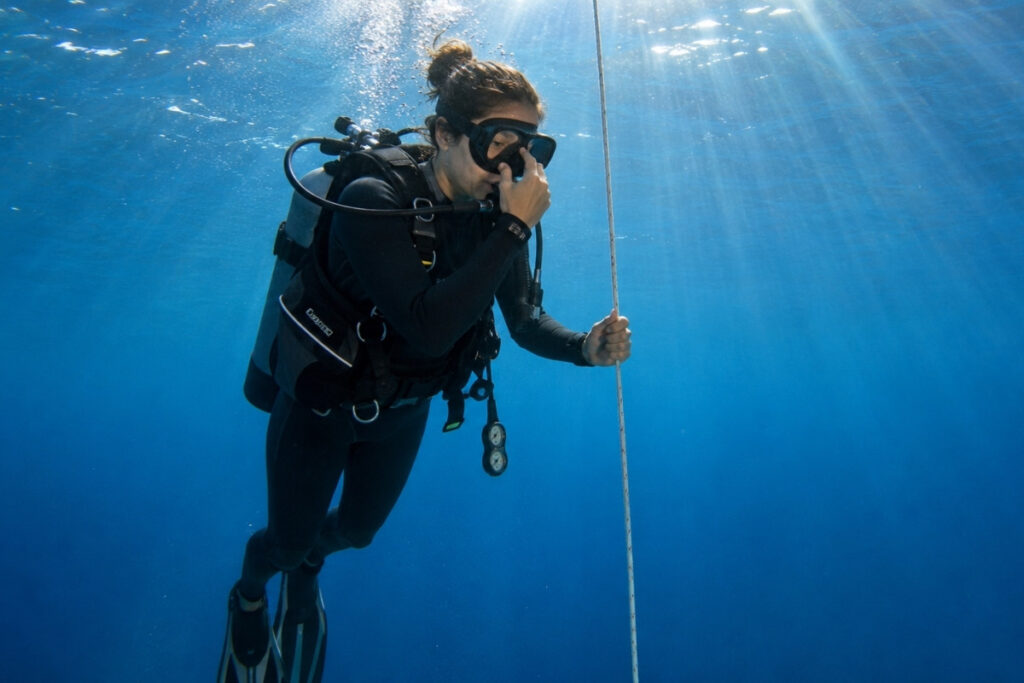
Say it early, before training starts. During mask-removal exercises, the instructor will ask you to close your eyes. When the mask is back on your face and the water is cleared (the instructor will teach you how), your instructor may touch your shoulder to tell you that you can open your eyes again.
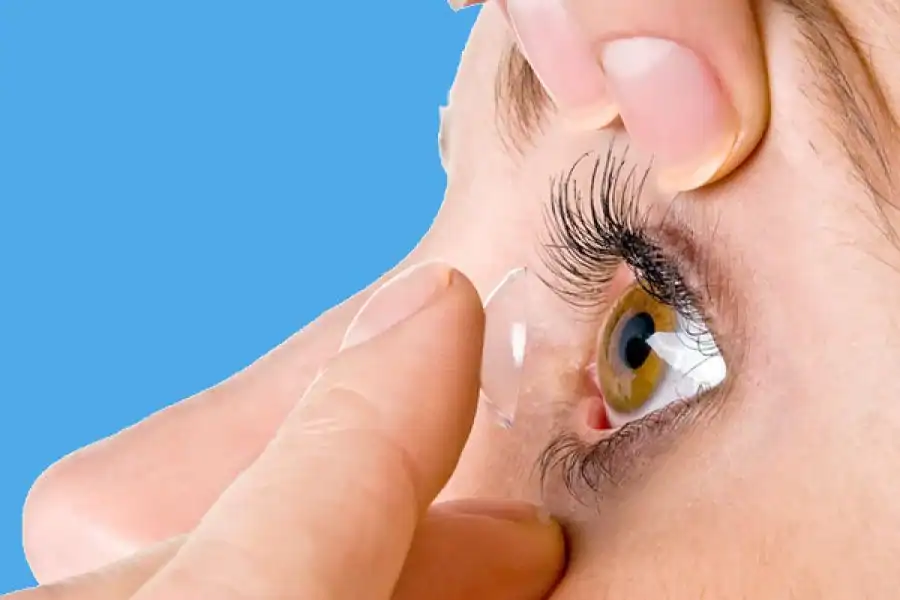
Choose soft contact lenses.
Soft lenses are usually the better choice for diving.
Infection risk is very low, but do not ignore symptoms.
Eye infection can happen, but the risk is less than 1/10000. If your eyes become red and itchy after a dive, do not wait. Go to your ophthalmologist.
Dry eyes after the dive can happen.
If your eyes feel very dry after the immersion, use eye drops to reduce discomfort.
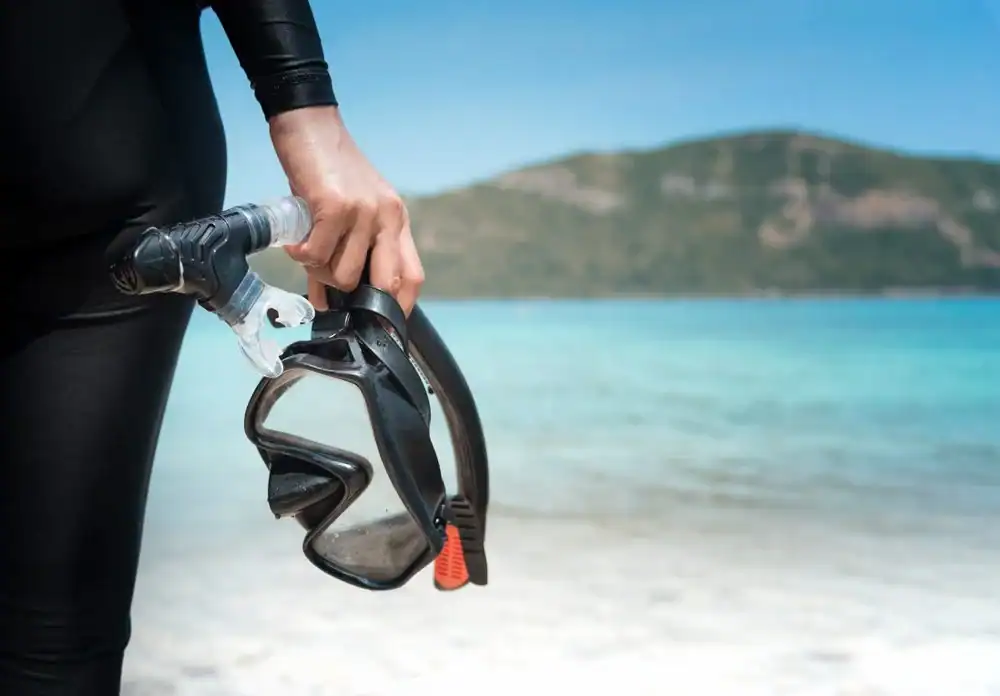
Another option: an optical corrective diving mask
You can also buy a mask with corrective glass. This is a good option if you prefer not to wear lenses in the water.
Be careful with these masks. They can be fragile. Bring a spare mask, in case your main mask is damaged.
Can I open my eyes in the water if I have contact lenses?
Yes, you can open your eyes underwater with contact lenses.
I was a dive instructor for 3 years, diving every single day, and I wore soft contact lenses. I often demonstrated Open Water Diver mask skills and removed my mask underwater, sometimes 10 times a day, with my eyes open. I never lost a lens.
In salt water, the density is different from lachrymal liquid. This helps the contact lens stay on your eye. It is different in a swimming pool with fresh water.
A 2025 perspective: simple habits that fit modern diving
Today, more divers pay attention to hygiene and small forms of waste. Both matter on boats and at dive sites.
- Keep your hands clean before touching your eyes, lenses, or mask.
- Do not leave small items behind, such as lens packaging. Keep waste secure until you can dispose of it properly on land.
- If you have eye discomfort after diving, stop and get professional advice before your next dives.
These steps are practical, and they support safe diving without changing the pace of a normal dive trip.
Editorial note: This article was originally published in 2019 and has been updated and expanded for 2025.

Diventures Team is a multidisciplinary team of scuba professionals, editors, and digital creators, producing accurate and experience-driven coverage of diving, marine life, and ocean culture.