


A clear way to choose, carry, and care for an underwater light in 2026.
Natural light changes fast underwater. Even on a bright day, colors fade as you descend because water absorbs and scatters light. Reds go first, then oranges and yellows. By about 30 feet, many scenes can look blue-green and flat. A dive light brings back detail and color. It also improves communication when visibility drops or when you need to point out hazards.
This article is an equipment guide for beginners, but it is written with experienced divers in mind. If you already dive wrecks, kelp, caves, or low-visibility lakes, you know that light is not only for night dives. For newer divers, the goal is simpler: choose a light you will actually carry, learn to use it safely, and keep it reliable.
Why carry a dive light on day dives
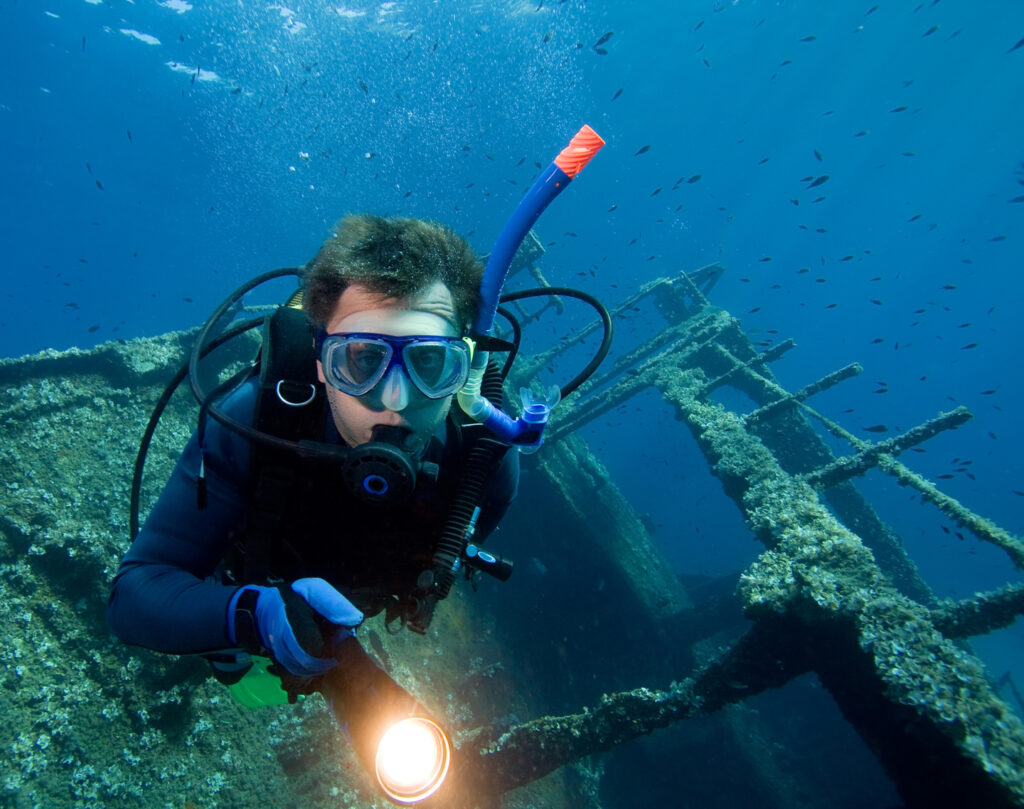
A common question is “Do I need a light if I dive in the daytime?” In many cases, yes. Sunlight does not reach under ledges, inside swim-throughs, or into wreck openings. A small light helps you check the inside of a crack before you put your hand near it. It also helps you see marine life that hides in shade.
Light is also a safety tool. A controlled beam can get your buddy’s attention, support hand signals, and help a team stay together. In current, surge, or poor visibility, a steady light signal is often clearer than waving an arm. For more complex dives, lights become part of the plan, not an extra item.
Primary and backup lights
Most divers organize lights in two categories.
Primary light
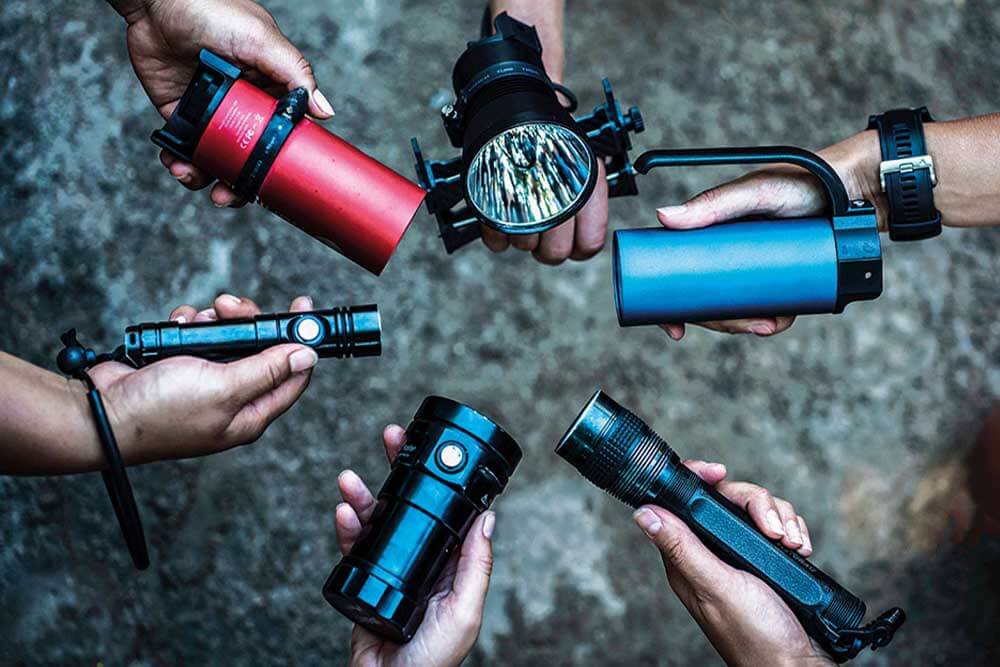
A primary light is your main source of illumination. It should be bright, reliable, and built for longer use. Primary lights are common for night dives, technical dives, and any dive where you may need a strong beam to communicate or to manage a problem.
Secondary or backup light
A backup light is smaller and lighter. It can be used as a spare if your primary fails. It is also useful for day dives when you want to restore colors or look into dark spaces. Many experienced divers carry at least one backup even on simple dives, because lights can fail due to battery issues, button problems, or flooding.
Beam angle: wide versus narrow
Beam angle is one of the most important choices, and it changes how a light feels underwater.
Wide beams
Wide beams (about 60 to 120 degrees) spread light across a larger area. They are useful when you want even coverage on a reef, when you are guiding a newer diver, or when you want a softer light for close work. Wide beams are also common for video, where you want consistent illumination across the frame.
Narrow beams
A narrow beam (about 10 to 15 degrees) reaches farther through the water column. It is helpful for signaling, for looking into cracks and crevices, and for focusing attention on a specific spot. In low visibility, a narrow beam can cut through backscatter better than a wide flood.
Adjustable beams
Some lights let you toggle between wide and narrow. If you want one light for mixed use, this can be a practical option. The tradeoff is usually more complexity in the head of the light, so pay attention to build quality and sealing.
Brightness: lumens and real performance
Manufacturers use lumens to describe total visible light output. A small backup light may output about 200 to 500 lumens. A primary dive light can output 1,000 to more than 10,000 lumens. For underwater photography or videography, a common starting point is at least 2,000 lumens, depending on your camera and the light sensitivity you can use.
But brightness is not everything. Beam angle, water clarity, and the distance to your subject matter a lot. A very bright wide beam can still look weak at distance. A lower-lumen narrow beam can look strong if it is focused and the water is clear. For beginners, it helps to choose a light with more than one power level. That way, you can save battery on a day dive and still have a higher setting when you need it.
Color and how your light changes the scene
A dive light restores colors by adding light back into the scene. For underwater imaging, color matters for how natural your photos or video look. Many divers also like lights because they help them see small details, such as textures, fish markings, and the edges of a line or reel.
If you dive in areas with sensitive animals, be careful. Avoid shining the beam directly into a creature’s eyes, and avoid chasing animals with a light. The same rule applies to your buddy: do not shine a light into another diver’s eyes. For experienced divers, this is part of good team discipline and reduces stress during night dives.
Battery type and 2026 choices
Most modern dive lights use rechargeable batteries. Rechargeables usually hold a charge better, provide more consistent power, and reduce waste compared with disposable batteries. There are still lights on the market that use disposable batteries. If you travel often, you may see them because they are easy to replace in remote locations.
In 2026, sustainability is part of equipment decisions. Millions of single-use batteries end up in landfills every year, where they can leak heavy metals and toxic chemicals into soil and water. If you use disposables while traveling, carry used batteries back with you and dispose of them responsibly. A simple travel habit can reduce local waste on small islands and at remote dive sites.
Burn time, settings, and what “reliable” means
Burn time is the time a light can run at a given power. Real burn time depends on the setting you use, battery type, and temperature. For beginners, longer burn time on a medium setting can be more useful than a short burst of maximum power.
Look for a light with:
– more than one brightness setting
– a clear, simple switch you can use with gloves
– a solid lockout feature if the light will be in your bag
– consistent output, not only a high peak number
For advanced dives, think about your failure plan. If a primary light is required for the dive, then a backup light is not optional. You should be able to finish the dive safely with your backup, not only “see a little.”
Maintenance habits that prevent floods
A dive light is only good if it works every time. Many failures come from small maintenance mistakes.
– Charge the light fully before each dive day if you expect to use higher settings.
– After diving, rinse the light thoroughly in fresh water.
– Press buttons and switches while rinsing, so salt does not build up around seals.
– If you open the light to recharge or change batteries, check O-rings and follow the manufacturer’s guidance for cleaning and care.
– Store the light dry, and avoid long storage with a fully depleted battery.
If you are taking a PADI Advanced Open Water course or a Night Diver course, you will practice best habits for signaling and team communication with light. Even if you are already experienced, refresh these habits before a night or wreck weekend, especially if you have not used lights recently.
Practical buying checklist for your next light
For a first purchase, choose the light you will carry on most dives, not the most extreme option.
1) Start with purpose: day dives, night dives, wrecks, kelp, or imaging.
2) Choose beam angle: wide for area coverage, narrow for signaling and distance.
3) Set brightness: enough for your typical visibility and depth, with multiple levels.
4) Decide on batteries: rechargeable when possible, with a plan for travel and spares.
5) Check ergonomics: switch feel, glove use, and attachment points.
6) Plan redundancy: add a backup light if the dive profile makes it necessary.
FAQ
Do I need a dive light for a daytime reef dive?
Often, yes. Shade under ledges and inside holes can hide hazards and marine life. A small light also restores color and detail, even on a bright day.
How many lumens should I look for in dive lights?
A backup light may be in the 200 to 500 lumen range. Primary lights can be 1,000 to more than 10,000 lumens. For photo or video work, many divers start at around 2,000 lumens, depending on camera settings and conditions.
Is a narrow beam better for communication?
A narrow beam (about 10 to 15 degrees) is easier to point and can travel farther in the water column. It is commonly used for signaling and for low-visibility teamwork.
Are rechargeable batteries better for the environment?
Rechargeables reduce single-use battery waste and usually provide more consistent power. If you must use disposables while traveling, carry used batteries home and dispose of them responsibly.
What is the most common reason a dive light fails?
Many failures come from maintenance issues, like salt residue around switches, poor O-ring care, or opening the light without checking seals. Rinsing well and following the maker’s guidance reduces risk.
Conclusion
A dive light is not only a night-diving requirement. It is a tool for color, navigation, and safety. If you are newer, focus on a simple, reliable light with the right beam and usable settings. If you are experienced, treat light as part of your system: plan redundancy, practice clear signaling, and maintain your lights so they work when the dive becomes more complex. In 2026, choosing rechargeable power when you can is also a practical step toward lower waste, without sacrificing performance.

Diventures Team is a multidisciplinary team of scuba professionals, editors, and digital creators, producing accurate and experience-driven coverage of diving, marine life, and ocean culture.