
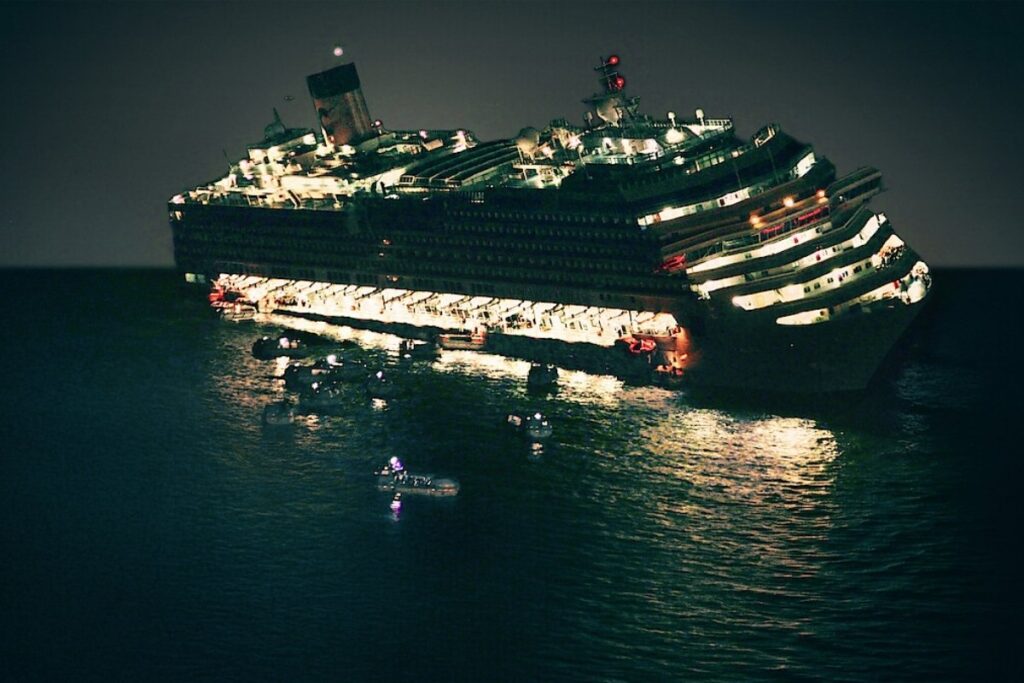

Shipwrecked: Nightmare at Sea revisits a cruise disaster, but its lessons on bridge discipline and passage planning apply just as much to liveaboard operations
Netflix released Shipwrecked: Nightmare at Sea on July 10, 2026, an 87 minute documentary that reconstructs the night the Costa Concordia disaster killed 32 people and reshaped cruise ship safety. Directed by Chiara Messineo, the film draws on eyewitness accounts from survivors, cell phone footage taken on the night of the tragedy, and translated excerpts from the ship’s black box recordings. Netflix Tudum
For most viewers, the film will land as a dramatic retelling of one of the deadliest maritime disasters in modern history. For anyone who operates or crews passenger vessels, including the liveaboard safaris that make up a large part of the Red Sea diving industry, it is something more: a case study in how a single chain of small decisions on the bridge can escalate into catastrophe. The official investigation into the accident, published by Italy’s Ministry of Infrastructure and Transport (MIT), remains one of the most detailed technical breakdowns of human error at sea ever produced, and its findings are worth revisiting alongside the documentary’s release.
What happened on the night of January 13, 2012
The Costa Concordia departed Civitavecchia, Italy, on January 13, 2012, carrying more than 4,000 people. The ship’s captain, Francesco Schettino, decided to sail close to the Tuscan island of Giglio to perform an unscheduled “sail by salute,” a maneuver in which a ship approaches shore closely to greet people on land by sounding its horn.
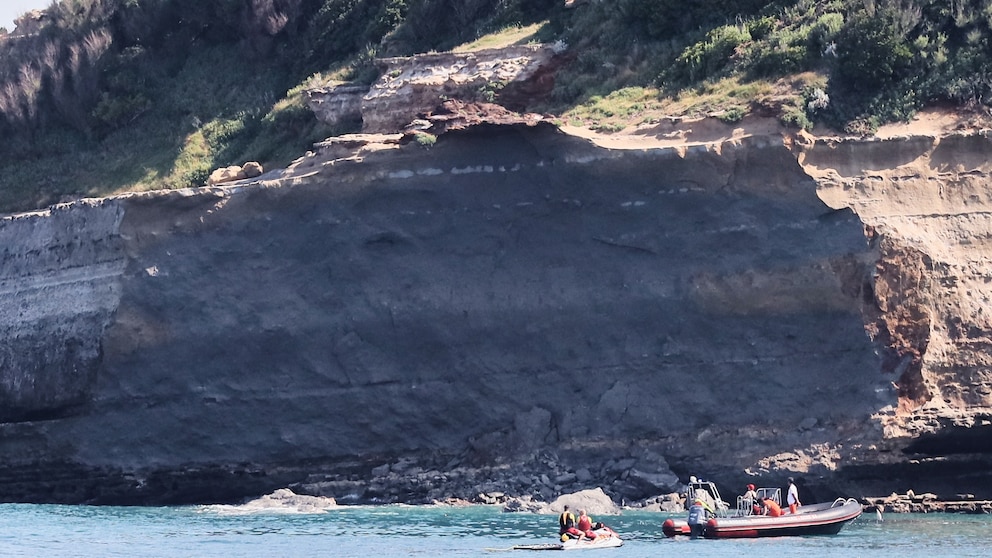
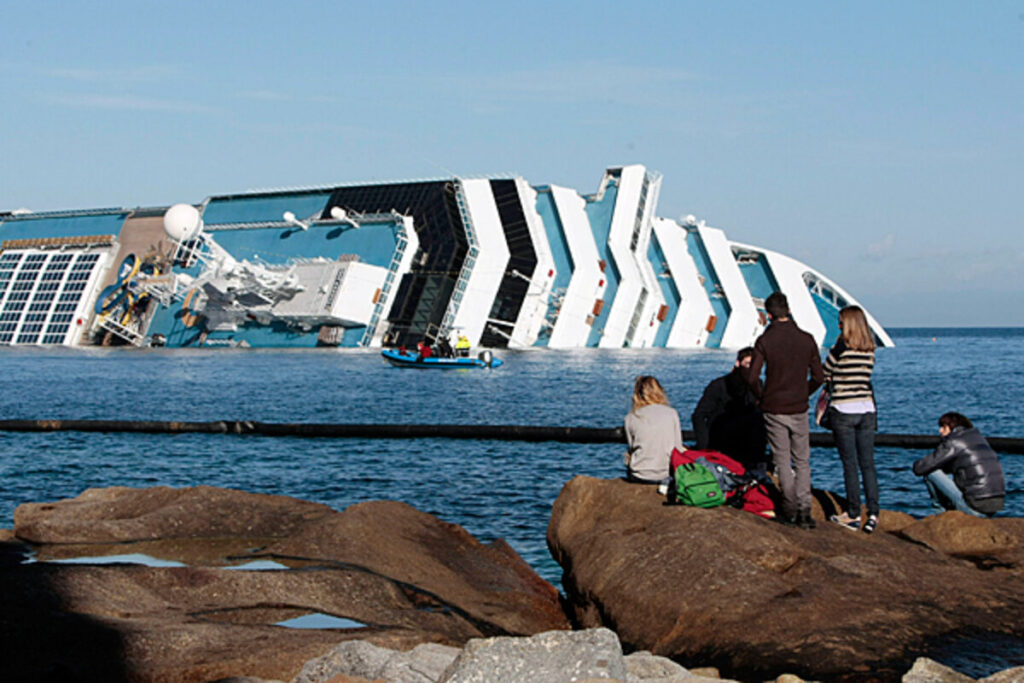
According to the MIT’s official investigation, the ship struck the Scole Rocks off Giglio Island at a speed of roughly 16 knots at 21:45 local time. The impact immediately caused a loss of propulsion and a total blackout. With the rudder frozen, the ship was carried by wind and current, drifting for roughly an hour and 15 minutes before grounding. It first listed at around 15 degrees, then rapidly increased to 80 degrees. The collision tore a 53 meter breach in the hull, flooding five watertight compartments. Saftey4Sea
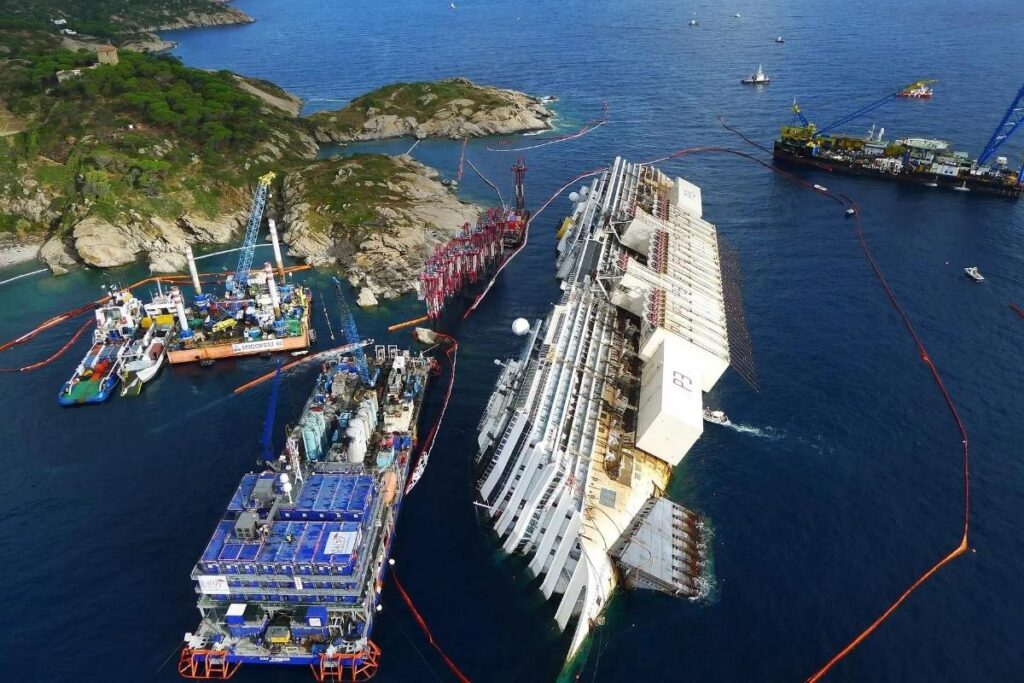
That last detail is the technical heart of the disaster. Investigators described the flooding of five contiguous watertight compartments, an area holding most of the ship’s vital equipment, as a genuinely unique event, because the extent of the damage went well beyond the survivability standard the ship had been designed and certified to. In plain terms: the ship was built to survive damage to two adjoining compartments, not five. No amount of correct emergency response after the collision could have changed the outcome once that much of the hull was breached. MIT
Where human decisions made things worse
The MIT report is careful to separate the initial collision, which was one bad command, from the response afterward, which compounded it. An engineer informed the bridge that at least three watertight compartments were already flooding, yet the captain did not order an evacuation for close to an hour after the impact. He reportedly still believed the vessel could be steered and anchored in shallower water rather than accepting the ship was lost.
The investigation also found that passenger and crew headcounts were reported incorrectly and inconsistently throughout the emergency, complicating rescue efforts. Critically, while an abandon ship drill had been carried out for passengers who boarded at the ship’s home port, no follow up drill was run for passengers who joined at later stops. That meant a meaningful share of those aboard had never been briefed on emergency procedure before the ship started taking on water. Investigators also cited crew training deficiencies and language barriers among crew members as contributing factors in the chaos of the evacuation.
Every one of those failures, a maneuver run without a documented plan, a delayed decision to declare an emergency, an incomplete safety briefing, and communication breakdowns under pressure, has a direct equivalent in liveaboard diving operations, where multinational crews, tight schedules, and route deviations for guest requests are also part of daily practice.
What changed afterward
The disaster’s most immediate regulatory consequence was that Cruise Lines International Association members moved quickly to require a full muster drill before a ship’s departure, rather than allowing it to happen after sailing. That change has since fed into International Maritime Organization rulemaking. The MIT investigation also recommended a series of structural changes for future ship designs, including double hull protection for compartments housing critical propulsion and electrical equipment, stricter limits on how flooding can spread across a ship’s watertight bulkheads, and computerized stability support tools to help a master assess flooding risk in real time. Sea Trade News
Schettino was convicted of manslaughter, causing a maritime accident, and abandoning ship, and was sentenced to 16 years in prison. Five other Costa Cruises employees who were aboard were also convicted on related charges. He has exhausted his appeals and remains in custody in Rome.
Why this matters beyond cruise ships
The parallels to liveaboard safety aren’t a stretch. A liveaboard captain deviating from a planned route to give guests a closer look at a reef or wreck site is, procedurally, the same category of decision as a sail by salute: an unplanned deviation, made under social or commercial pressure, without the same level of scrutiny a formally logged passage plan would receive. The Concordia inquiry’s finding that no formal process existed for what was effectively a close quarters maneuver, despite a full bridge team being present, is a direct warning about what happens when experience and familiarity are allowed to substitute for procedure.
The muster drill failure is arguably even more transferable. Liveaboard operators running back to back charters, with divers boarding at different points in an itinerary, face exactly the scenario that went wrong on the Concordia: guests who joined partway through a trip and never received a safety briefing before an emergency happened.
Shipwrecked: Nightmare at Sea tells this story from the perspective of the people who lived through it, and reactions to the film, including detailed breakdowns from maritime professionals, have circulated widely since its release, several picking apart the bridge decisions in more technical detail than the documentary itself covers. Whatever the film leaves out, the official investigation remains publicly available and remains the most rigorous account of exactly how a well regulated, modern passenger vessel came to be lost with the loss of 32 lives. For an industry that also puts hundreds of guests on vessels far from shore, on schedules driven by guest expectations, it is required reading, not just required viewing.

Mohsen Nabil is the Founder and Editor-in-Chief of Diventures Magazine. A mechanical engineer and scuba diving instructor based in the Red Sea, he writes about diving safety, marine conservation, underwater exploration, and developments in the global dive industry. Through Diventures Magazine, he works to connect divers, scientists, and ocean advocates while promoting responsible diving and protection of the oceans.