
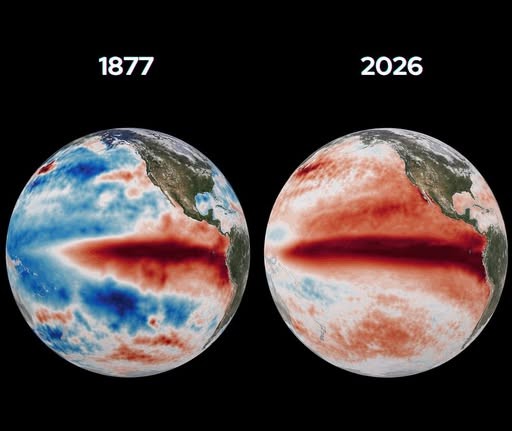

The Pacific Ocean is once again drawing global attention as climate scientists monitor conditions that could lead to one of the strongest El Niño events in decades. Forecasts from the U.S. National Oceanic and Atmospheric Administration (NOAA) now suggest a growing probability that El Niño conditions will emerge during 2026 and potentially intensify into what experts describe as a “super El Niño” by the end of the year.
For the diving industry, marine ecosystems, and coastal communities, the implications could be enormous.
While El Niño is a naturally occurring climate pattern, unusually strong events can dramatically alter ocean temperatures, visibility, currents, coral health, marine biodiversity, and weather systems across major dive destinations. From the Galápagos and Indonesia to the Red Sea and the eastern Pacific, divers and operators may soon experience the effects of a warming ocean on a global scale.
What Is El Niño?
El Niño is part of the El Niño–Southern Oscillation (ENSO), a climate cycle driven by shifting ocean temperatures and atmospheric patterns in the tropical Pacific Ocean.
During an El Niño phase, trade winds weaken, allowing warm surface water to spread eastward across the Pacific. This disrupts weather systems worldwide and often leads to higher global temperatures, changing rainfall patterns, and increased marine heat stress.
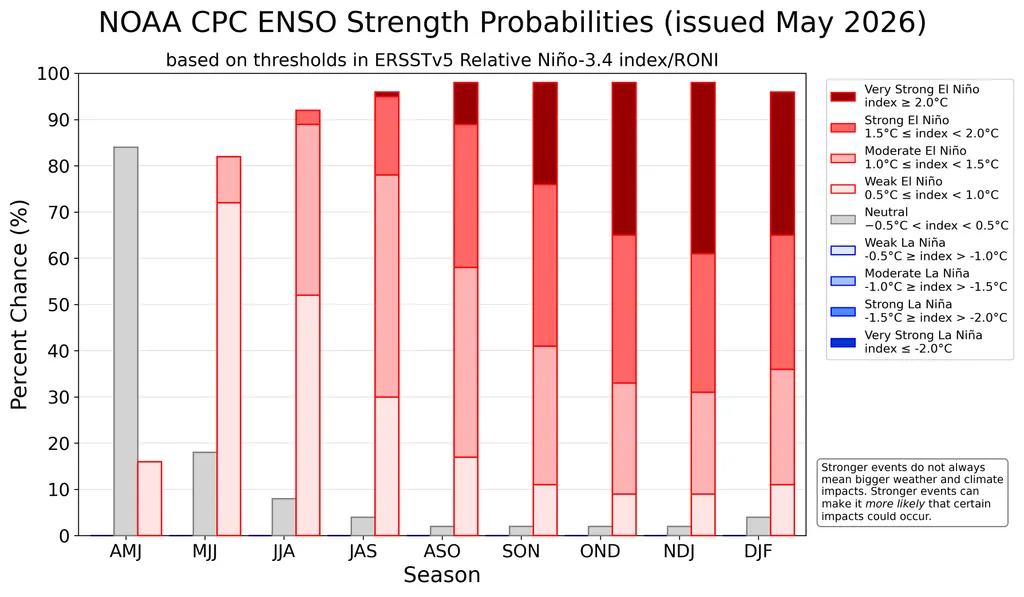
NOAA’s latest ENSO Diagnostic Discussion indicates that ENSO-neutral conditions are currently present, but forecasters see a 61% chance of El Niño developing between May and July 2026 and persisting through the end of the year. The agency also noted a possible one-in-four chance of a “very strong” event.
Some climate researchers and meteorologists are already warning that the developing pattern could rival major historical El Niño events from 1997–1998 or 2015–2016.
Why Divers Should Pay Attention
For divers, El Niño is far more than a climate headline.
Ocean temperatures directly influence marine life behavior, coral reef health, plankton blooms, visibility, and nutrient circulation. A strong El Niño can transform entire underwater ecosystems within months.
Warm-water anomalies suppress nutrient-rich upwellings that normally support marine food chains in parts of the Pacific. In destinations like Peru, Ecuador, and the Galápagos Islands, this often results in reduced marine productivity and major shifts in animal migration patterns.
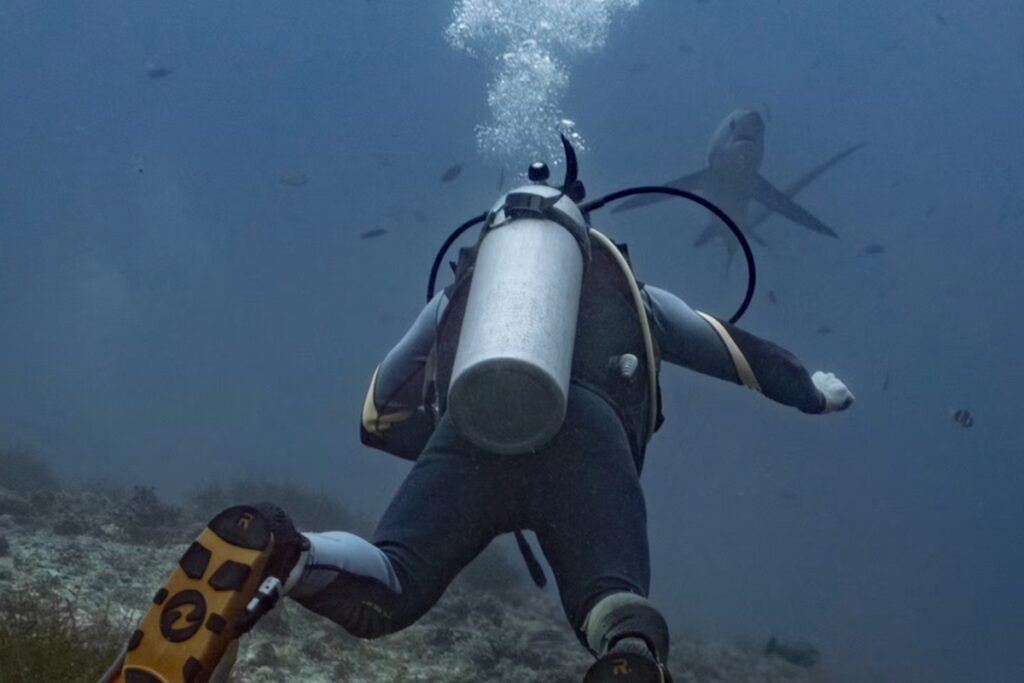
Species that thrive in colder, nutrient-rich water — including hammerheads, whale sharks, sea lions, and pelagic fish — may temporarily relocate or appear in lower numbers during severe El Niño years.
At the same time, tropical species can expand into new regions as sea temperatures rise.
Coral Bleaching Risks Could Increase
One of the greatest concerns surrounding a potential super El Niño is coral bleaching.
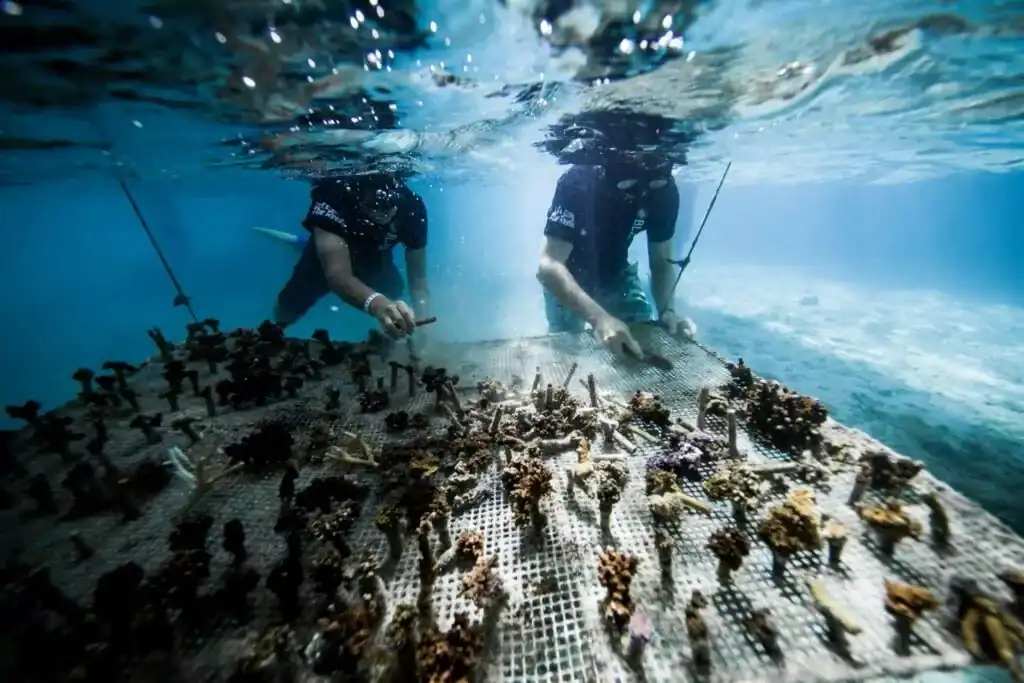
Corals survive within a narrow temperature range. When ocean temperatures remain elevated for prolonged periods, corals expel the symbiotic algae that provide them with energy and color. If the heat stress continues, reefs can die.
The 2015–2016 El Niño caused one of the largest global coral bleaching events ever recorded, severely impacting reefs across the Pacific, Indian Ocean, and parts of the Caribbean.
Marine scientists worry that another major El Niño layered on top of long-term climate warming could place additional stress on already vulnerable reef systems.
For dive tourism destinations that rely heavily on reef ecosystems, the economic consequences could also become significant.
The Red Sea: More Resilient, But Not Immune
The Red Sea is often viewed as one of the more resilient reef systems in the world, particularly in its northern regions, where corals have shown unusually high heat tolerance compared with many Indo-Pacific reefs.
That resilience has made the Red Sea increasingly important in global coral conservation discussions.
However, marine scientists caution that no reef system is completely immune to prolonged marine heatwaves or global climate instability. Rising sea temperatures, combined with local pressures such as coastal development and pollution, could still affect reef health and marine biodiversity over time.
For divers visiting Egypt, Saudi Arabia, or Jordan, monitoring ocean temperature trends during late 2026 and 2027 may become increasingly relevant.
Changing Conditions at Popular Dive Destinations
El Niño can affect dive conditions in different ways depending on the region.
Galápagos Islands
The Galápagos often experiences warmer water, reduced nutrients, and shifts in pelagic marine life during El Niño years. Some species become less predictable, while others appear in unusual numbers.
Indonesia and Southeast Asia
Certain areas may see warmer seas, altered monsoon behavior, and changes in visibility due to shifting rainfall patterns.
Pacific Coast of the Americas
Heavy rainfall, storms, and flooding are common during strong El Niño phases, potentially affecting coastal dive infrastructure and liveaboard operations.
Caribbean and Atlantic
El Niño can suppress Atlantic hurricane activity by increasing upper-level wind shear, though exceptionally warm ocean temperatures may complicate forecasts in coming seasons.
(Image credit: NOAA Climate Prediction Center)
Climate Change Is Raising the Stakes
Scientists continue debating how climate change affects ENSO cycles, but many agree that warmer global oceans may amplify the impacts associated with strong El Niño events.
Recent ocean temperature records have already alarmed climate researchers. According to recent reporting and NOAA data, sea surface temperatures remain exceptionally high across multiple ocean basins.
That means even a moderate-to-strong El Niño could interact with already elevated baseline temperatures, increasing the risk of marine heatwaves and ecosystem stress.
For divers, underwater photographers, conservation groups, and dive operators, the coming year may offer both extraordinary encounters and significant environmental challenges.
What Happens Next?
Forecasting El Niño intensity months in advance remains difficult because of what climatologists call the “spring predictability barrier,” a period when ENSO forecasts become less reliable. NOAA itself emphasizes that uncertainty remains high regarding the final strength of the developing event.
Still, subsurface warming patterns across the Pacific and weakening trade winds are signals scientists take seriously.
If current trends continue, late 2026 and 2027 could become defining years not only for global climate records, but also for the health of marine ecosystems worldwide.
For the diving community, this evolving climate pattern serves as another reminder that ocean conservation and climate resilience are becoming inseparable from the future of dive travel itself.

Mohsen Nabil is the Founder and Editor-in-Chief of Diventures Magazine. A mechanical engineer and scuba diving instructor based in the Red Sea, he writes about diving safety, marine conservation, underwater exploration, and developments in the global dive industry. Through Diventures Magazine, he works to connect divers, scientists, and ocean advocates while promoting responsible diving and protection of the oceans.