

A sweeping amendment to UK law could make every sunken military vessel a Protected Place by default. No touching, no penetrating, no souvenirs — and potentially criminal charges if you get it wrong. We break down what’s changing, which wrecks are affected, and how to stay legal.
If you dive wrecks in UK waters, new UK military wreck diving law currently moving through Parliament could reshape everything you are and aren’t allowed to do on the bottom. The change is contained in Clause 47 of the Armed Forces Bill — a single amendment that maritime law expert Professor Mike Williams calls “massive changes for UK wreck-diving.”
“There are substantial changes in the pipeline and no one wants a diver inadvertently getting a criminal record,” he warns. For recreational divers, the message is simple: understand this now, before the law changes.
How UK Wreck Protection Law Currently Works
The Protection of Military Remains Act 1986 (PMRA) has governed UK military wreck diving law for four decades. It operates a two-tier system. Protected Places can be visited by recreational divers on a strict look-but-don’t-touch basis — no artefact removal, no penetration. Controlled Sites are far more restrictive, accessible only under a Ministry of Defence (MoD) licence and rarely dived at all.
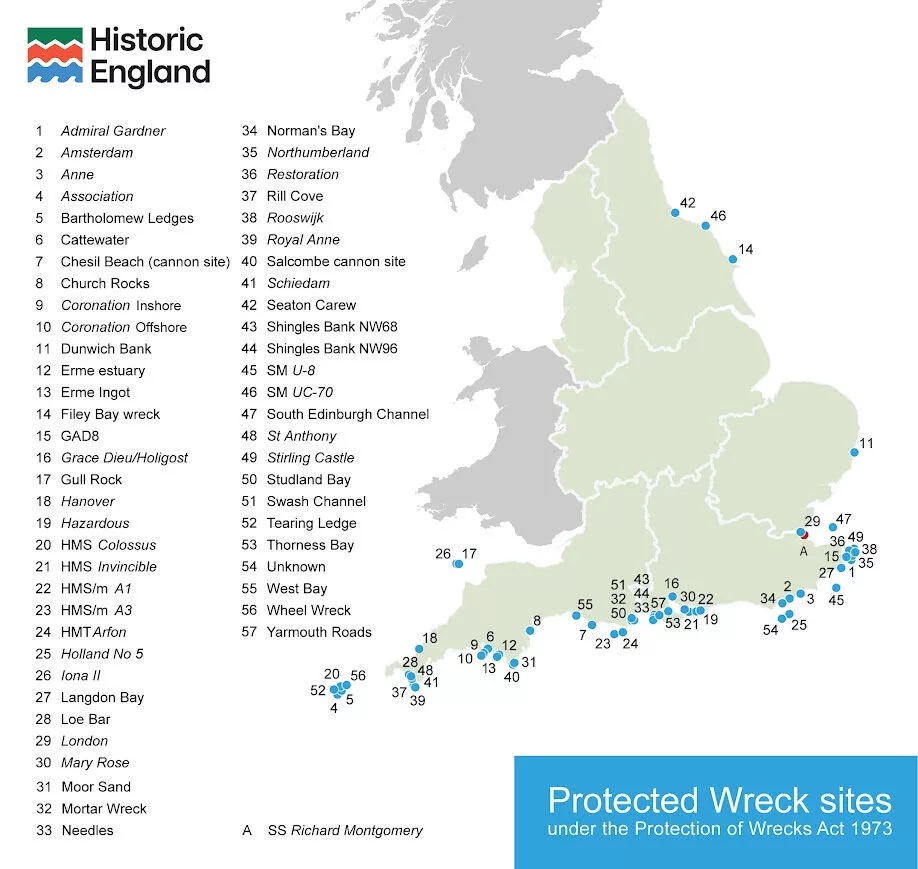
Military aircraft automatically receive Protected Place status. Warships, however, only get protection when a government minister issues a specific designation order. At present there are fewer than 100 underwater Protected Places in the UK, 57 of them in English waters — mostly historic wrecks along the south coast.
The system’s critical weakness: if a wreck has never been individually designated, it has no automatic protection at all. That is exactly what Clause 47 is written to fix.
What Clause 47 of the Armed Forces Bill Would Change
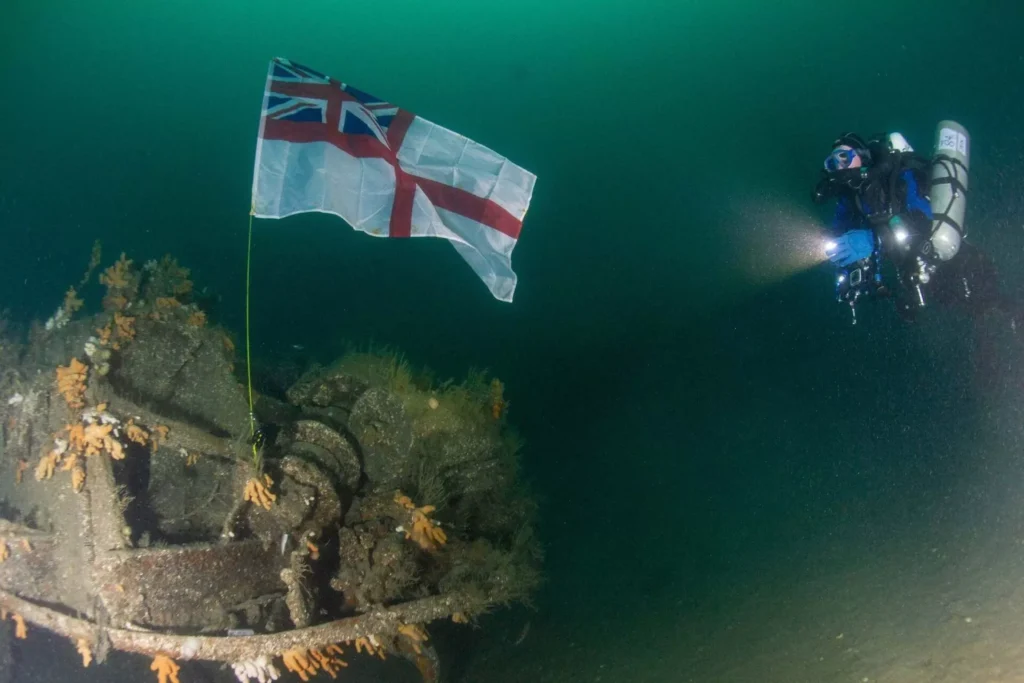
Under the proposed amendment, any ship sunk while in military service would automatically become a Protected Place — no ministerial order required. This applies to Royal Navy vessels and to warships of any nation sunk in UK territorial waters.
That means no physical disturbance and absolutely no collection of portholes, bells or any other souvenirs. Not touching can also mean not penetrating a wreck.
Professor Mike Williams, maritime law expert
Divers caught violating a Protected Place could face criminal prosecution. Worse, an incident could trigger the reclassification of a site as a Controlled Site — placing it entirely out of bounds to recreational divers.
Two further changes compound the impact significantly. The current 200-year rule — limiting Controlled Site designation to vessels lost since 1826 — would be removed entirely. And the existing 1914 start-date for Protected Place status would also be scrapped. Once enacted, the new UK military wreck diving law would cover all sunken military vessels of any age, including historically significant wrecks such as HMS Victory (1744).
Wrecks That Could Be Affected
- James Eagan Layne (Cornwall) — arguably the UK’s most popular wreck dive; Liberty ship lost 1945
- HMS Exmouth (Moray Firth) — first Royal Navy destroyer lost in WWII, already a Controlled Site
- HMCS Trentonian (English Channel) — Canadian corvette, 65m; the bell recovery that reportedly triggered this legislation
- MV Storaa (off Whitby) — Danish cargo ship, designated Protected Place in 2018
- HMS M2 (Dorset) — submarine Protected Place; the first MoD dive licence was granted here
- HMS Victory 1744 (English Channel) — previously outside scope of the PMRA; swept in under new rules
- Countless unnamed WWII merchant and naval vessels around the UK coastline
Approximately one quarter of the UK’s tens of thousands of known shipwrecks were lost during the two World Wars.
The Merchant Ship Grey Area
One of the most complex aspects of the new UK military wreck diving law is how it handles wartime merchant vessels. A Court of Appeal ruling in the Storaa case found that a defensively armed merchant ship sailing in convoy with Royal Navy gunners aboard was “in military service” for the purposes of the PMRA. The Storaa was subsequently designated a Protected Place in 2018.
Under Clause 47, the logic extends further. Liberty ships like the James Eagan Layne — armed, in convoy, carrying wartime cargo — could fall under automatic protection, with no penetration or contact permitted.
For divers, the safest course of action to avoid committing a criminal offence is not to touch or recover items from any merchant ship lost in war.
Professor Mike Williams
The Bell That May Have Triggered the Legislation
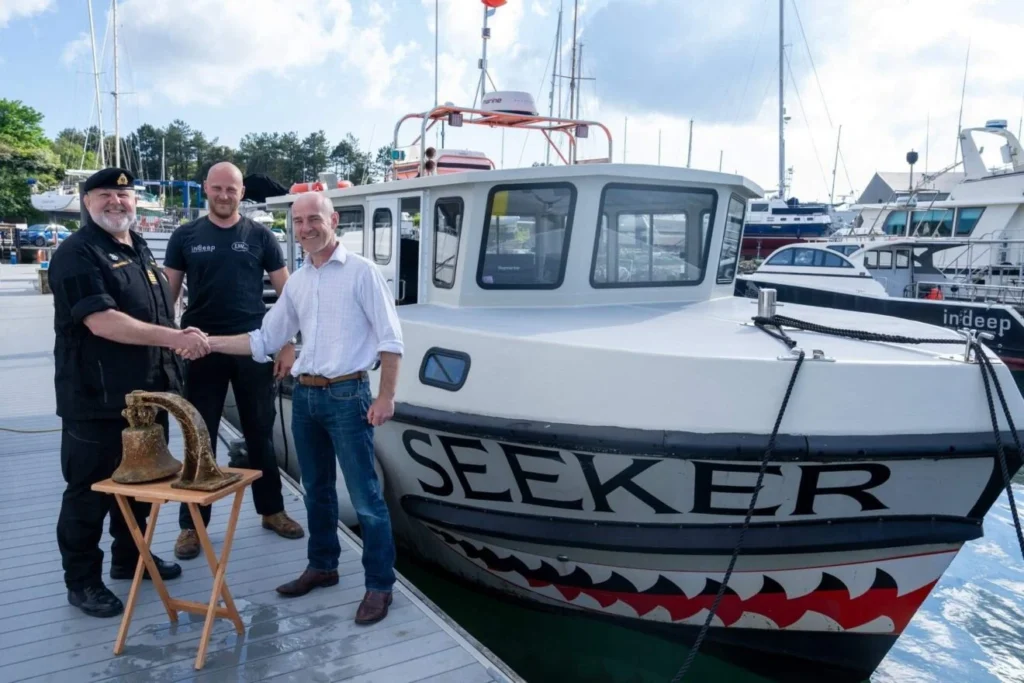
What has prompted this change now? At least part of the answer lies with a single artefact: the ship’s bell recovered from HMCS Trentonian, a Canadian corvette and U-boat victim that sank in the English Channel in February 1945 with the loss of six crew.
Leading UK wreck-diver Dom Robinson recovered the bell in 2025, declared it to the Receiver of Wreck, and personally returned it to Canadian Navy representatives for restoration and display. As a non-British vessel, Trentonian had no formal protection under existing UK military wreck diving law — but the recovery reportedly prompted Canadian authorities to raise the matter with MoD Navy Command.
Robinson waived his legal salvage rights to speed up the handover, and a Canadian Navy officer acknowledged it was far better to have the bell on display in a museum. Robinson remains pragmatic: “I’d also have been happy to return it to where it was found!”
Will Stricter UK Military Wreck Diving Law Backfire?
Not everyone is convinced the blanket approach will achieve its goals. Receiver of Wreck Stephen White, the Maritime & Coastguard Agency official responsible for administering found shipwrecks, raised a fundamental concern at the recent Go Diving Show.
What concerns me is that if this amendment goes through it will affect the reporting of finds on wrecks. I can see it being driven underground as a result.
Stephen White, Receiver of Wreck
Dom Robinson echoes this: “Making all wrecks Protected Places will simply return us to the days when people didn’t declare things they found. Also worth mentioning is that many wrecks are now in private hands and/or have been salvaged through the years.”
Parliamentary Timeline: When Will This Become Law?
- 26 January 2026 — Second reading in the House of Commons; Clause 47 introduced
- Spring/Summer 2026 — Select committee stage (line-by-line scrutiny)
- Summer 2026 — Report stage and third reading
- Autumn 2026 — House of Lords stages
- Late 2026 (est.) — Royal Assent; bill becomes law
- 2027 — New UK military wreck diving law fully in force
New Enforcement Manual: Heritage Crime at Sea
In parallel with the legislative changes, Historic England launched its Common Enforcement Manual for Heritage Crime at Sea in late February 2026 — a downloadable guide co-authored by Professor Williams in his role as visiting professor at the University of Plymouth’s law school.
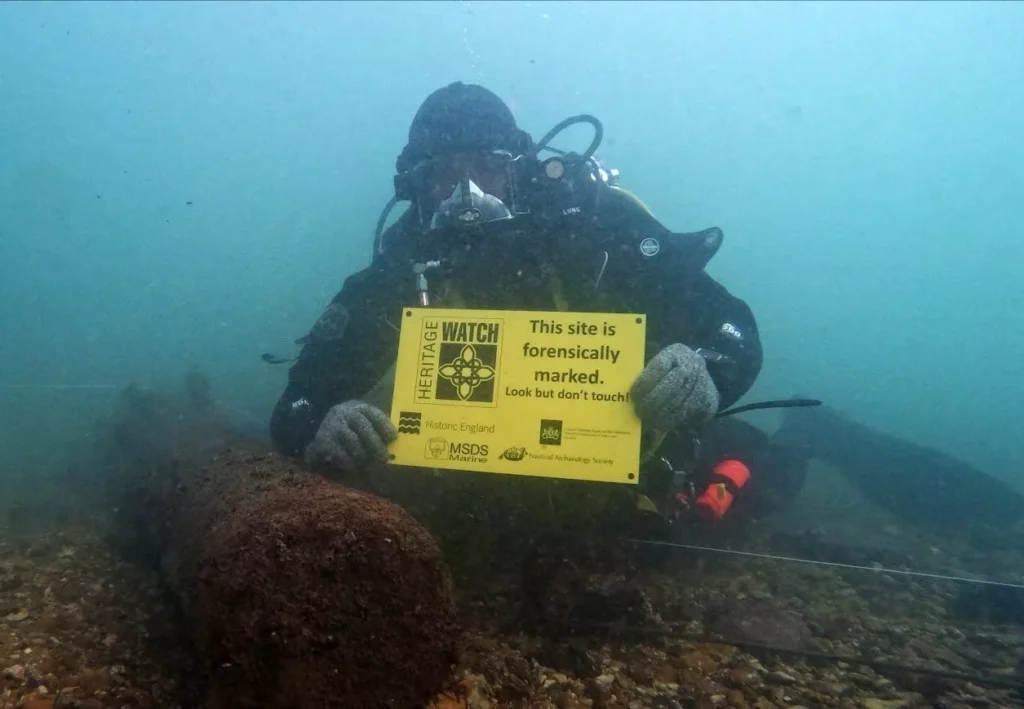
The manual gives frontline law-enforcement agencies clear protocols for detecting, investigating, and prosecuting shipwreck interference. It sits alongside Historic England’s Heritage Watch programme and a forensic marking initiative that tags cannon and artefacts on key wreck sites. Historic England notes that while the majority of divers abide by the law, an unscrupulous minority have caused irreparable damage to historic shipwreck sites.
FAQs: UK Military Wreck Diving Law
Will I still be able to dive military wrecks under the new law?
Yes — recreational diving on Protected Places is still permitted. What changes is what you can do on the wreck. No touching, no penetrating, no removing any artefacts whatsoever.
Does this affect non-British wrecks in UK waters?
Yes. Clause 47 applies to any vessel sunk in military service in UK territorial waters, regardless of the flag it sailed under. Foreign wartime casualties like HMCS Trentonian would be fully covered.
Is the James Eagan Layne going to become off-limits?
Not off-limits to diving — but it would become a Protected Place, meaning no penetration and no contact with the wreck or its contents. A significant change for a site famous for its swimthroughs.
What should I do if I find an artefact on a wreck right now?
Under current law, declare any found artefact to the Receiver of Wreck within 28 days. Once the new law is enacted, even touching an artefact on a qualifying wreck could constitute an offence — the best advice is to leave everything exactly as you find it.
When exactly does this come into force?
Royal Assent is expected in late 2026, with new protections in force from 2027. Nothing has changed yet — but the time to get informed is now.
What This Means for UK Wreck Diving
For a community built around exploring history beneath the waves, this is a genuinely significant moment. The vast majority of popular UK wreck dive sites are wartime casualties — and all of them would fall under the new UK military wreck diving law if Clause 47 passes unamended.
The message from Professor Williams, Dom Robinson, and the Receiver of Wreck is consistent: get informed, dive respectfully, and always declare what you find. The law is changing — make sure you change with it.

Diventures Team is a multidisciplinary team of scuba professionals, editors, and digital creators, producing accurate and experience-driven coverage of diving, marine life, and ocean culture.