

A growing number of major cruise lines have been affected by escalating geopolitical tensions in the Middle East, particularly in the Arabian Gulf and Strait of Hormuz, but the Red Sea region itself remains safe and open to cruise traffic at this time.
According to recent industry reports, at least six cruise ships have been delayed, rerouted, or temporarily held in ports due to the worsening security environment around the Gulf region following recent military escalation involving the United States, Israel and Iran.
Ships Stalled in the Gulf Region
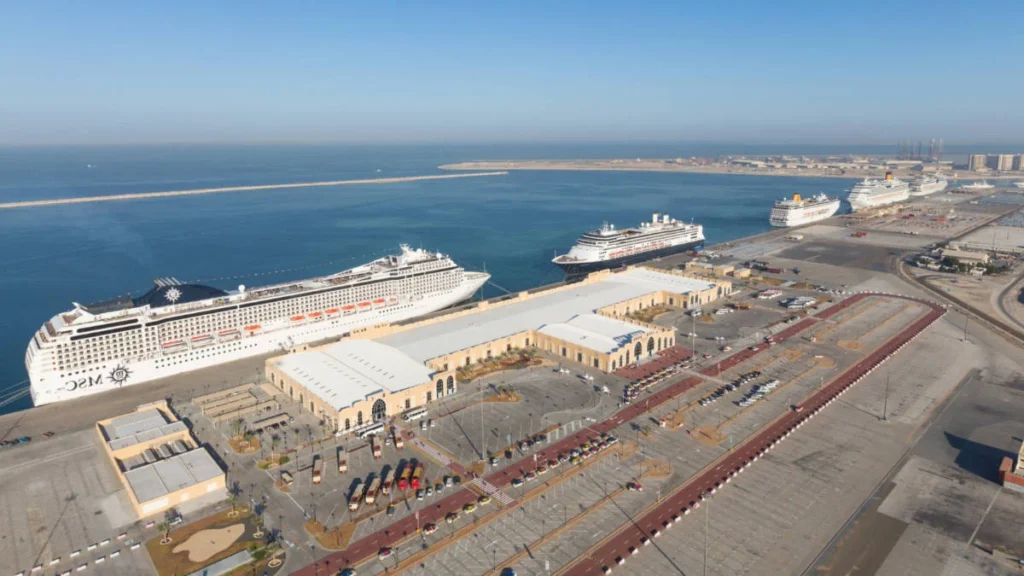
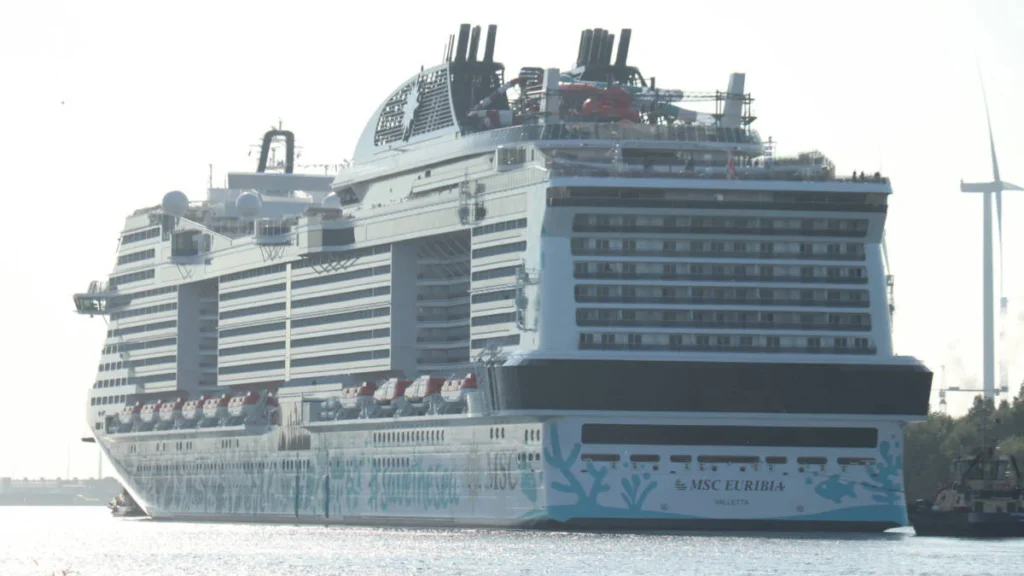
One such vessel, the MSC Euribia, is currently docked in Dubai and will remain there “until further notice” as cruise operators monitor the situation closely and prioritise passenger safety.
Other cruise lines have also adjusted their schedules or are keeping ships in Gulf ports rather than continuing with planned sailings. Industry officials say the priority remains on the safety and welfare of guests and crew, and decisions are being made as real-time developments unfold in the region.
Tensions Focused on Gulf Area and Strait of Hormuz
The heightened alert among cruise lines is linked to broader geopolitical instability — particularly near the Strait of Hormuz, a key international maritime chokepoint — where recent military actions have disrupted shipping traffic and raised global concerns. In fact, international sources report a dramatic reduction in tanker movement there as naval warnings and risks grow.
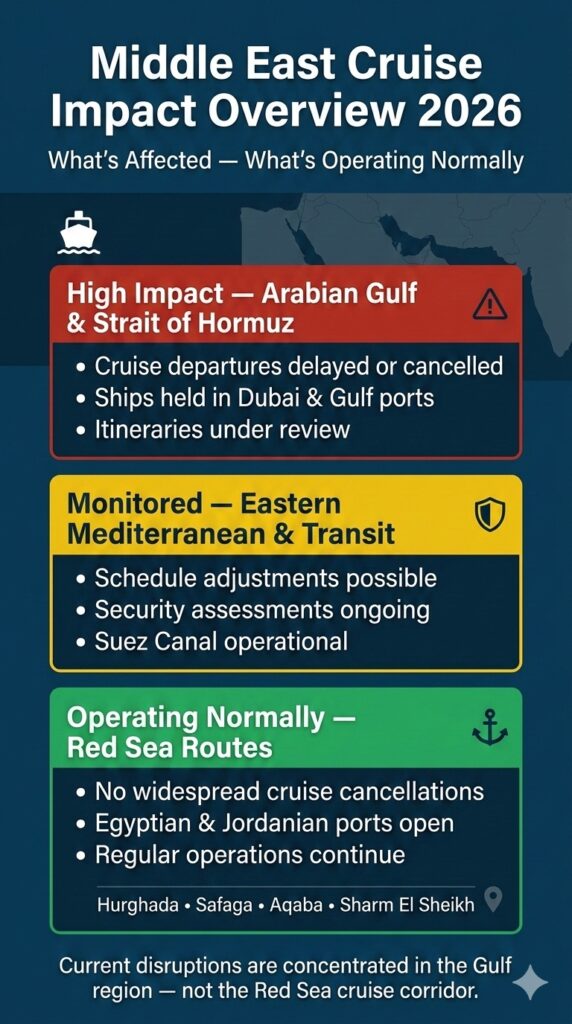
This area lies well east of the Red Sea, meaning the current tensions are primarily concentrated further into the Arabian Gulf rather than along the traditional Red Sea cruise routes. Cruise itineraries that include Dubai, Abu Dhabi or Gulf ports are most directly impacted.
Red Sea Cruises Unaffected — A Safer Corridor
Despite intermittent media reports about regional maritime disruptions, cruise ship operations in the Red Sea continue without official travel advisories. Ships transiting the Red Sea and calling at Egyptian and Jordanian ports are still operating on regular schedules, and no major cruise line has publicly suspended all Red Sea itineraries due to current Gulf tensions.
Maritime authorities in the region maintain that the Red Sea remains navigable and secure relative to Gulf hotspots, and that safety protocols for commercial and leisure vessels continue to be upheld. The Suez Canal and associated shipping lanes — which link the Mediterranean with Red Sea routes — also remain in standard operation, supported by continuous monitoring and coordination with international maritime organisations.
What This Means for Cruisers
- Gulf itineraries (like those including Dubai and Abu Dhabi) are the most affected due to proximity to the Arabian Gulf tensions.
- Red Sea cruises remain a viable travel option, and no comprehensive cancellations have been announced for that region.
- Cruise firms are actively reviewing itineraries, prioritising passenger safety and adjusting routes where necessary.
With ongoing developments across wider Middle East waters, cruise operators are maintaining flexibility, but the Red Sea continues to be navigable and considered low-risk for cruising at this point in time.

Diventures Team is a multidisciplinary team of scuba professionals, editors, and digital creators, producing accurate and experience-driven coverage of diving, marine life, and ocean culture.