
Scuba diving during pregnancy raises important medical and ethical questions. For ethical reasons, no experimental studies have been conducted on pregnant women to directly assess the risks of diving. Available knowledge is therefore based on surveys, observational data, and animal studies. These sources do not provide absolute answers, but they offer important guidance.
One survey conducted in 1980 examined diving activity during pregnancy. The results were inconclusive, but they highlighted possible concerns that should not be ignored. For this reason, most medical and diving organizations recommend avoiding scuba diving during pregnancy.
Human Survey Data
The 1980 survey included 208 women. Among them, 69 women did not dive during pregnancy and reported no fetal abnormalities. Another 109 women did dive during pregnancy. In this group, fetal abnormalities were reported in 5.5 percent of cases. This rate was considered normal for that time period.
It is important to note that these findings do not prove that diving caused the reported abnormalities. Many factors unrelated to diving could have contributed. Because of these limitations, no clear conclusion can be drawn from the survey alone.
Critical Periods of Pregnancy
Potential negative effects of scuba diving are believed to mainly affect the fetus during the first and third trimesters of pregnancy. These stages involve critical periods of development and physiological change.
During the first trimester, exposure to increased oxygen pressure may affect fetal development. Reported concerns include low birth weight, abnormal skull growth, limb deformities, and abnormal heart development. These risks are theoretical but medically plausible based on what is known about fetal sensitivity during early development.
Decompression Risks in Late Pregnancy
At any stage of pregnancy, and especially during the third trimester, decompression sickness in the mother can pose serious risks to the fetus. The fetal circulatory system bypasses the lungs and relies on the placenta for gas exchange.
Because of this, nitrogen bubbles cannot be filtered through fetal lungs. Even mild or unrecognized decompression sickness in the mother may result in significant harm to the fetus.
Evidence From Animal Studies
Animal studies provide additional insight into these risks. Sheep have been used in research because their placental structure is similar to that of humans. Experiments involving pregnant sheep in hyperbaric chambers have shown concerning results.
In some cases, nitrogen bubbles appeared in the fetus’s bloodstream even when the mother showed no signs of decompression sickness. When mothers did show symptoms, the effects on the fetus were more severe.
Observed fetal effects included life-threatening heart rhythm disturbances, limb weakness, and spinal defects. These findings support concerns about the fetus’s inability to safely handle gas bubbles in the bloodstream.
Physiological Vulnerability of the Fetus
A fetus cannot rely on the lungs to filter bubbles from the blood. Blood circulation is routed through the placenta instead. Because of this, even so-called silent bubbles that are harmless in adult divers can result in arterial gas embolism in the fetus. This condition can be fatal.
This physiological difference explains why fetal risk may exist even when the mother feels well after a dive.
Medical Recommendations
Although the exact level of risk cannot be measured with certainty, available evidence suggests that scuba diving during pregnancy should be avoided. The potential consequences are serious, and there is no proven safe exposure level.
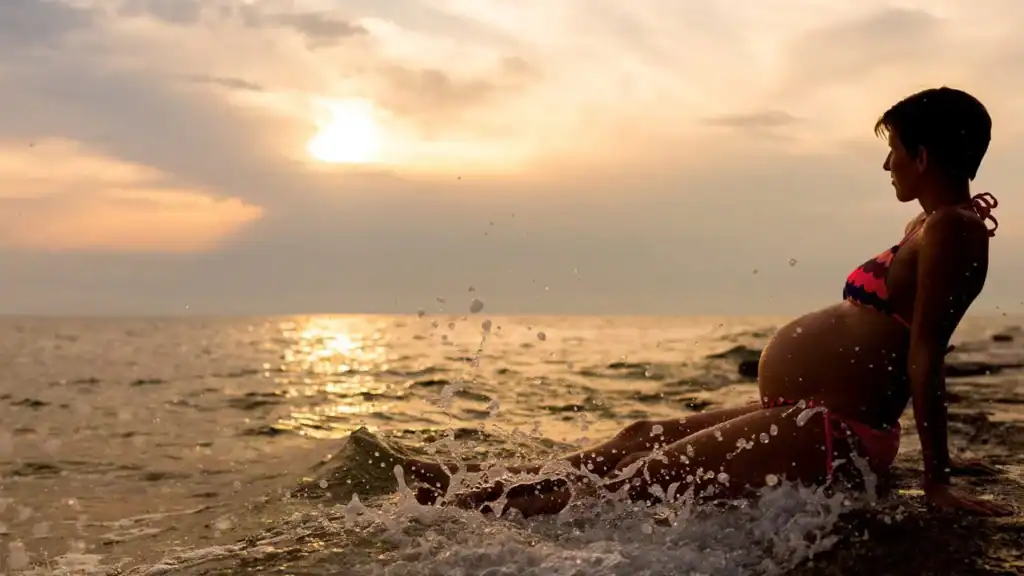
Most medical guidance supports avoiding diving until after the baby is born. This approach prioritizes safety in the absence of definitive data.
Returning to Diving After Birth
After delivery, mothers are generally advised to wait between 4 and 8 weeks before resuming scuba diving. The appropriate waiting period depends on the nature of the delivery and individual recovery.
Medical advice should always be sought before returning to diving. A healthcare professional can assess recovery and help determine when it is safe to dive again.
Conclusion
Scuba diving during pregnancy presents potential risks that cannot be fully quantified. Human surveys, animal studies, and physiological understanding all suggest caution.
Until clearer evidence is available, avoiding diving during pregnancy remains the safest choice for both mother and child.

Diventures Team is a multidisciplinary team of scuba professionals, editors, and digital creators, producing accurate and experience-driven coverage of diving, marine life, and ocean culture.