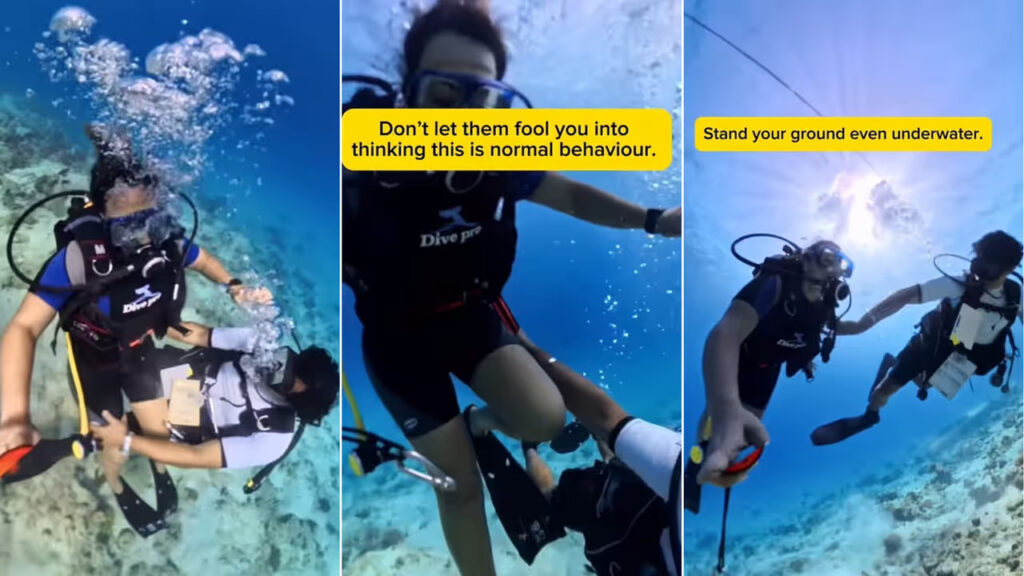

Recent discussions on social media about a diving incident in Hurghada have brought an important topic back to the surface of the global diving community: the professional boundaries that must exist between dive instructors and their students.
The conversation, however uncomfortable, presents a valuable opportunity. Rather than debating the specifics of one incident, it is worth stepping back to examine the standards that define safe, ethical, and professional diving instruction — and to ask honestly whether our industry is doing enough to uphold them.
Trust Is the Foundation of Diving
Scuba diving is unlike almost any other recreational activity. From the moment a student enters the water, they place an extraordinary level of trust in their instructor — not just for guidance, but for their safety in an environment that is inherently unfamiliar and potentially unforgiving.
For beginners especially, the underwater world can feel disorienting. Limited communication, unfamiliar equipment, and complete dependence on a breathing apparatus leave students with little choice but to follow their instructor’s lead. That dependence is not a weakness — it is simply the nature of learning to dive. But it places a profound responsibility on the instructor. Professional conduct underwater is not optional. It is the foundation on which every dive lesson is built.
Physical Contact: Necessary, Limited, and Always Purposeful
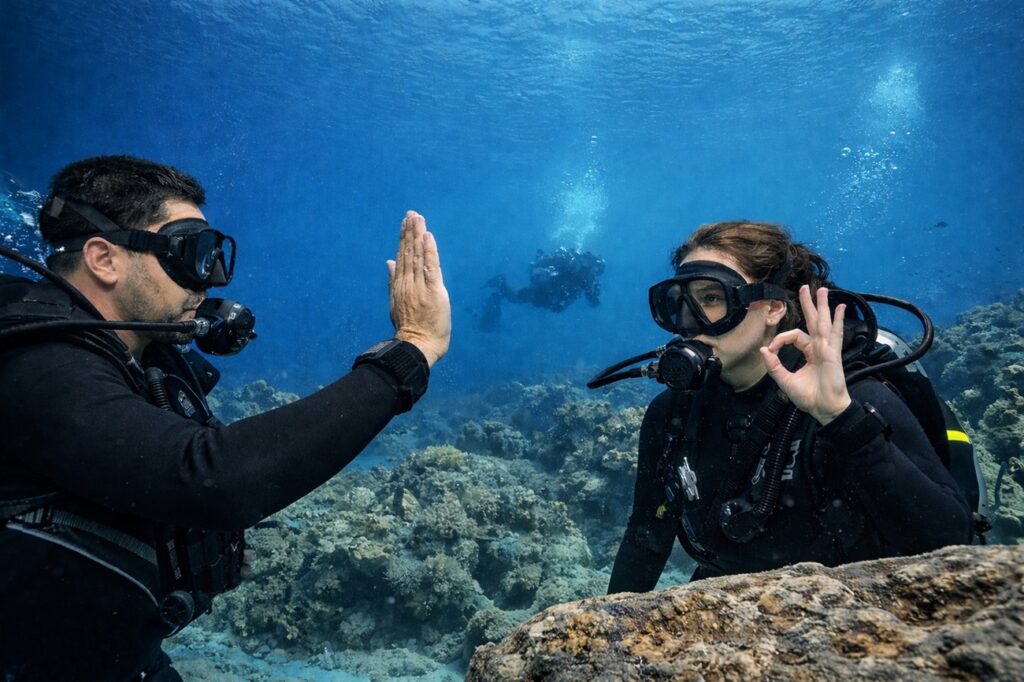
Some physical contact between an instructor and a student is an accepted and sometimes essential part of dive training. Adjusting a student’s buoyancy or positioning, assisting with equipment, preventing an unsafe ascent, or stabilising a diver who is showing signs of stress — these are all legitimate reasons an instructor may make physical contact during a session.
But the operative word is purposeful. Every instance of physical contact should have a clear, safety-related reason behind it. It should be proportionate, brief, and focused on the student’s equipment or posture rather than their body. And critically, it should never leave a student feeling uncomfortable or confused about its intent.
Professional instructors understand this instinctively. They also understand that a calm, controlled student is not a student who needs to be physically redirected. When contact occurs in the absence of any safety concern, it falls outside the bounds of professional instruction — regardless of intent.
The Briefing Is Not Optional
One of the most effective tools an instructor has for establishing trust before a dive even begins is the pre-dive briefing. Yet it is sometimes treated as a formality rather than the foundation it should be.
A thorough briefing should explain clearly how the instructor may assist the student during the session, what physical guidance might occur and why, and how the student can signal if they feel uncomfortable or want to pause. This transparency does more than prevent misunderstanding — it gives the student a sense of agency in an environment where they have very little. A student who knows what to expect is a student who can focus on learning rather than uncertainty.
Instructors who skip or rush this step are not just cutting corners on procedure. They are removing a layer of protection for both the student and themselves.
The Responsibility Does Not Rest With Instructors Alone
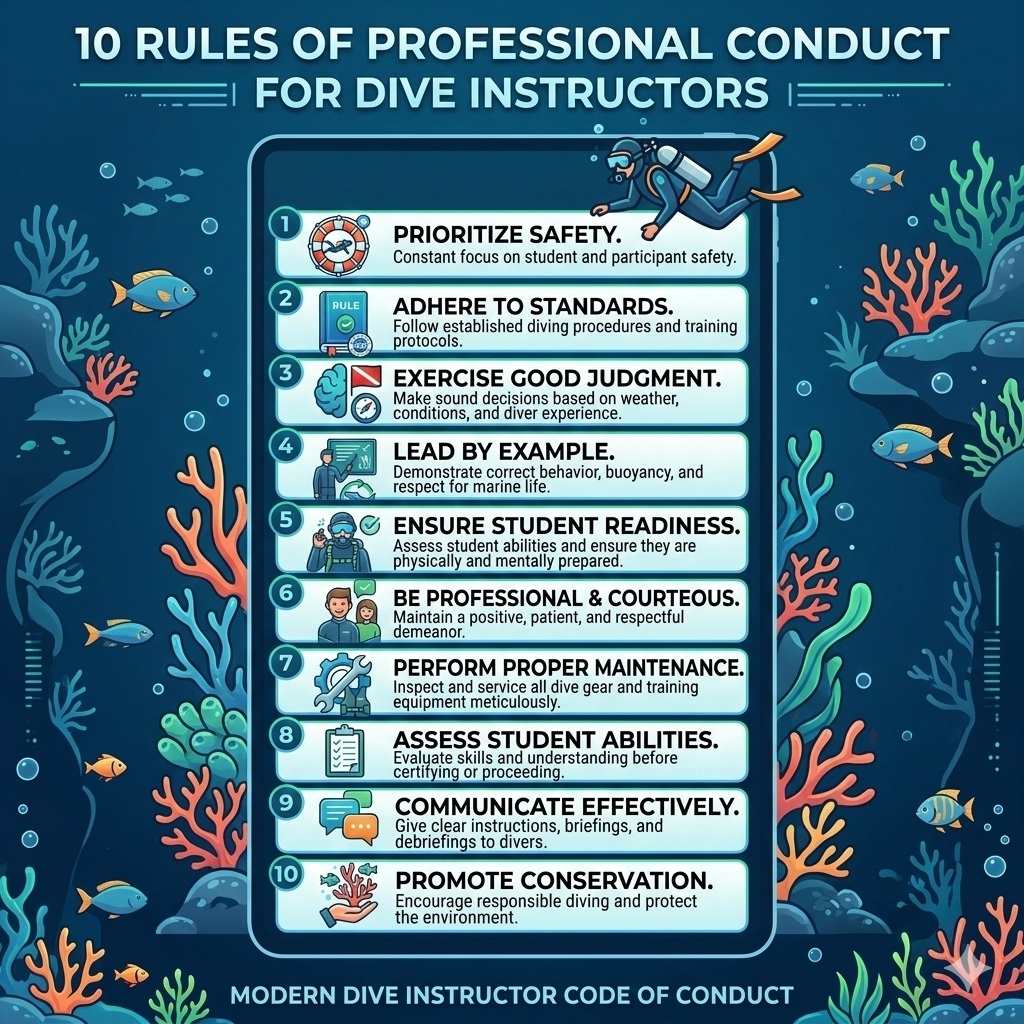
Individual instructors set the tone underwater, but dive centres shape the culture that instructors operate within. Hiring certified and experienced staff is the baseline — not the ceiling. Reputable dive centres go further, ensuring that codes of conduct are clearly communicated to all staff, that students have accessible and genuine channels to raise concerns, and that professionalism is modelled from management downward.
Most dive centres in Hurghada and across the Red Sea have built their reputations over decades of consistent, high-quality instruction. That reputation is one of the region’s most valuable assets, and it belongs to the entire community — operators, instructors, and support staff alike. Protecting it is a collective responsibility, and that means taking concerns seriously rather than defensively when they arise.
A Moment for Honest Reflection
Conversations about instructor conduct are rarely comfortable, particularly when they play out publicly and involve allegations that have not been fully resolved. The instinct to defend the profession is understandable. But defensiveness, when it comes at the expense of accountability, ultimately does more damage to the industry’s reputation than the incident that prompted it.
What serves the diving community better is honest reflection. Are pre-dive briefings thorough enough? Do students — particularly solo travellers new to the sport — genuinely understand their rights underwater? Are reporting channels within dive centres visible and trustworthy? These are questions every operator and instructor should be able to answer confidently.
Protecting What We Have Built
Destinations like Hurghada and the wider Red Sea have become world-renowned precisely because generations of dedicated instructors and operators chose to prioritise safety, professionalism, and the diver’s experience above all else. That legacy does not sustain itself.
Every instructor who enters the water with a student carries that legacy with them. Respecting professional boundaries is not simply a matter of compliance with a code of conduct — it is an act of care for the student in front of you, for the colleagues who share your workplace, and for the future of a sport that depends on public trust to thrive.
The standard is clear. Respect, professionalism, and accountability must always remain at the heart of scuba diving — not because they are required, but because they are what the profession demands of those who are worthy of it.

Mohsen Nabil
Mohsen Nabil es el fundador y redactor jefe de la revista Diventures. Ingeniero mecánico e instructor de buceo con base en el Mar Rojo, escribe sobre seguridad en el buceo, conservación marina, exploración submarina y avances en la industria mundial del buceo. A través de la revista Diventures, trabaja para conectar a buceadores, científicos y defensores de los océanos, promoviendo al mismo tiempo el buceo responsable y la protección de los océanos.