
Sha’ab Abu Nuhas
Unverified
Explore Abu Nuhas in Egypt’s Strait of Gubal, home to four legendary Red Sea wrecks: Giannis D, Carnatic, Chrisoula K and Kimon M.
Overview
Abu Nuhas means “Father of Copper” in Arabic, a name traditionally associated with copper recovered around the reef after historic shipwrecks, particularly the Carnatic.
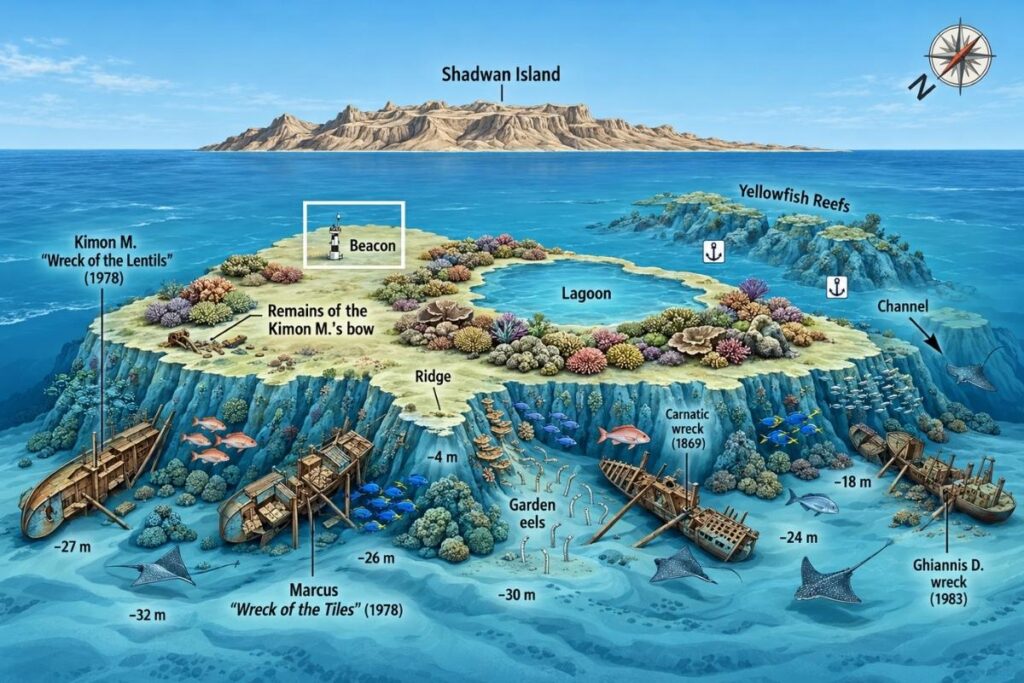
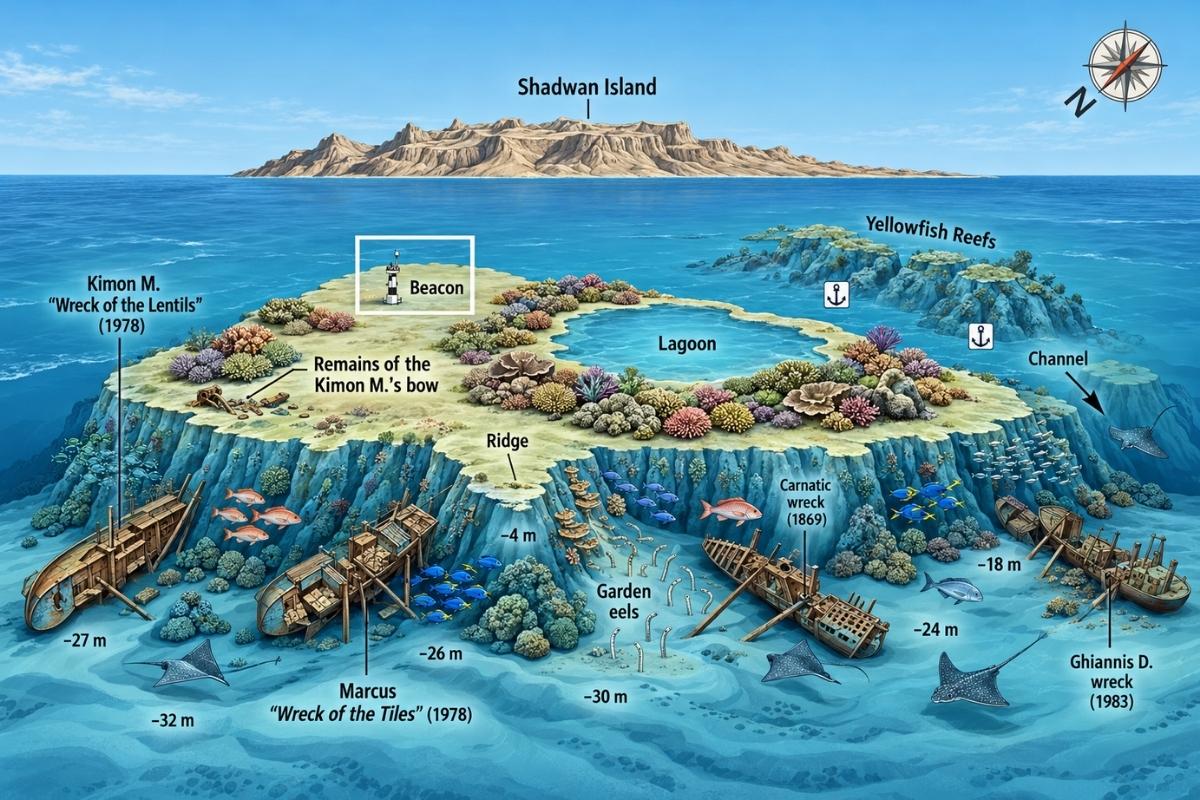
Sha’ab Abu Nuhas is one of the most famous wreck-diving locations in the Red Sea. Situated on the northern edge of the Strait of Gubal, northwest of Shadwan Island, the shallow reef lies close to the major shipping route leading between the Red Sea and the Gulf of Suez.
Its position has made it a navigational hazard for more than 150 years. Several vessels have struck the reef, creating an extraordinary concentration of shipwrecks along its exposed northern side.
Four of these wrecks have become classic recreational dives: Giannis D, Carnatic, Chrisoula K and Kimon M.
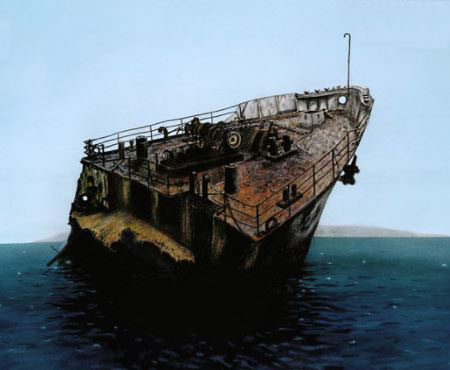
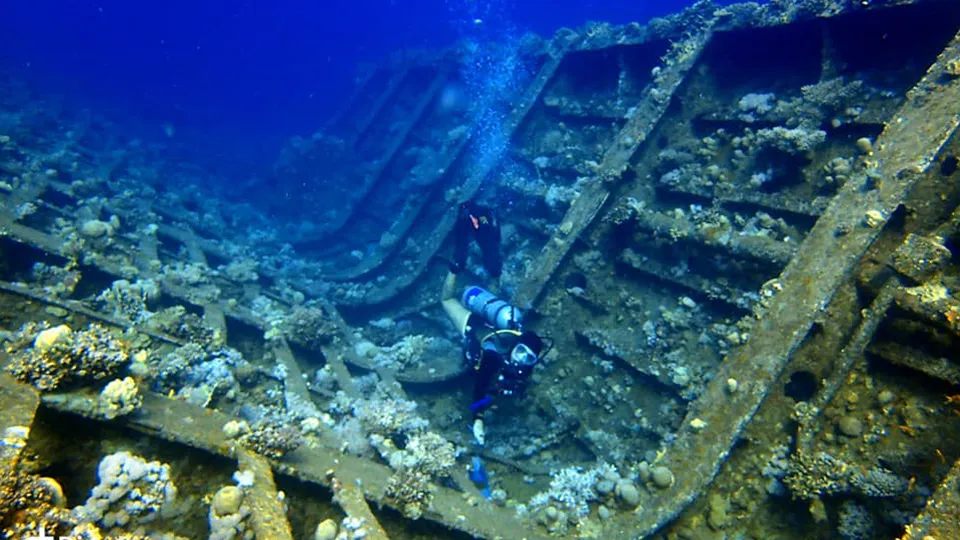
The oldest is the Carnatic, a British P&O passenger and cargo steamer that struck the reef in September 1869. The vessel eventually broke apart and sank, killing 31 people. Its iron framework is now heavily covered with coral and remains one of the most atmospheric historical wrecks in the Red Sea.
More than a century later, the Kimon M struck Abu Nuhas in December 1978 while carrying thousands of tonnes of lentils. It was followed by the Chrisoula K, carrying Italian floor tiles, in August 1981, and the timber-carrying Giannis D in April 1983.
Each wreck has a completely different character. The tilted stern and engine spaces of Giannis D provide dramatic wreck scenery; the Carnatic resembles a coral-covered iron skeleton; Chrisoula K still contains its distinctive tile cargo; while Kimon M is the deepest and most deteriorated of the four.
Depths range from only a few metres to approximately 32 metres, keeping the exterior portions of all four wrecks within recreational limits. Penetration, however, requires appropriate wreck-diving training, and unstable sections—particularly on Kimon M—should be avoided.
The wrecks have also become thriving artificial reefs. Moray eels, glassfish, lionfish, groupers, batfish and numerous other Red Sea species occupy the structures, while decades of coral growth have increasingly integrated the ships into the surrounding reef.
With four historic wrecks spanning more than a century of maritime history concentrated around a single reef, Abu Nuhas is not simply one dive—it is one of the defining wreck-diving destinations of the Egyptian Red Sea.
Why are there so many wrecks?
Abu Nuhas occupies an unfortunate position for shipping.
The shallow reef lies close to the main route used by ships approaching or leaving the Gulf of Suez and Suez Canal.
Historically, much of the reef lay barely visible beneath the surface. With heavy shipping traffic, navigation errors, strong winds and limited visual warning, several vessels drove directly onto it.
At least seven ships have reportedly been lost around the reef, although the four best-known recreational wrecks are:
Carnatic — 1869
Kimon M — 1978
Chrisoula K — 1981
Giannis D — 1983
This extraordinary concentration of wrecks earned Abu Nuhas its commonly used nickname:
The Ship Graveyard of the Red Sea
Main Attractions
Abu Nuhas is unusual because four major recreational wrecks lie along a relatively short section of the same reef.
Four famous recreational shipwrecks on one reef
Giannis D
SS Carnatic
Chrisoula K / Tile Wreck
Kimon M / Lentil Wreck
More than 150 years of maritime history
Coral-covered wreck structures
Engine rooms and cargo holds for appropriately trained wreck divers
Victorian-era Carnatic wreck
Giannis D’s dramatically tilted stern
Italian floor tiles aboard Chrisoula K
Large propellers and rudders
Excellent wide-angle photography
Glassfish
Moray eels
Lionfish
Batfish
Marine Life
The wrecks provide extensive shelter for reef fish, particularly inside broken cargo holds and around shaded structural areas.
Common or possible encounters include:
Giant moray eels
Lionfish
Scorpionfish
Glassfish
Batfish
Groupers
Anthias
Butterflyfish
Angelfish
Surgeonfish
Triggerfish
Nudibranchs
Octopus
Turtles
Barracuda
Trevally
Occasional dolphins
Coral & Habitat
Sha’ab Abu Nuhas is a shallow coral reef positioned on the northern side of the Strait of Gubal, close to one of the principal shipping routes connecting the Red Sea with the Gulf of Suez and Suez Canal.
The northern side is exposed to prevailing winds and waves.
Four major recreational wrecks lie along this northern face, while the reef itself supports healthy Red Sea coral communities.
Hard corals dominate shallow sections while soft corals, sponges and other marine growth have colonised the wreck structures.
After decades underwater, parts of the Carnatic in particular have become almost indistinguishable from the surrounding reef ecosystem.
Wreck Information
The four principal wrecks
1. Giannis D
Year lost: 1983
Depth: approximately 6–27 m
Type: Cargo freighter
Cargo: Sawn timber
The Giannis D is probably the most photographed wreck at Abu Nuhas.
Built in Japan in 1969, the freighter was carrying timber from Rijeka toward Saudi Arabia and Yemen when it struck the northwestern corner of Abu Nuhas on 19 April 1983. The crew abandoned the ship and were rescued safely.
Today the wreck is divided into bow, central and stern sections.
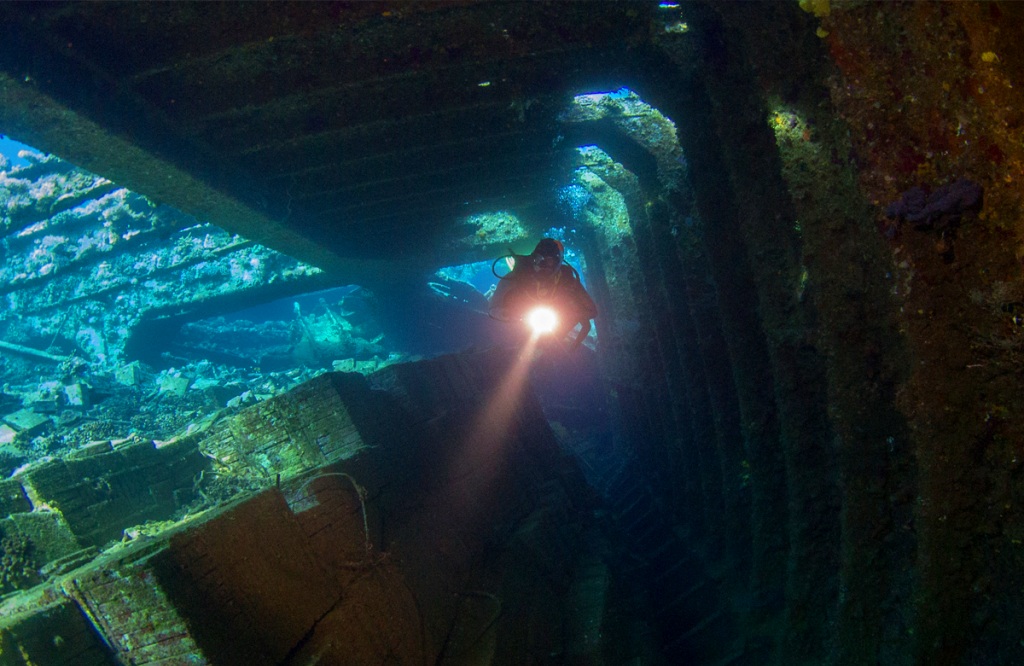
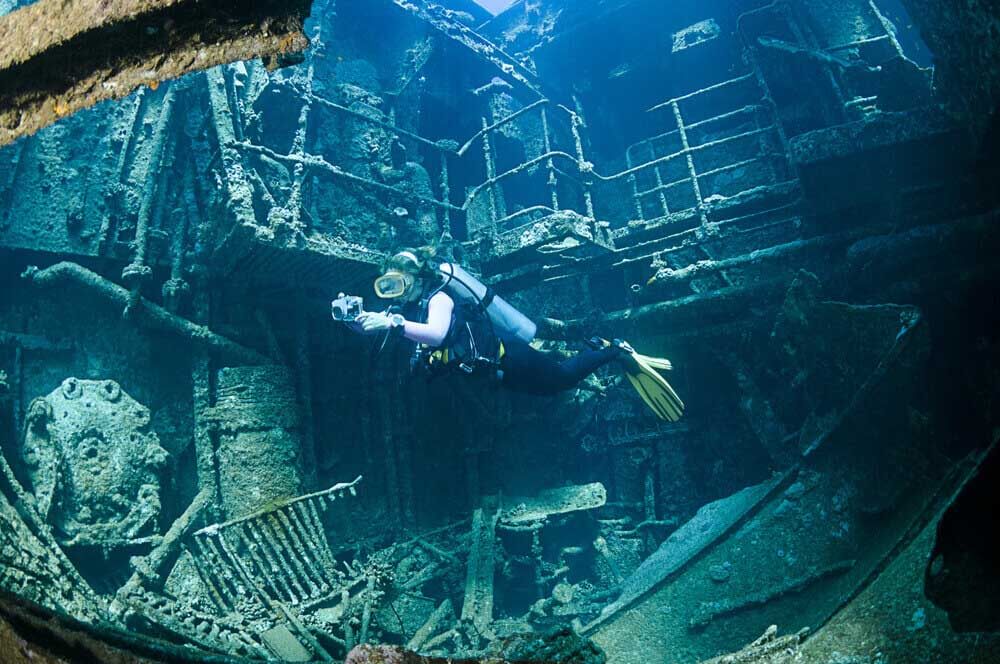
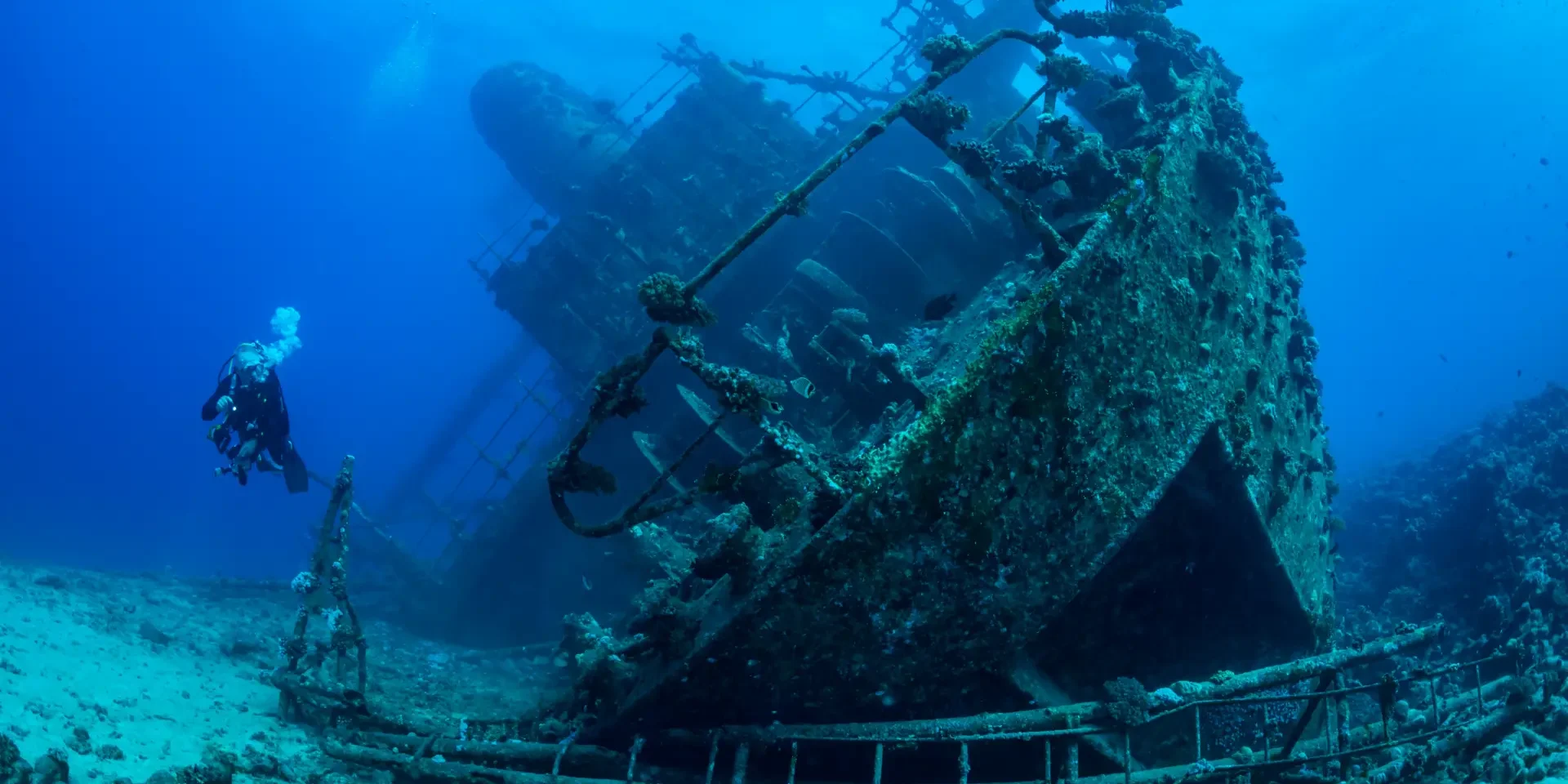
The stern is the most recognisable part, lying at an angle of approximately 45 degrees. The bridge, engine room, large propeller and tilted corridors create some of Abu Nuhas's most distinctive underwater scenery.
Part of the wreck rises to within only a few metres of the surface, while the deepest sections are around 27 m.
Best for: Wide-angle wreck photography, machinery and dramatic tilted interiors.
2. SS Carnatic
Year lost: 1869
Depth: approximately 17–27 m
Type: Iron-framed passenger and cargo steamer
Built: 1862
The Carnatic is the oldest and historically most significant of Abu Nuhas's major recreational wrecks.
The P&O passenger steamer left Suez for Bombay in September 1869 carrying passengers, mail, general cargo and specie.
Early on 13 September 1869, the vessel struck Abu Nuhas Reef.
Captain P. B. Jones initially kept passengers and crew aboard because he believed the vessel remained secure. Two days later, however, the ship broke apart and sank.
Five passengers and 26 crew members died. Survivors reached Shadwan Island before being rescued.
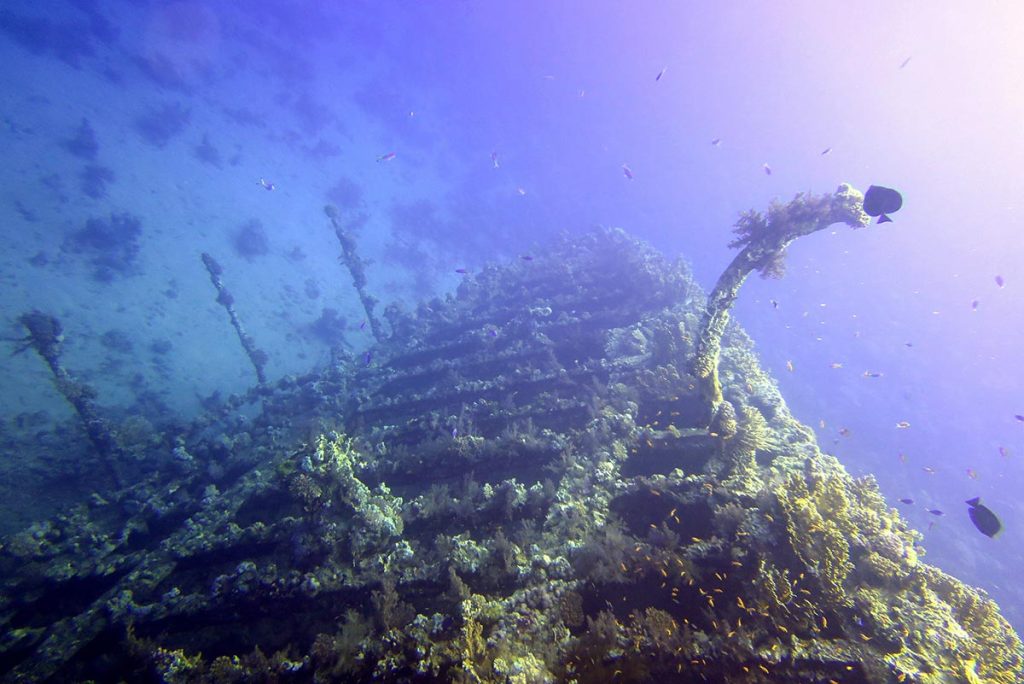
The wooden planking has long disappeared, leaving the ship's iron framework exposed like a giant underwater skeleton.
Soft corals and marine growth now cover much of the wreck.
The Carnatic is sometimes nicknamed the Bottle Wreck because numerous wine bottles were discovered around it.
Was there treasure?
The ship did carry valuable specie destined for the Indian Mint, but contrary to popular treasure stories, the valuable cargo was recovered during official salvage operations after the sinking.
Best for: History, atmospheric photography and coral-covered Victorian wreck structure.
3. Chrisoula K — The Tile Wreck
Year lost: 1981
Depth: approximately 4–27 m
Type: Freighter
Cargo: Italian floor tiles
The vessel commonly identified as Chrisoula K was carrying Italian floor tiles toward Jeddah when it struck the northeastern corner of Abu Nuhas on 31 August 1981.
The ship was abandoned as a constructive total loss and later slipped from the reef onto the seabed.
Stacks of tiles remain visible in the cargo holds, giving the wreck its well-known nickname: The Tile Wreck
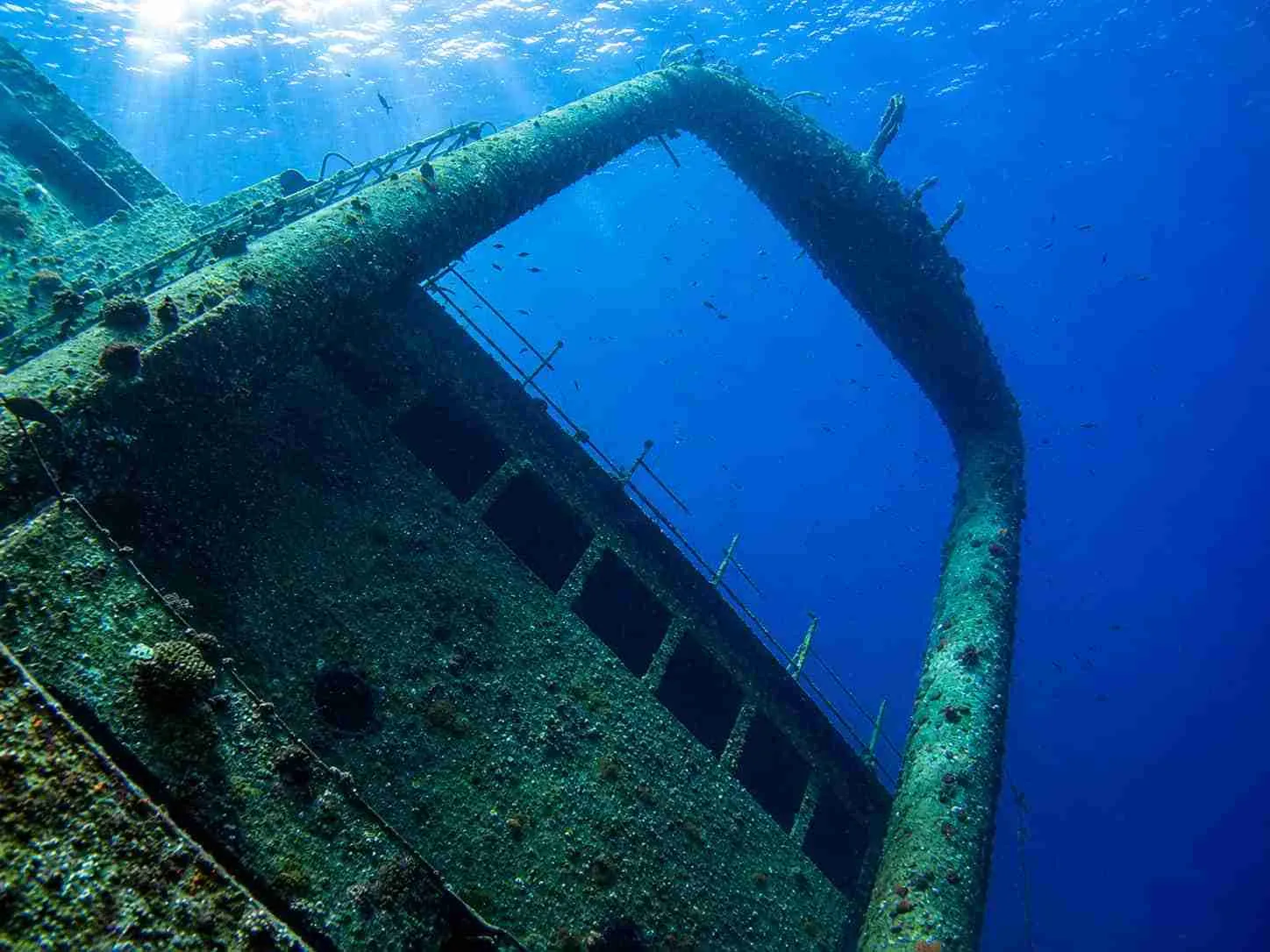
Much of the wreck remains remarkably recognisable. Cargo holds, bridge structure, engine spaces, stern, propeller and rudder can still be explored.
The propeller and rudder lie at approximately 26 m.
Identity controversy
There has been a long-running debate over whether the Tile Wreck is actually Chrisoula K or another vessel, Marcus/Markos.
CDWS identifies it as Chrisoula K and strongly supports that identification, while some wreck researchers continue to dispute it.
The wreck is officially and commonly identified as Chrisoula K, although some wreck researchers have questioned the identification and argued that it may instead be the Marcus.
4. Kimon M — The Lentil Wreck
Year lost: 1978
Depth: approximately 6–32 m
Type: Cargo vessel
Cargo: 4,500 tonnes of bagged lentils
The Kimon M was travelling from Iskenderun, Turkey, toward Bombay when it struck the northeastern corner of Abu Nuhas on 12 December 1978.
The crew were rescued safely.
Some undamaged cargo was salvaged while the vessel remained on the reef, but the ship was eventually declared a total loss.
Wind and waves gradually pushed it onto its starboard side before much of the vessel slipped into deeper water.
Its forward section is heavily broken up, while the stern remains the most intact area. The wreck reaches approximately 32 m, making Kimon M the deepest of the four principal recreational Abu Nuhas wrecks.
CDWS specifically warns that the wreck is continuing to deteriorate and that penetration should be regarded as dangerous.
Best for: Experienced wreck divers, stern structure, machinery and marine life.
Suggested Route
A typical visit involves two wreck dives, with operators selecting the wrecks according to conditions.
Giannis D route
Descend toward the wreck and explore the exterior of the stern section.
The large propeller, stern structure and engine-room exterior are the main attractions.
Continue toward the broken central section and bow if conditions and gas supply permit.
Gradually return toward the shallower portions of the wreck for the safety stop.
Wreck penetration should only be conducted by suitably trained divers.
Carnatic route
Descend toward the wreck at approximately 20–25 m.
Follow the exposed iron framework from bow toward stern.
Explore the open cargo structure and coral-covered ribs while remaining aware of fragile wreck material.
The propeller and rudder provide excellent photographic subjects near the stern.
Gradually ascend toward the reef for the safety stop.
Chrisoula K route
Begin around the shallower forward section and follow the wreck toward the cargo holds.
Observe the stacks of Italian tiles before continuing toward the bridge and stern.
The propeller and rudder lie around 26 m.
Any internal exploration of the cargo or machinery spaces should be limited to appropriately trained wreck divers.
Kimon M route
Because Kimon M reaches approximately 32 m, it is often best conducted early in the diving day.
Explore the more intact stern and exterior structures while avoiding unstable sections of the hull.
The bow has largely collapsed into a debris field.
Photography Notes
Abu Nuhas is one of Egypt's best locations for wide-angle wreck photography.
Giannis D
The tilted stern, bridge and large propeller make excellent wide-angle subjects.
Including a diver alongside the stern helps communicate the size and unusual angle of the wreck.
Carnatic
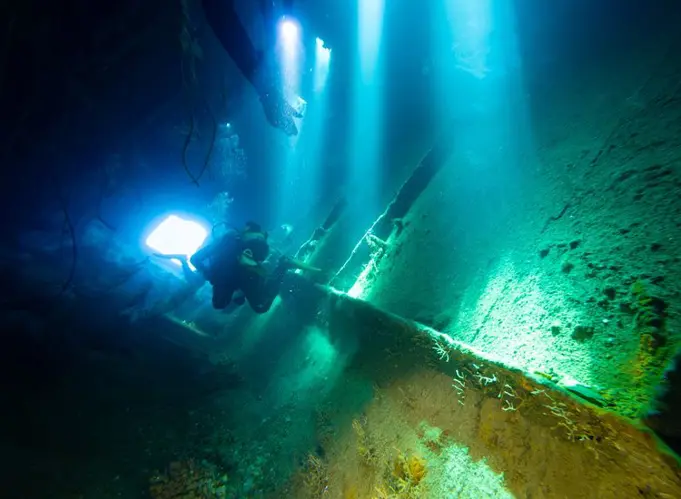
The exposed iron ribs produce some of the most atmospheric wreck photographs in the Red Sea.
Soft corals growing across the structure make it particularly attractive with natural light and wide-angle lenses.
Chrisoula K
Cargo holds filled with tiles, stern machinery and the propeller provide strong documentary subjects.
Kimon M
The stern structure, engine area and deteriorating hull can produce dramatic wreck imagery.
Macro photographers can also find nudibranchs, lionfish, scorpionfish and small reef species inhabiting all four wrecks.
Safety Information
Abu Nuhas may appear relatively accessible because the wrecks lie within recreational depth limits, but wreck penetration introduces hazards that do not exist during an exterior wreck dive.
These include:
Overhead environments
Entanglement
Sharp metal
Restricted exits
Silt and loss of visibility
Unstable structures
Disorientation
Increased gas-management requirements
Divers should not enter enclosed wreck sections unless they have appropriate wreck training, equipment and a suitable dive plan.
This is particularly important at Kimon M, where continuing structural deterioration has been documented.
History
Few Red Sea dive sites illustrate the history of maritime navigation as dramatically as Abu Nuhas.
The four principal wrecks span more than a century.
The Carnatic, lost in 1869, represents the era when steam power and sail were still used together on international passenger and cargo routes.
More than a century later, the Kimon M, Chrisoula K and Giannis D demonstrated that modern navigation had not eliminated the danger posed by the shallow reef.
All four ships approached one of the world's most important maritime corridors—the route between the Red Sea, Gulf of Suez and Suez Canal—but never completed their voyages.
Today their remains have become artificial reefs and some of the most important wreck-diving attractions in Egypt.
Best Season
Year-round diving
Site Diagram