
Elphinstone Reef
Unverified
Explore Elphinstone Reef near Marsa Alam, Egypt, famous for oceanic whitetip sharks, hammerheads, dramatic coral walls and powerful drift diving.
Overview
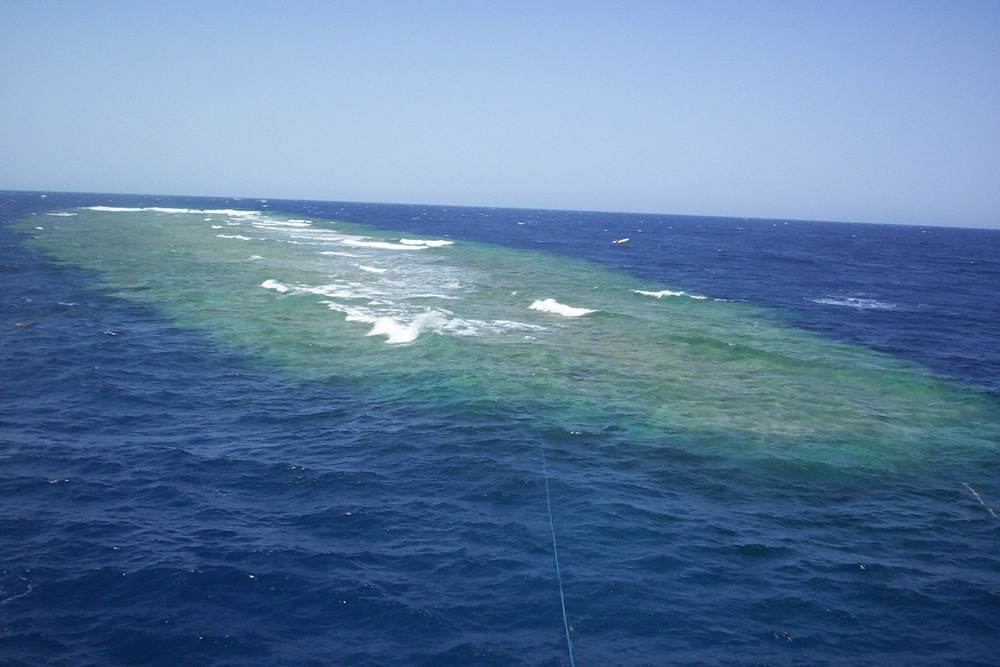
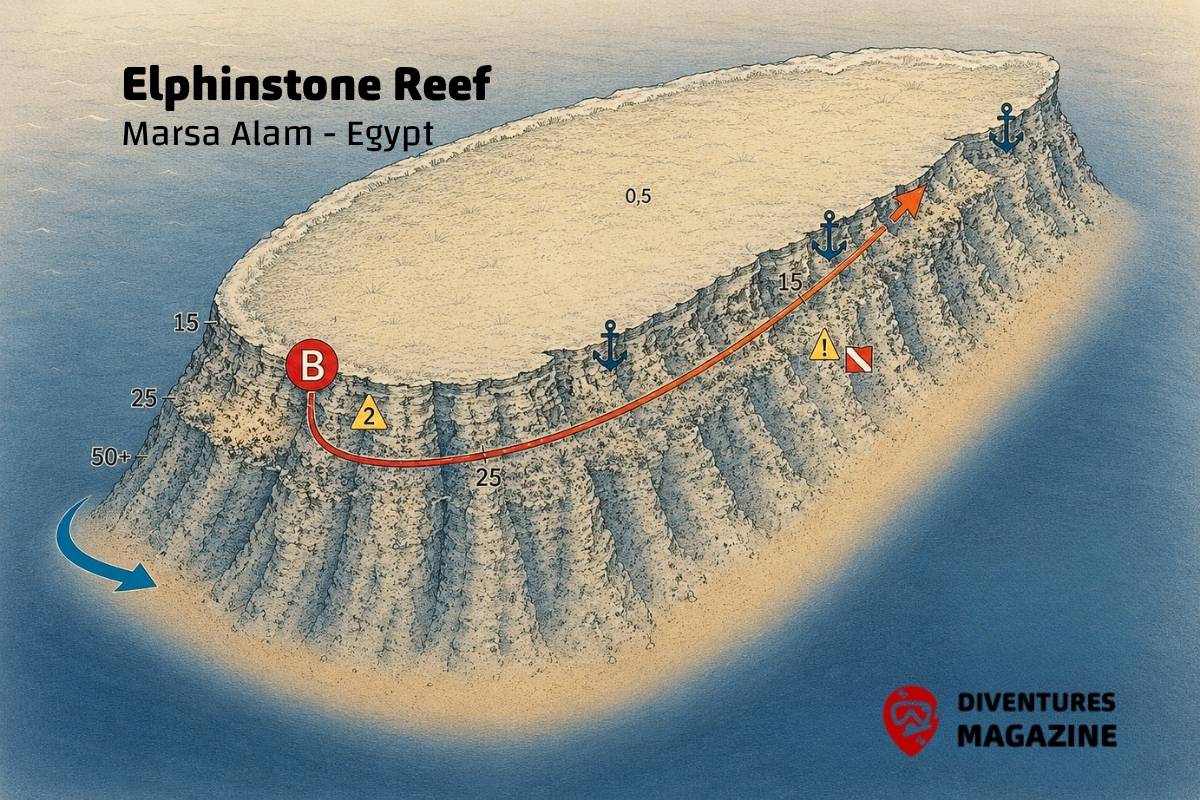
Elphinstone Reef, locally known as Sha’ab Abu Hamra, is one of the most celebrated offshore dive sites in Egypt’s southern Red Sea. Located approximately 12 kilometres from the coast north of Marsa Alam, the reef rises from deep open water as a long, narrow formation surrounded by dramatic walls.
The reef top begins only a few metres beneath the surface before dropping sharply along its eastern and western sides. At the northern and southern ends, submerged plateaus extend into the blue and create some of Elphinstone’s most exciting diving.
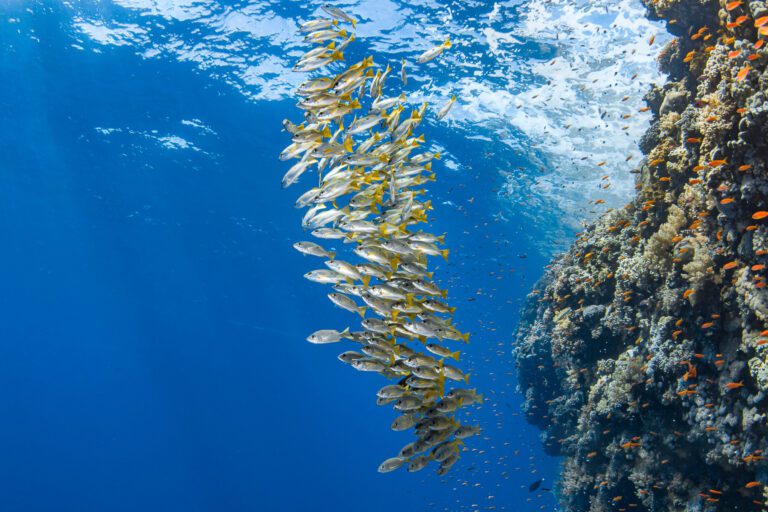
Strong currents bring nutrient-rich water to the reef, supporting dense soft-coral growth, gorgonian sea fans and enormous numbers of anthias and other reef fish.
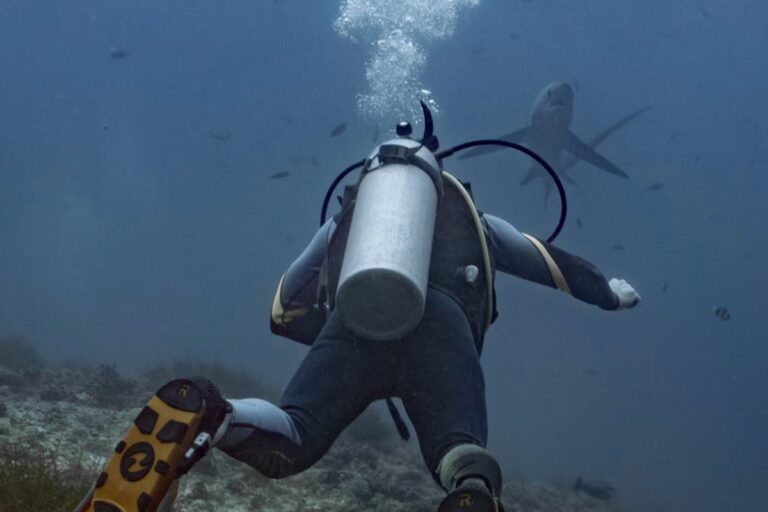
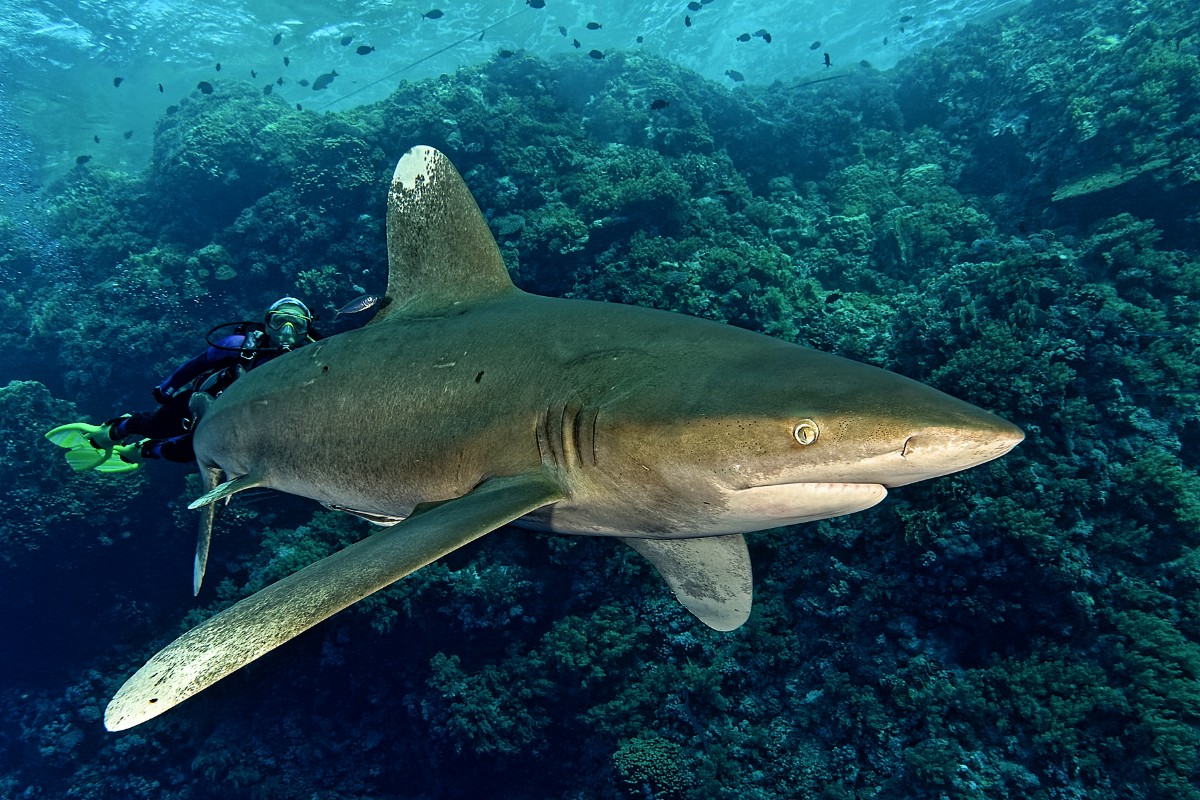
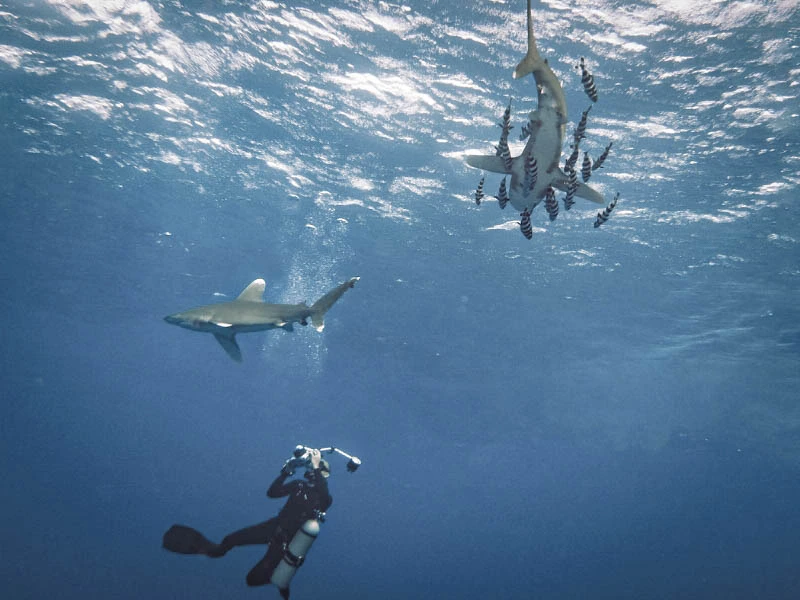
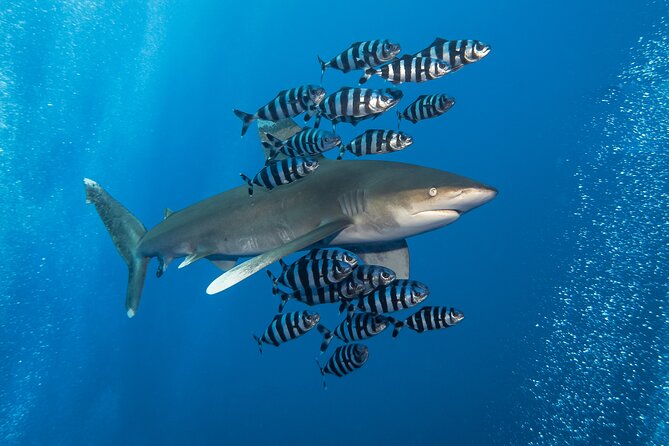
Elphinstone is particularly famous for sharks. Oceanic whitetips are most strongly associated with autumn, while scalloped hammerheads may appear around the northern plateau during summer. Grey reef, whitetip reef and thresher sharks may also be encountered, together with tuna, barracuda, giant trevally and Napoleon wrasse.
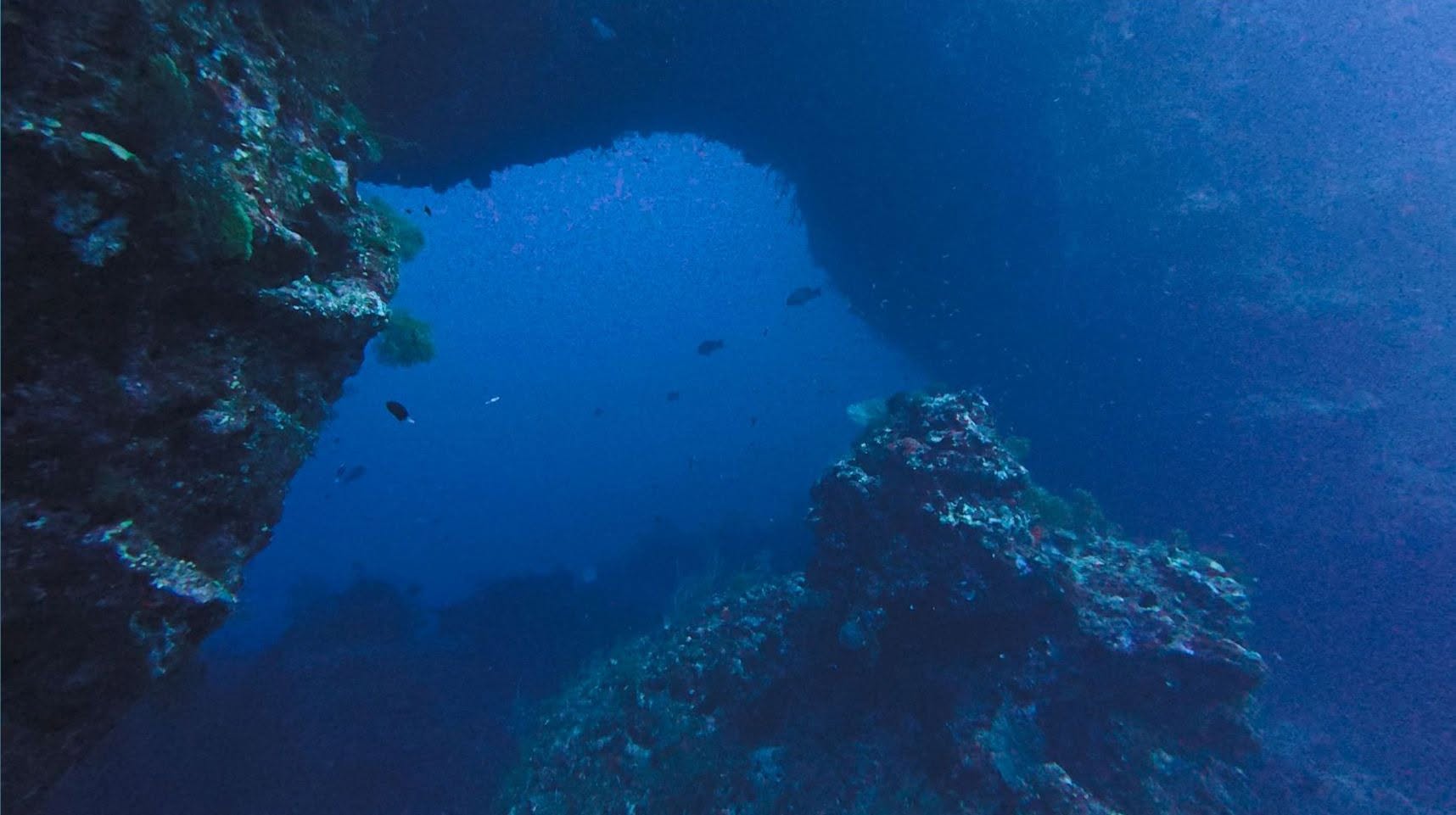
At the southern end lies the famous Elphinstone Arch, a natural passage beginning at approximately 50–55 metres. Its depth places it firmly within technical diving territory. A local legend claims that a mysterious rectangular formation beneath the arch may be an ancient sarcophagus, although there is no evidence supporting the story.
Despite its proximity to Marsa Alam, Elphinstone is an exposed open-sea dive. Strong currents, deep drop-offs, possible downcurrents and blue-water ascents mean it is best suited to experienced advanced divers.
Its combination of spectacular coral walls, dramatic underwater topography and encounters with some of the Red Sea’s most iconic sharks makes Elphinstone Reef one of Egypt’s defining dive sites.
Main Attractions
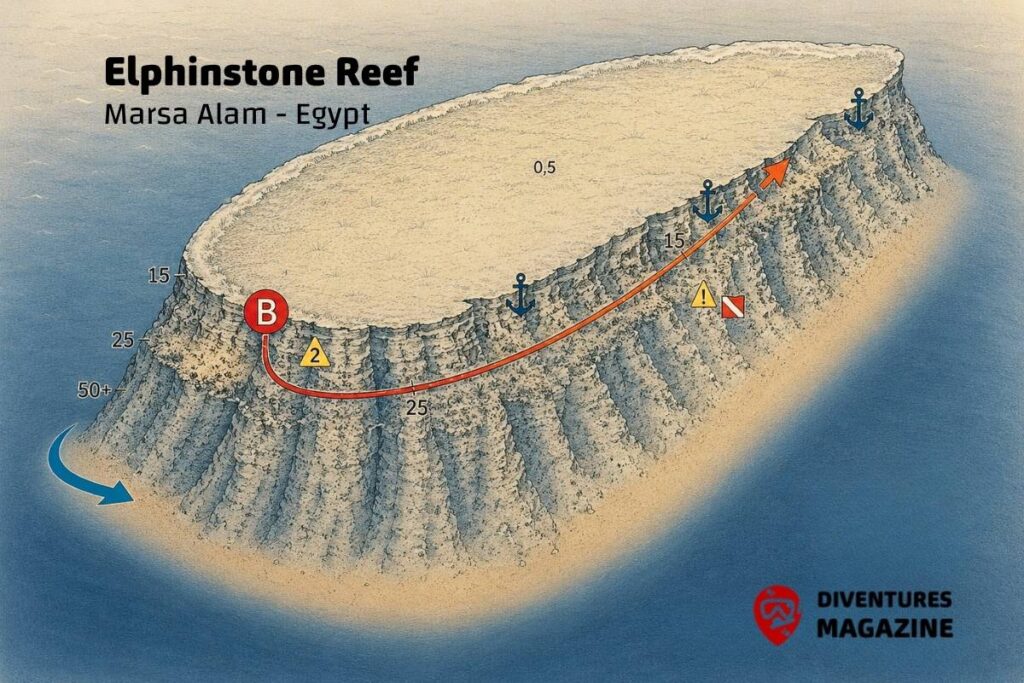
Elphinstone is essentially a long, narrow offshore reef approximately 300–375 metres long with deep walls on both sides and plateaus extending from its northern and southern ends.
Oceanic whitetip shark encounters
Seasonal scalloped hammerheads
Dramatic north and south plateaus
Near-vertical eastern and western walls
Dense soft-coral growth
Large gorgonian sea fans
Tuna and barracuda
Napoleon wrasse
Deep southern arch
Legendary “sarcophagus” story
Excellent drift diving
Outstanding wide-angle photography
Marine Life
Oceanic whitetip sharks, scalloped hammerheads, grey reef sharks, whitetip reef sharks, thresher sharks, barracuda, tuna, giant trevally, Napoleon wrasse, anthias, butterflyfish, angelfish, moray eels and turtles.
Possible visitors also include manta rays, whale sharks and dolphins.
For the Diventures guide, shark and ray encounters should always be described as possible or seasonal sightings, rather than guaranteed encounters.
Coral & Habitat
Elphinstone Reef is an isolated, elongated offshore reef running approximately north to south.
The shallow reef top begins at roughly 5–8 metres, while the eastern and western sides descend as steep walls into deep open water. The reef terminates in submerged plateaus at both ends.
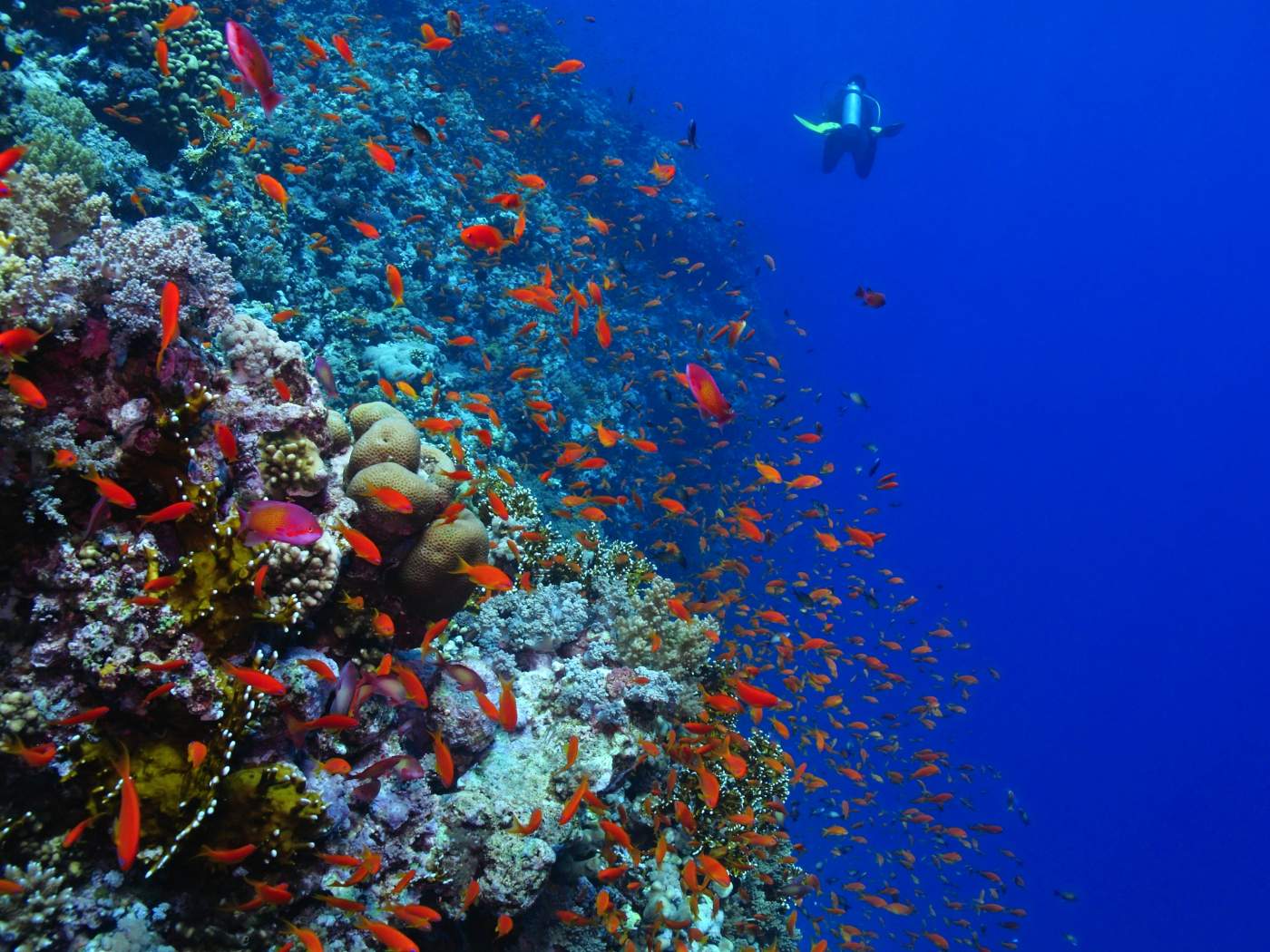
The walls are densely covered with hard and soft corals, particularly colourful Dendronephthya soft corals, together with large gorgonian sea fans and other filter-feeding organisms that benefit from the constant water movement.
Anthias and other reef fish gather in large numbers close to the wall, while the exposed blue-water side attracts tuna, barracuda and sharks.
The northern plateau generally begins around 20–25 metres and extends outward before dropping into deeper water.
The southern plateau slopes into deeper water and eventually leads toward Elphinstone’s famous underwater arch.
Suggested Route
North plateau and wall drift
Enter from the RIB on the up-current side of the northern plateau.
Descend quickly as a group toward approximately 20–30 metres and approach the plateau.
Watch the surrounding blue for hammerheads, grey reef sharks, tuna and other pelagic species while remaining close enough to the reef to maintain orientation.
Continue onto either the eastern or western wall according to current direction.
Allow the current to carry the group southward while gradually reducing depth. Explore the soft corals and gorgonians before completing a drifting safety stop beneath a DSMB.
South plateau
Enter up-current from the southern tip and descend toward the plateau around 20–30 metres.
Remain within recreational limits while watching the open water for oceanic whitetips and other sharks.
The plateau slopes toward the deep arch, but recreational divers should not descend toward the arch, which begins at technical depths around 50 metres.
Turn onto the eastern or western wall according to the guide’s plan and gradually ascend while drifting.
East or west wall drift
When current conditions make the plateaus unsuitable, divers can conduct a wall drift along either side of the reef.
Descend beside the wall and move with the current while observing the soft corals, sea fans, anthias and open water.
Finish with a DSMB ascent and RIB or boat pickup.
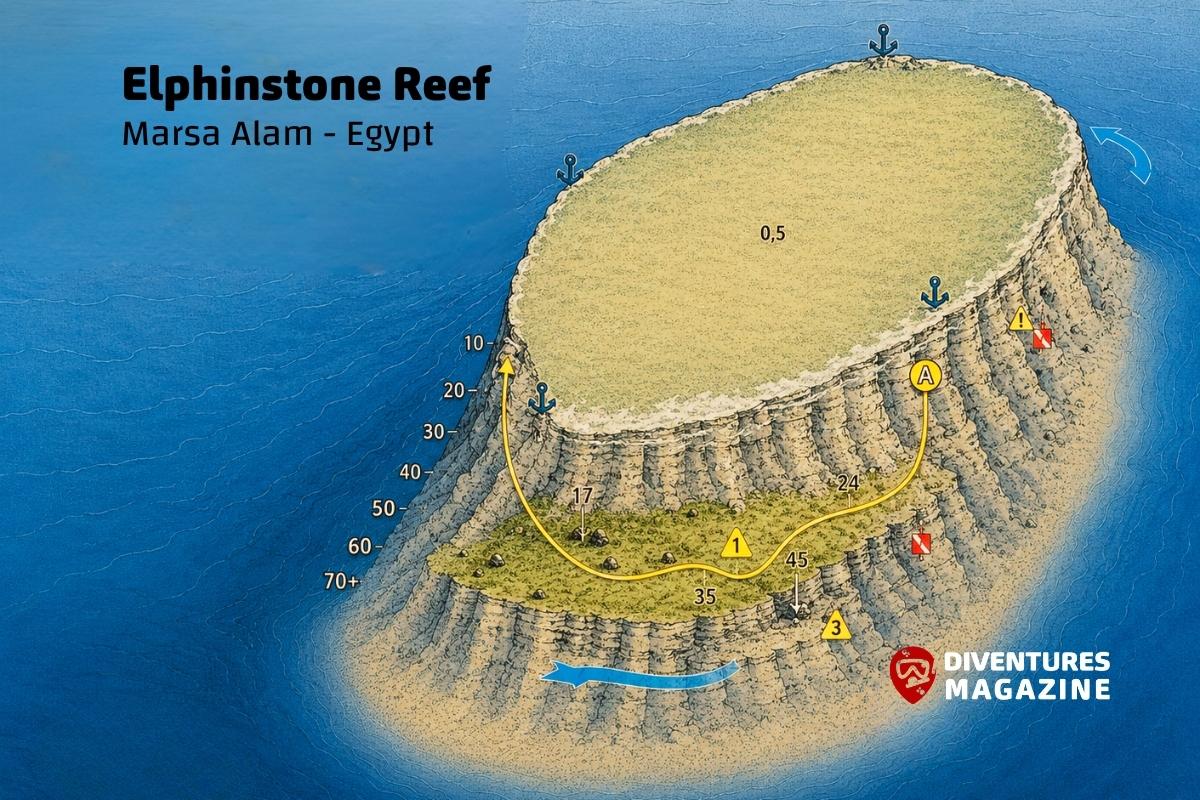
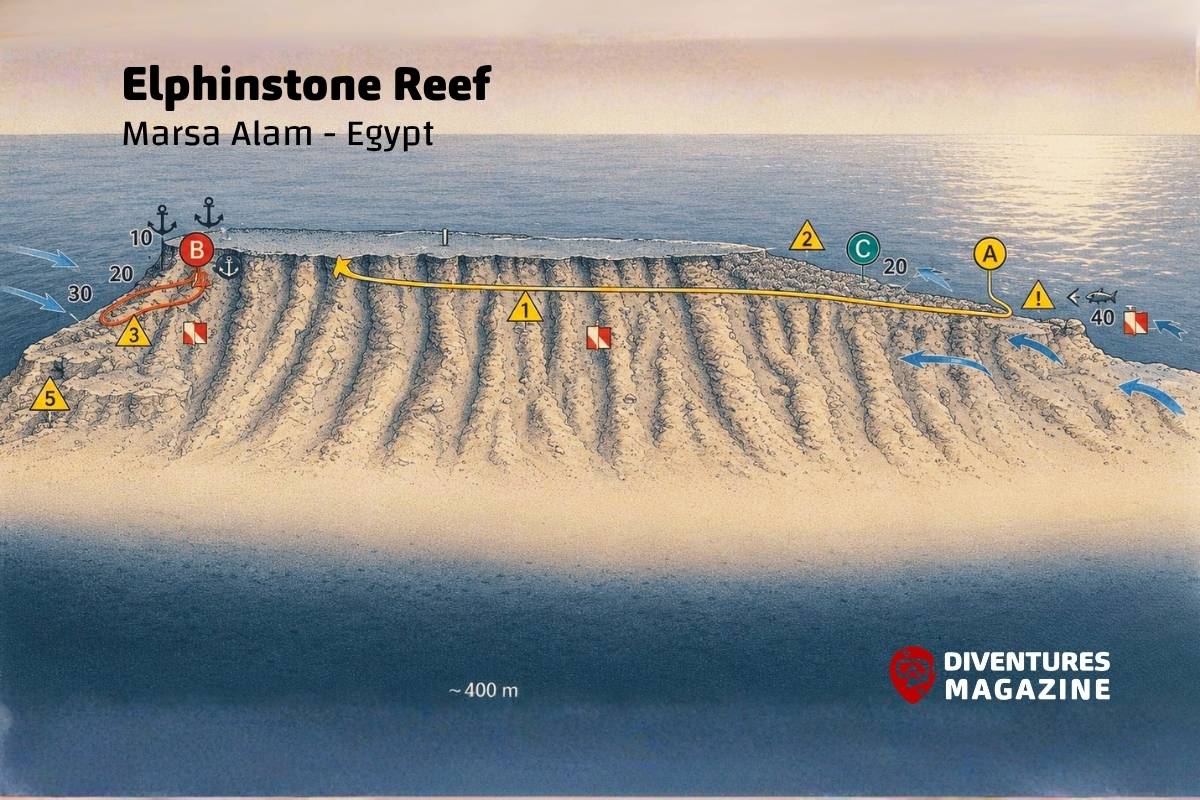
Because the current determines the entry point and direction, I would not draw a fixed dive route on the Diventures dive map.
Photography Notes
Elphinstone is primarily an excellent wide-angle photography destination.
The eastern and western walls provide colourful compositions using soft corals, gorgonian fans, schooling anthias and divers against deep blue water.
Oceanic whitetips can sometimes approach remarkably close to divers, particularly during their seasonal appearances. Photographers should remain with the group, avoid chasing sharks and follow the guide’s shark-interaction briefing.
The northern plateau offers opportunities for photographing hammerheads and other pelagic species in open water, although visibility and current can make positioning difficult.
Strong currents mean photographers should prepare exposure, strobes and focus settings before reaching exposed areas rather than trying to remain stationary while adjusting equipment.
History
The origin of the name Elphinstone is unusually well documented.
A contemporary account of a voyage from India to Egypt records that on 18 December 1827, a vessel carrying Scottish statesman and former Bombay governor Mountstuart Elphinstone unexpectedly approached an uncharted reef in the Red Sea.
The ship came dangerously close to the breakers and was briefly becalmed, unable to anchor because of the great depth. A light breeze eventually carried it clear.
The account states that Captain Denton measured the previously uncharted shoal and named it “Elphinstone Reef.”
The reef was subsequently included in nineteenth-century Red Sea charts.
Its Arabic name is commonly given as Sha’ab Abu Hamra.
Best Season
Year-round diving
Underwater Map
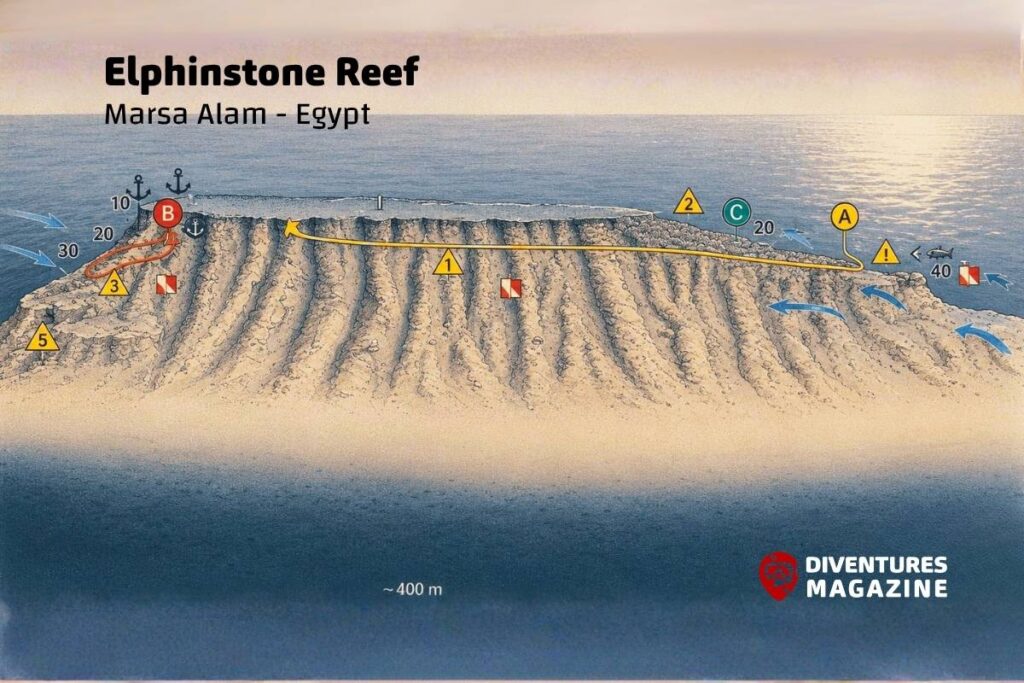
Site Diagram
Surface Map