
Darwin’s Arch (Pillars of Evolution)
Unverified
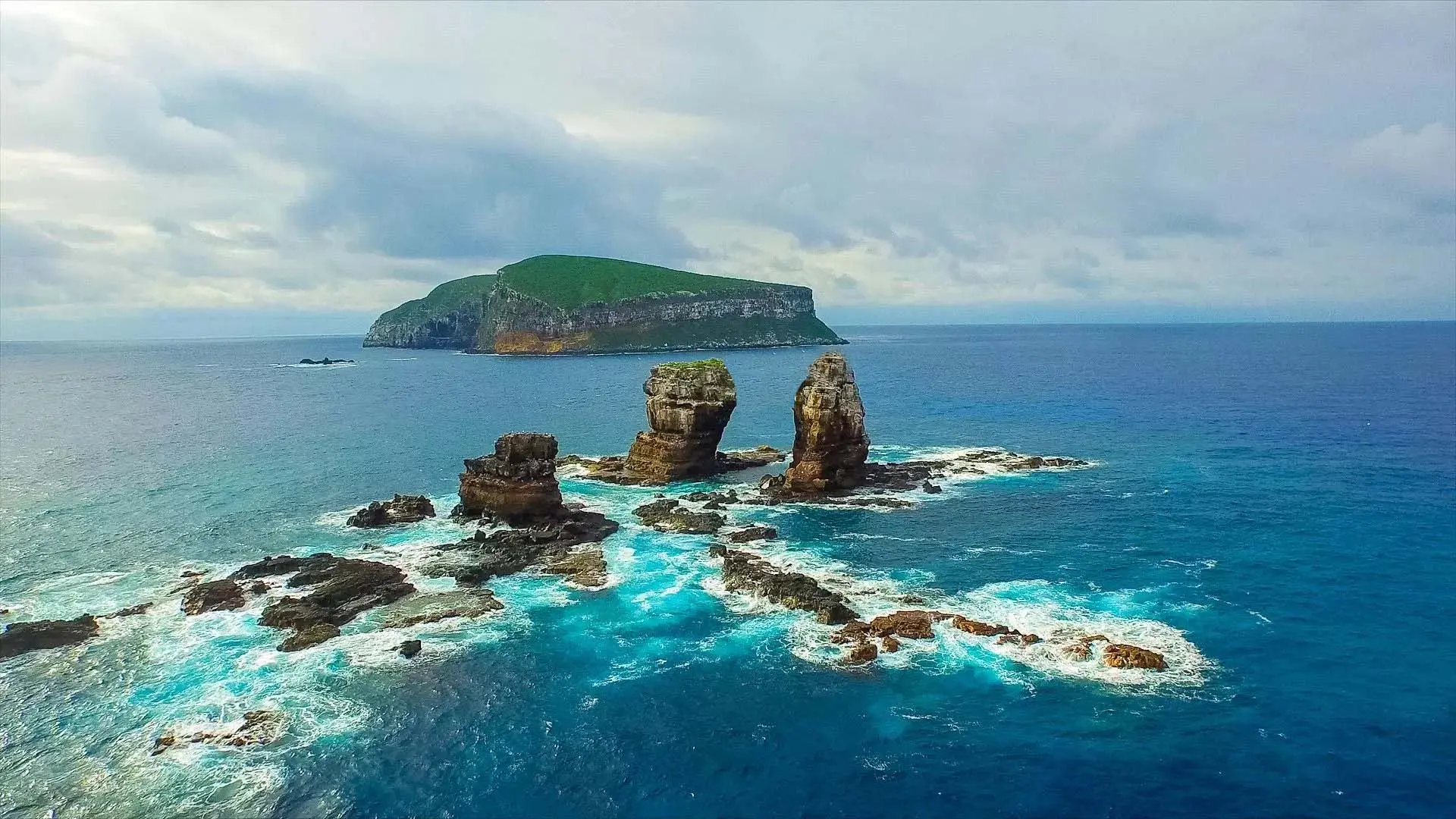
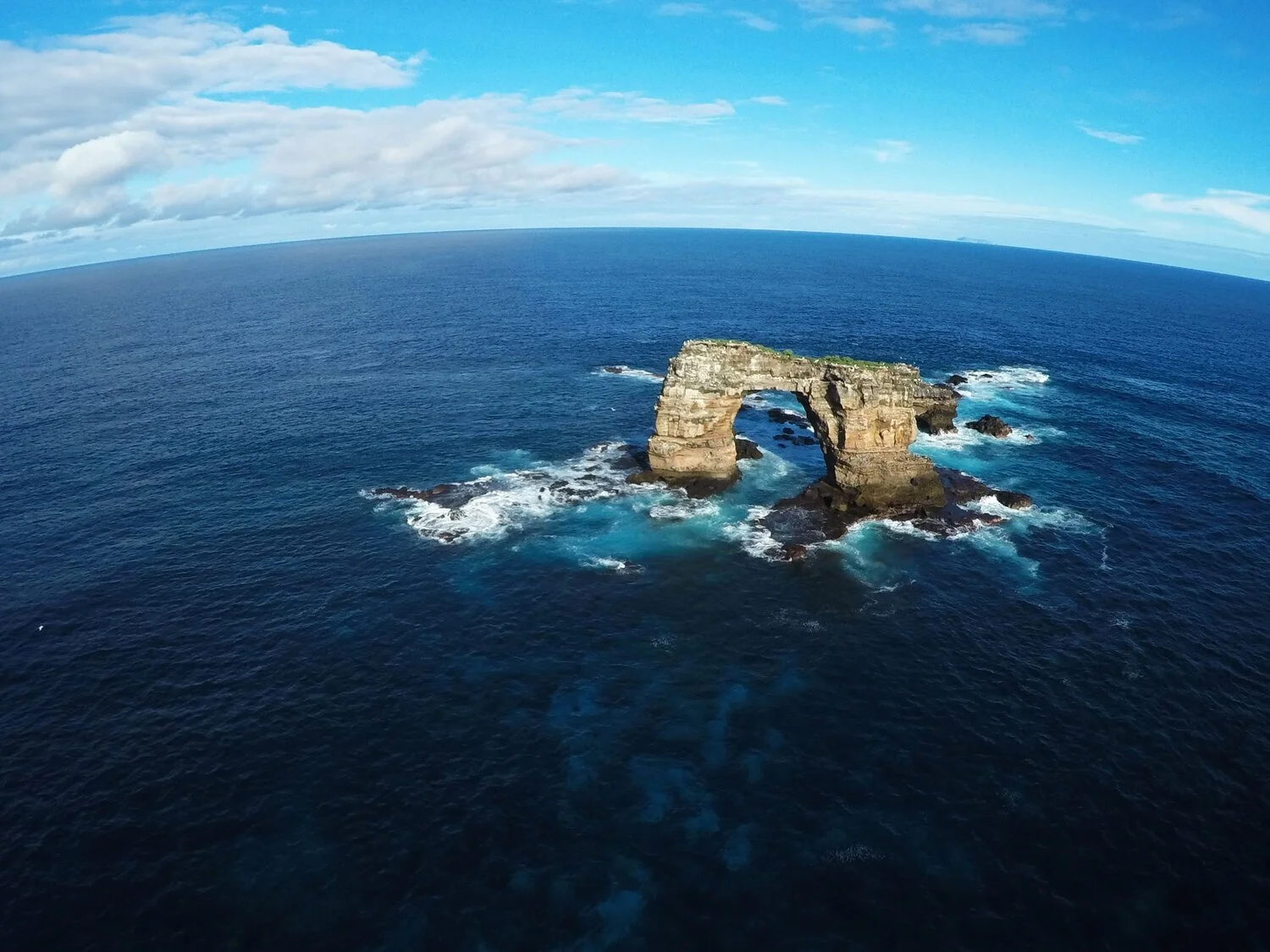
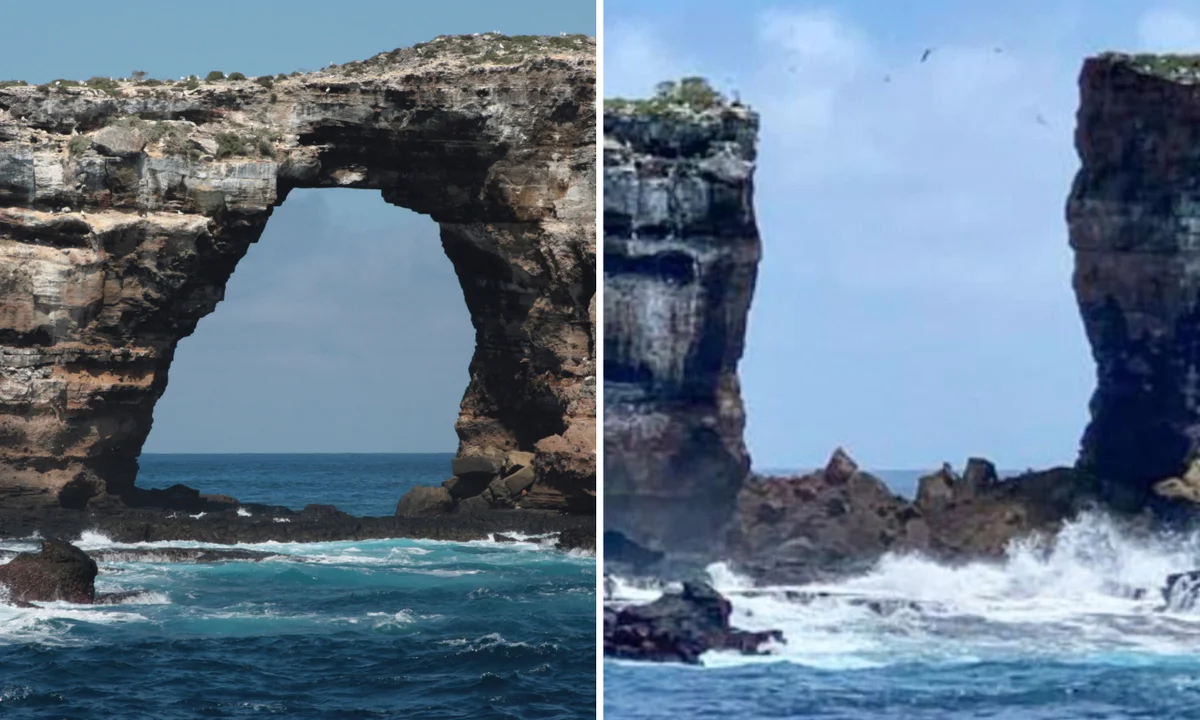
The natural arch collapsed on 17 May 2021 because of natural erosion. The two remaining rock columns are now commonly called the Pillars of Evolution.
Overview
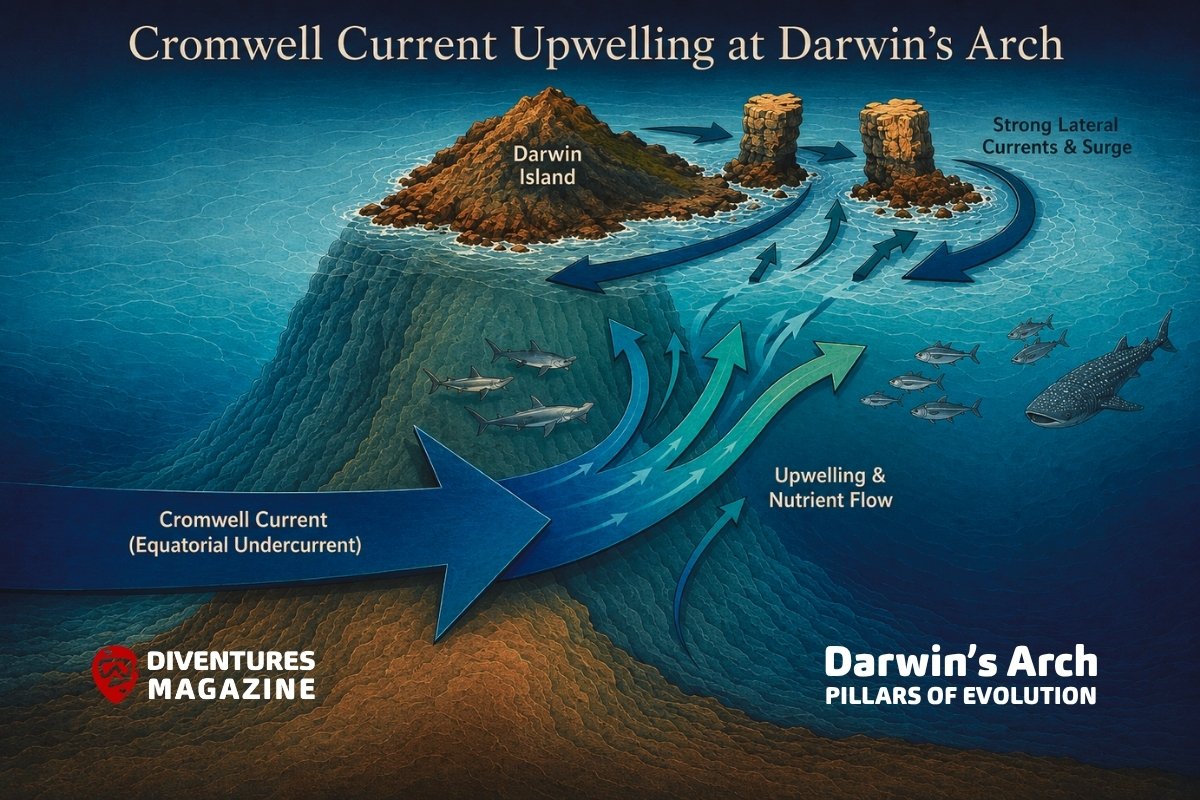
Darwin’s Arch—now also known as the Pillars of Evolution—is a remote open-ocean dive site located southeast of Darwin Island in Ecuador’s Galápagos Archipelago. Accessible only by liveaboard, it is internationally recognised for encounters with scalloped hammerheads, whale sharks and other large pelagic animals.
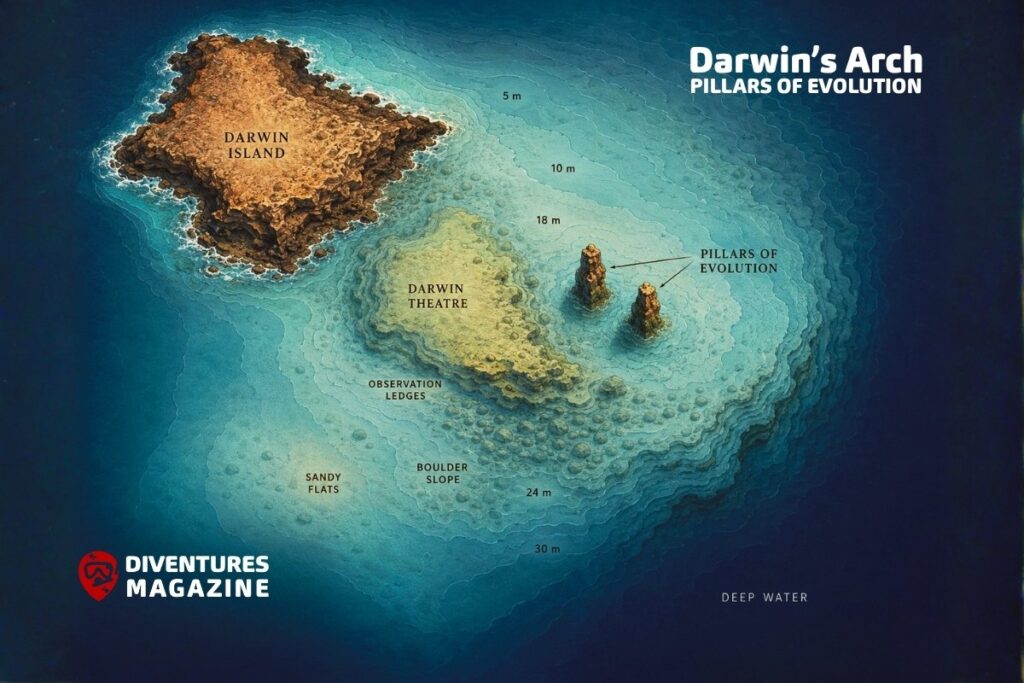
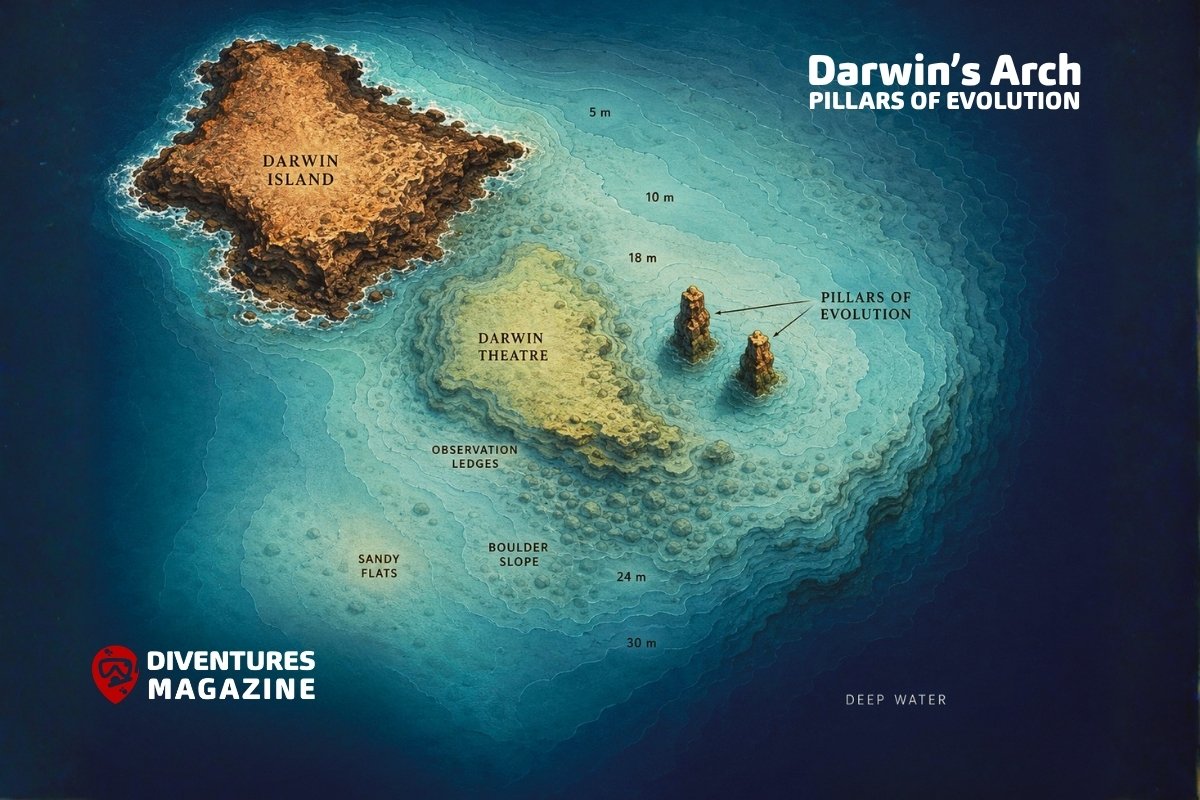
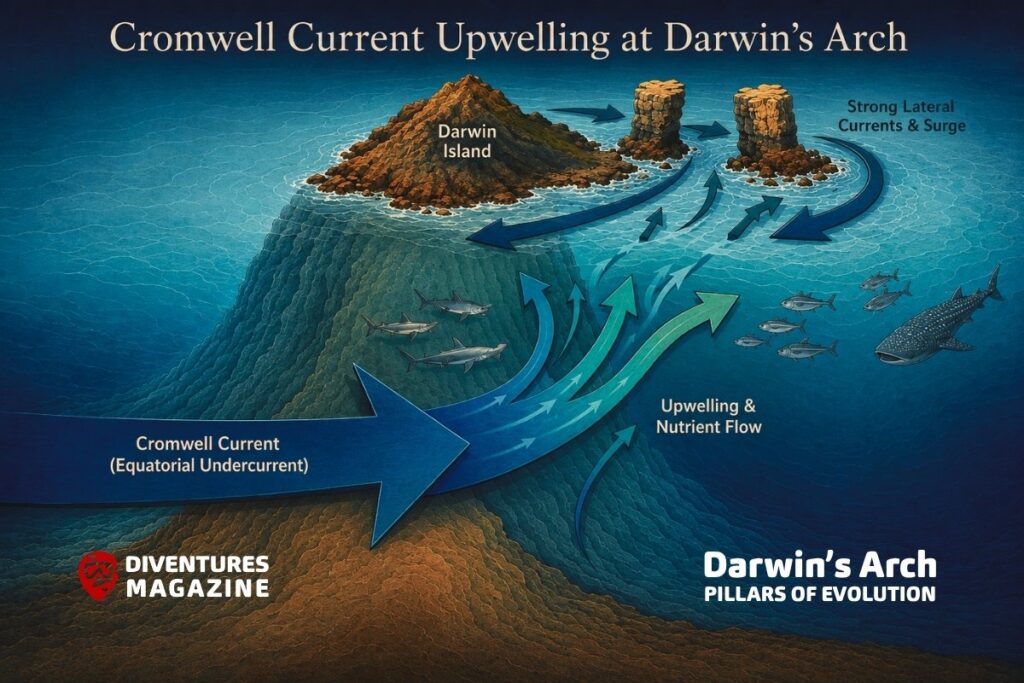
The former arch rose above a submerged volcanic plateau less than one kilometre from Darwin Island. Although the bridge collapsed through natural erosion in May 2021, the two remaining pillars, underwater ledges, cleaning stations and principal diving areas remain.
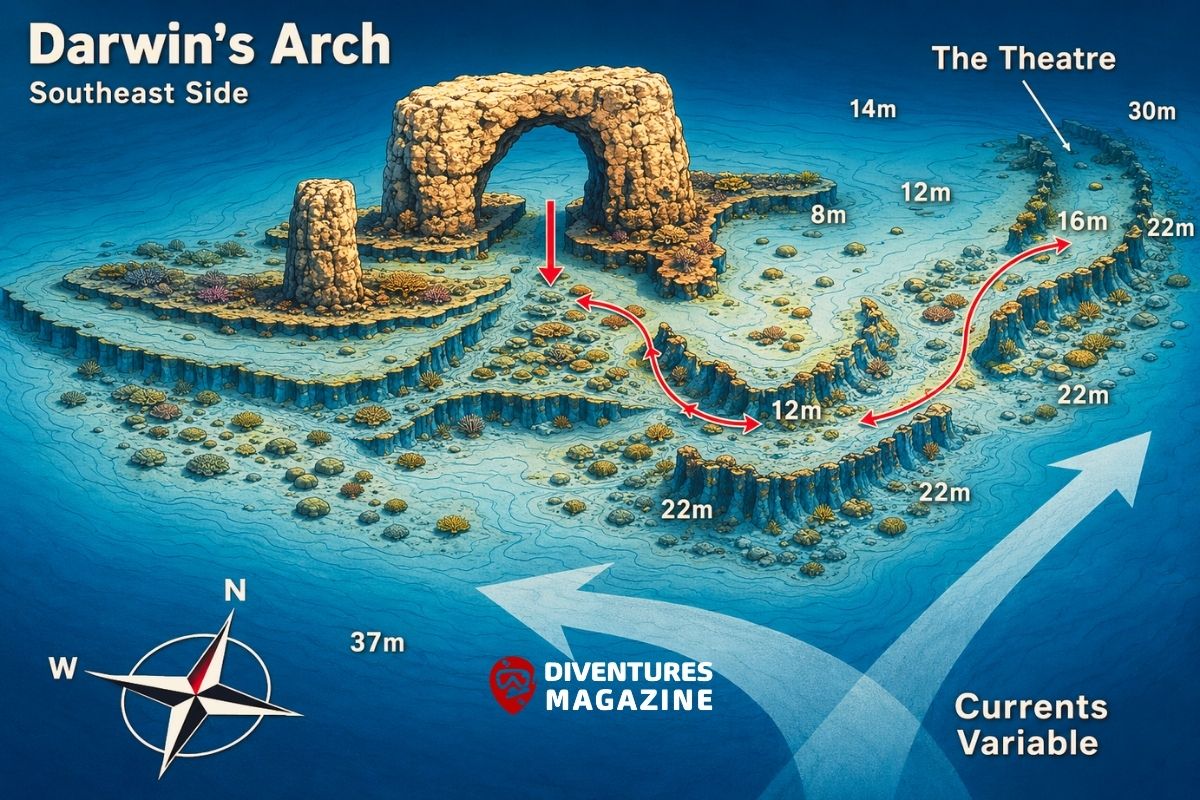
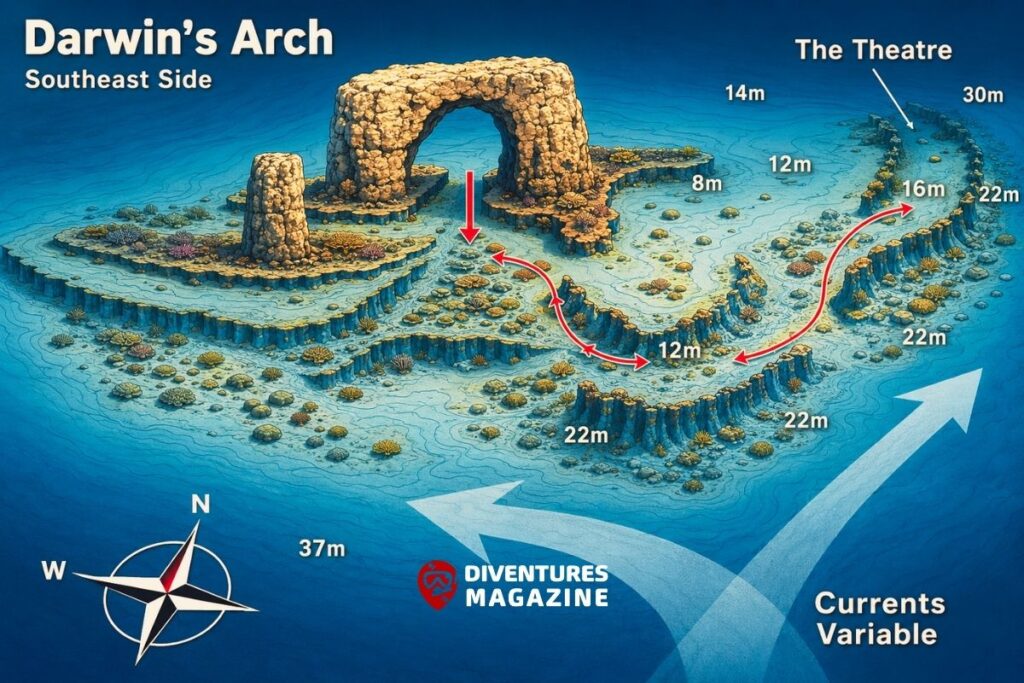
The site’s underwater terrain includes rocky slopes, boulder fields, sandy flats and a plateau known as the Darwin Theatre. Divers commonly descend to ledges between approximately 18 and 24 metres, settle into a stable position and watch marine life pass through the current.
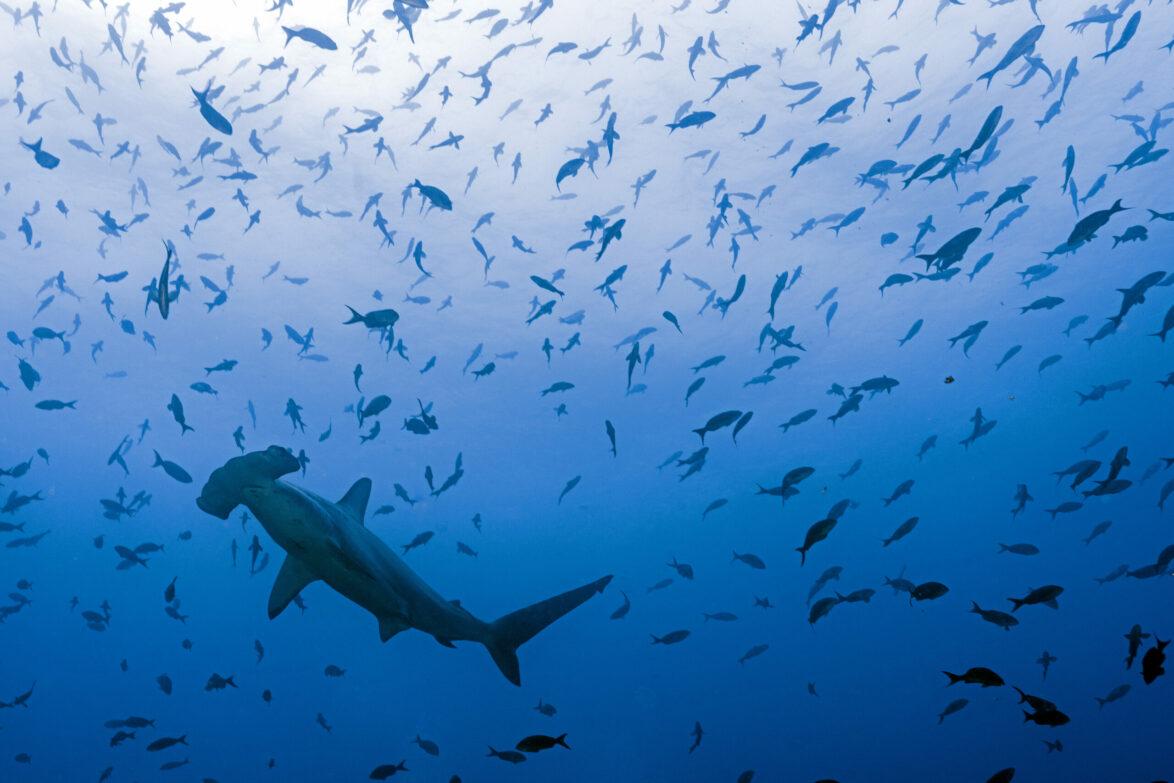
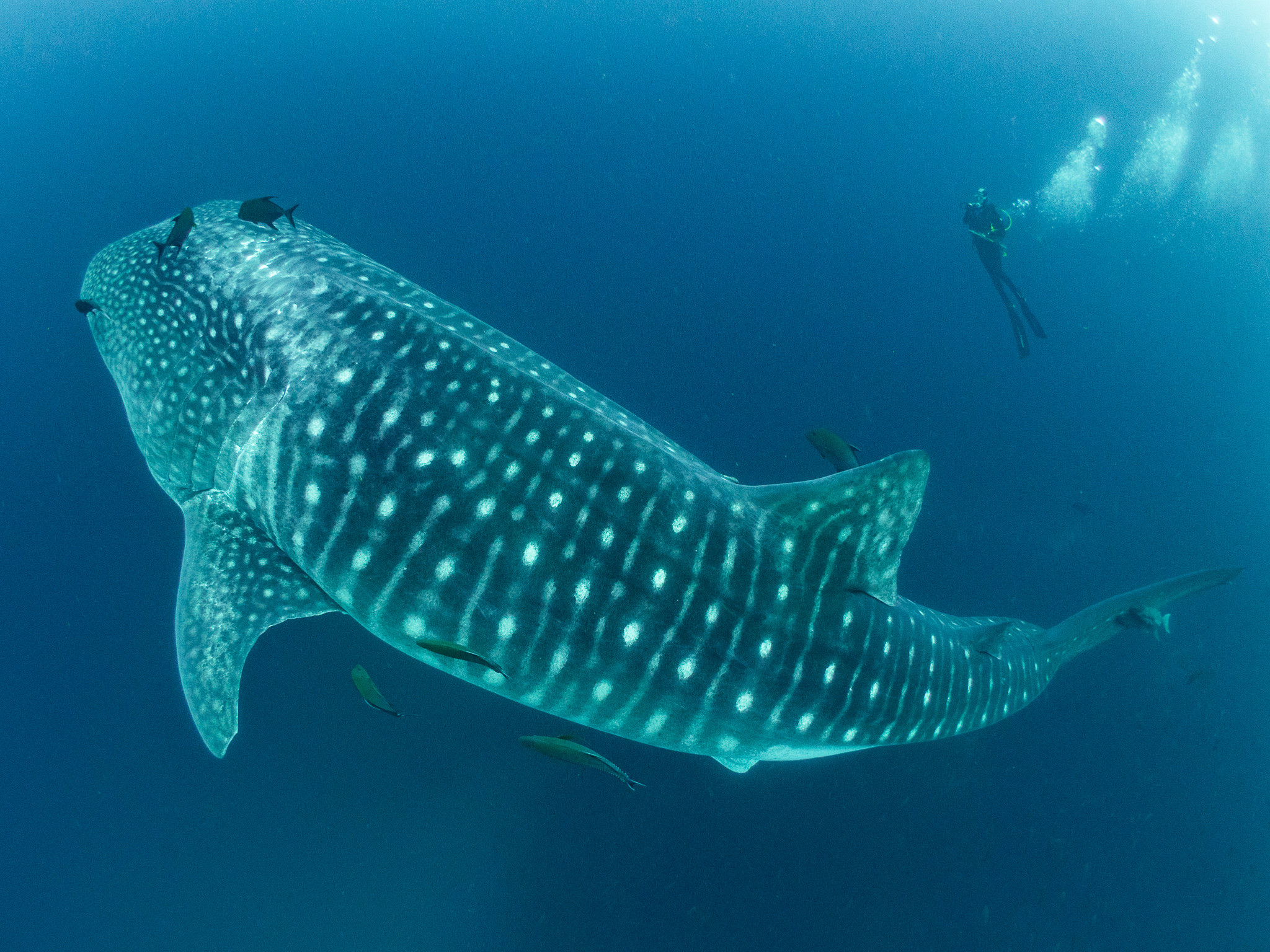
Large schools of scalloped hammerheads are the site’s signature attraction and may be encountered throughout the year. Whale sharks are most strongly associated with the cooler nutrient-rich months, particularly from June through November. Galápagos sharks, silky sharks, eagle rays, manta rays, turtles, dolphins, tuna and dense schools of fish may also be seen.
Conditions can be demanding. Currents range from moderate to very strong, thermoclines can appear suddenly and most dives involve rapid entries, holding position on exposed rock and ascending in blue water.
For these reasons, Darwin’s Arch is suitable only for experienced advanced divers who are comfortable with strong current, surge, open-ocean environments and delayed surface marker buoy deployment.
Main Attractions
The main experience often involves settling on a rocky ledge and watching sharks and other pelagic animals pass through the current rather than swimming continuously around the site.
Large schools of scalloped hammerhead sharks
Seasonal whale shark encounters
Galápagos and silky sharks
The remaining Pillars of Evolution
Hammerhead cleaning stations
Rocky observation ledges known as the “theatre”
Eagle rays, manta rays and mobula rays
Dolphins and occasional sea lions
Large schools of jacks, tuna and other pelagic fish
One of the world’s most remote liveaboard diving locations
Marine Life
Scalloped hammerhead sharks, whale sharks, Galápagos sharks, silky sharks, blacktip sharks, eagle rays, manta rays, mobula rays, green turtles, dolphins, sea lions, yellowfin tuna, bonito, barracuda, bigeye jacks and large schools of pelagic fish.
Smaller reef species include butterflyfish, angelfish, wrasses, anthias, hawkfish, blennies, moray eels, garden eels, starfish and lobsters.
Whale sharks are seasonal, while all shark, ray and dolphin encounters must be described as possible sightings rather than guarantees.
Coral & Habitat
Darwin’s Arch is primarily a volcanic rock and open-ocean habitat, rather than a conventional tropical coral reef.
The site includes a submerged rocky plateau, ledges, boulder slopes, rubble areas, sandy flats and a wall descending into deep Pacific water. One of its best-known underwater features is the area called the Darwin Theatre, where divers can shelter slightly below the strongest current and observe sharks passing through the blue.
The rocky surfaces support barnacles, encrusting organisms and smaller reef life. Sandy areas between approximately 18 and 23 metres may contain garden eels, turtles, moray eels and starfish, while the exposed edges attract sharks, rays, tuna and schooling fish.
Suggested Route
Hammerhead observation route
Enter from the panga on the up-current side and make a rapid or negative descent with the group.
Reach the rocky slope or ledge at approximately 18–24 metres and secure a stable position without damaging living organisms. Face into the current and watch the blue for scalloped hammerheads, Galápagos sharks, tuna, eagle rays and other pelagic species.
Remain in position while conditions and gas supply allow. Toward the end of the dive, release from the rocks and allow the current to carry the group away from the reef.
Ascend together in open water, deploy a delayed surface marker buoy and complete a drifting safety stop before collection by the panga.
Darwin Theatre route
When the current direction permits, descend toward the submerged plateau known as the Darwin Theatre.
Move between suitable observation positions while watching the blue for hammerheads, Galápagos sharks, whale sharks and rays. The slightly sheltered plateau may also offer opportunities to observe butterflyfish, angelfish, wrasses, anthias and lobsters.
Finish by leaving the plateau with the current and conducting a controlled blue-water ascent beneath a delayed surface marker buoy.
The precise entry point, route and depth must always be selected by an authorised local guide according to the current, surge, thermoclines and group experience.
Photography Notes
Darwin’s Arch is primarily a wide-angle photography site. Hammerhead schools, whale sharks, rays, dolphins and divers positioned against the open blue provide the most powerful images.
Photographers should prepare exposure, focus and camera settings before descending because strong current may prevent repositioning. A wide-angle or fisheye lens is usually more suitable than a long focal length for large animals and schooling sharks.
The best approach is normally to remain low and still on the rocky ledges, allowing the animals to approach naturally. Chasing hammerheads or whale sharks into open water may cause them to turn away and can separate the photographer from the group.
Thermoclines can affect buoyancy, visibility and image sharpness. Photographers must monitor gas carefully and should not allow the camera to distract them from depth, current or the guide’s signals.
History
Darwin Island and Darwin’s Arch were named in honour of the English naturalist Charles Darwin, whose observations in the Galápagos contributed to the development of his theory of evolution.
The island was previously known as Culpepper Island. Despite appearing on older maps, the first recorded terrestrial visit reportedly took place by helicopter in 1964. There is no visitor landing site, and access remains focused on the surrounding marine environment.
On 17 May 2021, the upper bridge of Darwin’s Arch collapsed into the sea as a result of natural erosion. The underwater dive site, shark-cleaning areas and surrounding rocky formations remained accessible. The two standing columns were subsequently nicknamed the Pillars of Evolution.
Best Season
Year-round diving
Underwater Map
Site Diagram
Surface Map