
Careless Reef
Unverified Last verified: 2026-07-22
Overview
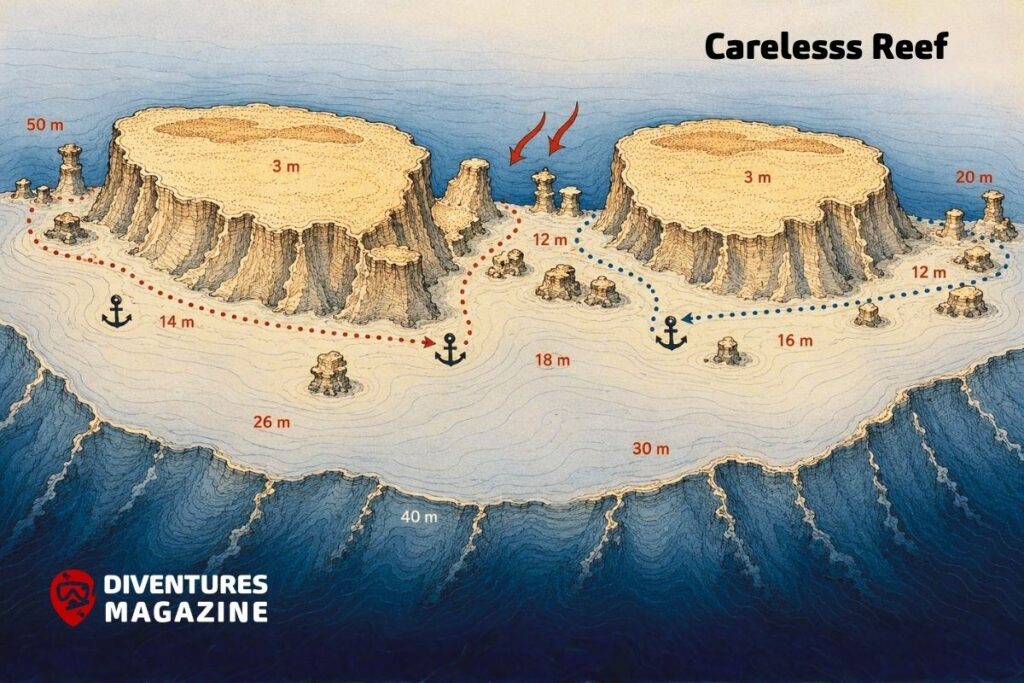
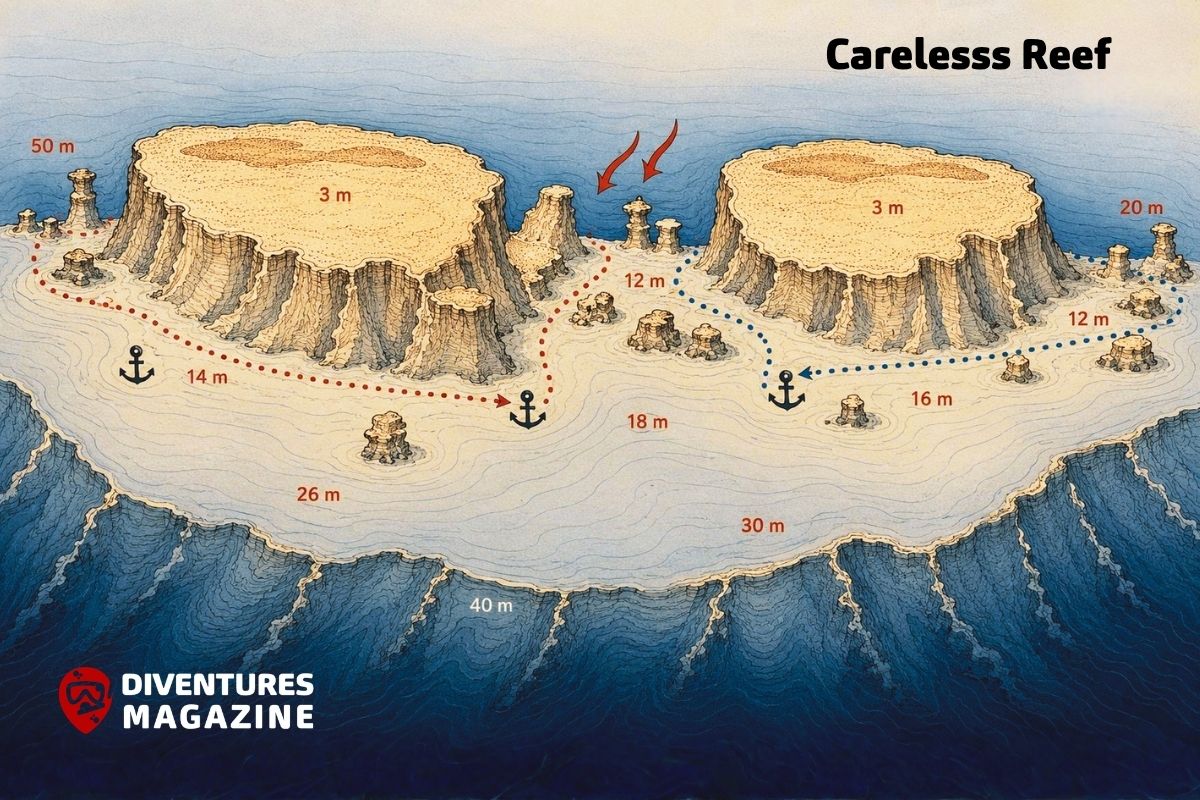
Careless Reef is an isolated offshore dive site northeast of Hurghada. Rising abruptly from deep water, it consists of two large coral pinnacles standing on a shallow plateau surrounded by steep drop-offs.
The plateau generally lies between 12 and 17 metres and is covered by a rich coral garden. Hard and soft corals grow around the pinnacles, smaller coral blocks and sandy passages, attracting dense schools of reef fish. Near the edge of the plateau, a coral tower filled with cracks and crevices provides shelter for smaller species.
The northern and eastern edges descend toward approximately 20–25 metres before falling steeply into deeper water. These walls offer the possibility of encountering tuna, giant trevally, barracuda, large groupers and occasional sharks passing through the blue.
Careless Reef is particularly famous for its giant moray eels, which may be seen resting openly among the coral blocks or swimming across the plateau. Turtles, bannerfish, nudibranchs and a wide variety of reef fish may also be encountered.
The pinnacles rise to within only a few metres of the surface and provide little protection from waves or currents. For this reason, boats normally visit Careless Reef only during favourable weather. Currents can be strong and may change direction at different depths.
Although the shallower plateau can offer a manageable profile, the site’s exposed location, difficult surface conditions, unpredictable currents and deep drop-offs make it more appropriate for confident certified divers. All dives should be planned according to the day’s wind, waves, current and boat-pickup arrangements.
Main Attractions
The twin pinnacles and surrounding coral plateau form the site’s defining topography. The reef is especially famous for its unusually visible giant moray eels and the marine activity generated by nutrient-rich currents.
Two large coral pinnacles rising close to the surface
Coral-garden plateau between the pinnacles
Dramatic northern and eastern drop-offs
Coral tower filled with cracks and marine life
Large free-swimming moray eels
Possible turtle encounters
Schools of reef fish around the wall
Tuna, giant trevally and large groupers
Drift diving in open-sea conditions
Possible reef shark and hammerhead sightings
Marine Life
Giant moray eels, turtles, bannerfish, anthias, glassfish, sweetlips, groupers, nudibranchs, tuna, giant trevally, barracuda and other schooling reef fish.
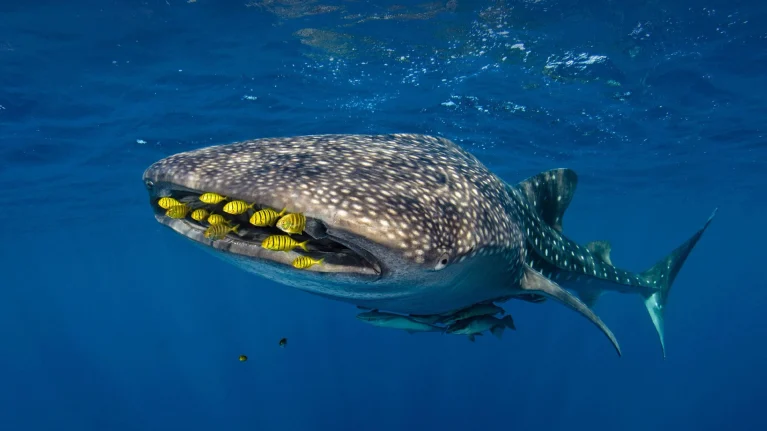
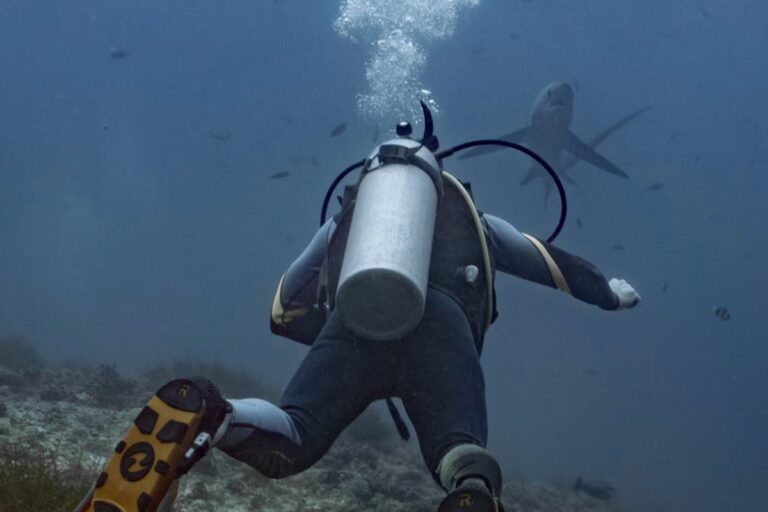
Whitetip reef sharks may occasionally appear around the plateau, while other sharks, including hammerheads, are possible in the open water. Shark and pelagic encounters should always be described as possible sightings, not guaranteed.
Coral & Habitat
Careless Reef is an isolated offshore reef consisting of two large coral pinnacles rising from a shallow plateau surrounded by deep water. The tops of the pinnacles lie only a few metres below the surface, leaving the site exposed to waves, wind and currents.
The plateau generally lies between approximately 12 and 17 metres and supports an extensive coral garden containing a variety of hard and soft corals. Smaller coral blocks and sandy channels occupy the area between the two main pinnacles.
Toward the northern and eastern edges, the plateau slopes toward approximately 20–25 metres before falling away in a steep wall. A prominent coral formation near the drop-off contains fissures, crevices and sheltered areas occupied by reef fish and smaller marine species.
Suggested Route
Coral garden and twin pinnacles
Begin near the mooring area when weather and surface conditions permit. Descend to the plateau at approximately 12–15 metres and explore the coral garden between the two main pinnacles.
Circle the larger northern pinnacle while observing its cracks, coral growth and schooling fish. Continue across the plateau toward the smaller southern pinnacle, searching the coral blocks for giant moray eels, turtles, nudibranchs and reef fish.
The dive can follow a loose figure-eight pattern around the two pinnacles before finishing in the shallower coral garden. The exact direction must be determined only after checking the current.
Northern drift and eastern drop-off
When conditions permit, experienced divers can enter north of the pinnacles and descend beside the eastern drop-off.
Follow the current southward along the wall, watching the open water for tuna, giant trevally, barracuda, large groupers and possible sharks. Gradually reduce depth before reaching the coral garden and smaller southern pinnacle.
Finish the dive in the shallower plateau area or conduct a blue-water ascent using a delayed surface marker buoy, depending on the current and the boat’s pickup procedure.
Because the current direction is unpredictable, this route must not automatically be planned from north to south. The local guide should select the entry point only after assessing the actual conditions.
Photography Notes
Careless Reef is particularly suitable for wide-angle photography. The twin pinnacles, coral garden, steep wall and divers silhouetted against the open blue provide strong compositions.
The site is famous among photographers for its large moray eels, which may be seen moving between coral blocks or resting in reef openings. Photographers should maintain a respectful distance and must never touch, handle or feed the animals.
The drop-off can provide opportunities to photograph schools of fish, tuna, trevally, large groupers and possible sharks. However, strong or changing currents may make it difficult to stop and reposition, so camera settings should be prepared before beginning the drift.
Macro photographers can search the coral garden and reef fissures for nudibranchs and smaller reef inhabitants, while maintaining good buoyancy and avoiding contact with the coral.
Best Season
Year-round diving
Site Diagram