
Cabo Pearce
Unverified
Explore Cabo Pearce at Socorro Island, Mexico, a volcanic liveaboard dive famous for giant mantas, hammerhead sharks, dolphins and strong currents.
Overview
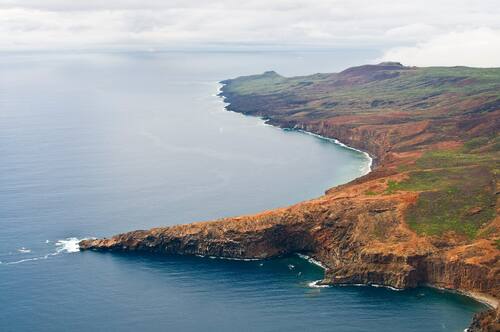
Cabo Pearce is one of the signature dive sites of Socorro Island in Mexico's remote Revillagigedo Archipelago. Located along the island's eastern coast, the site consists of a long volcanic ridge extending like a finger from the shoreline into deep Pacific water.
Cabo Pearce forms part of volcanic Socorro Island, whose dominant feature is Evermann Volcano.
Socorro itself rises almost 4,000 metres from the ocean floor, with its summit reaching more than 1,000 metres above sea level. Official geological records describe repeated volcanic activity that created extensive lava flows and secondary volcanic formations across the island.
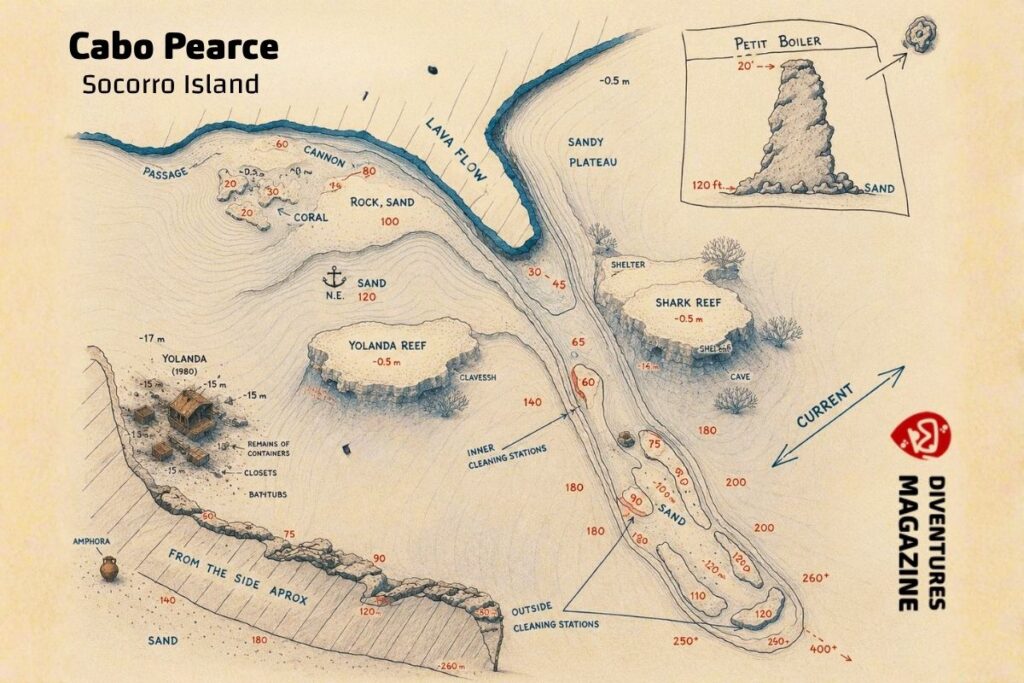
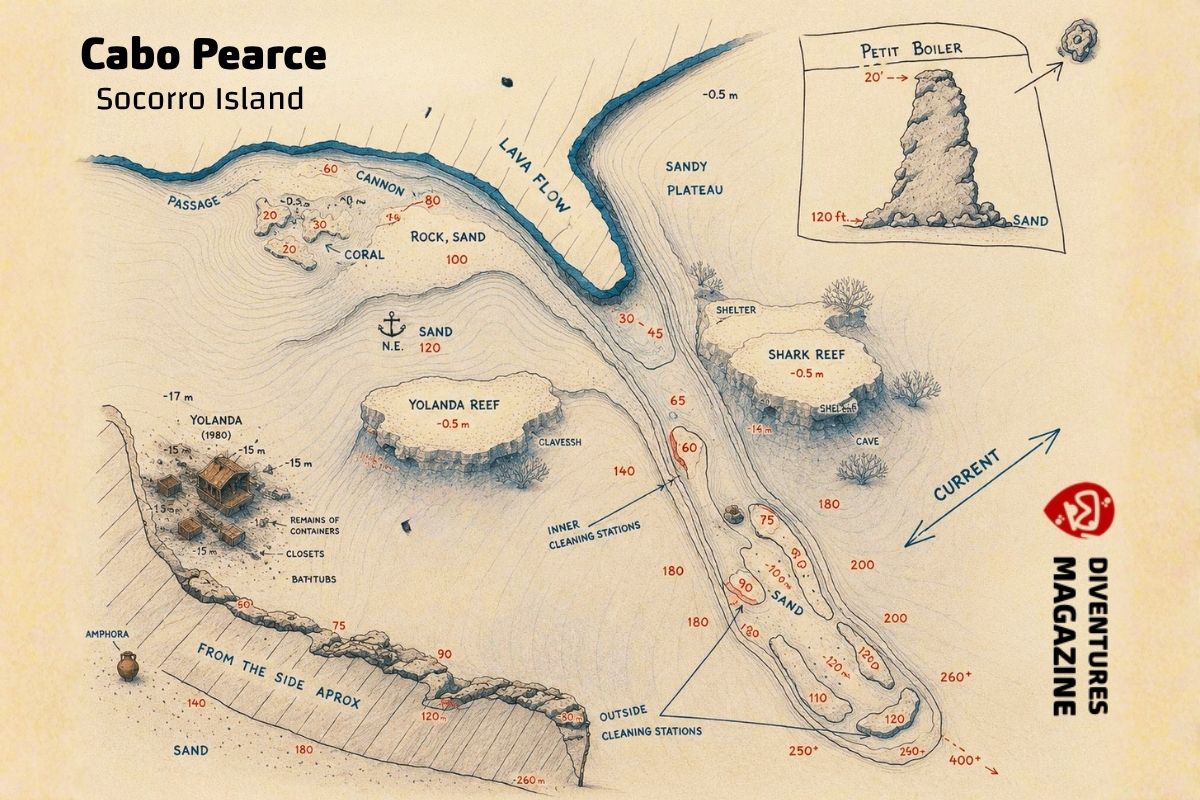
The distinctive underwater “finger” at Cabo Pearce is a lava formation extending from the eastern coast into the Pacific.
The underwater formation creates walls, rocky slopes and sheltered areas where divers can position themselves while watching the surrounding open ocean. Strong currents and nutrient-rich upwellings attract an exceptional concentration of large marine animals.
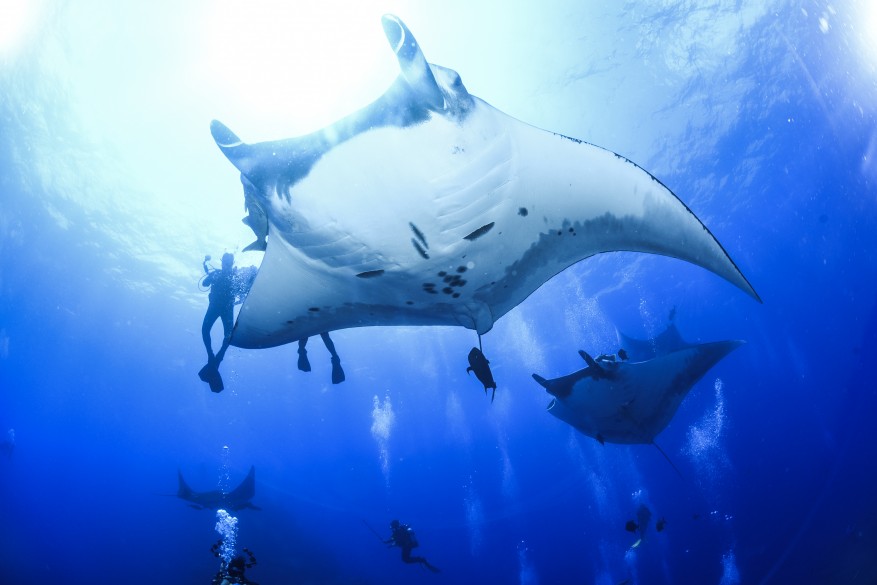
Cabo Pearce is particularly famous for its giant oceanic manta cleaning stations. Clarion angelfish gather around the mantas as they circle the volcanic ridge, sometimes remaining around divers for extended periods.
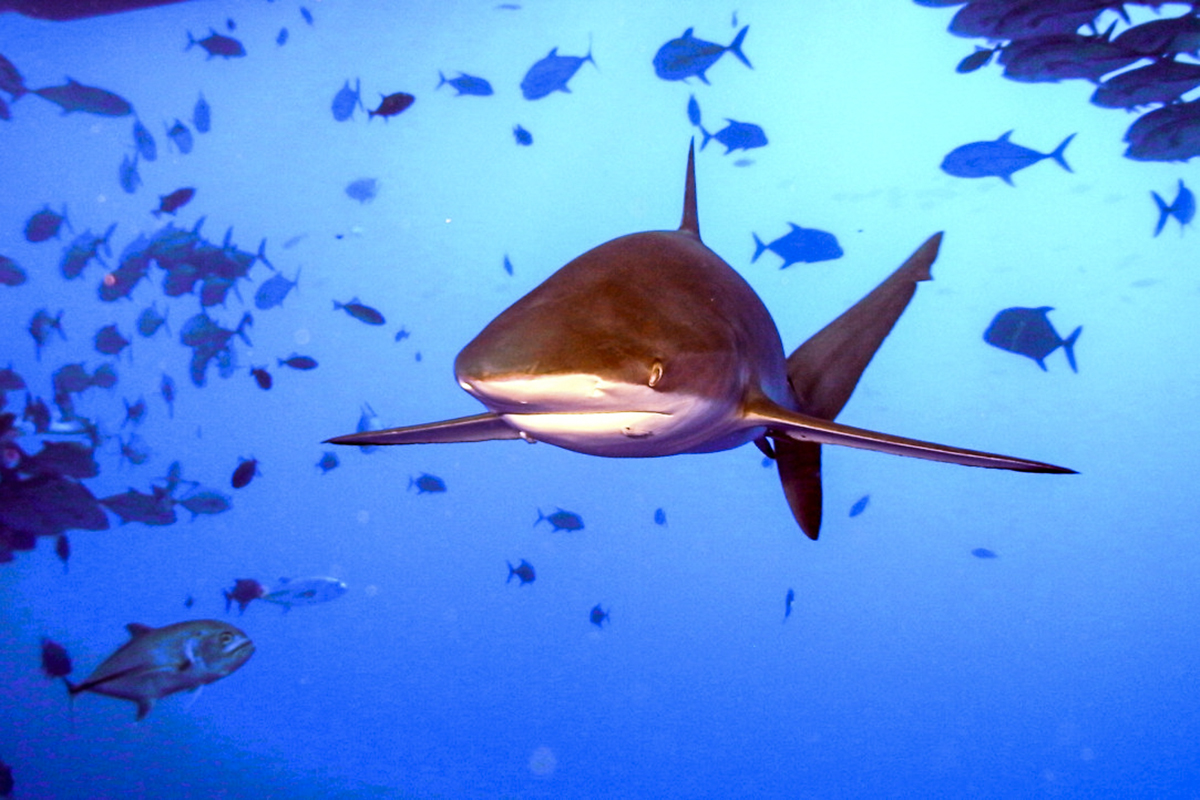
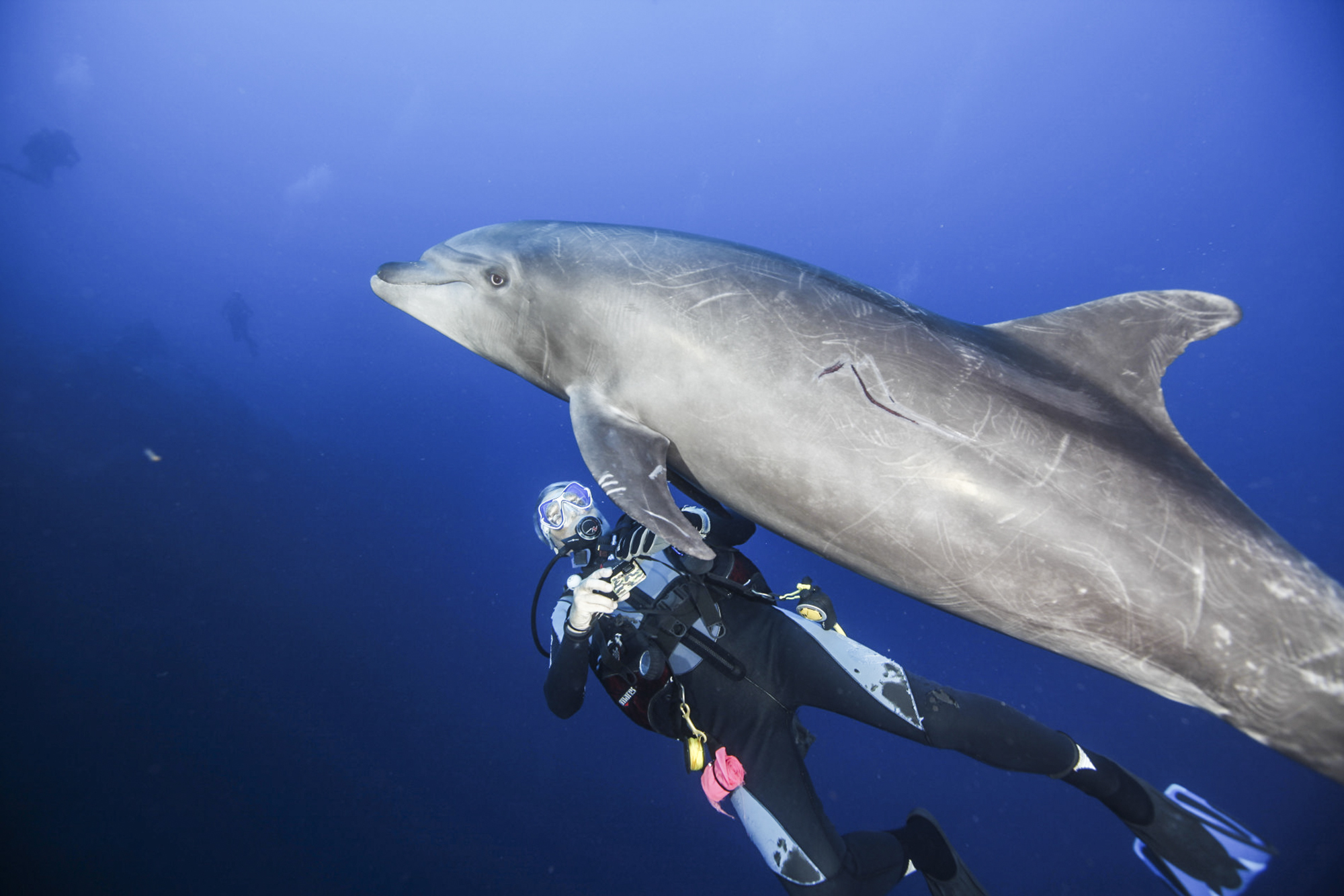
Scalloped hammerheads may cruise beyond the ridge, together with Galápagos sharks, silky sharks, tuna and large schools of jacks. Cabo Pearce is also regarded as one of Socorro's notable dolphin sites, with bottlenose dolphins frequently reported around divers.
During winter, humpback whales migrate through the Revillagigedo Archipelago. Divers may hear their songs underwater, while actual underwater sightings remain much less predictable.
Currents are central to the Cabo Pearce experience. They may run in either direction along the lava ridge and can strengthen considerably around its exposed outer sections. For this reason, the entry point and dive direction must always be selected after the guide assesses conditions.
Its combination of volcanic scenery, manta cleaning stations, dolphins, schooling hammerheads and open-ocean diving makes Cabo Pearce one of the defining dives of the Revillagigedo Archipelago.
Main Attractions
Cabo Pearce is especially known for its manta cleaning stations. Clarion angelfish gather around giant mantas to remove parasites, while hammerheads and other sharks may patrol the surrounding blue.
Giant oceanic manta cleaning stations
Scalloped hammerhead schools
Bottlenose dolphin encounters
Galápagos sharks
Silky sharks
Possible tiger sharks
Seasonal humpback whales
Large schools of jacks and tuna
Dramatic volcanic ridge
Deep Pacific drop-offs
Strong open-ocean drift diving
Marine Life
Giant oceanic mantas, scalloped hammerhead sharks, Galápagos sharks, silky sharks, whitetip reef sharks, bottlenose dolphins, yellowfin tuna, jacks and other schooling pelagic fish.
Tiger sharks and whale sharks are possible but less predictable. During winter, humpback whales migrate through the Revillagigedo Archipelago; their songs may sometimes be heard underwater and occasional underwater encounters occur.
As with the other Diventures listings, mantas, sharks, dolphins and whales should be presented as possible wildlife encounters rather than guaranteed sightings.
Coral & Habitat
Cabo Pearce is primarily a volcanic rocky habitat, rather than a conventional tropical coral reef.
Its defining feature is a long, narrow lava ridge extending eastward from Socorro Island into deep Pacific water. The formation resembles a giant underwater finger, with rocky slopes and walls falling away on either side.
Boulders and rocky ledges provide some shelter from the current, allowing divers to remain relatively stationary while observing pelagic animals passing through the blue.
Strong currents and nutrient-rich upwellings support a productive marine ecosystem and attract manta rays, sharks, dolphins and large schooling fish.
Coral growth is less dominant than at tropical reef destinations; Socorro's environment is characterised more by volcanic rock, encrusting organisms, hard corals and open-ocean marine life.
Suggested Route
Manta cleaning station and outer ridge
Enter from the RIB on the side selected by the guide according to current direction.
Descend together toward the rocky ridge, normally reaching the main diving area between approximately 20 and 25 metres.
Follow the sheltered side of the ridge toward the cleaning-station area. Find a stable position among the volcanic boulders without damaging marine growth and wait for giant mantas, dolphins and sharks to approach naturally.
Continue toward the outer end of the ridge while watching the open water for hammerheads, Galápagos sharks, silky sharks, tuna and schooling jacks.
Avoid crossing directly over the exposed top when the current is strong, because water movement can accelerate substantially over the ridge.
At the end of the dive, release from the formation and drift into open water. Deploy a delayed surface marker buoy and complete the safety stop before RIB pickup.
The direction should never be fixed in the Dive Guide map, because the dive may be conducted from either side according to the day's current.
Photography Notes
Cabo Pearce is primarily a wide-angle photography destination.
Giant mantas at the cleaning stations are the signature subject. Photographers should settle near the rocky ridge and allow the mantas to approach naturally rather than swimming after them.
Hammerhead schools, dolphins, Galápagos sharks and silky sharks may appear beyond the ridge in open water. A fisheye or wide rectilinear lens works especially well for animals passing close to divers.
The rock formation itself can also create dramatic compositions with divers positioned against the deep blue Pacific.
Strong current can make repositioning difficult, so exposure and focus settings should be prepared before reaching the outer ridge. Photographers should avoid following animals far into open water and becoming separated from the group.
Best Season
January, February, March, April, May, November, December
Site Diagram