
Blue Hole — Dahab
Unverified
Explore the Blue Hole in Dahab, Egypt, from the famous Bells wall and shallow Saddle to the 100m+ sinkhole, deep technical Arch and remarkable diving history.
Overview
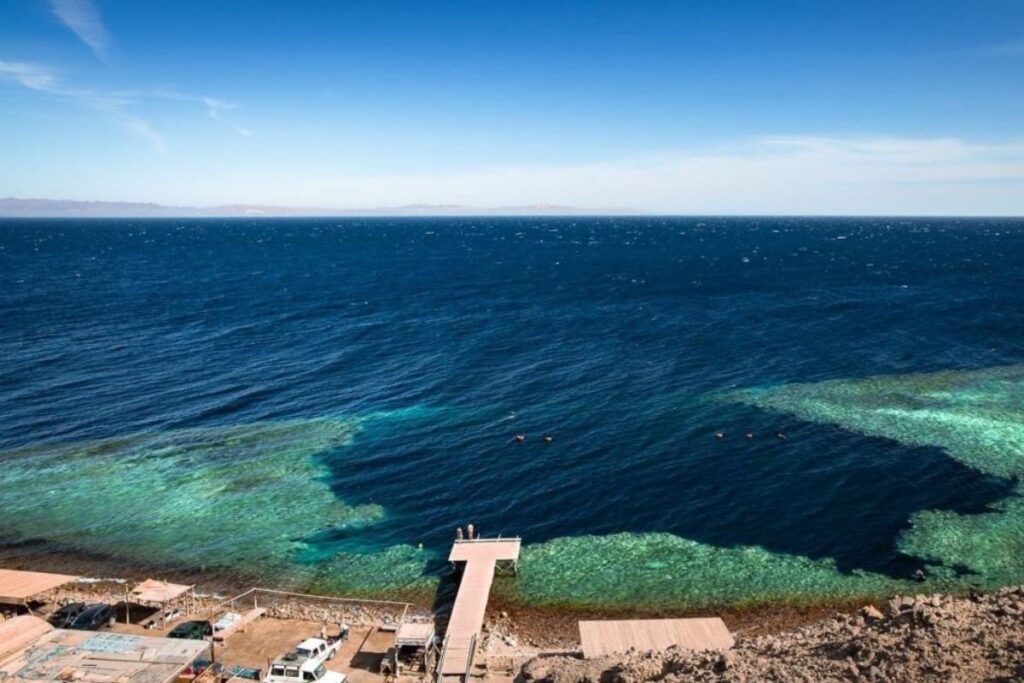
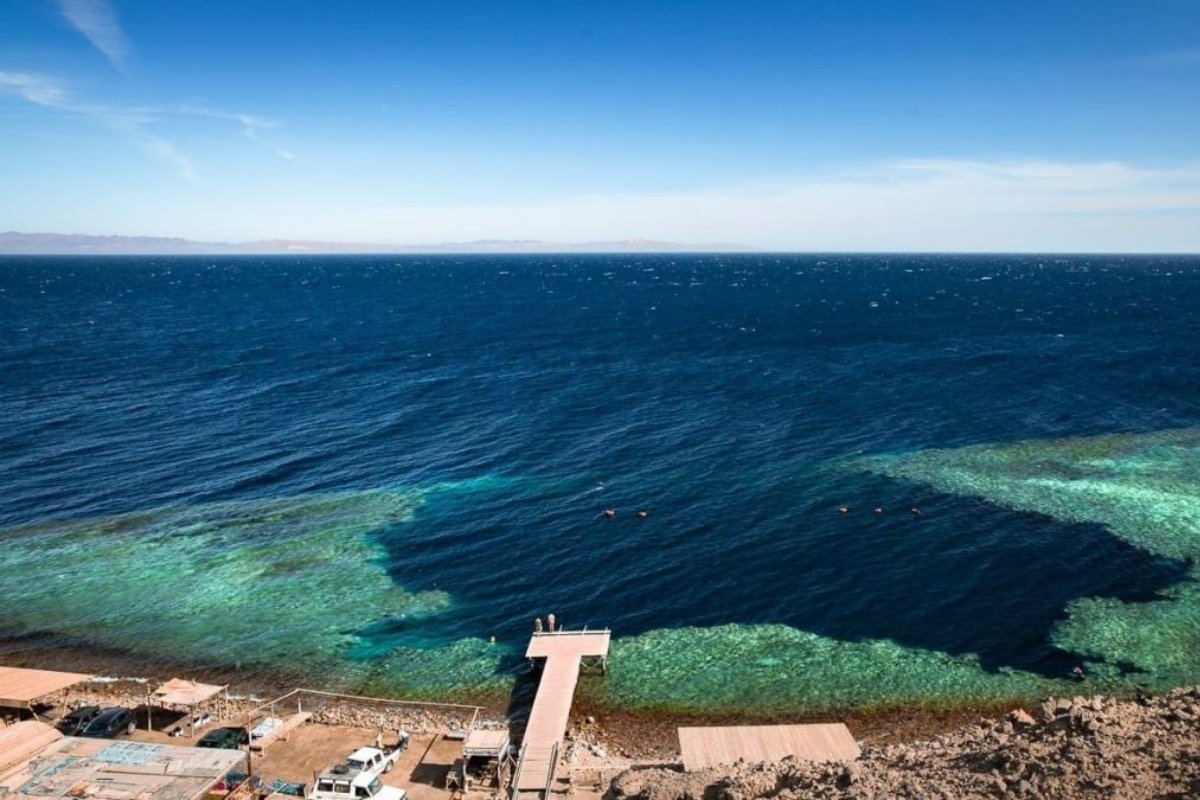
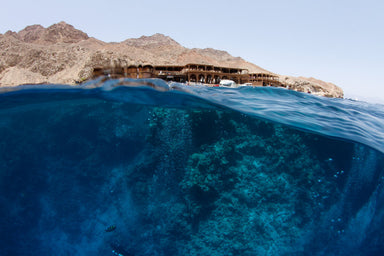
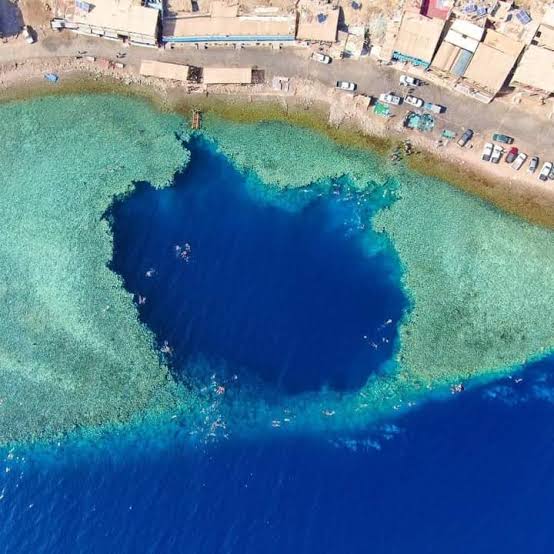
The Blue Hole of Dahab is one of the most famous dive sites in Egypt and one of the most recognisable underwater formations in the Red Sea. Located approximately eight kilometres north of Dahab on the Gulf of Aqaba, the site is a deep natural depression in the coastal reef that descends beyond 100 metres only a short distance from shore.
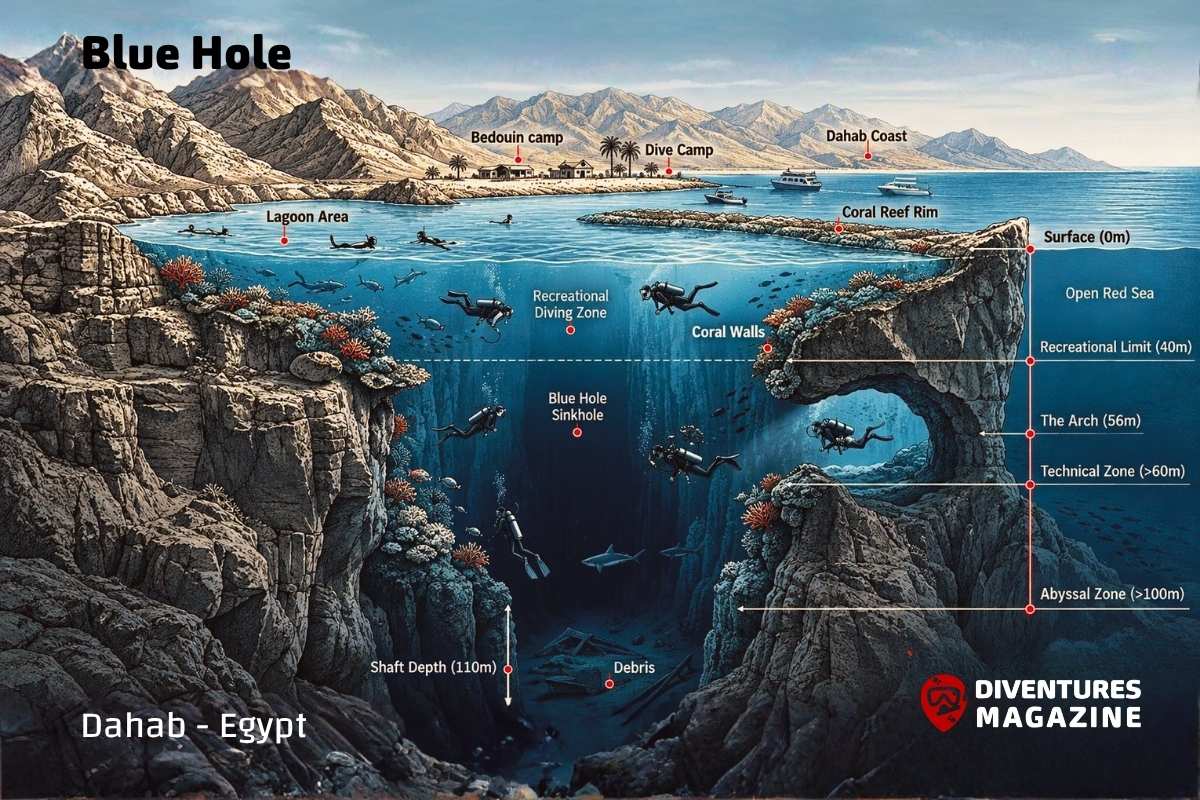
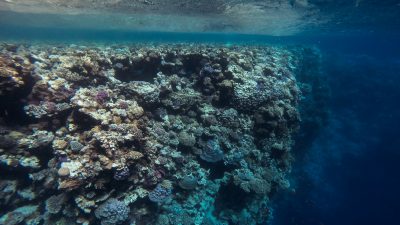
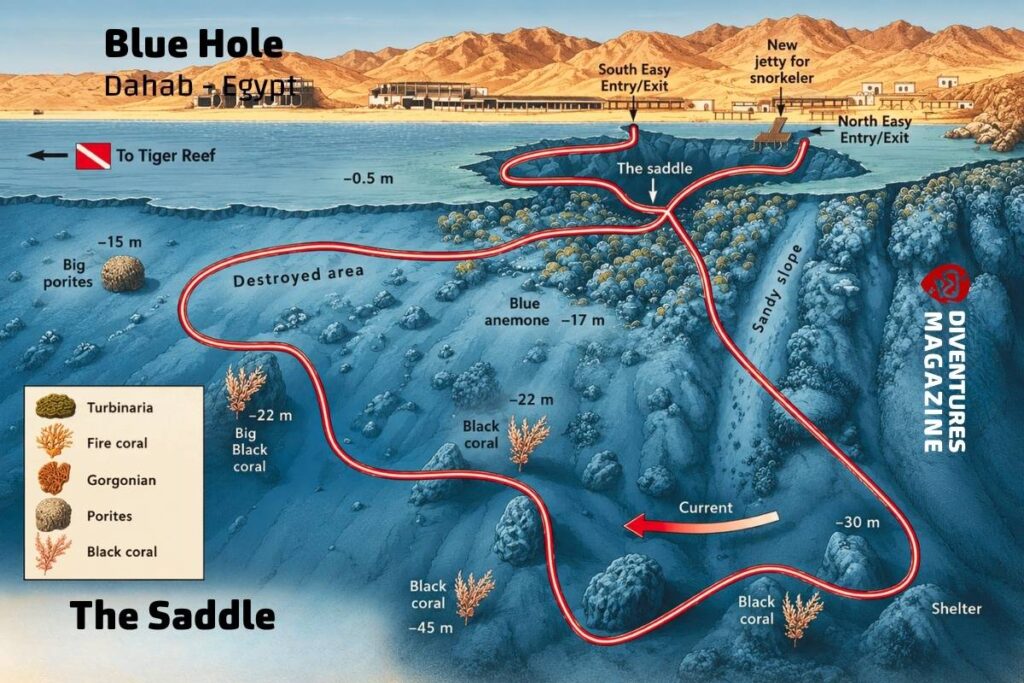
A shallow opening known as the Saddle, at approximately six metres, connects the Blue Hole with the open sea. Beyond it, the outer reef drops dramatically into deep blue water and supports considerably richer coral growth than much of the Blue Hole's interior.
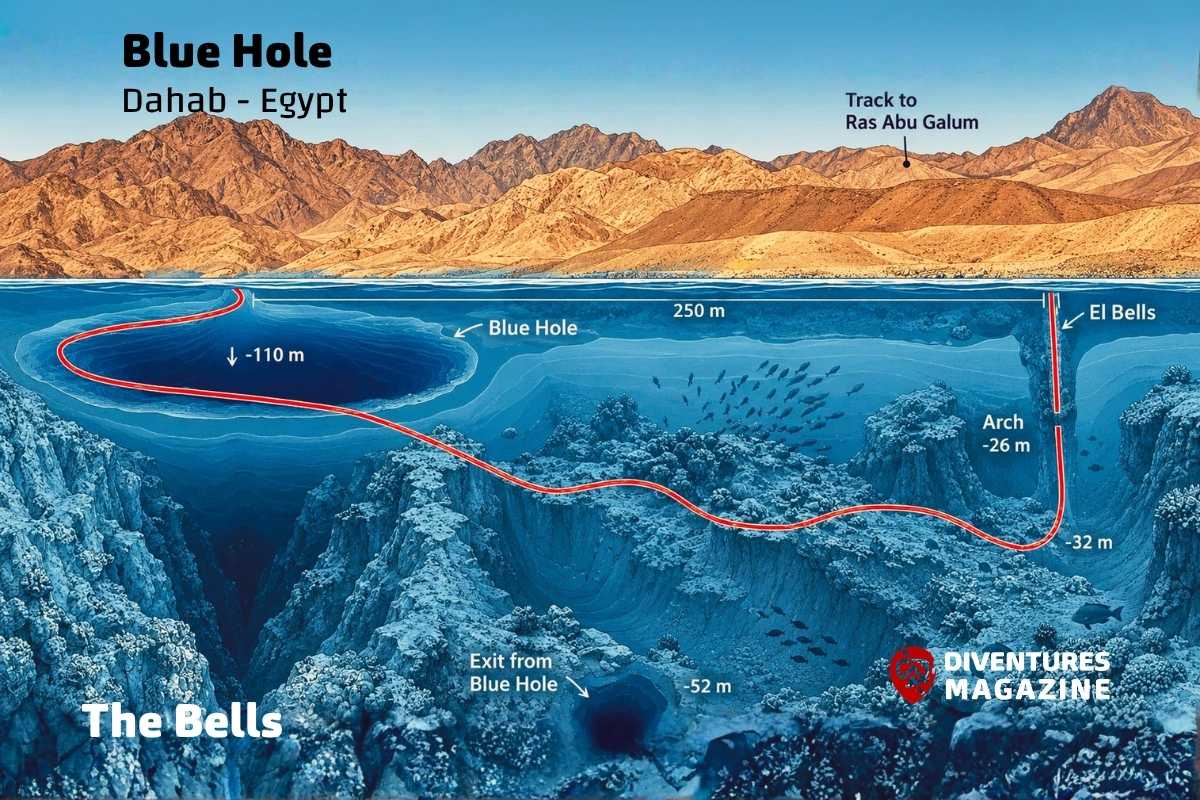
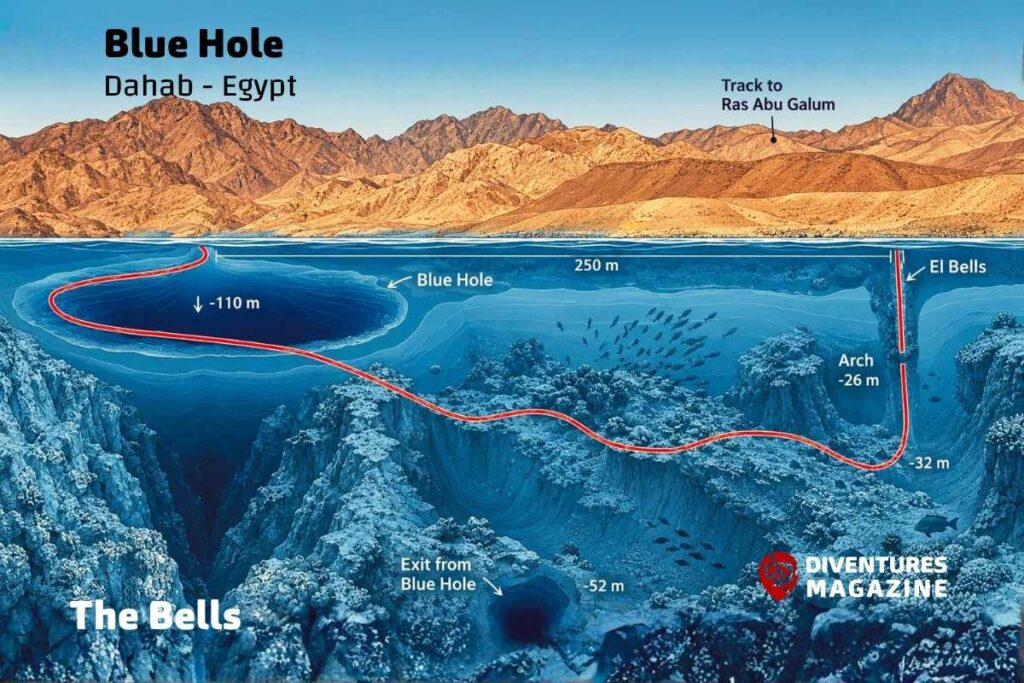
One of the best recreational ways to experience the site is the classic Bells-to-Blue-Hole dive. Divers enter through a narrow chimney approximately 100 metres north of the Blue Hole, emerge onto the outside wall at around 27–28 metres and follow the reef south. The dive gradually becomes shallower before crossing the coral-covered Saddle and finishing inside the Blue Hole.
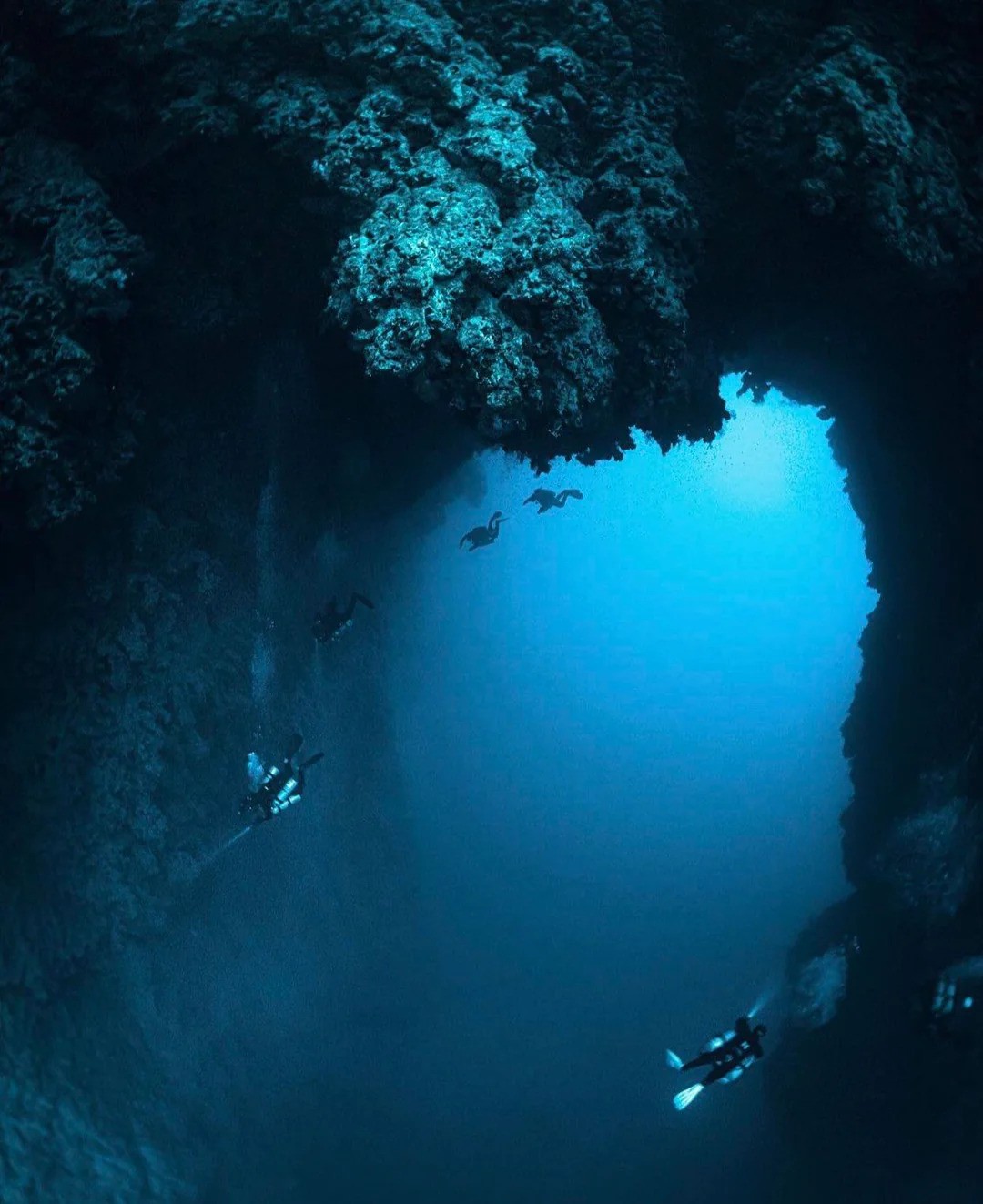
Deep beneath this recreational route lies the site's most famous technical feature: the Arch. Beginning at approximately 52–55 metres, the Arch forms a passage roughly 26–30 metres long through the reef from the interior of the Blue Hole to the open Gulf of Aqaba.
The Arch has also played a central role in the Blue Hole's tragic reputation. Numerous divers have died at the site over the decades, particularly during deep diving and attempted Arch traverses. Estimates reaching approximately 200 fatalities have circulated, but no complete publicly available official record confirms an exact total.
Among the best-known incidents was the death of Yuri Lipski in 2000 during an uncontrolled deep descent, while in 2017 experienced freediving safety diver Stephen Keenan died while assisting Alessia Zecchini during a freedive involving the Arch. These and other accidents helped establish the site's grim international reputation.
Yet the Blue Hole should not be understood simply as a dangerous dive site. The standard Bells, outer-wall and Saddle route remains fundamentally different from attempting the Arch. Recreational divers can experience the Blue Hole while remaining within their normal training limits, while the Arch and deeper sections belong to the specialised world of technical diving.
With immediate shore access, exceptional visibility, dramatic walls, recreational and technical diving opportunities, and a history that has shaped modern diving culture in Dahab, the Blue Hole remains one of Egypt's most extraordinary underwater destinations.
Main Attractions
he famous Blue Hole geological formation
Depth exceeding 100 metres
The Bells chimney
Spectacular outside reef wall
The shallow Saddle
The deep Arch
Technical diving
Freediving
Exceptional visibility
Dramatic vertical topography
Coral-covered outer wall
Napoleon wrasse
Barracuda
Turtles
Moray eels
Trevally
Reef fish
Excellent wide-angle photography
One of diving's most famous—and historically controversial—deep sites
Marine Life
Common or possible marine life includes:
Napoleon wrasse
Green turtles
Great barracuda
Trevally
Anthias
Butterflyfish
Angelfish
Surgeonfish
Batfish
Lionfish
Giant moray eels
Nudibranchs
Occasional eagle rays
Occasional dolphins
Larger pelagic animals may occasionally appear outside the wall, but sharks and other large species should not be presented as a defining or guaranteed attraction of the Blue Hole.
Coral & Habitat
The Dahab Blue Hole is a large natural depression within the coastal reef of the Gulf of Aqaba.
The hole descends beyond 100 metres and is surrounded by steep walls. Its relatively sheltered interior contrasts dramatically with the outer reef, where the wall falls away into deep blue water.
A shallow opening called the Saddle, at approximately 6 metres, connects the upper Blue Hole with the open sea.
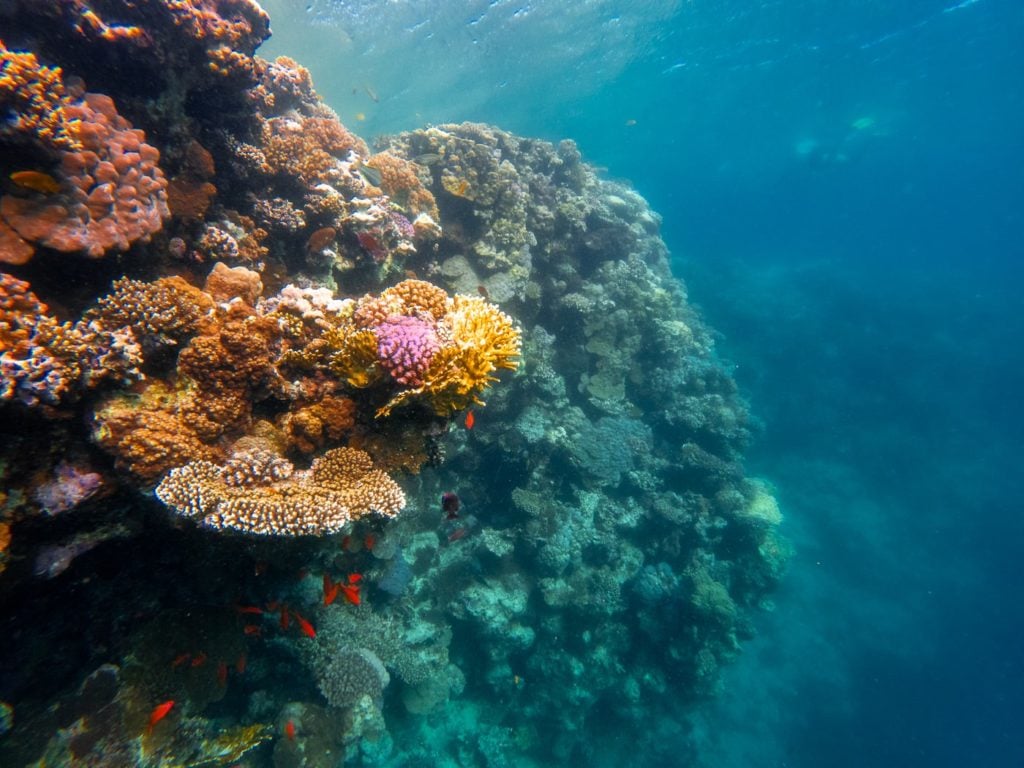
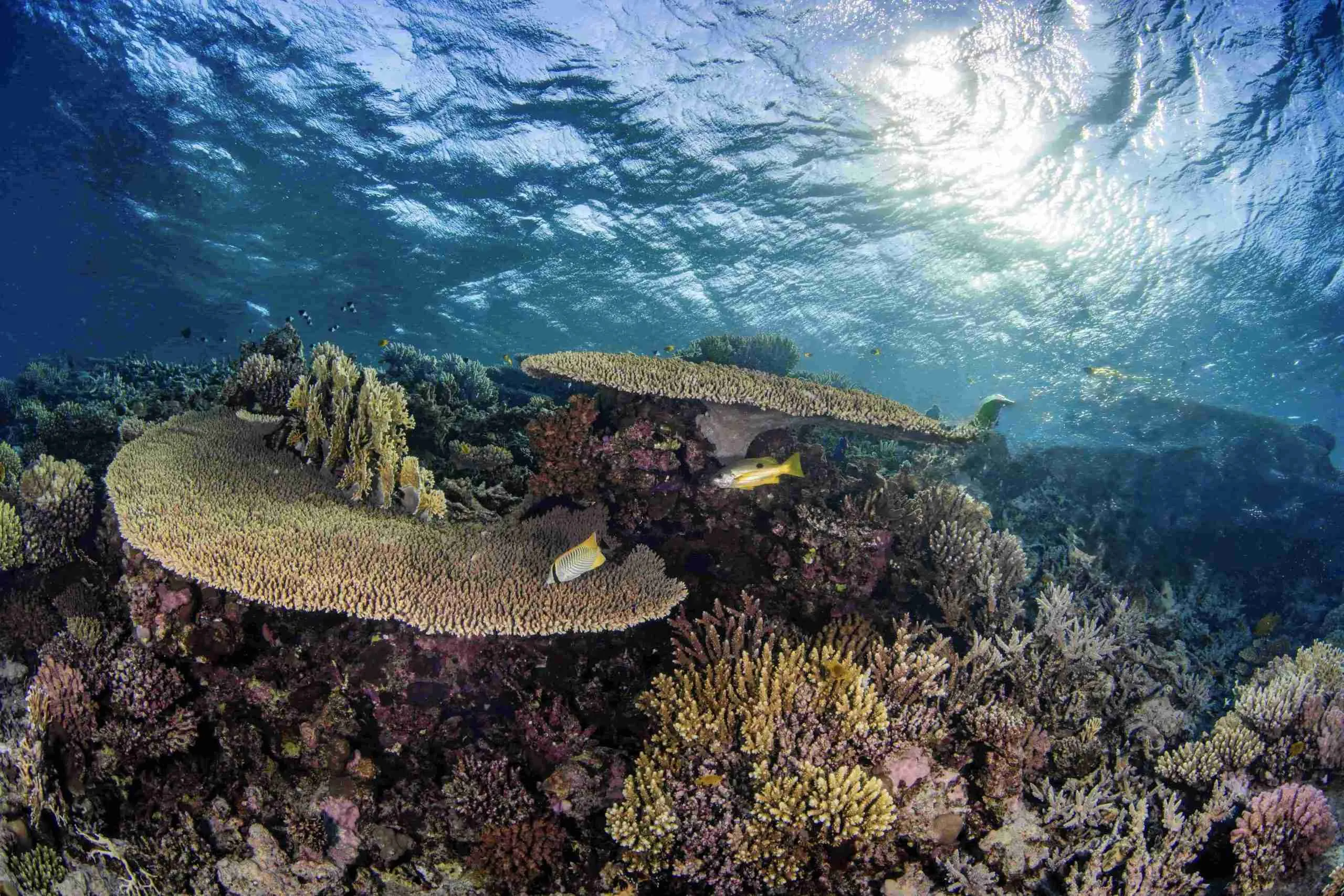
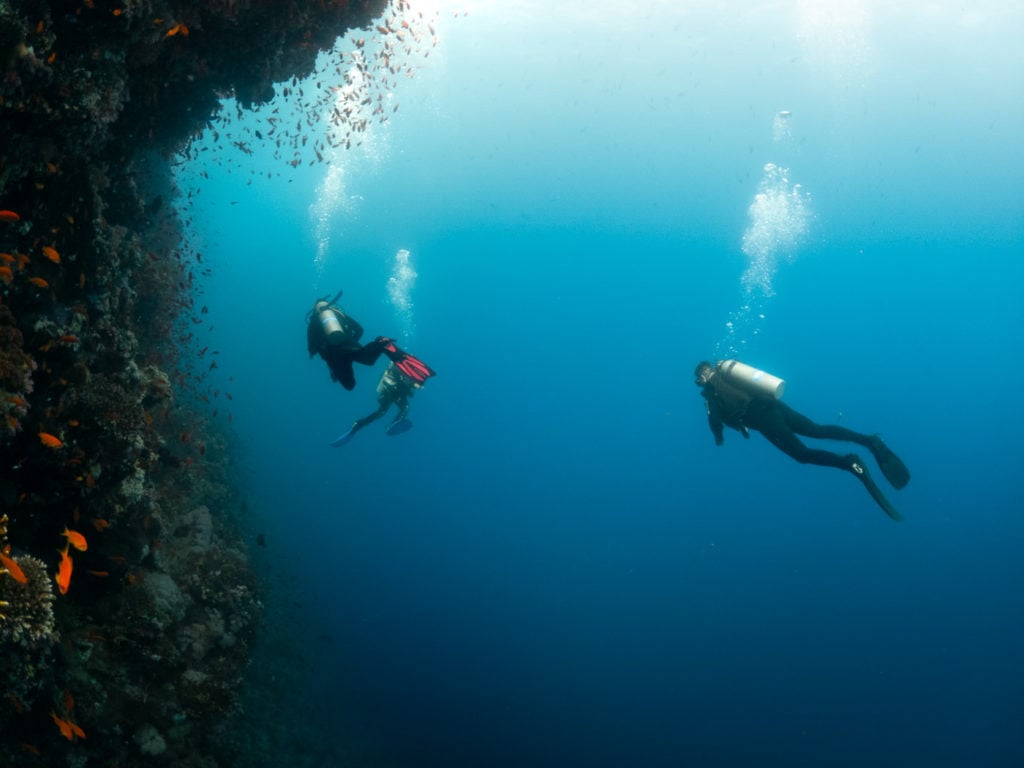
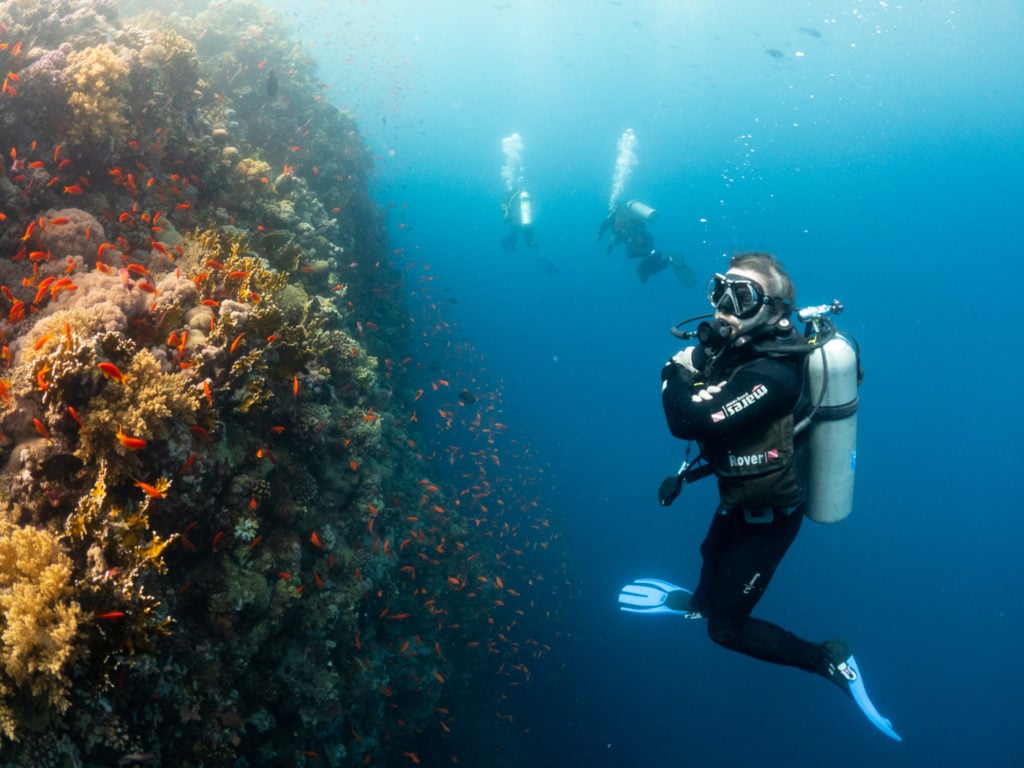
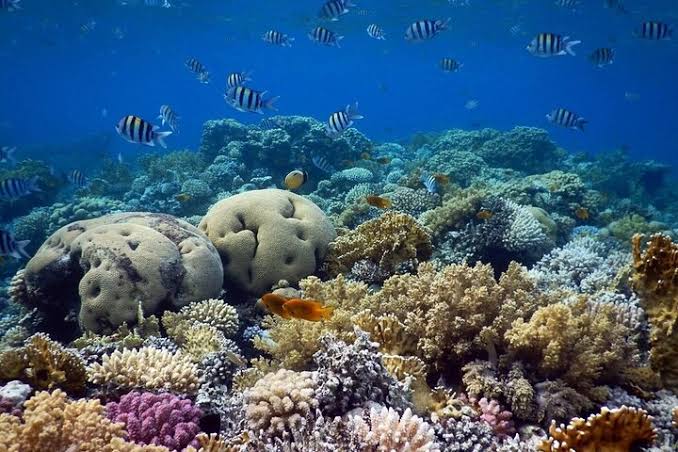
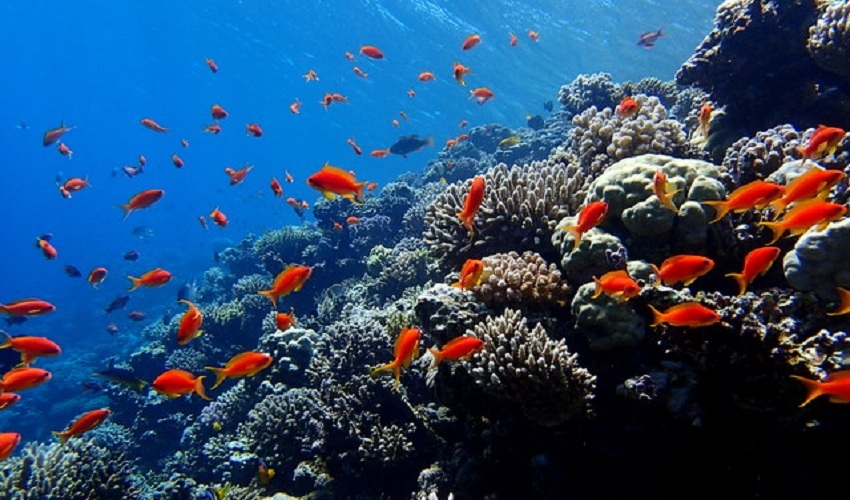
The outer wall supports significantly richer coral growth than much of the interior, including hard corals, overhangs and sections with black coral and other reef-building organisms. Schools of anthias and other reef fish gather along the wall.
There is effectively no shallow seabed beneath divers on the outside wall, making depth awareness and good buoyancy control particularly important.
Suggested Route
The Bells
Approximately 100 metres north of the Blue Hole is an entry point known as The Bells.
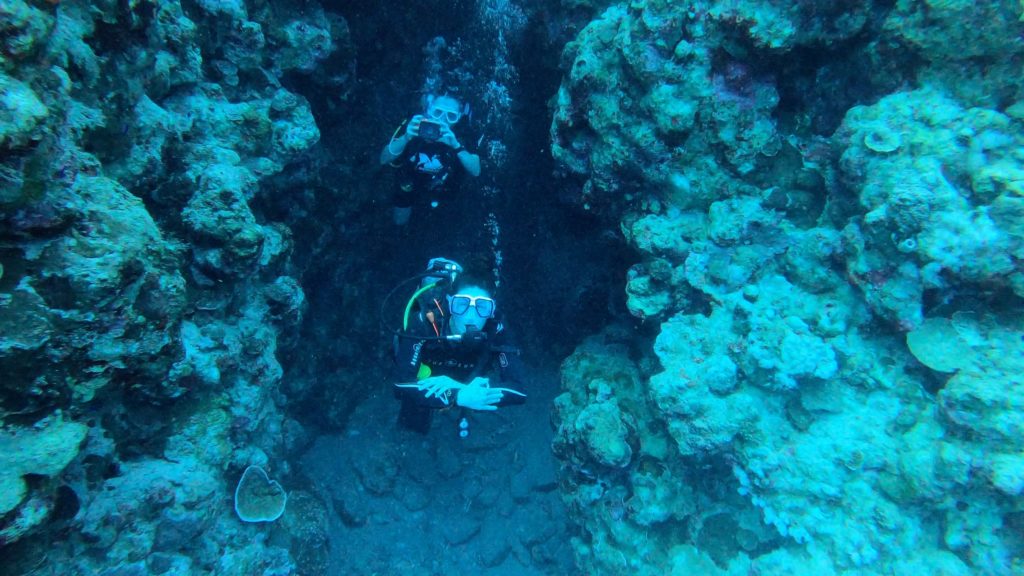
Divers enter through a narrow crack in the reef table and descend through a chimney-like formation. The chimney opens onto the outside wall at approximately 27–28 metres.
From here, divers normally turn south and follow the wall toward the Blue Hole.
The outside wall is one of the site's major attractions, with coral growth, overhangs, reef fish and occasional larger marine life appearing against the deep Gulf of Aqaba.
The Saddle
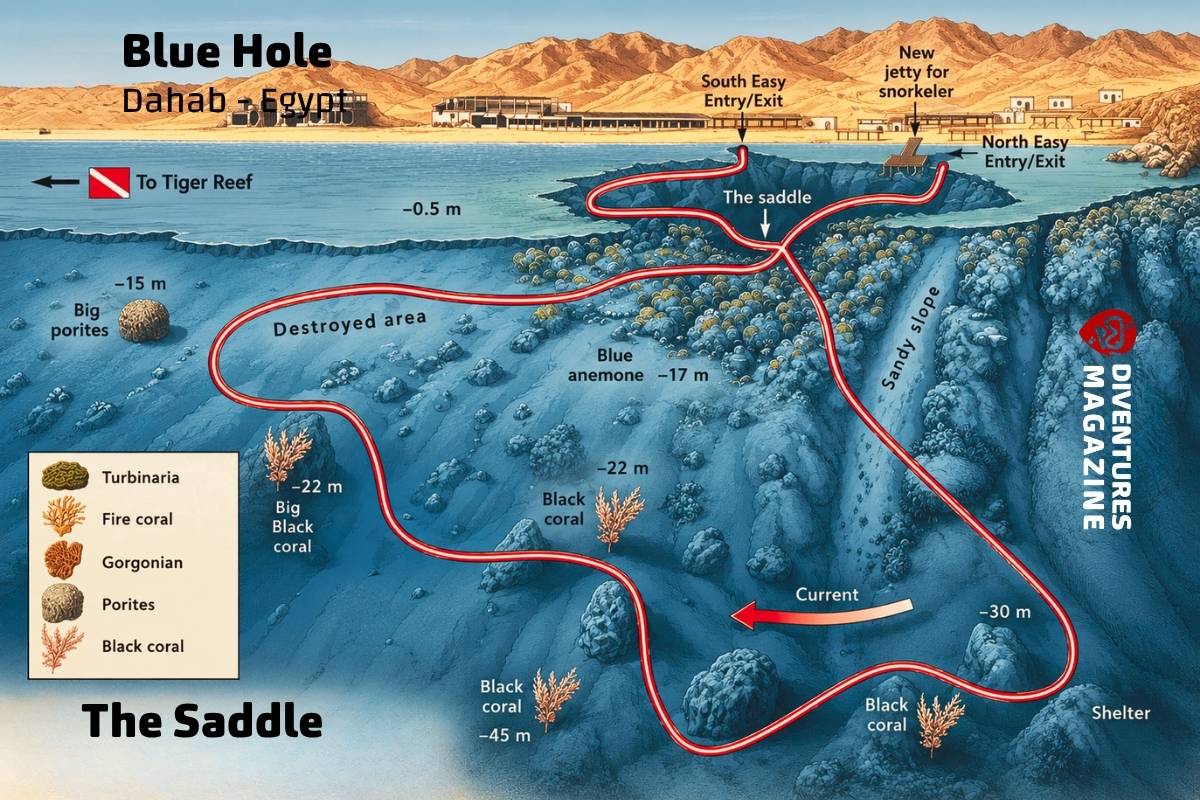
The Saddle is the shallow opening connecting the outside reef with the Blue Hole.
Depth: approximately 6 metres
During the classic Bells dive, divers gradually ascend along the outside wall before crossing the Saddle and entering the Blue Hole for the final part of the dive.
The Saddle should never be confused with the much deeper Arch.
The Arch
The Arch is the most famous technical feature of the Blue Hole.
It is a large underwater passage connecting the deep interior of the Blue Hole with the outside wall.
Arch ceiling: approximately 52–55 metres
Horizontal passage: approximately 26–30 metres
Environment: Deep overhead passage opening onto the Gulf of Aqaba
Required diving type: Technical diving
Local technical operators describe the top of the Arch at approximately 54 metres, while other sources place it around 50–55 metres depending on the exact point measured.
The lower portion of the opening extends dramatically downward, meaning the Arch appears more like an enormous underwater gateway than a conventional enclosed tunnel.
The Arch lies well beyond normal recreational scuba limits.
For the Dive Guide, use this safety note:
The Blue Hole Arch is a technical dive. It is not an extension of the recreational Blue Hole dive and should only be attempted by divers with appropriate technical training, equipment, gas planning and experience for the planned depth and decompression environment.
Technical diving
The Blue Hole is one of Dahab's major technical-diving locations because extreme depth can be accessed directly from shore.
Technical diving at the site includes the Arch, deep dives inside the Blue Hole and deeper profiles along the external wall.
Local technical centres support open-circuit twinset and sidemount diving as well as CCR and mixed-gas technical diving.
The Dive Guide should describe the routes without publishing specific gas mixtures, decompression schedules or turn pressures, since these depend on certification, equipment and an individually prepared dive plan.
Technical Route 1 — The Arch Traverse
The classic technical route begins from the Blue Hole shore entry.
Technical divers descend along the inner wall toward the Arch at approximately 52–55 metres.
The passage then leads through the reef from the Blue Hole to the outside wall of the Gulf of Aqaba.
After emerging from the Arch, the dive continues along the outer wall while the team begins the ascent and completes the decompression profile required by its individual dive plan.
Depending on the plan and conditions, the team may eventually return toward the Saddle and Blue Hole or complete the dive using another planned exit procedure.
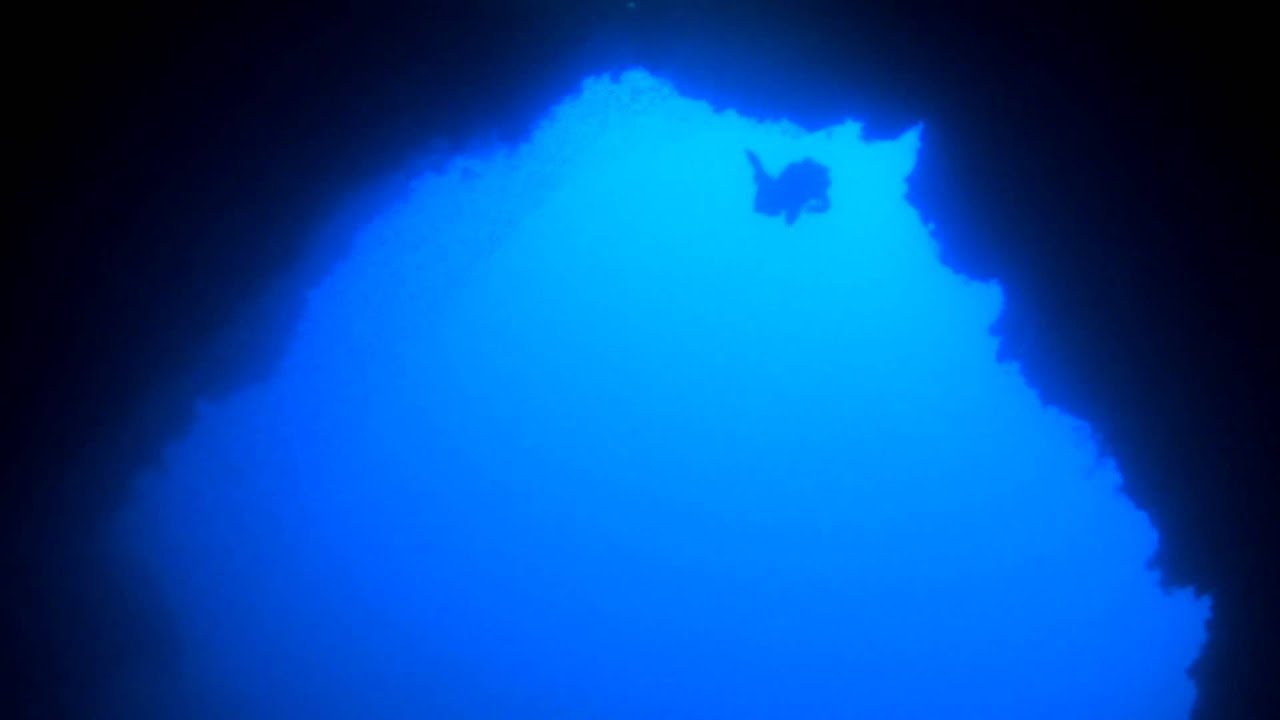
The dramatic view from the darker interior of the Blue Hole toward the open blue water beyond the Arch is one of the reasons the passage has become so famous among technical divers.
Technical Route 2 — Deep Blue Hole
Technical divers can also explore deeper sections of the Blue Hole without making the Arch the principal objective.
The inner walls descend far beyond recreational depth, allowing suitably qualified divers to conduct deeper training or exploration profiles.
These dives may include:
Deep wall exploration
Technical training
Mixed-gas diving
CCR diving
Deep photography
Viewing the Arch from different depths
They should be described as technical profiles rather than a fixed route, because the maximum depth and decompression obligations depend entirely on the dive plan.
Technical Route 3 — Deep Bells and Outer Wall
The Bells and outside wall can also be used for technical diving.
Rather than remaining within the normal recreational range, properly trained technical divers can continue deeper along the enormous external wall.
Bells diving as one of Dahab's technical options, although transporting technical equipment to the Bells entry can be more demanding than entering directly at the Blue Hole.
The attraction is the immense vertical wall descending into deep water, combined with better coral growth than inside the Blue Hole.
Recreational route — Bells to Blue Hole
The classic recreational dive begins at The Bells, approximately 100 metres north of the Blue Hole.
Enter through the narrow opening in the reef table and descend through the chimney.
Exit onto the outside wall at approximately 27–28 metres.
Turn south with the reef wall on the right.
Follow the wall while gradually reducing depth.
The outside reef offers colourful coral growth, overhangs, schools of reef fish and possible encounters with barracuda, turtles and other larger animals.
Continue south toward the Blue Hole.
Gradually ascend until reaching the Saddle at approximately 6 metres.
Cross the Saddle into the Blue Hole.
Complete the final shallow section and safety stop inside the sheltered Blue Hole before exiting from shore.
This recreational route does not approach the Arch.
Recreational route — Blue Hole circuit
A less demanding option starts directly inside the Blue Hole.
Enter from shore and explore the upper inner walls while remaining within the planned recreational depth.
Continue toward the Saddle.
Depending on conditions and the dive plan, cross onto the outside reef to experience the coral wall before returning through the Saddle.
Complete the safety stop inside the Blue Hole and exit from shore.
This route allows divers to experience the geological formation without conducting the deeper Bells entry.
Photography Notes
The Blue Hole is particularly suited to wide-angle photography.
Recommended subjects include:
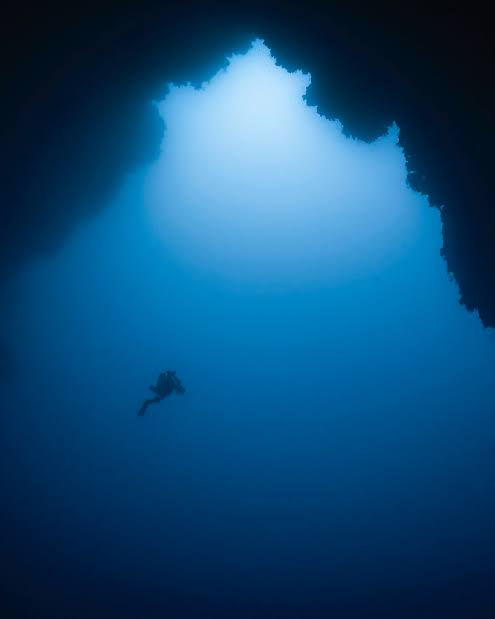
Divers silhouetted against the Blue Hole
The deep blue interior
The outside wall
Bells exit
Saddle
Coral-covered sections of the wall
Napoleon wrasse
Barracuda
Turtles
Freedivers
Divers positioned against the wall for scale
The outside wall generally provides considerably richer coral compositions than the interior.
Photographers must pay particular attention to depth creep. The vertical wall and lack of seabed reference can make it easy to descend gradually while concentrating on the camera.
Technical photography around the Arch should only be conducted within an appropriately planned technical dive.
History
The Blue Hole is situated approximately 8 km north of Dahab on the eastern coast of Egypt's Sinai Peninsula.
Its extraordinary depth immediately beside the shore helped make Dahab internationally important for recreational scuba diving, technical diving and freediving.
Over several decades the Blue Hole also acquired one of the most notorious reputations in diving because of repeated fatal accidents, many of which involved attempts to reach or cross the deep Arch.
History of fatalities
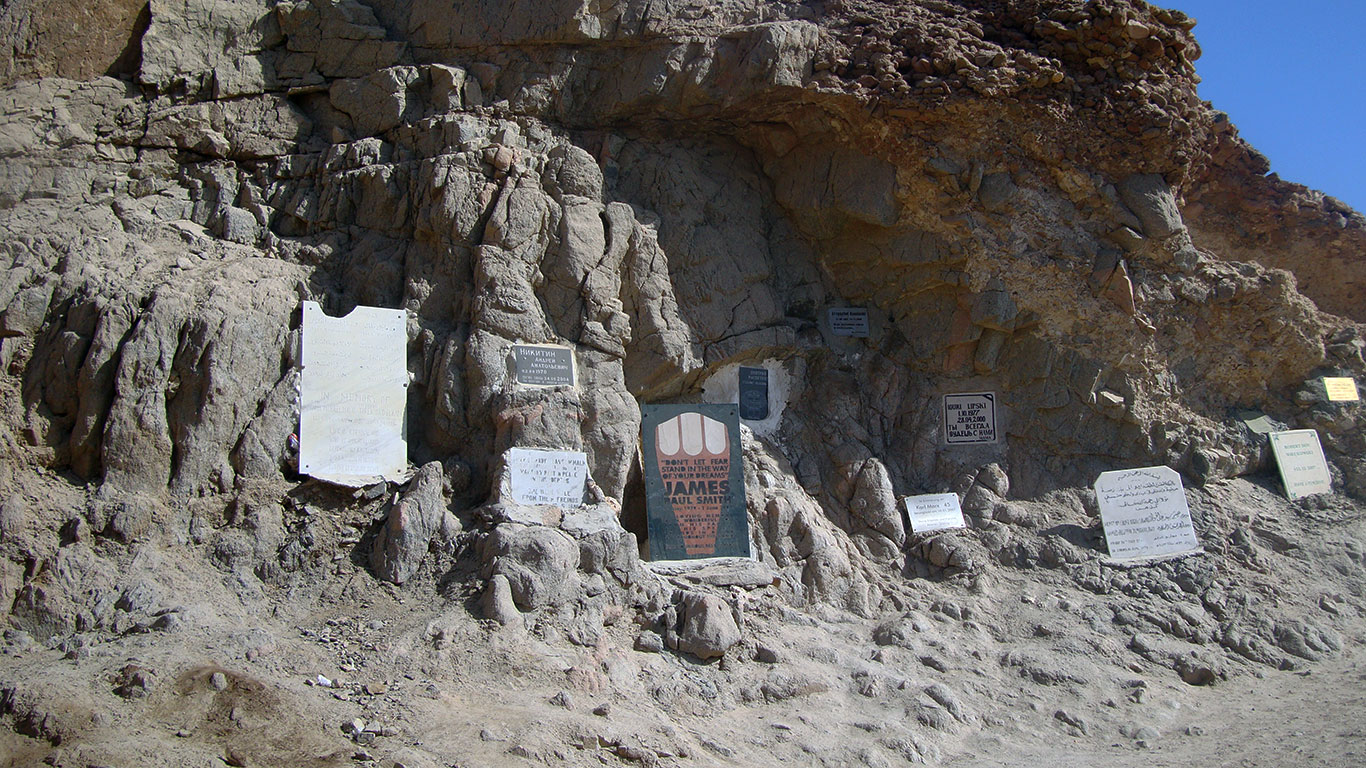
The Blue Hole has frequently been called the “Divers' Cemetery” because of the number of diving fatalities associated with the site and the memorial plaques that accumulated near it.
However, there is no complete publicly available official record establishing the exact number of deaths.
Reports and local estimates have sometimes placed the total at around 200 fatalities, but that figure should be treated as an estimate rather than a verified official statistic. A 2017 investigation by The Observer reported that no public record existed and that local divers estimated the figure could be as high as approximately 200
The exact number of fatalities at the Dahab Blue Hole is unknown. Estimates reaching into the hundreds have circulated for years, but no publicly available official record confirms a definitive total.
Why have fatalities occurred?
It is important to distinguish the normal recreational Blue Hole dive from the deep Arch.
The recreational Bells → wall → Saddle → Blue Hole route can remain within approximately 30 metres.
The Arch begins more than 50 metres deep and introduces a completely different combination of hazards.
Historically, fatal accidents have been associated with factors including:
Diving substantially beyond certification and experience
Attempting the Arch as a recreational dive
Inadequate gas reserves
Nitrogen narcosis
Loss of buoyancy control
Rapid uncontrolled descent
Disorientation
Separation from a buddy or team
Deep solo diving
Failure to account for decompression obligations
Inadequate technical equipment or redundancy
At Arch depth, narcosis, gas consumption, buoyancy changes and decompression requirements become significantly more important. The overhead passage removes the possibility of simply ascending directly to the surface while inside it.
The Blue Hole's accident history should therefore not be interpreted as meaning that the ordinary recreational Blue Hole or Bells dive carries the same risk as attempting the Arch.
They are fundamentally different dives.
Conor O'Regan and Martin Gara — 1997
Technical diver Tarek Omar told The Observer that in 1997 he recovered the bodies of divers Conor O'Regan and Martin Gara from the Blue Hole.
They became among the early fatalities closely associated with the site's developing international reputation.
Omar subsequently became involved in numerous recovery operations at the Blue Hole
Yuri Lipski — 2000
One of the most famous accidents at the Blue Hole occurred in 2000, when Russian-Israeli diver Yuri Lipski died during a deep dive.
Lipski carried a video camera that recorded his uncontrolled descent and final minutes underwater. The footage subsequently circulated widely and became one of the best-known diving accident recordings.
Tarek Omar later told The Observer that he had spoken to Lipski before the dive and recommended additional preparation.
Lipski nevertheless entered the water and eventually descended uncontrollably.
His body was recovered the following day from approximately 92 metres.
The incident became closely connected with the reputation of the Blue Hole because it demonstrated how rapidly a deep dive can deteriorate when depth, buoyancy and decision-making are lost.
Stephen Keenan — 2017
The Blue Hole's accident history is not limited to scuba diving.
In July 2017, experienced Irish freediving safety diver Stephen Keenan died while assisting elite freediver Alessia Zecchini during a breath-hold attempt involving the Arch.
Zecchini became disoriented during the dive. Keenan assisted her toward safety; she survived, but Keenan subsequently blacked out and died.
The accident became internationally significant within the freediving community and demonstrated that the Blue Hole's extreme environment also presents serious risks to highly experienced freedivers.
Safety legacy
The most important lesson from the Blue Hole's history is the distinction between recreational and technical diving.
The Arch was historically attempted by some recreational divers using techniques and equipment unsuitable for the depth and overhead environment.
Today, reputable Dahab technical operators explicitly present the Arch as a technical-diving objective and offer technical training ranging from decompression procedures through mixed-gas and CCR programs.
The Blue Hole itself can be enjoyed within recreational limits. Its dangerous reputation is closely connected to deep diving and attempts to cross the Arch beyond recreational depths. The Bells wall, recreational Blue Hole and technical Arch should therefore be understood as distinctly different diving experiences.
Best Season
Year-round diving
Underwater Map
Site Diagram
Surface Map