
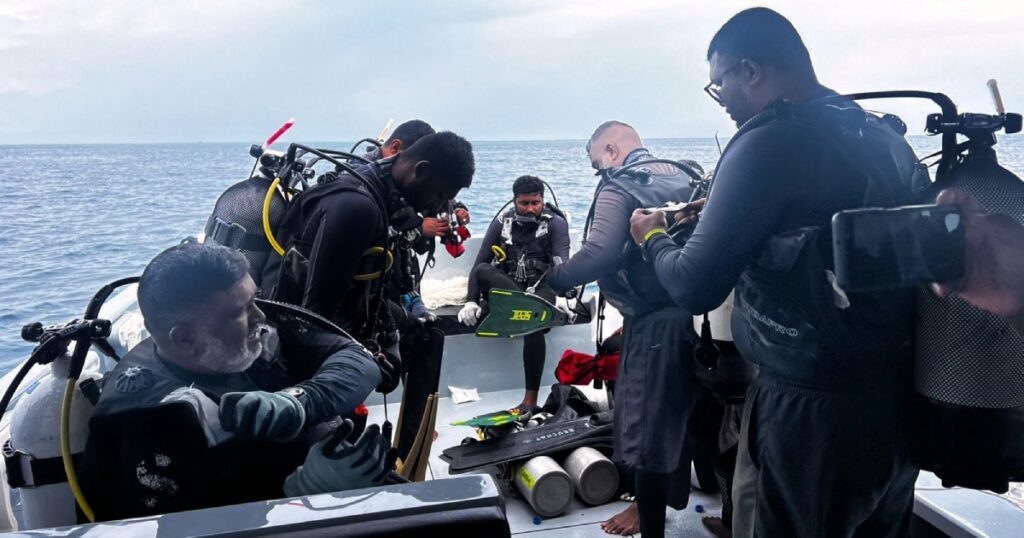

Recovery operations remain underway in the Maldives following the fatal cave diving accident that claimed the lives of five Italian divers earlier this week, as authorities continue searching underwater cave systems near Vaavu Atoll.
The tragedy, which has already sparked global attention within the diving community, occurred during a deep dive from the liveaboard vessel Duke of York. According to officials cited by international reports, search teams have now recovered four bodies, while efforts to locate and retrieve the remaining victim continue inside the submerged cave network.
The divers disappeared during a technical dive reaching depths of around 50 meters (164 feet), one of the most challenging environments in recreational and technical diving. Maldivian authorities confirmed that the operation has involved military personnel, local rescue teams, and experienced divers working in difficult underwater conditions.
The victims were identified as marine biology professor Monica Montefalcone, her daughter Giorgia Sommacal, research assistant Muriel Oddenino, diving instructor Gianluca Benedetti, and marine biology graduate Federico Gualtieri.
Difficult Recovery Conditions Inside the Cave
Officials said recovery operations have been slowed by the depth and confined nature of the underwater cave system. Cave environments present unique hazards, including narrow passages, reduced visibility, strong currents, and the risk of sediment disturbance that can rapidly turn visibility to zero.
Reports from local authorities indicated that strong weather conditions and rough seas in the Vaavu Atoll region may have further complicated rescue and recovery efforts during the first days of the incident.
The Maldives National Defence Force has been assisting with the operation, while investigators continue gathering evidence related to the dive profile, gas mixtures, and equipment used during the expedition.
Rescue Mission Turns Deadly
The recovery operation itself later turned tragic after Maldivian military diver Staff Sergeant Mohamed Mahudhee died while participating in the underwater search mission.
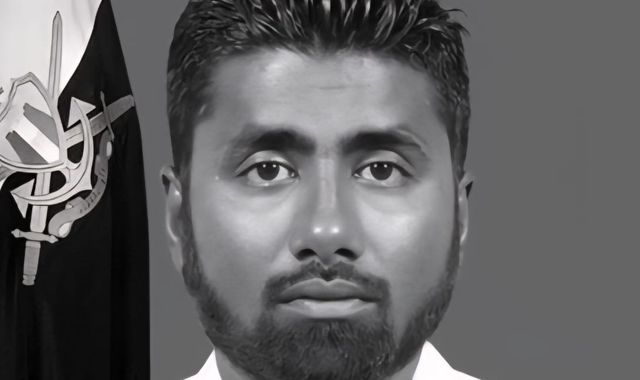
According to Maldivian authorities, Mahudhee became critically ill after surfacing from a deep recovery dive and later died in hospital. Officials said he was part of an elite team conducting high-risk operations inside the same underwater cave system where the Italian divers disappeared.
Reports indicated the diver suffered decompression sickness, highlighting the extreme dangers involved in deep cave recovery operations. Following his death, authorities temporarily suspended parts of the mission to reassess safety conditions and recovery strategy.
His death pushed the overall toll of the Maldives diving tragedy to six and sparked renewed discussion within the global diving community about the risks faced not only by technical divers, but also by rescue and recovery teams operating in confined underwater environments.
Ongoing Investigation Into the Cause
Authorities have not officially confirmed what caused the accident, but recent expert analysis has suggested that oxygen toxicity and panic inside the cave system may have contributed to the tragedy.
Diving and medical experts interviewed by international media explained that oxygen toxicity can occur during deep dives involving enriched gas mixtures, potentially leading to confusion, convulsions, or unconsciousness underwater. In confined cave environments, even a minor emergency can escalate quickly if visibility or communication is lost.
Investigators are expected to review dive computers, breathing gas systems, and other technical equipment as part of the ongoing inquiry.
Global Diving Community Reacts
The incident has triggered widespread discussion throughout the international diving industry, particularly among technical and cave diving professionals.
Many divers have highlighted the extreme risks associated with deep overhead-environment diving, where direct access to the surface is impossible and emergencies require highly specialized procedures and training.
For Red Sea technical divers and instructors, the Maldives tragedy serves as another sobering reminder of the importance of gas planning, cave protocols, and environmental awareness during advanced dives.
Authorities in the Maldives have not yet announced when the final recovery operation will conclude or when official findings from the investigation may be released.

A young voice whose articles shine with energy and a fresh perspective. Through a promising pen, he takes us on journeys driven by a passion for discovery and a spirit of curiosity, adding a distinctive character to Diventures that reflects a new generation of writers connected to the sea and its worlds.