


A detailed inquest into the death of a Belgian technical diver off the coast of Ireland has shed light on the final moments leading up to a fatal deep wreck dive, highlighting the complexities and risks associated with advanced diving operations.
Incident Overview
The incident occurred in June 2023 near the coast of County Donegal, where a group of experienced divers had traveled to explore a deep wreck lying at approximately 83 meters. The diver, identified as Belgian national Peter Gielen, was part of a planned technical dive requiring specialized equipment, staged decompression, and precise gas management.
According to the inquest findings, the dive initially proceeded as planned, with the team descending to the wreck site under controlled conditions. However, complications arose during the ascent phase, a critical stage in deep technical diving.
Final Moments Underwater
Evidence presented during the inquest revealed that Gielen began experiencing difficulties while ascending from the wreck. He reportedly became separated from his dive partner during decompression stops, a situation that can significantly increase risk at such depths.
Witness accounts and dive computer data indicated that he made a rapid ascent at one point, deviating from the planned decompression schedule. This likely contributed to severe physiological stress, including the possibility of decompression-related complications.
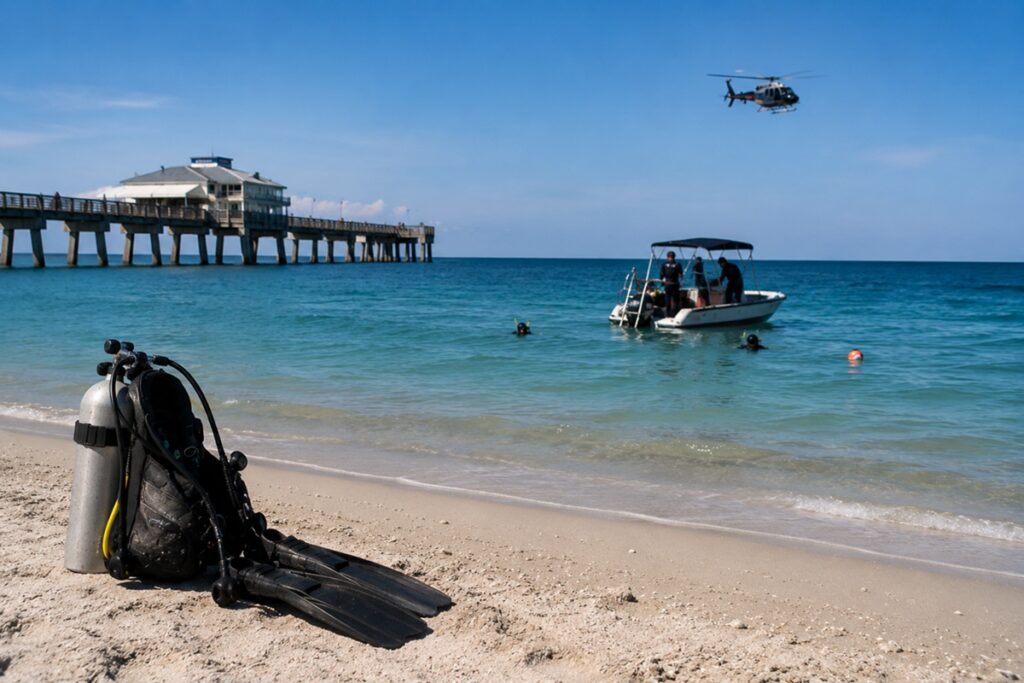
Attempts were made by fellow divers to locate and assist him, but the challenging conditions and depth made immediate intervention difficult. His body was later recovered following a coordinated search effort.
Medical Findings
The post-mortem examination suggested that the diver suffered from issues consistent with decompression illness, although the exact cause of death could not be attributed to a single factor. The inquest noted that multiple elements—including rapid ascent and separation from the dive plan—likely played a role.
Experts emphasized that dives at depths exceeding 80 meters require strict adherence to decompression protocols, redundant systems, and continuous team coordination.
Technical Diving Risks Highlighted
The case underscores the inherent risks of deep technical diving, particularly on wreck sites where environmental factors such as low visibility, currents, and complex structures can complicate navigation and communication.
While the divers involved were described as experienced and properly equipped, the inquest highlighted how quickly conditions can escalate when even minor deviations occur during high-risk dives.
Broader Diving Community Impact
The findings have drawn attention within the global diving community, prompting renewed discussions around safety practices in extreme depth diving. Organizations and instructors continue to stress the importance of disciplined dive planning, team awareness, and emergency preparedness.
Although the incident took place in the cold waters of Ireland, similar deep wreck dives are conducted worldwide, including in regions like the Red Sea, where technical diving on deep wrecks is increasingly popular. The lessons from this case resonate across all advanced diving environments.

A young voice whose articles shine with energy and a fresh perspective. Through a promising pen, he takes us on journeys driven by a passion for discovery and a spirit of curiosity, adding a distinctive character to Diventures that reflects a new generation of writers connected to the sea and its worlds.