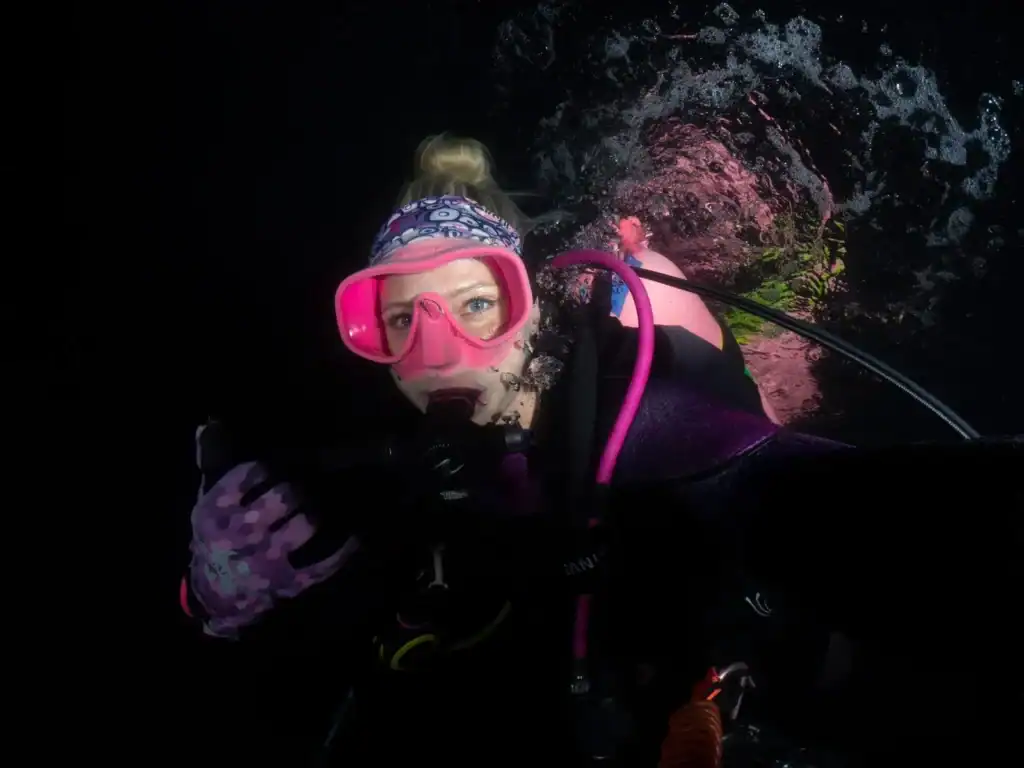
Night diving changes how you read a reef. A site you know well in daylight becomes different after sunset. The shapes are the same, but the activity is not. Behaviors shift, colors change under torchlight, and new animals take over the scene. Many divers feel this on their first night dive, even if they have logged dozens of dives on the same reef.
Light changes the dive
The first difference is light. In the day, the sun gives you a wide view and natural depth cues. At night, your torch creates a narrow field. You see in short sections, not in panoramas. This changes your focus. You stop scanning far ahead and start reading details. Small movements become important. A coral head is no longer “the coral head”. It is a surface with life on it.
Artificial light also changes colour. Corals can look brighter. Fish scales can reflect silver and gold. Some animals show patterns that are easy to miss in daylight, because your eye is not pulled by the full reef at once. The dive becomes slower, even if the group keeps the same pace.
Night life comes out
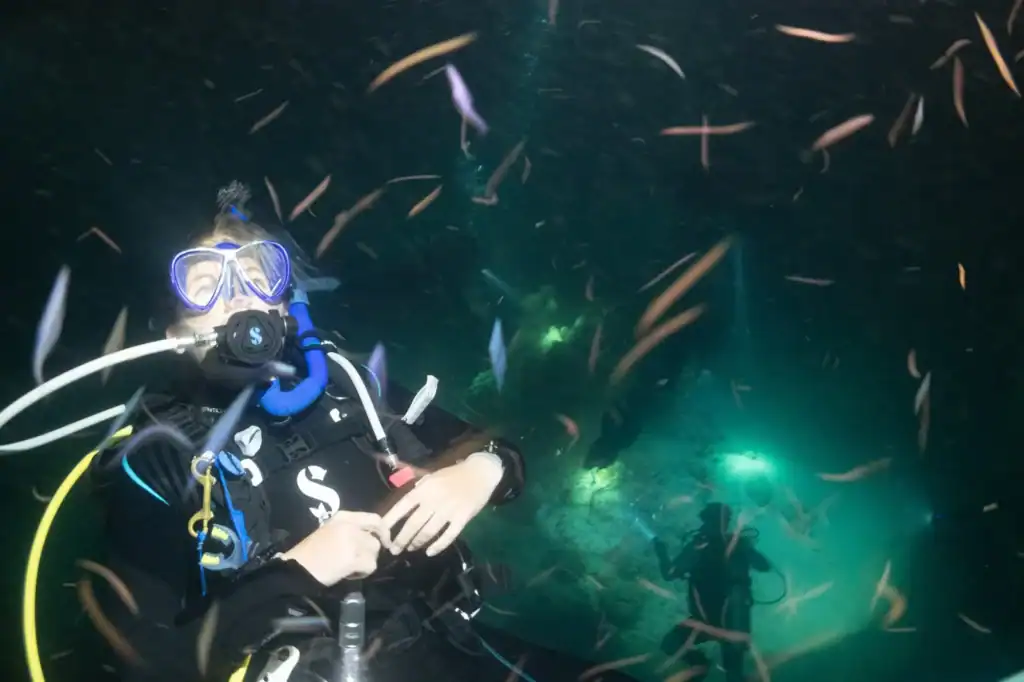
Marine life runs on a different schedule at night. Many daytime reef fish move into crevices to rest. They reduce movement and stay close to cover. This clears space for nocturnal hunters. Octopuses leave their dens. Crustaceans move across open sand and rubble. Moray eels often become more active. For divers who enjoy marine life behaviour, this is the main reason to go at night. You are not only seeing different species. You are seeing the same ecosystem at a different hour.
Corals look more alive after dark
Corals can also look more alive after dark. Many species extend their polyps to feed. In the day, a coral can look still and solid. At night, torchlight can show soft, moving parts across the surface. On reef walls and slopes, this can be striking. The reef becomes less like a structure and more like a working system. For divers who want to understand reef ecology, night diving is not a side activity. It is direct observation.
Skill level and dive planning
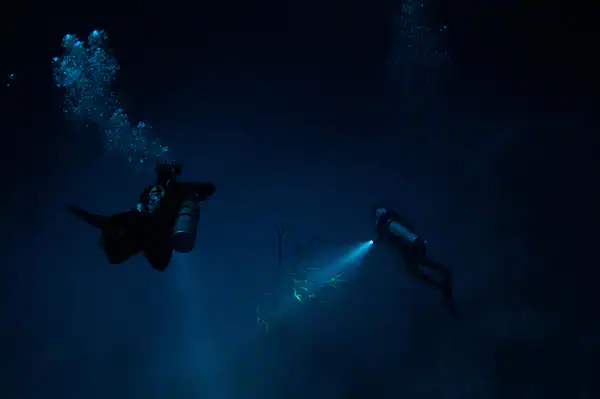
From a skills point of view, night diving is usually less complex than people expect. Most recreational night dives are done at shallow to moderate depths on sites the team already knows. Routes are often simple. Many dives use a fixed reference, such as a mooring line, and return to it. The dive plan is often conservative by design. The goal is not distance. The goal is control.
Equipment that matters most
Lighting is the key equipment. A primary dive light is essential. A backup light is also important in case the primary fails. Many divers add small marker lights or glow sticks so buddies can track each other without confusion. These markers support team awareness. They reduce the need to sweep your torch in wide arcs just to locate a diver.
Navigation without daylight cues
Navigation at night depends on discipline. Most divers avoid diving a new site at night unless a professional guide leads the route. It is harder to use natural landmarks because the reef is visible only in parts. Controlled movement matters. Compass use becomes more important. Staying close to the bottom and keeping visual contact with the reef helps prevent loss of direction. It also reduces the risk of drifting away from the planned area.
Fear and calm underwater
Many divers worry about fear. Darkness can trigger anxiety, especially at the start of a dive. In practice, fear often fades once the descent is complete. The limited view can reduce sensory overload. For some divers, this creates a calm experience. The reef feels quieter. There are fewer visual demands, and the dive becomes more deliberate. This is one reason some divers say they feel more relaxed at night than during a busy day dive.
Buoyancy and depth control
Night diving also changes buoyancy awareness. Without the wide visual scene, some divers lose depth cues. This can lead to slow, unnoticed changes in depth. The solution is simple: rely on instruments and body control. Check depth and time more often. Use breathing carefully. Move slowly. Over time, this can improve buoyancy because it forces precision.
Communication and team safety
Safety at night depends on communication. Hand signals still work, but they may be harder to read. Many divers use light signals. A slow circle is often used for “okay”. Rapid movement can mean “attention”. These signals must be agreed in the briefing. A clear briefing is not optional at night. It should cover route, depth limits, separation procedures, and what to do if a light fails. Teams should also agree on how close buddies will stay and how often they will stop to regroup.
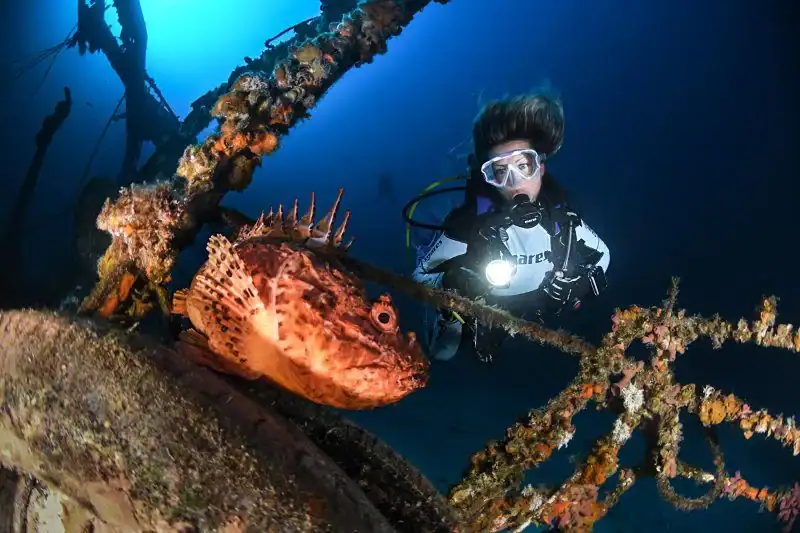
A 2025 approach to low-impact night diving
In 2025, responsible night diving also means managing light and contact. Bright light can disturb animals. Divers should avoid shining directly into eyes for long periods, especially for turtles and sleeping fish. Observation should not become harassment. Slow movement and controlled lighting reduce stress for marine life. Good buoyancy also matters more at night because it is easy to drift into the reef while watching a small subject. Less contact is better for the reef and for your dive control.
Photography at night
Photography is a strong match for night diving, especially macro. Darkness removes background clutter. The torch or strobe isolates the subject. Small animals like nudibranchs, shrimp, and crabs stand out clearly under focused light. The challenge is stability. You need careful fin control and good trim to avoid damaging the bottom while framing a shot. At night, a careless kick can do more harm than you realise.
Where night diving works best
Many night dive locations are shallow coral reefs, protected bays, and calm lagoons. The Red Sea, Caribbean, and Indo-Pacific regions are known for warm water and high biodiversity, which supports strong night diving. Temperate waters can also deliver good night dives, especially where crustaceans are active and bioluminescence is present.
Bioluminescence
Bioluminescence is worth attention. In some places, simple hand movements can trigger brief flashes of blue-green light from microscopic organisms. These moments are short, but they show how active the water column can be at night. They also remind divers that the ocean does not “sleep”. It changes shifts.
What night diving teaches
Night diving is mainly about perspective. It reduces diving to fundamentals: light, breath, movement, and awareness. It rewards patience. It trains control. It also offers a clear view of the reef as a living system, not only a scene. It is not about drama. It is about seeing the ocean on its own schedule.

Diventures Team is a multidisciplinary team of scuba professionals, editors, and digital creators, producing accurate and experience-driven coverage of diving, marine life, and ocean culture.