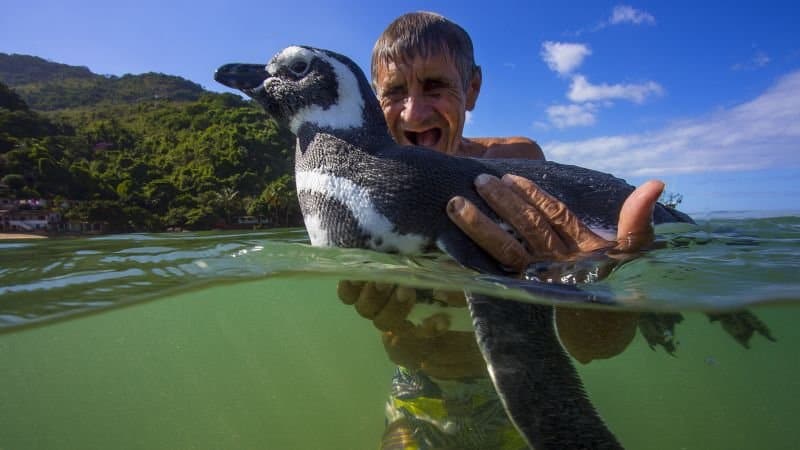
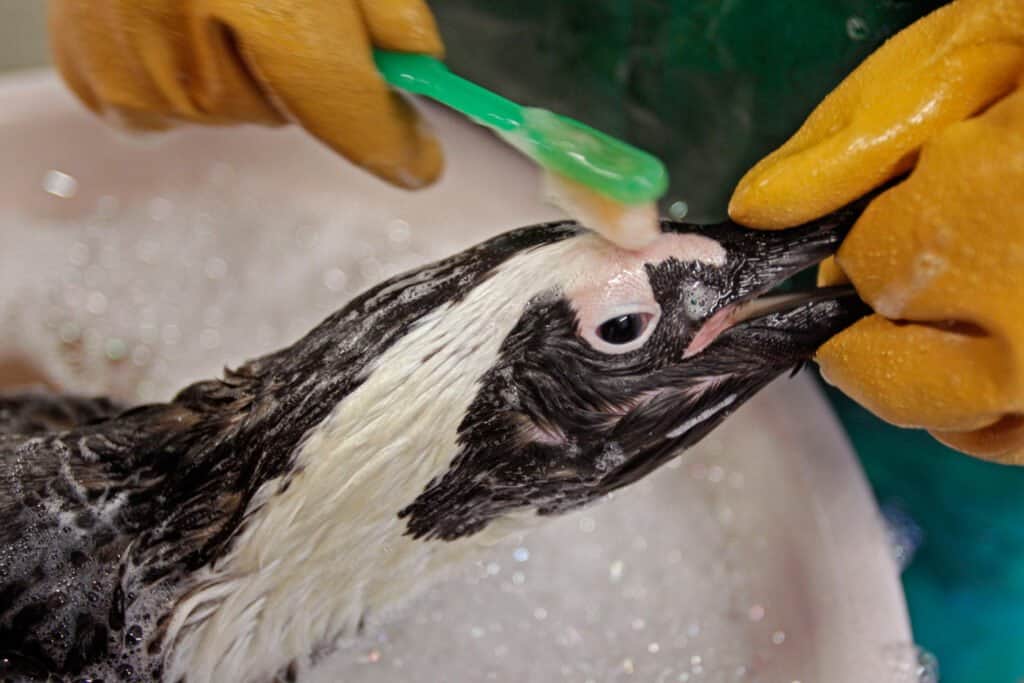
In 2011, a retired fisherman named Joao Pereira de Souza found a Magellanic penguin on a beach near Rio de Janeiro. The bird was covered in oil and very weak. Joao cleaned the penguin, fed him, and stayed with him until he recovered.
When the penguin was strong again, he returned to the ocean. A few months later, he came back. Since then, the penguin—known as Dindim—has returned every year to visit the man who helped him. Dindim is reported to swim about 8,000 kilometers each year for these visits.
The story is often shared as a rare example of trust between a wild animal and a person. It is also a reminder of a harder truth: oil in the sea can turn a normal day for a seabird into a life-or-death event. For beginners who love the ocean, Dindim’s rescue is a clear place to start learning about the oil pollution impact on wildlife.
Why an oiled penguin is in danger
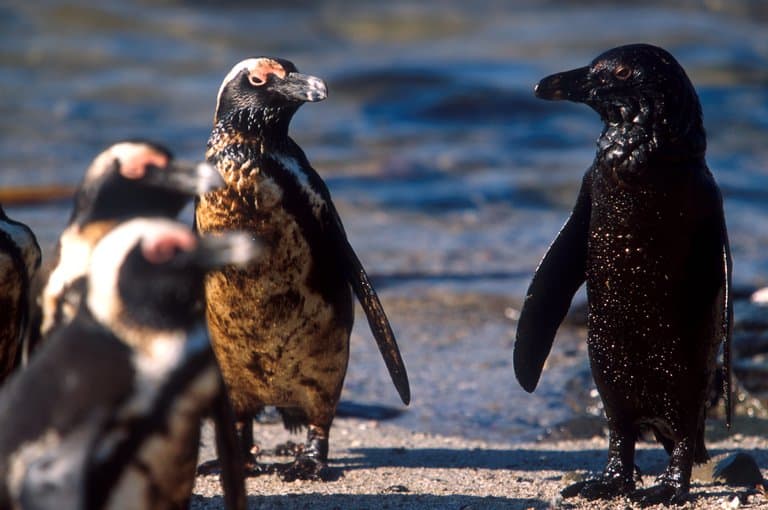
Oil does not only stain feathers. It breaks the feather structure that keeps seabirds dry and warm. When feathers lose their waterproof layer, cold water reaches the skin. The bird can lose body heat fast and may struggle to swim.
Oil is also a poison risk. Many birds try to clean themselves by preening, and they can swallow oil while doing it. That can irritate the mouth and stomach, and it can harm the body over time. A bird that is cold, stressed, and exposed to toxins is less able to find food or avoid predators.
Dindim’s rescue: what mattered most
Fast help and steady care
From the details shared about Dindim, the first key was timing. The penguin was found while he was still alive, and he received help before he became too weak to recover.
The second key was consistent care. Cleaning oil safely takes patience. Feeding and hydration also matter, because an oiled seabird is often exhausted and dehydrated. The story describes Joao feeding Dindim until he was healthy again.
A safe return to the sea
The goal of seabird oil rescue is not to keep a wild animal as a pet. It is to support recovery and return the animal to the ocean. In Dindim’s case, he left when he was strong enough, then returned by choice months later. That difference matters: a wild animal that can leave and still returns shows its own decision-making.
What Dindim’s yearly return suggests
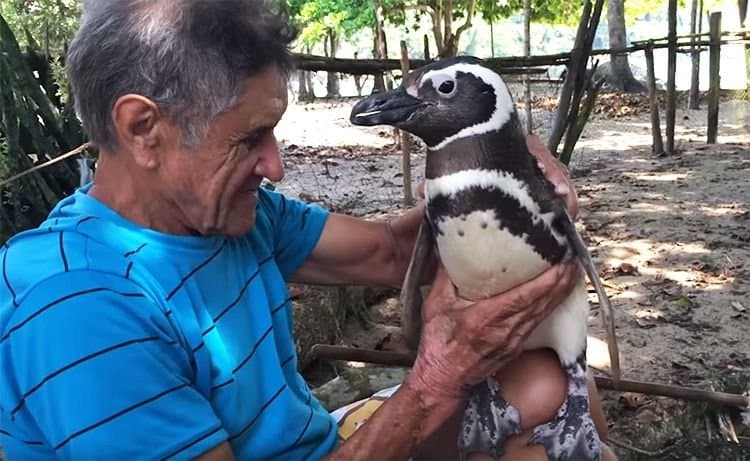
Stories like this can be read as simple friendship. It may be that. It may also include memory, routine, and recognition. The story does not need a single explanation to be meaningful. What is clear is that Dindim’s behavior is consistent over time, returning each year after his recovery.
For beginners, the lesson is not that all wildlife will behave this way. Most will not. The lesson is that individual animals can respond to careful, calm human actions. It also shows that small decisions on the shoreline—helping, calling rescue services, not walking away—can change an outcome.
Oil pollution impact on wildlife: the wider context
Oil in the ocean comes from different sources. Some events are large and obvious. Others are smaller and repeated, such as fuel leaks, illegal discharge, or accidents near ports. Even small amounts can affect coastal birds, because birds spend time at the surface where oil spreads.
The marine pollution effects are not limited to birds. Oil can coat marine mammals, harm fish eggs and larvae, and affect habitats. When shorelines are contaminated, animals that nest, rest, or feed near the coast face added stress. These impacts can also reduce local tourism and fishing, creating added pressure on coastal communities.
A beginner’s guide: what to do if you find an oiled seabird
If you ever see a bird that looks oiled or in distress, your actions can help, but only if they are safe. Here are practical steps that apply in many places, including wildlife rescue Brazil and beyond.
1) Keep a safe distance and observe
Stay calm and keep people and pets away. Watch for signs of distress, such as heavy breathing, poor balance, or inability to swim. If the bird is on the shore, it may try to escape into the water, which can make rescue harder.
2) Contact local wildlife rescue support
Call local wildlife rescue, a coastal authority, a local aquarium, or an animal rehabilitation center if one is available. Explain the location, the size of the animal, and what you see on the feathers or skin. If you are diving with an operator, notify the staff so they can contact the right services.
3) Do not wash the bird with household products
Washing with random soaps or strong chemicals can make the problem worse and can harm the animal’s skin and eyes. Cleaning should be done by trained people using the right methods and the right water temperature.
4) Protect yourself
Oil can be toxic. Avoid touching it with bare hands. If you must assist to prevent immediate harm, use gloves and keep contact brief. Do not put yourself in danger from waves, rocks, or unstable ground.
5) Support the scene
If rescue teams are on the way, you can help by keeping the area quiet and limiting stress on the animal. If you can do so safely, note the time and any visible sheen on the water. Do not share the exact location online in a way that draws crowds before help arrives.
Magellanic penguin threats and responsible attention
Dindim is described as a Magellanic penguin from South America. Like many seabirds, penguins face a mix of risks. Oil exposure is one. Weather, food availability, and human activity near the coast can also add pressure.
There is also a risk in how we share wildlife stories. A popular story can lead people to seek close contact with animals. Responsible travel and responsible diving place a higher value on wildlife welfare. If you visit a place connected to a wildlife story, follow local guidance, keep distance, and avoid feeding or handling wild animals.
Prevention, not only rescue
Rescue stories are powerful, but they are not the full solution. In many coastal communities and marine groups focus on prevention. That includes better reporting of spills, stronger harbor practices, and cleaner operations for boats and industry.
As divers and ocean users, we can support this shift. Choose operators that maintain their boats well and manage fuel carefully. Use established disposal points for waste. Report visible pollution to local authorities. If you take part in cleanups, follow safety guidance, because some debris and residues can be hazardous.
FAQ
What is an oiled penguin, and why is it dangerous?
An oiled penguin is a penguin with oil on its feathers. Oil can reduce waterproofing, cause cold stress, and lead to poisoning if the bird swallows oil while cleaning itself.
What should I do if I find an oiled seabird on the beach?
Keep a safe distance, keep pets away, and contact local wildlife rescue or coastal authorities. Avoid washing the bird with household products.
Why does oil pollution impact on wildlife so strongly?
Oil can damage feathers and fur, harm animals through toxins, and contaminate feeding and resting areas. These marine pollution effects can spread through coastal ecosystems.
Is it safe to try seabird oil rescue by myself?
It can be risky for you and the animal. It is best to contact trained responders. If you must help to prevent immediate harm, protect yourself and keep handling minimal.
What is one simple way ocean users can help reduce pollution risk?
Support operators with good environmental practices, report pollution when you see it, and follow local rules for waste and fuel safety.
Conclusion
Dindim’s story begins with a crisis: a penguin on a beach, covered in oil and near collapse. It continues with steady care and a safe return to the sea. His reported 8,000-kilometer yearly journey back to Joao makes the story memorable, but the wider point is practical. Oil pollution can harm wildlife quickly, and recovery often depends on fast, responsible action.
For beginners, the best next step is simple: learn what to do when you see a distressed animal, and support prevention in your own ocean habits. Rescue can save one life. Prevention protects many.
Diventures Team is a multidisciplinary team of scuba professionals, editors, and digital creators, producing accurate and experience-driven coverage of diving, marine life, and ocean culture.