
Shark & Yolanda Reef
Unverified
Explore Shark & Yolanda Reef in Ras Mohammed, Egypt, famous for spectacular coral gardens, strong drift diving, huge fish schools and the unusual cargo of the Yolanda wreck.
Overview
Yolanda Reef is one of the signature dive sites of Ras Mohammed National Park, at the southern tip of Egypt's Sinai Peninsula. Together with neighbouring Shark Reef, it forms the internationally known Shark & Yolanda Reef drift dive.
Yolanda Reef itself has a plateau around 12–20 metres, while the adjacent walls descend dramatically into several hundred metres of water.
While Shark Reef is characterised by a dramatic vertical wall, Yolanda offers a wider coral plateau lying mainly between approximately 12 and 20 metres. The plateau is covered with small coral pinnacles, colourful soft corals and dense reef life before dropping sharply toward deep open water.
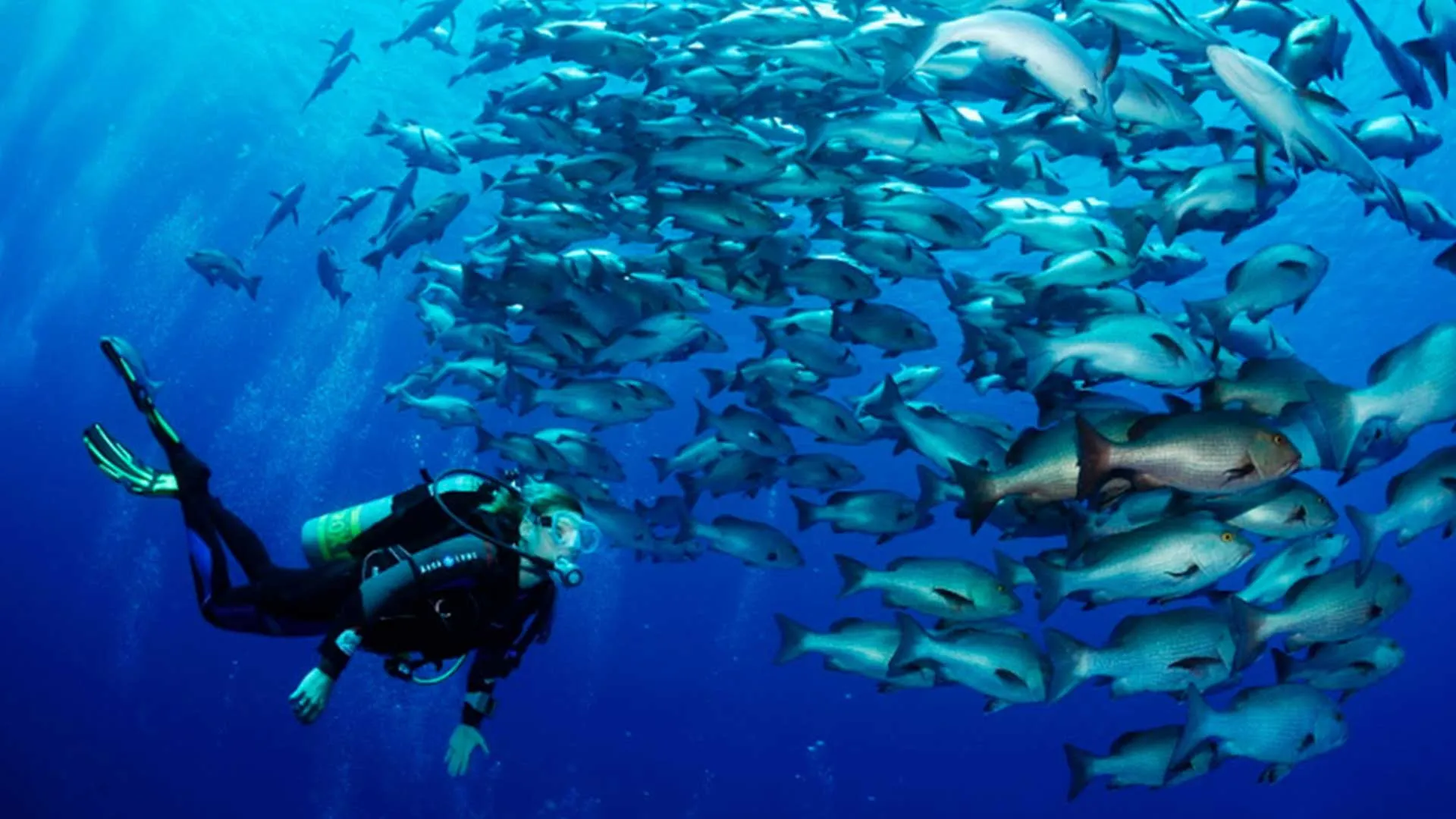
Strong currents moving around Ras Mohammed bring nutrients to the reef and support large concentrations of marine life. During the summer months, huge schools of snapper, barracuda and batfish may gather around the walls, while tuna, jacks and other pelagic fish patrol the blue.
What makes Yolanda Reef immediately recognisable, however, is its unusual wreck cargo.
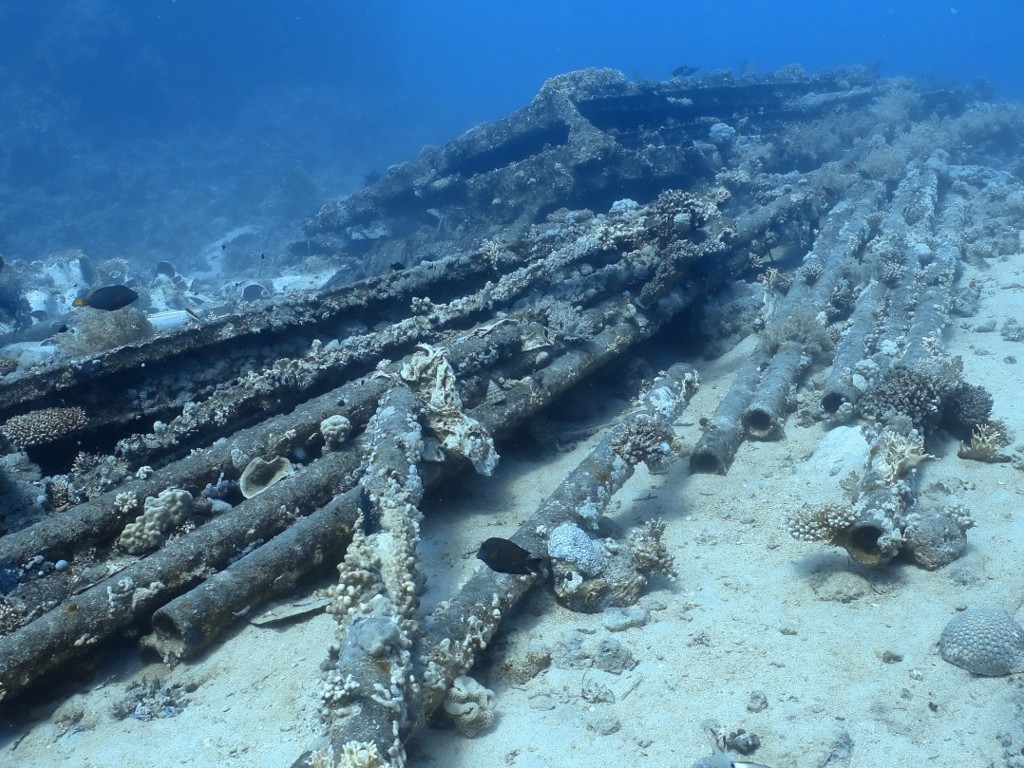
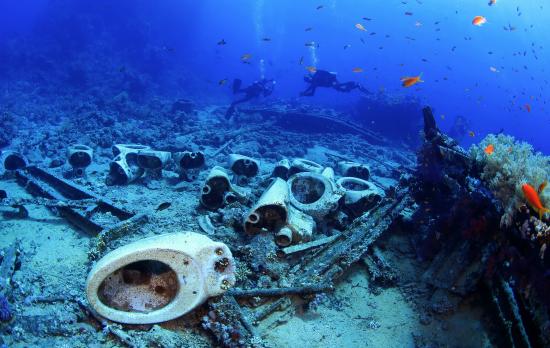
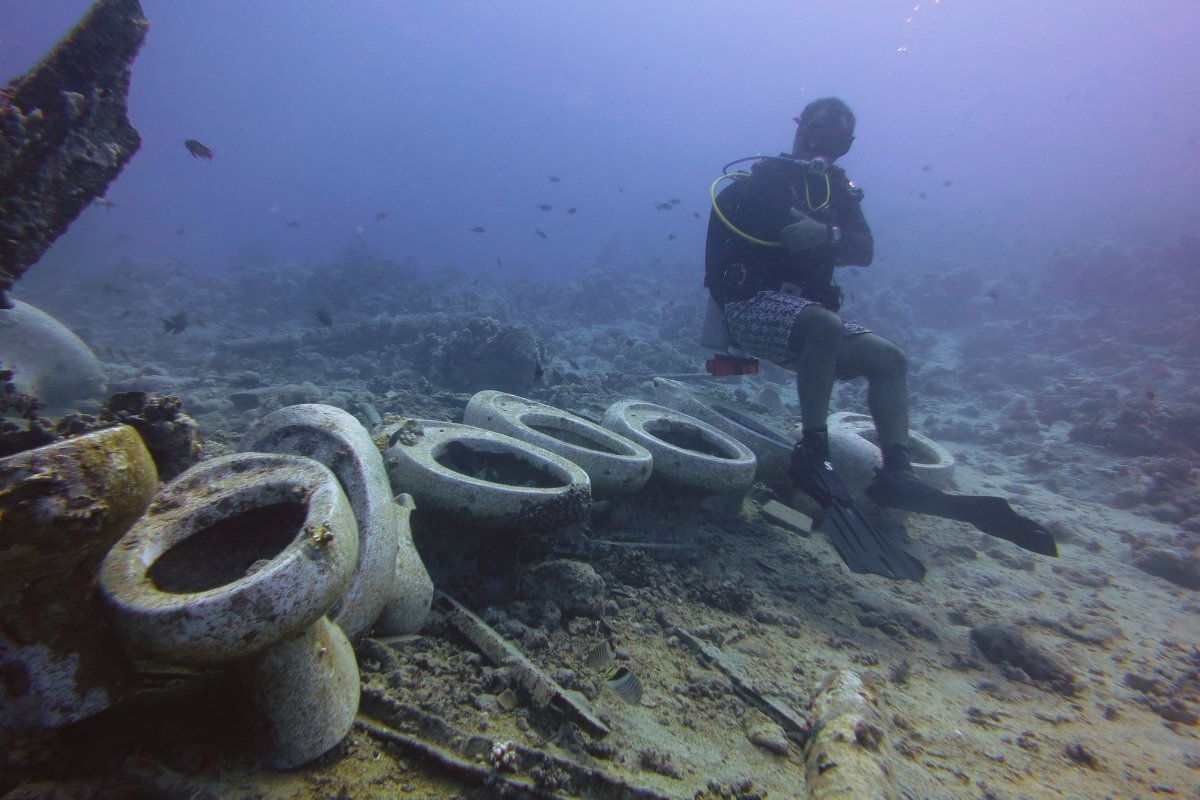
In 1980, the cargo vessel Jolanda—usually called Yolanda by divers—ran aground on the reef while carrying bathroom fixtures. The main vessel later slipped into deep water, but toilets, bathtubs, pipes and other cargo remain scattered across the shallow plateau. Over the decades, these objects have become part of the underwater landscape, surrounded by coral growth and marine life.
The combination of dramatic walls, strong drift diving, spectacular coral, schooling fish and one of the Red Sea's most unusual wreck sites makes Yolanda Reef one of the most distinctive dives in Egypt.
Diving is possible year-round, but June through August is particularly impressive because large schools of snapper, barracuda, batfish and other fish gather around the reef.
Visibility around Ras Mohammed is often excellent, commonly around 20–30 metres and reaching approximately 40 metres in favourable conditions.
Most dives are conducted as one-way drifts, commonly beginning near Shark Reef and finishing around Yolanda Reef and its wreck cargo.
Main Attractions
Yolanda Reef is particularly unusual because the wreck itself is now deep beyond recreational limits, while much of its cargo remains scattered in shallow water and has become incorporated into the reef ecosystem.
Famous cargo remains from the Yolanda wreck
Toilets, bathtubs, sinks and pipes scattered across the reef
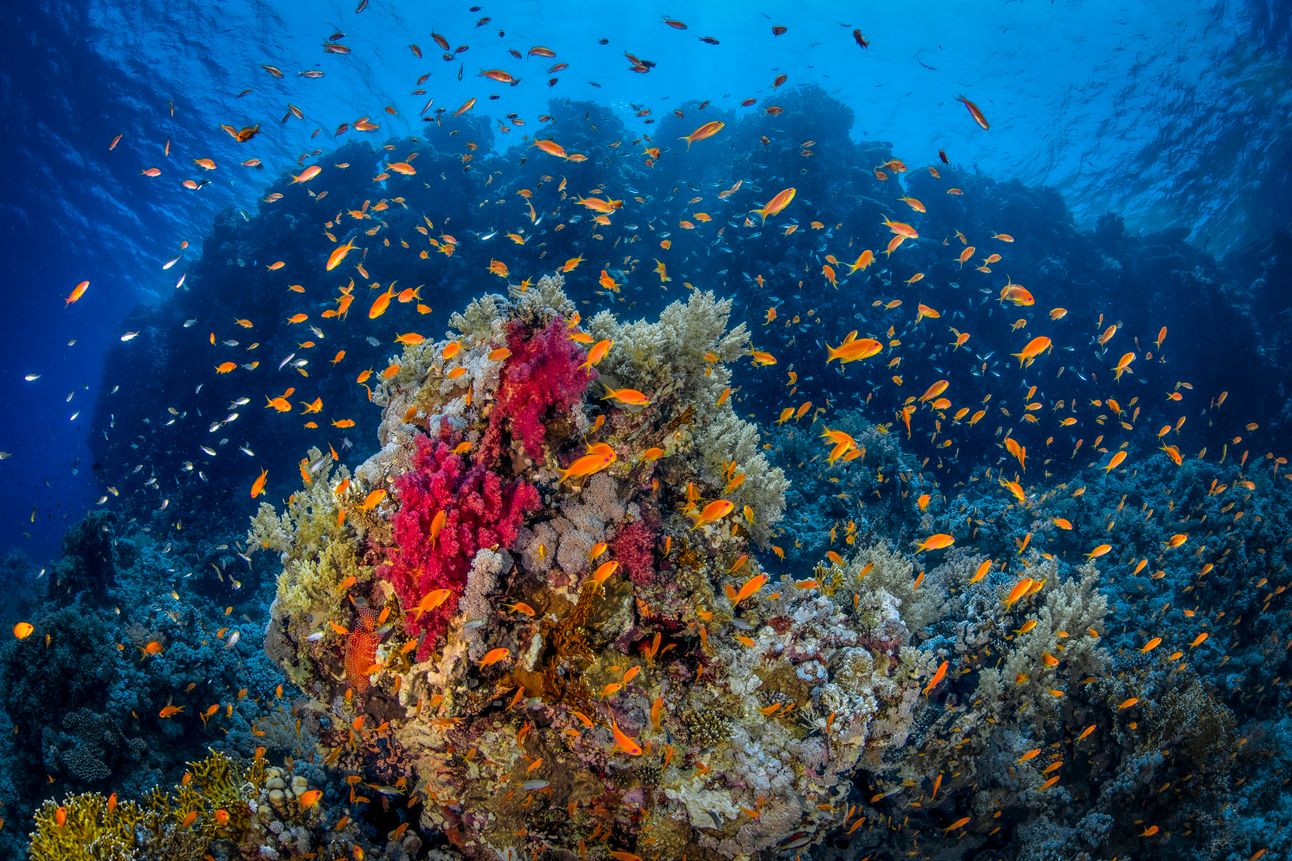
Rich coral garden on the Yolanda plateau
Dramatic wall and drop-off
Large coral pinnacles
Strong drift diving
Huge summer schools of snapper and barracuda
Napoleon wrasse
Giant moray eels
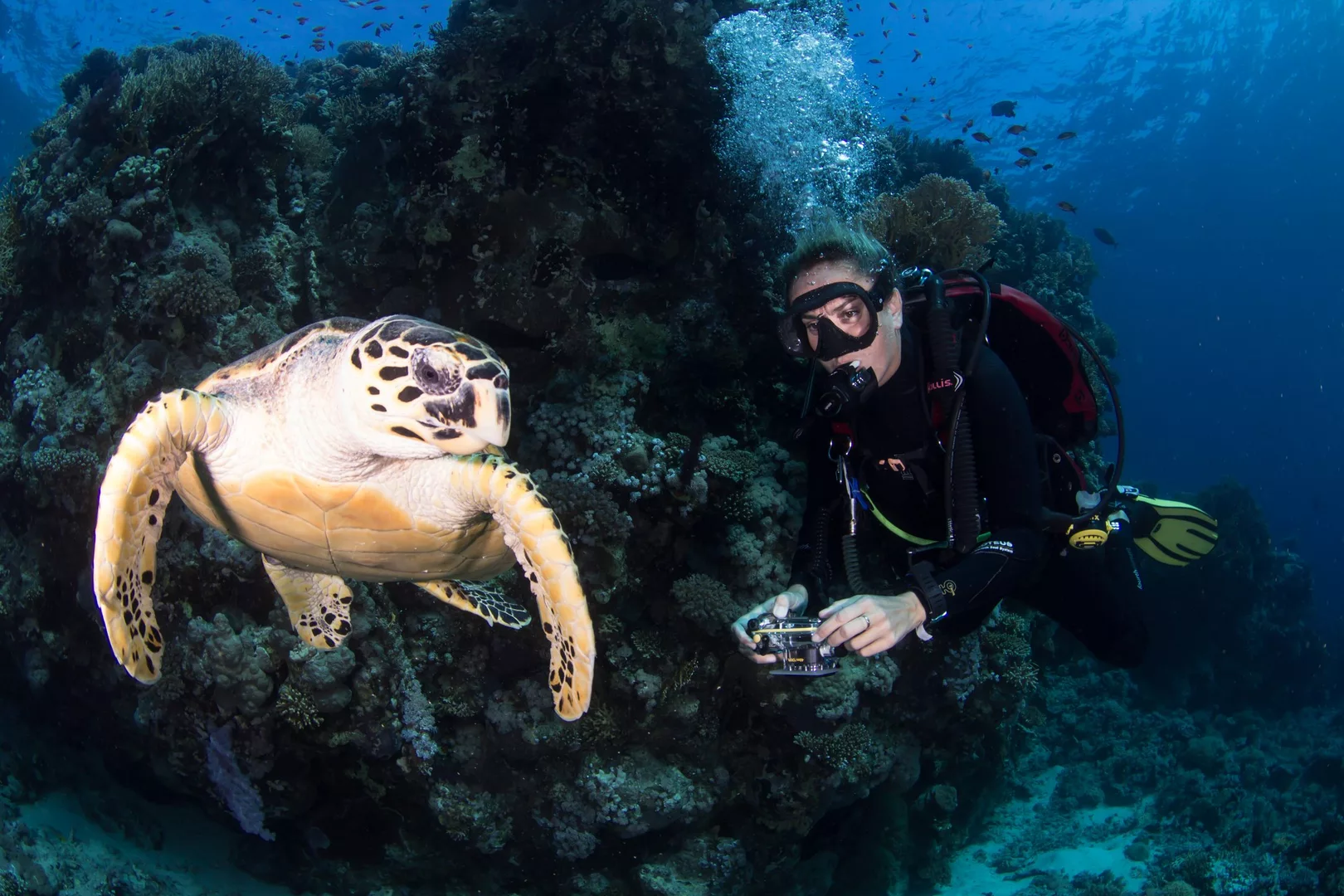
Turtles
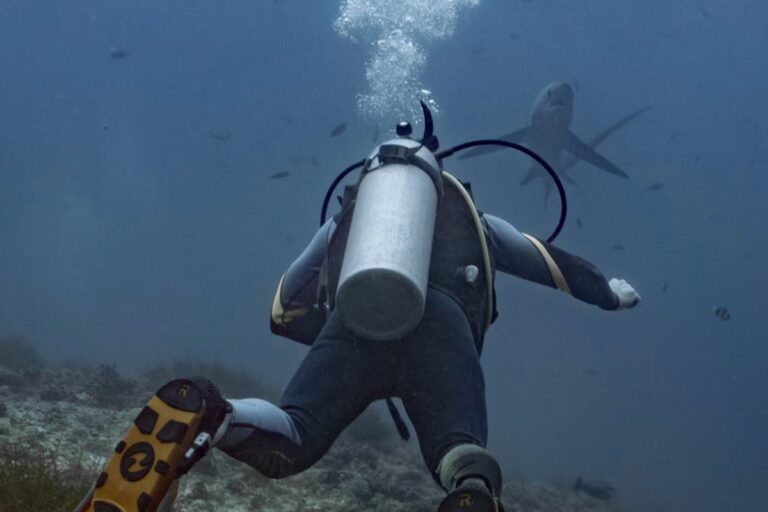
Possible grey reef and other shark encounters
Blue-spotted stingrays and crocodilefish
Marine Life
Large schools of snapper, barracuda, batfish, jackfish and tuna may gather around the reef, especially during summer.
Other common or possible sightings include Napoleon wrasse, giant moray eels, turtles, blue-spotted stingrays, scorpionfish, stonefish, crocodilefish, groupers, unicornfish and numerous smaller reef species.
Grey reef sharks and other pelagic species may pass through the surrounding blue water, but shark sightings should always be presented as possible encounters rather than guaranteed sightings.
Coral & Habitat
Yolanda Reef forms part of the spectacular reef system at the southern end of Ras Mohammed National Park.
Unlike neighbouring Shark Reef, which is dominated by a nearly vertical wall, Yolanda Reef includes a broader plateau approximately 12–20 metres deep. Small coral pinnacles rise from the plateau and are covered with colourful soft corals and surrounded by dense reef life.
The plateau gradually approaches the deep outer edge, where the seabed drops sharply into the open Red Sea.
Strong currents transport plankton and nutrients past the southern tip of Ras Mohammed, supporting exceptional hard and soft coral growth and attracting large schools of reef and pelagic fish.
Wreck Information
Yolanda Reef takes its name from the cargo vessel Jolanda, commonly written as Yolanda, which ran aground at Ras Mohammed on 1 April 1980.
The ship was carrying commercial cargo that included bathroom fittings such as:
Toilets
Bathtubs
Washbasins
Pipes
For several years, the wreck remained accessible on the reef. A major storm later pushed the vessel off the edge into deep water. Technical divers rediscovered the main wreck in 2005 at approximately 145–160 metres.
The famous bathroom fittings and other cargo, however, remain scattered across the shallow plateau. They have become covered with marine growth and provide shelter for moray eels, scorpionfish, stonefish and other species.
The deep main wreck should not be presented as part of the normal recreational Yolanda Reef dive.
Suggested Route
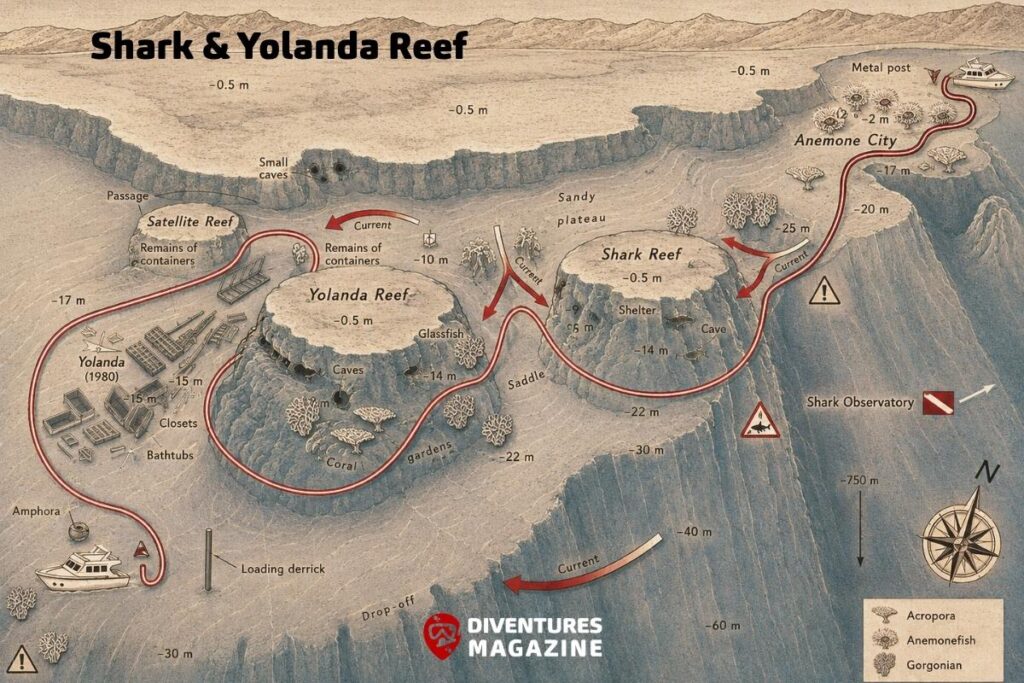
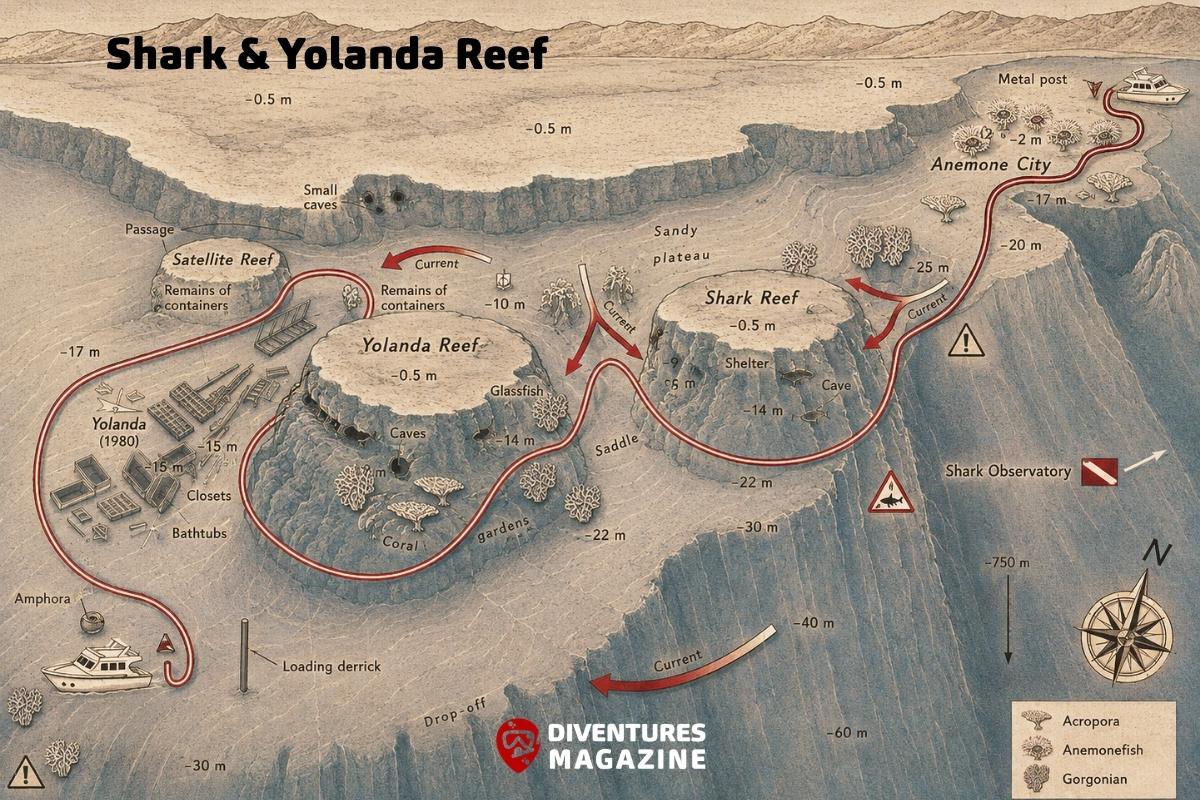
Shark Reef to Yolanda Reef
The classic dive normally begins with a quick entry near Shark Reef.
Descend immediately and follow the steep coral wall while the current carries the group south toward the saddle connecting Shark Reef and Yolanda Reef. Large schools of snapper, barracuda, batfish and jackfish may gather along this section.
Cross the saddle toward Yolanda Reef and gradually move onto the broader plateau.
Explore the coral pinnacles between approximately 12 and 20 metres before continuing toward the scattered cargo of the Yolanda wreck.
Look among the toilets, pipes and other remains for blue-spotted stingrays, giant moray eels, scorpionfish, stonefish and Napoleon wrasse.
Continue into shallower water as the dive progresses and complete a drifting safety stop before being collected by the boat.
The entry point and exact direction must always be chosen according to the actual current.
Photography Notes
Yolanda Reef works extremely well for both wide-angle and close-focus wide-angle photography.
The scattered toilets, bathtubs and pipes provide unusual compositions when photographed together with coral growth and reef fish. The challenge is to make the cargo appear as part of the underwater landscape rather than simply documenting individual objects.
The coral pinnacles and soft-coral-covered plateau are excellent for photographing divers against the blue.
During summer, large schools of snapper, barracuda and batfish provide some of the site's strongest wide-angle opportunities.
Blue-spotted stingrays, moray eels, crocodilefish and scorpionfish around the wreck cargo also provide good smaller subjects.
Because currents can be strong, photographers should prepare settings in advance and avoid remaining behind while the rest of the group continues with the drift.
History
The unusual name Yolanda Reef comes from the cargo ship Jolanda/Yolanda, which ran aground here in 1980. The vessel itself eventually disappeared into deep water, but its scattered cargo remains one of the most recognisable underwater landmarks in the Red Sea.
The reef lies within Ras Mohammed National Park, at the extreme southern end of the Sinai Peninsula. Egypt's environmental authority identifies Yolanda Reef directly offshore from the southern tip of the peninsula.
Best Season
Year-round diving
Site Diagram