
Roca Partida
Unverified
Explore Roca Partida in Mexico’s Revillagigedo Archipelago, a remote liveaboard dive site known for sharks, giant mantas, tuna and dramatic volcanic walls.
Overview
Roca Partida is a remote volcanic islet in Mexico’s Revillagigedo Archipelago, commonly known among divers as the Socorro Islands. Accessible only by liveaboard, it rises almost vertically from deep Pacific water and is recognised as one of the region’s most exciting big-animal dive sites.
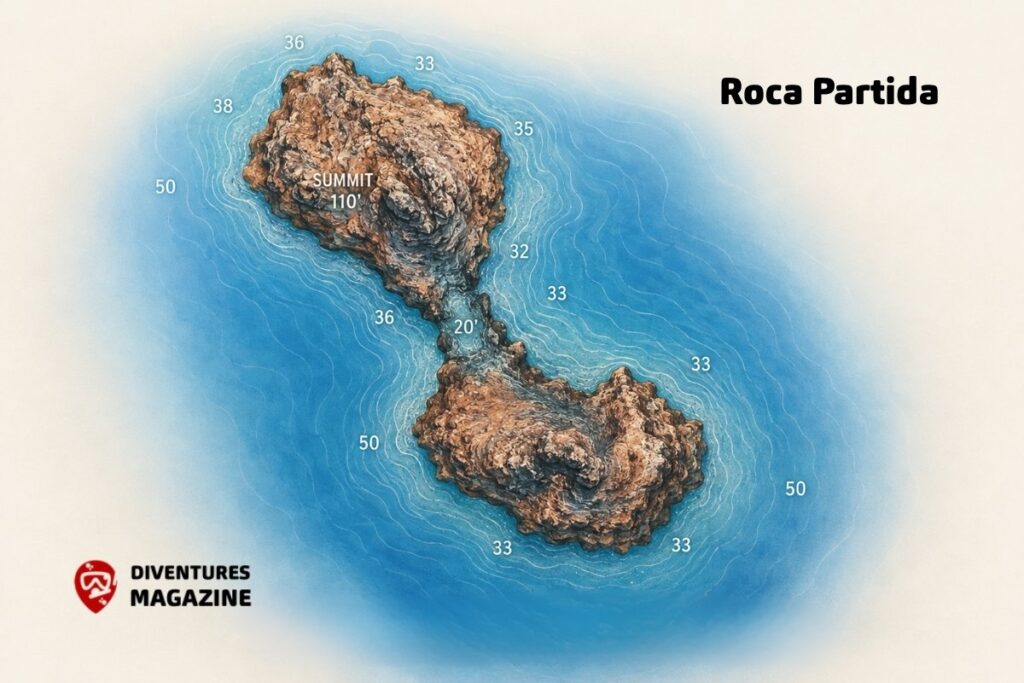
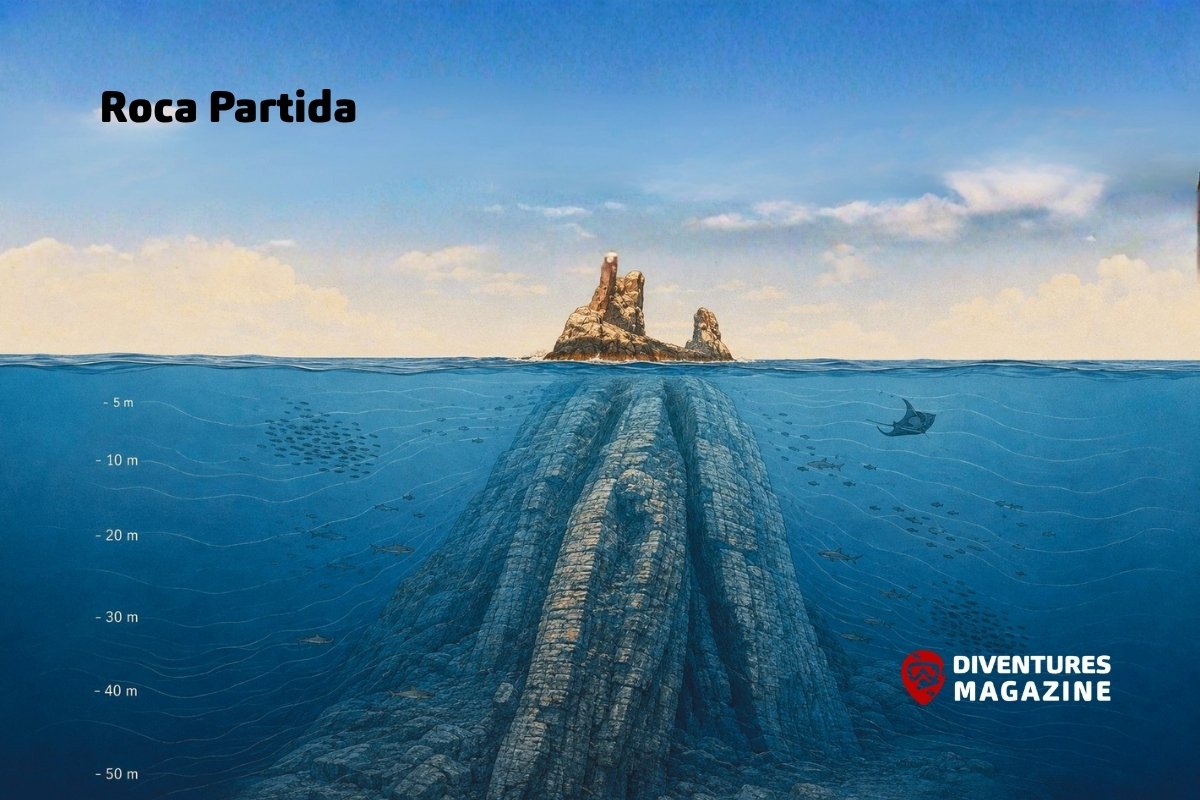
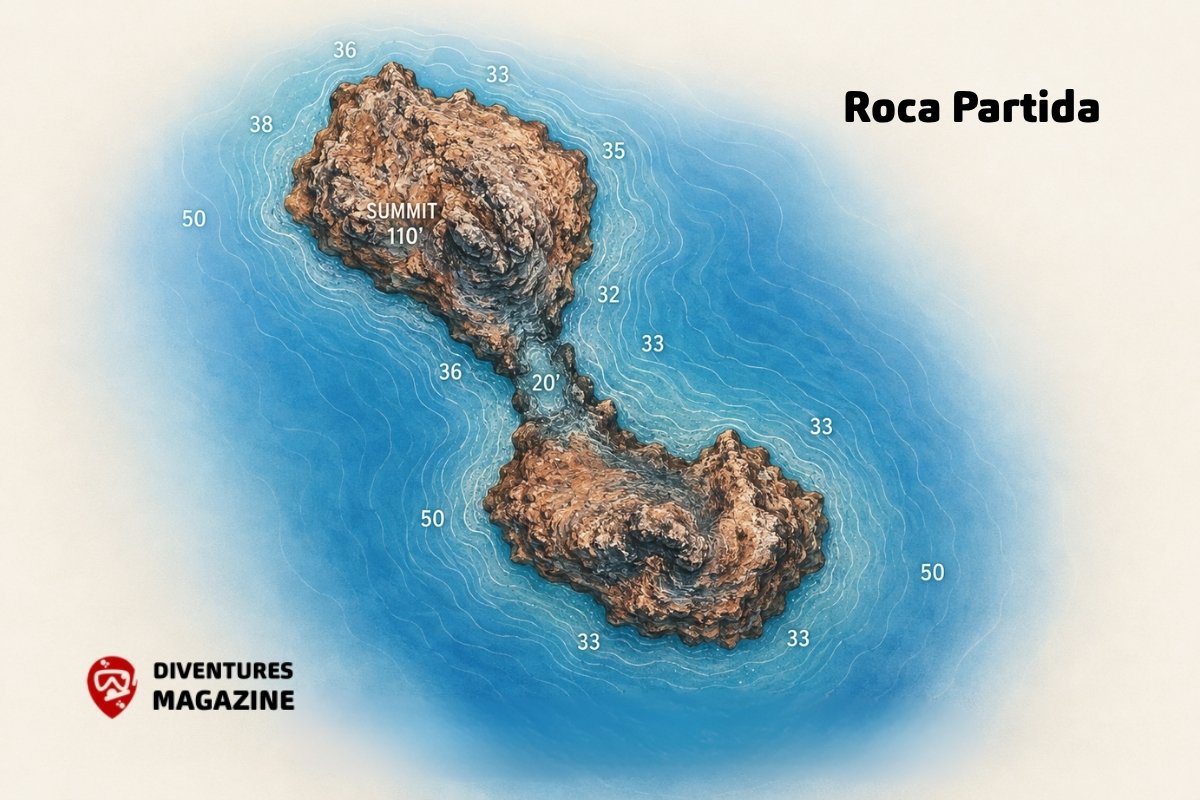
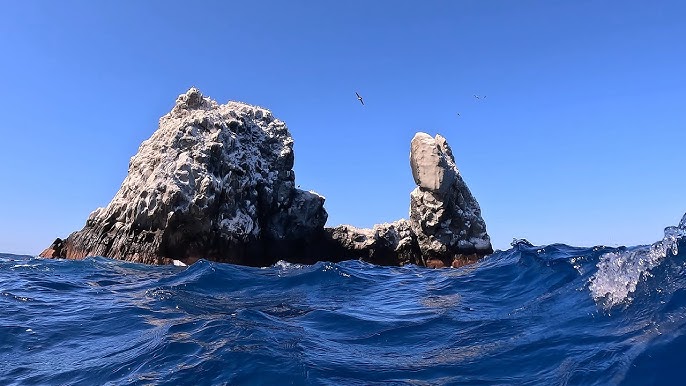
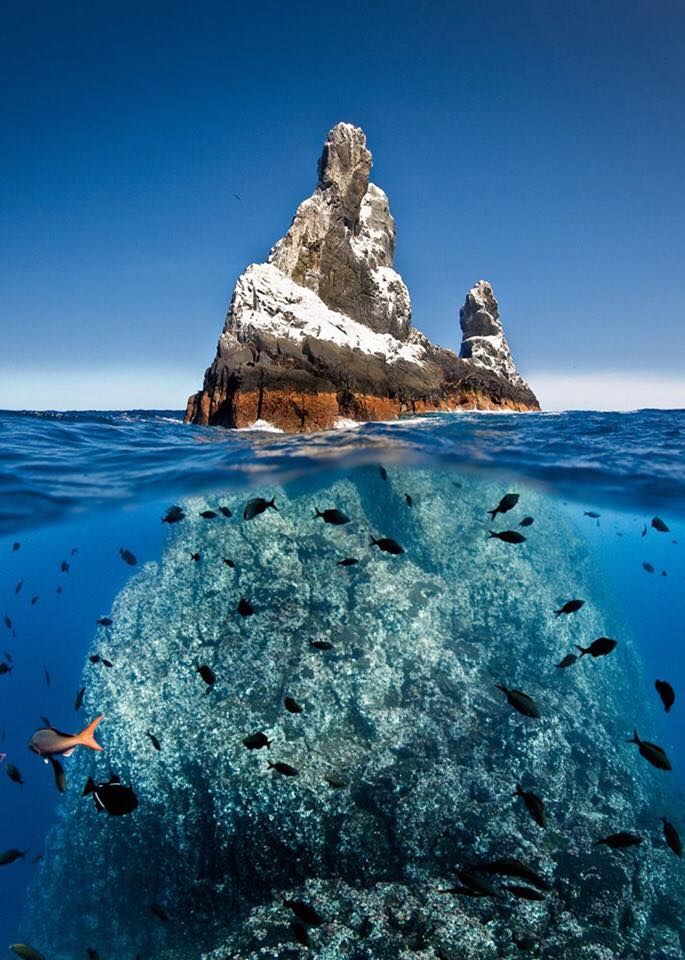
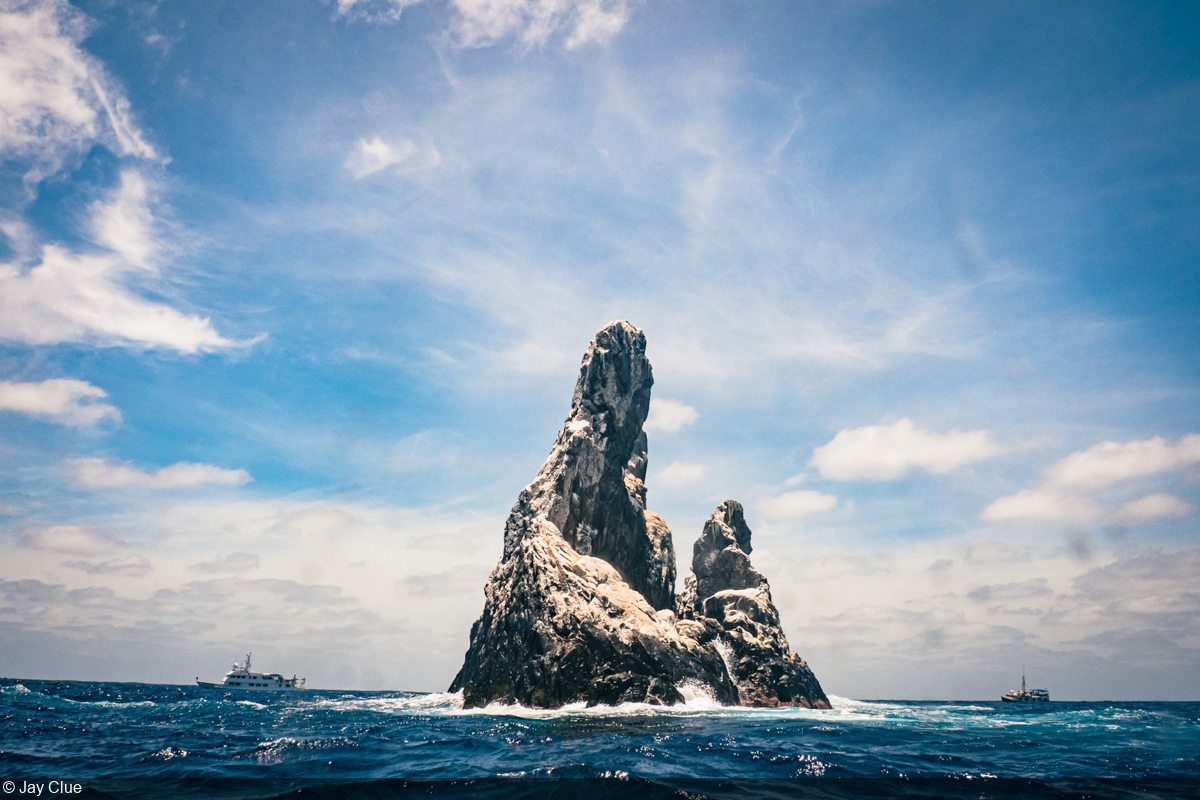
Above water, Roca Partida consists of two narrow rocky peaks. Beneath the surface, steep walls descend into the depths, broken by cracks and small ledges where large groups of whitetip reef sharks frequently rest.
The open water surrounding the rock may attract silky sharks, Galápagos sharks, silvertip sharks, schooling hammerheads, giant oceanic mantas, tuna, wahoo and dense schools of jacks. Whale sharks, dolphins and humpback whales are possible seasonal encounters.
Most dives take place between approximately 18 and 30 metres. Divers follow the wall, inspect the shark ledges and watch the blue water around the rock’s current-swept corners.
Roca Partida is highly exposed, with no sheltered harbour or protected anchorage. Strong currents, swell and surface movement can make entries and exits demanding, and dives commonly end with a blue-water safety stop and RIB pickup.
The site is best suited to experienced advanced divers who are comfortable with current, surge, open-ocean diving and delayed surface marker buoy deployment.
Main Attractions
Wildlife sightings depend on season, current and ocean conditions and should never be presented as guaranteed.
Whitetip reef sharks resting together on wall ledges
Silky, Galápagos and silvertip sharks
Possible schooling scalloped hammerheads
Giant oceanic manta rays
Large yellowfin tuna, wahoo and jacks
Seasonal whale sharks
Seasonal humpback whales
Two distinctive rock peaks above the surface
Near-vertical volcanic walls
Open-ocean drift diving
Large schools of pelagic fish
Marine Life
Whitetip reef sharks, silky sharks, Galápagos sharks, silvertip sharks, scalloped hammerheads, giant oceanic manta rays, yellowfin tuna, wahoo, bonito, jacks and large schools of reef and pelagic fish.
Whale sharks, dolphins and humpback whales are also possible seasonal visitors.
Coral & Habitat
Roca Partida is not a traditional tropical coral reef. It is the exposed summit of a submerged stratovolcano and appears to be the remains of a volcanic neck rising almost vertically from deep Pacific water.
The formation consists of steep volcanic walls, narrow shelves, cracks and rocky ledges. Whitetip reef sharks frequently rest together on these ledges, while schooling fish gather around the corners where currents deliver nutrients.
The walls descend rapidly, and the surrounding seabed lies hundreds of metres below the normal recreational diving zone.
Suggested Route
Sheltered-wall and shark-ledges route
Enter from the RIB on the side selected by the guide according to the current and swell.
Descend close to the wall to approximately 18–25 metres. Follow the volcanic face while inspecting cracks and shelves for groups of resting whitetip reef sharks.
Continue toward one of the exposed corners, watching the open water for silky sharks, Galápagos sharks, hammerheads, mantas, tuna and schools of jacks.
Remain within the planned depth and avoid following animals far from the rock. Toward the end of the dive, move slightly away from the wall to reduce the effect of surface surge.
Deploy a delayed surface marker buoy and complete a drifting safety stop before collection by the RIB.
Blue-water drift
When the current prevents a close circuit of the rock, the group may enter up-current and drift toward Roca Partida.
Descend quickly as a group, approach the wall and spend the central part of the dive observing the shark ledges and pelagic activity.
Allow the current to carry the group away from the rock at the end of the dive, then ascend together beneath a delayed surface marker buoy.
The precise entry point and route must always be chosen by the liveaboard guide after evaluating the actual conditions.
Photography Notes
Roca Partida is primarily a wide-angle photography destination.
The strongest subjects include giant mantas, sharks, tuna, schooling jacks and the full volcanic wall disappearing into the blue. A fisheye or wide-angle rectilinear lens is generally more suitable than a macro setup.
The famous groups of whitetip reef sharks can be photographed resting on narrow ledges. Photographers should approach slowly from below or from the side and avoid disturbing the animals.
The corners of the rock often concentrate schooling fish and pelagic activity, but they may also experience the strongest currents. Camera settings should therefore be prepared before reaching these sections.
Photographers should carry a delayed surface marker buoy and avoid becoming separated from the group while following marine life into open water.
History
The Spanish name Roca Partida means “Split Rock,” referring to the formation’s two prominent peaks.
The islet rises to approximately 35 metres above sea level and is the exposed remnant of a much larger underwater volcano. Mexico’s protected-area records describe it as an inhospitable volcanic islet roughly 246 metres long and 73 metres wide.
Roca Partida forms part of Revillagigedo National Park and was included when the archipelago was inscribed on the UNESCO World Heritage List in 2016.
Best Season
January, March, April, May, November, December
Underwater Map
Surface Map