
The Brothers Islands
Unverified
Explore the Brothers Islands in Egypt, a remote liveaboard destination known for shark encounters, coral walls and the historic Numidia and Aida wrecks.
Overview
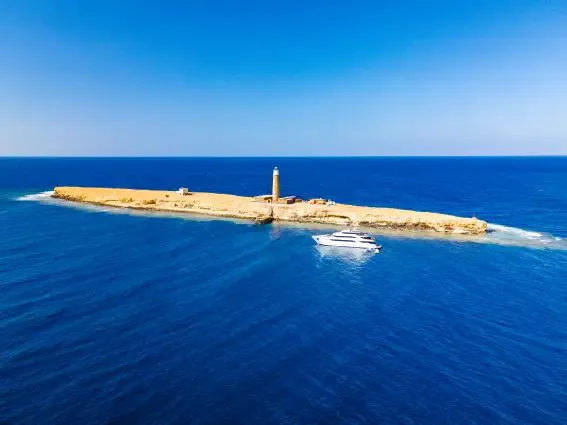
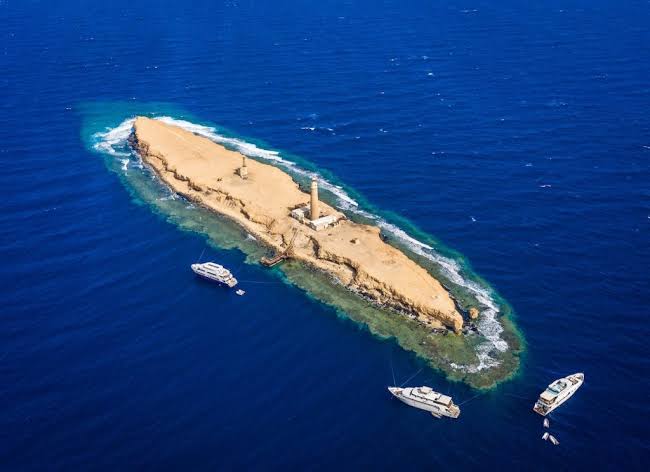
The Brothers Islands, known locally as El Akhawein, are two isolated offshore islands situated approximately 60 kilometres from the Egyptian coast near El Quseir. Accessible only by liveaboard, they combine steep walls, strong currents, historic wrecks and possible encounters with some of the Red Sea’s most sought-after pelagic species.
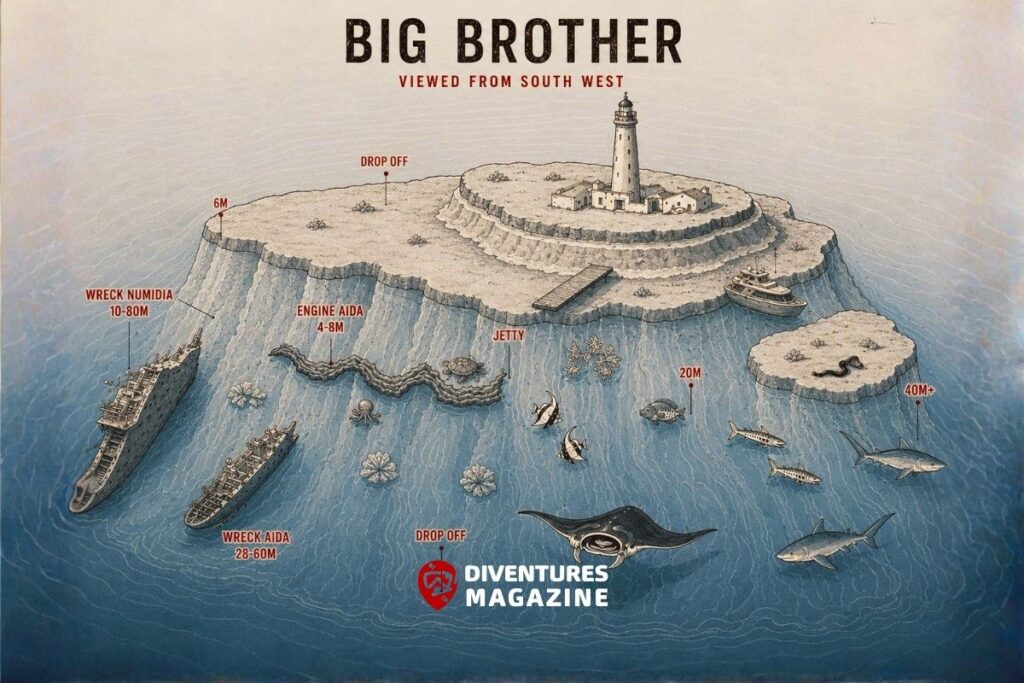
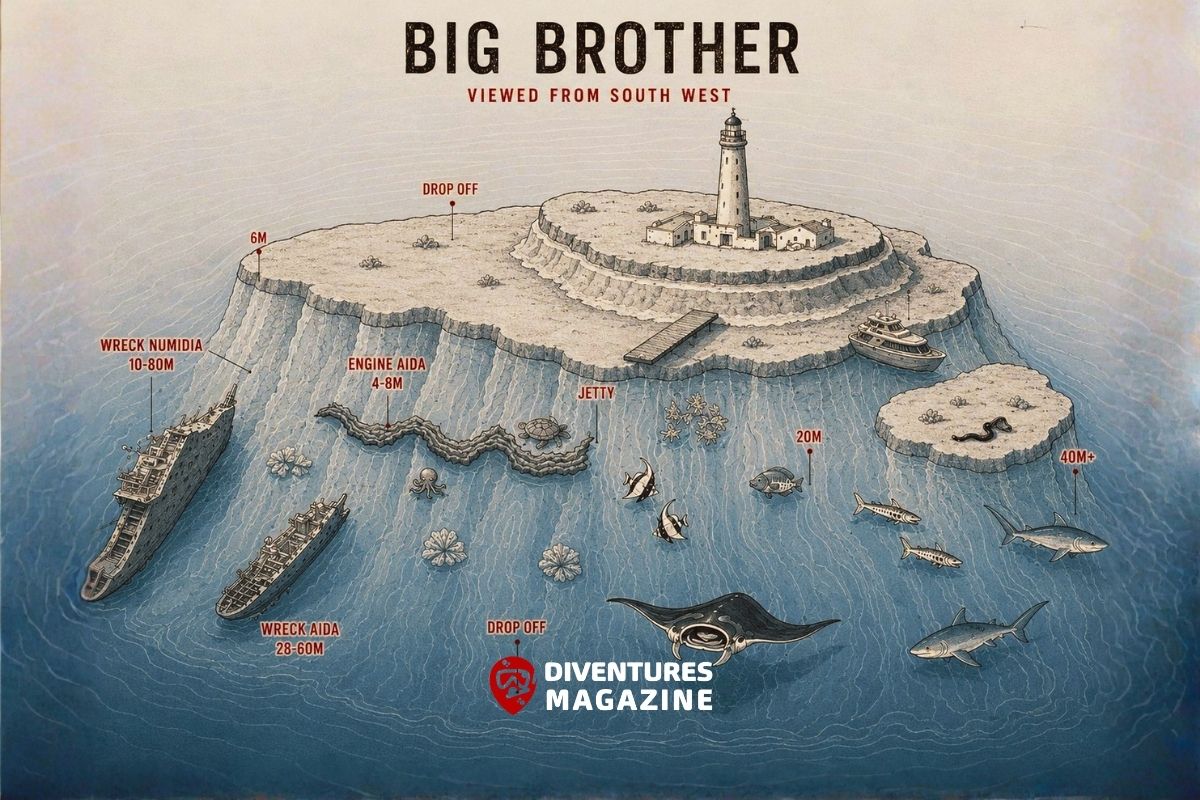
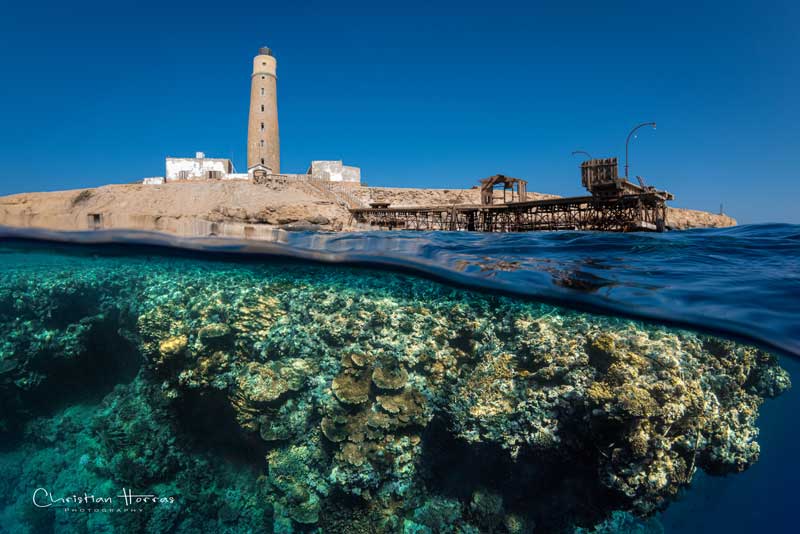
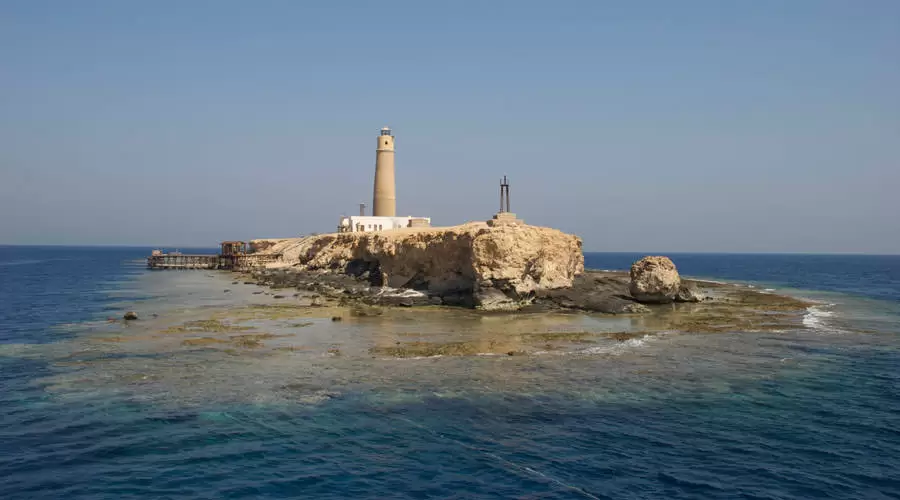
Big Brother is the larger island and is distinguished by its operational nineteenth-century lighthouse. Its northern wall contains the SS Numidia, which begins in shallow water before descending dramatically into the depths. Farther along the western side lies the Aida, an Egyptian supply vessel lost in 1957.
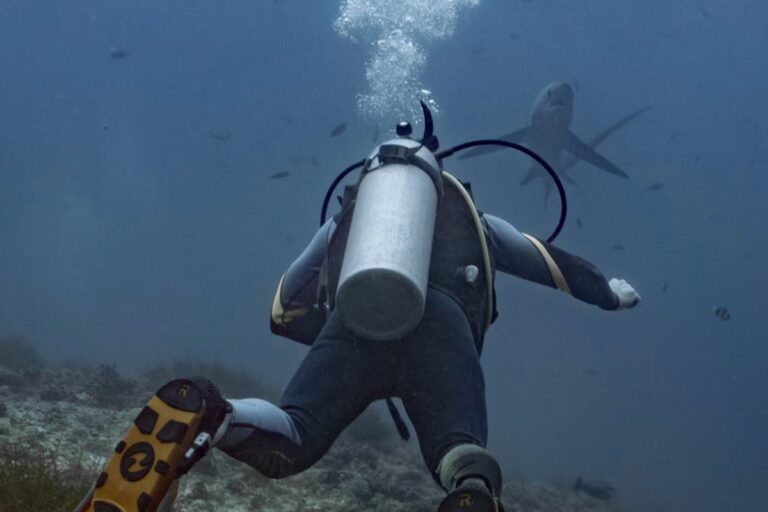
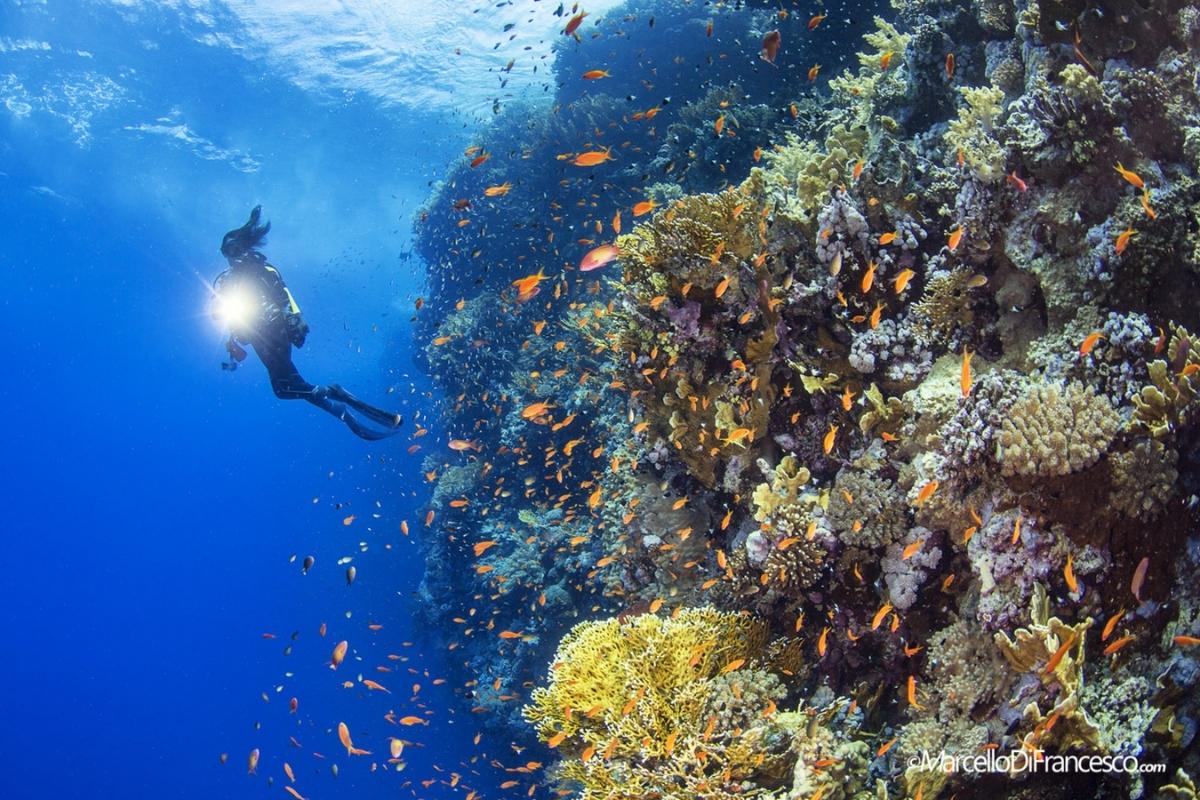
The southern end of Big Brother includes a small plateau and ridge where oceanic whitetips, threshers, grey reef sharks and other large fish may appear. Its eastern and western walls are densely covered with hard and soft corals, sea fans and large schools of reef fish.
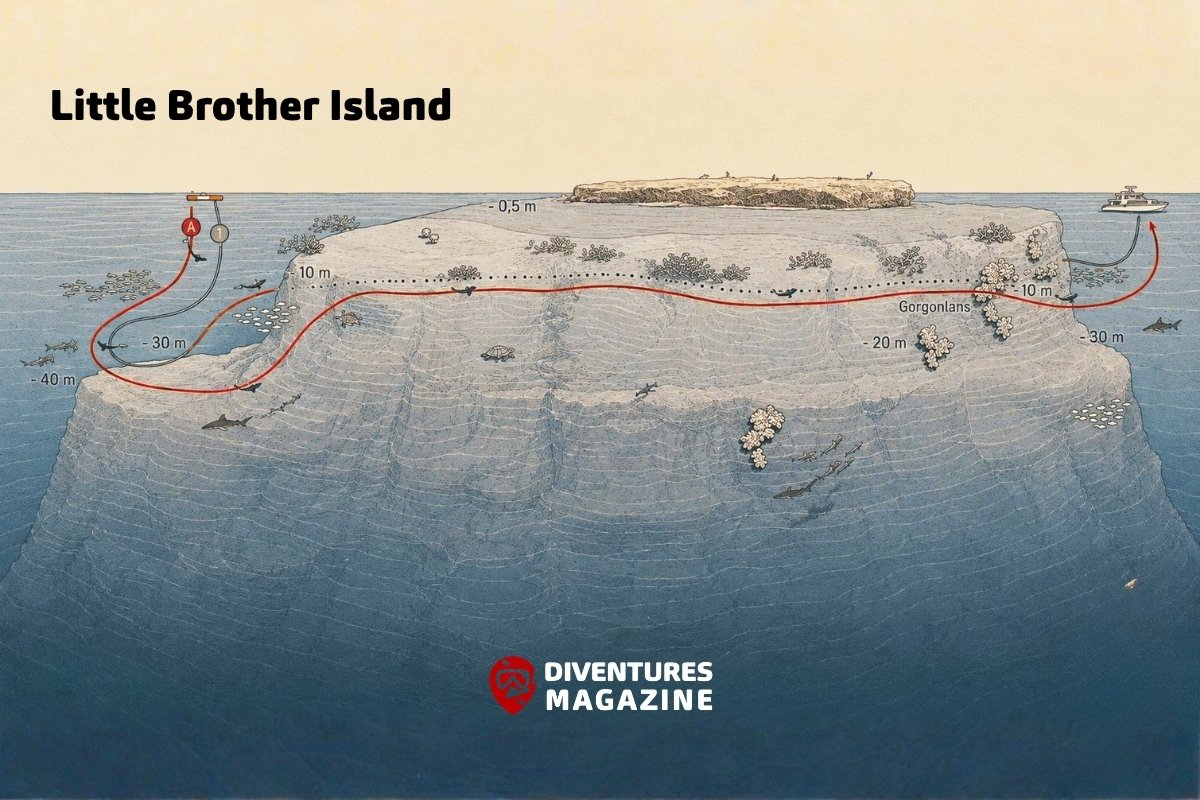
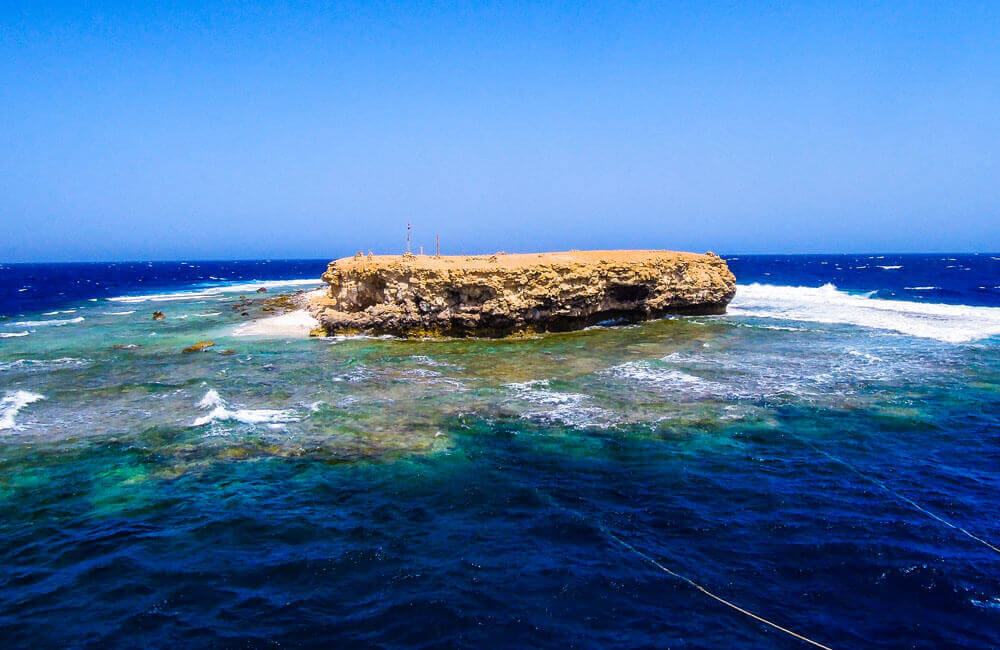
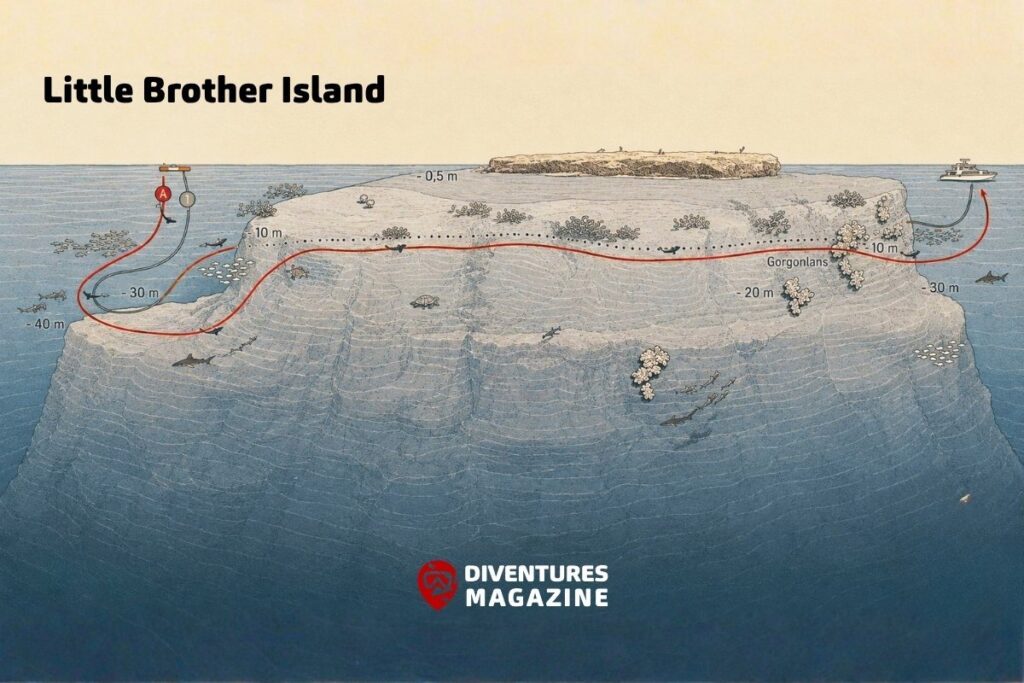
Little Brother lies southeast of Big Brother and is smaller, steeper and more exposed. Its narrow fringing reef drops rapidly into water more than 700 metres deep. A northern plateau and current-swept southern tip provide opportunities for possible hammerhead, grey reef and silky shark encounters.
Conditions at both islands can be demanding. Strong and changing currents, rough surface conditions, deep walls and the risk of being carried into open water make the Brothers suitable only for experienced divers.
Entry points and routes must always be selected by a knowledgeable local guide after assessing the current, wind, waves and RIB-pickup plan.
Main Attractions
Big Brother combines historic wrecks, walls and a southern pelagic plateau, while Little Brother is smaller, steeper and particularly valued for its coral-covered walls and possible shark encounters.
Two isolated offshore islands rising from deep water
Outstanding wall and drift diving
The Numidia wreck on Big Brother
The Aida wreck on Big Brother
Historic lighthouse completed in 1883
Coral-covered eastern and western walls
Large sea fans and soft-coral formations
Southern shark plateau at Big Brother
Northern plateau at Little Brother
Possible oceanic whitetip, thresher and hammerhead sightings
Schools of barracuda, jacks, tuna and snapper
Liveaboard-only marine park experience
Marine Life
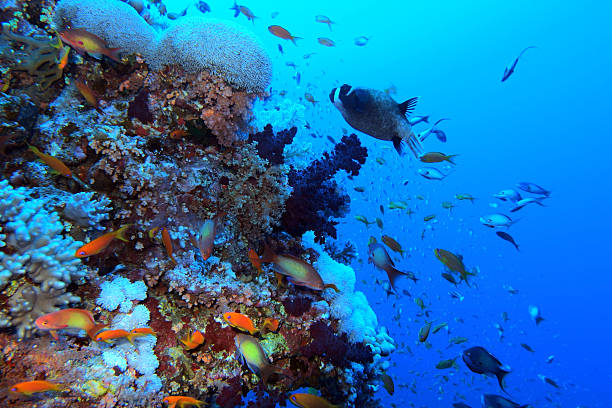
Oceanic whitetip sharks, grey reef sharks, scalloped hammerheads, thresher sharks, silky sharks, tuna, barracuda, giant trevally, jacks, snappers, surgeonfish, anthias, Napoleon wrasse and moray eels.
Manta rays and other large pelagic species may also pass through the area. Sharks and rays should always be presented as possible or seasonal sightings, not guaranteed encounters.
Coral & Habitat
The Brothers are two isolated rocky islands forming the exposed summits of underwater seamounts that rise from approximately 800 metres of open water.
Both islands are surrounded by narrow fringing reefs with steep walls. Big Brother has small northern and southern plateau areas, while Little Brother is more compact and drops sharply on nearly every side.
The walls support dense growths of hard and soft corals, sea fans, overhangs and coral-covered recesses. Nutrient-rich currents sustain large numbers of anthias, surgeonfish, snappers and other reef fish while attracting larger predators into the surrounding blue water.
Wreck Information
SS Numidia
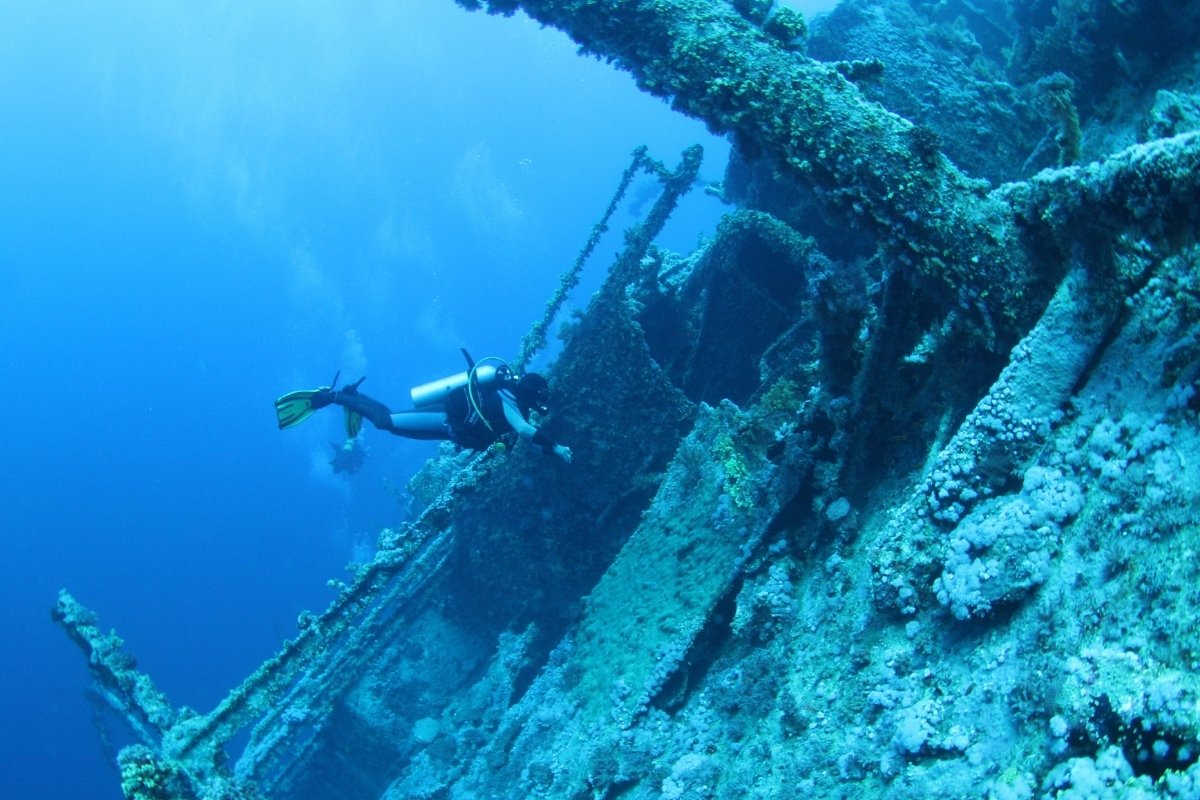
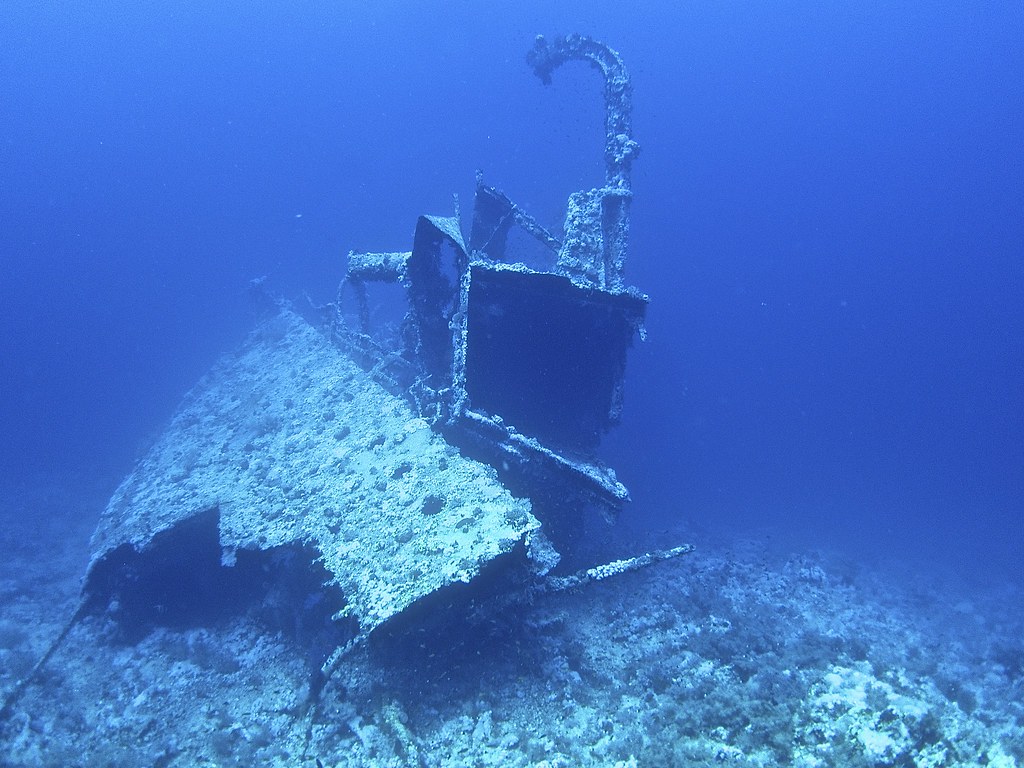
The SS Numidia lies against the northern wall of Big Brother. The British cargo steamship struck the reef on 20 July 1901 during a voyage toward Calcutta.
The wreck begins in shallow water at approximately 8–15 metres and descends steeply down the wall. Its stern and propeller lie far below recreational limits, at around 70–80 metres.
The accessible upper sections are heavily covered with hard and soft corals. Strong current, waves and the steep depth profile make the Numidia appropriate only for experienced divers.
Aida
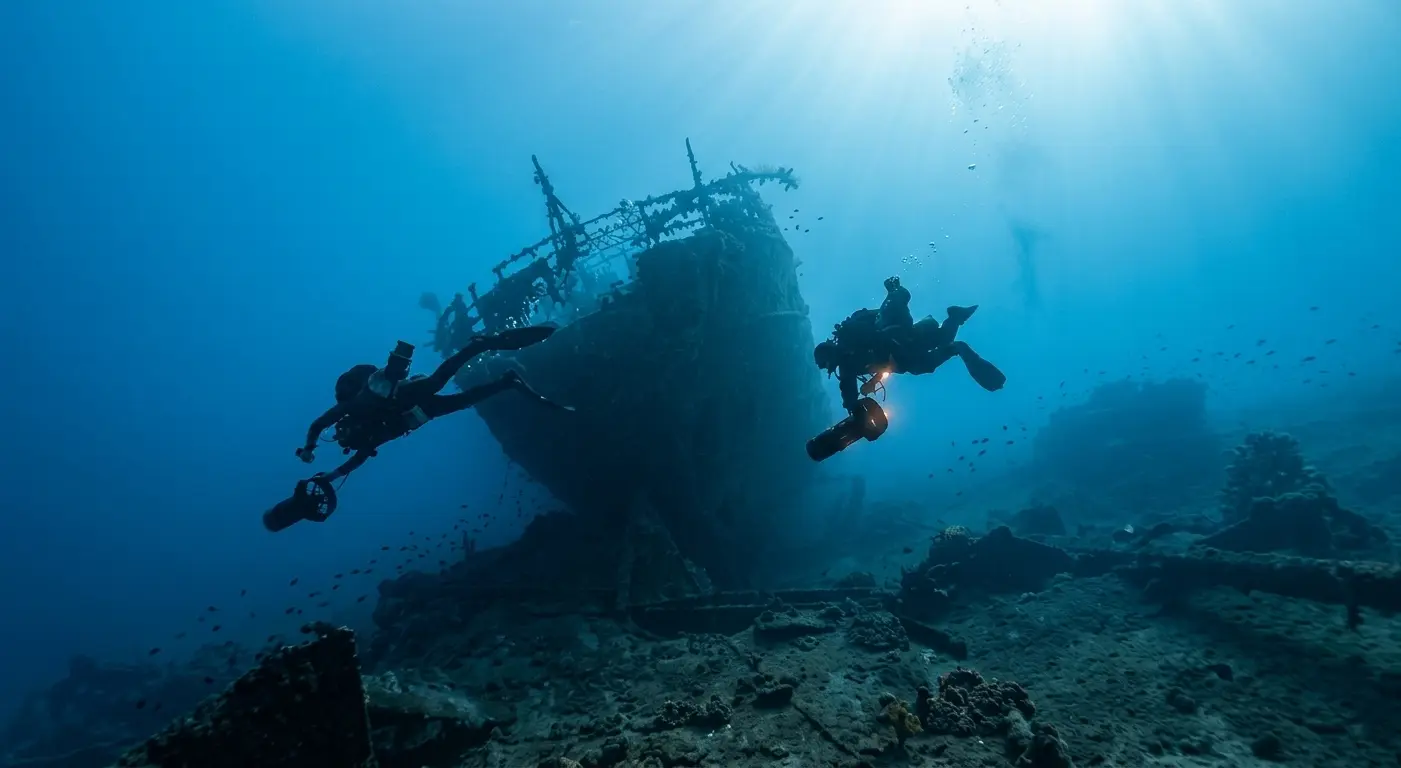
The Aida was an Egyptian supply vessel carrying personnel and supplies to the station on Big Brother. On 15 September 1957, heavy seas pushed it against the reef while it attempted to approach the island’s jetty.
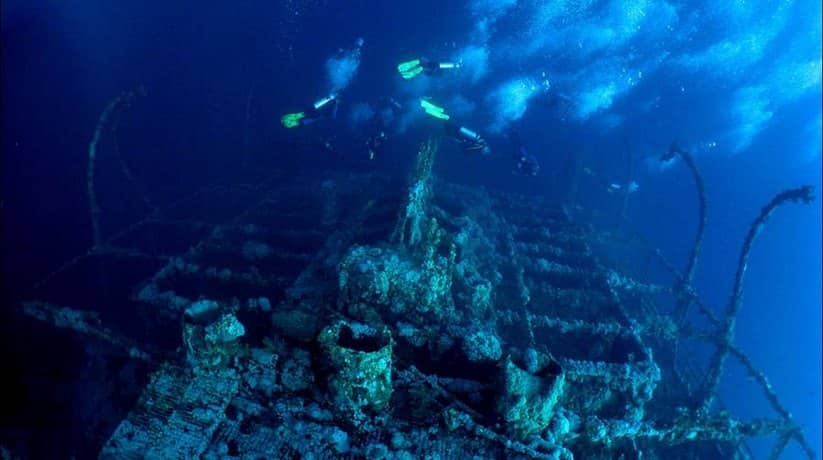
Everyone was evacuated, but the damaged vessel slipped down the southwestern wall. The wreck now lies at a steep angle from approximately 25–30 metres to around 60 metres.
The upper section can be viewed within recreational limits, but most of the wreck requires deeper or technical diving.
Suggested Route
Big Brother: Numidia and western wall
Enter from the RIB near the northern end of Big Brother after the guide has assessed the current.
Descend toward the upper section of the Numidia at approximately 10–20 metres. Explore only the section appropriate to the group’s certification and dive plan before continuing south along the western wall with the reef on the left shoulder.
Pass the coral-covered wall and, when conditions allow, continue toward the Aida. Because the Aida begins deeper, recreational divers may view only its upper section before gradually reducing depth.
Finish near the southern moorings or conduct a blue-water ascent beneath a delayed surface marker buoy for RIB collection.
Big Brother: southern plateau shark drift
Enter from the RIB near the southern end and descend toward the small ridge or plateau at approximately 25–30 metres.
Remain close to the reef while watching the open water for oceanic whitetips, threshers, grey reef sharks, tuna and jacks.
Allow the current to carry the group along either the eastern or western wall according to the guide’s briefing. Reduce depth progressively and complete a drifting safety stop before pickup.
Little Brother: northern plateau and wall
Make a precise RIB entry on the up-current side of the island and descend rapidly toward the northern plateau.
The plateau begins around 16 metres and slopes toward a rocky projection at approximately 40 metres. Recreational divers should remain within their planned depth while watching the blue for hammerheads, grey reef sharks, tuna and other pelagic species.
Continue with the current along the eastern or western wall. Explore the coral growth, overhangs and schools of fish before gradually ascending.
Finish close to the southern moorings when possible or deploy a delayed surface marker buoy for RIB pickup.
Photography Notes
The Brothers are primarily suited to wide-angle photography.
At Big Brother, the Numidia provides dramatic compositions combining wreck structure, coral growth and the steep wall. The shallower sections offer enough ambient light for wide wreck scenes, while the deeper parts quickly become darker and require careful attention to depth and no-decompression time.
The Aida’s steep position against the wall can also create powerful images, but much of the wreck lies beyond normal recreational limits.
Little Brother offers coral walls, sea fans, schools of reef fish and possible sharks against clear blue water. Photographers should prepare their settings before entering exposed areas because strong current may prevent them from stopping or repositioning.
Do not chase sharks into open water or allow photography to separate you from the group. A delayed surface marker buoy should remain immediately accessible.
History
The local Arabic name El Akhawein means “the two brothers,” referring to the paired islands.
Big Brother’s most recognisable landmark is its lighthouse and associated buildings. The lighthouse was constructed under British administration and completed in June 1883. Building stone was quarried directly from the island, and traces of the old quarry remain near the northern end.
The lighthouse remains operational, while Little Brother is uninhabited. The two islands later became part of Egypt’s protected marine-park system.
Best Season
Year-round diving
Site Diagram
Surface Map